
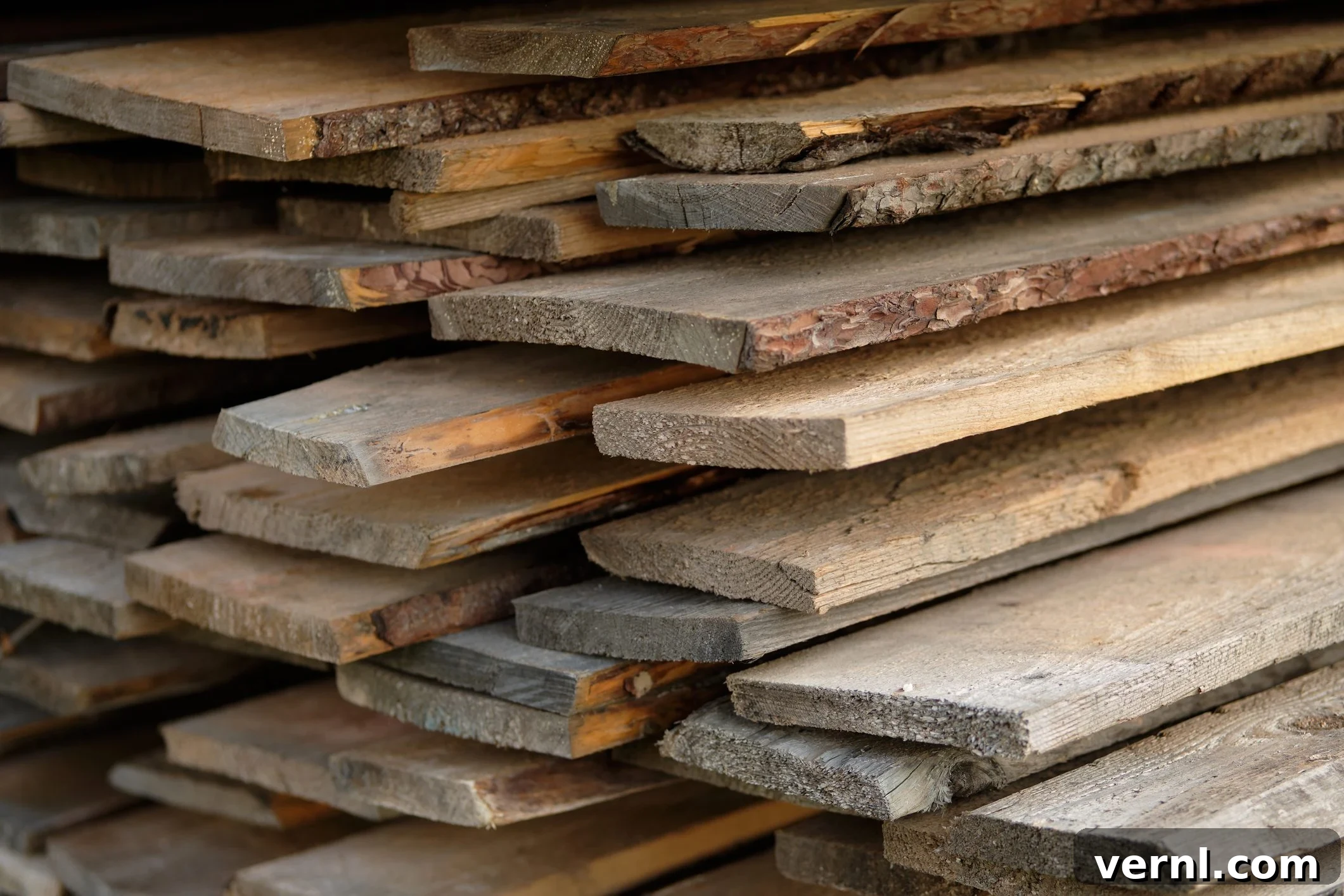
If you’re embarking on a home improvement project or simply appreciate materials with history and character, then reclaimed wood is an exceptional choice. Imagine timber that has already stood the test of time, weathering decades—or even centuries—of nature’s elements. This “experienced” wood is recovered from old buildings, historic barns, forgotten fences, and other vintage structures, each piece bearing a unique patina and story that simply cannot be replicated by freshly milled lumber. Beyond its aesthetic appeal, often featuring charming imperfections like nail holes, saw marks, and natural distressing, reclaimed wood also offers a sustainable alternative to new timber. Sometimes, the wood salvaged from old buildings comprises species that are now rare or was milled using traditional techniques no longer practiced, making each plank truly special.
The allure of reclaimed wood lies in its compelling combination of unparalleled character and environmental responsibility. As a recycled building material, it minimizes deforestation, reduces waste, and lessens the demand for new resources, making it a highly desirable option for eco-conscious builders and DIY enthusiasts alike. It’s no wonder that its popularity continues to grow, finding its way into a myriad of applications. From durable flooring that tells a story underfoot to stunning handcrafted furniture, robust structural beams, and intricate architectural details, reclaimed wood adds warmth and authenticity to any space. While it’s incredibly versatile, wall paneling remains one of its most beloved applications, transforming ordinary rooms into rustic retreats or contemporary havens. Whether you’re envisioning an accent wall, a custom headboard, or a full renovation, incorporating reclaimed wood can infuse your home with soul and enduring beauty.
However, the journey to integrate this unique material into your project begins with a crucial first step: finding a reliable source. While the idea of sourcing aged timber might seem daunting, you’ll be pleasantly surprised by the numerous avenues available. A quick search for “how to find reclaimed wood near me” can open up a world of possibilities, from digital marketplaces to local salvage yards. The key is knowing where to look and what to look for to ensure you acquire high-quality, authentic reclaimed timber for your vision.
Online Marketplaces and Digital Resources
In today’s interconnected world, online platforms offer a vast array of options for sourcing reclaimed wood. Major e-commerce sites like Amazon and large retailers such as The Home Depot often yield numerous results when you search for “reclaimed wood.” However, a word of caution is essential here: not all wood marketed as “reclaimed” on these platforms is genuinely antique timber. Many products are, in fact, new wood that has been artificially distressed, stained, or otherwise processed to mimic the aged appearance and weathered texture of genuine salvaged material. While these options can be appealing for certain aesthetics, they lack the true history, unique characteristics, and environmental benefits of authentic reclaimed lumber.
To ensure you’re getting real reclaimed wood, look for specific indicators. Authentic salvaged timber is typically sold unstained and unfinished, revealing its natural character. It often features genuine imperfections like remnants of original paint, authentic saw marks, and, most notably, nail holes or bolt holes from its previous life. A crucial certification to look for is the Forestry Stewardship Council (FSC) label. If the wood you purchase is FSC-certified, it provides a strong assurance that it has been sourced responsibly and is indeed genuine reclaimed material, not merely new wood made to look old.
Beyond the mega-retailers, a wealth of opportunities can be found closer to home through community-focused online platforms. Local groups and marketplaces like Nextdoor, Craigslist, or neighborhood Facebook pages are excellent resources for discovering local sellers or individuals looking to offload salvaged wood. Depending on your local network and the specific needs of your project, you might even have success by posting a specific request outlining what you’re looking for. This allows potential sellers to reach out to you directly, often leading to unexpected and valuable finds from within your community.
Specialized online marketplaces such as eBay and Etsy also serve as potential treasure troves for unique pieces of reclaimed wood. These platforms are home to smaller businesses and individual sellers who specialize in unique and often rare salvaged materials. For a more visual and community-driven approach, Instagram has emerged as one of the best online sources for reclaimed wood, according to industry experts like Robert Kundel of Restorer Tools. By searching “reclaimed wood” and exploring the myriad of images, you can often find suppliers tagged in photos, or discover recommendations and direct links to sellers in the comments section or through direct messages with enthusiasts.
However, a critical piece of advice when purchasing reclaimed wood online, especially from independent sellers, is to exercise caution. Buying lumber sight-unseen carries inherent risks. You could inadvertently end up with wood that is partially rotted, actively infested with insects, or simply not fit for your intended purpose. While some minor insect damage (like inactive wormholes) can actually enhance the character of reclaimed wood, severe damage or active infestations can compromise structural integrity and spread to other parts of your home. Reputable, large-scale dealers of reclaimed wood are far more likely to provide FSC-certified material that has been properly inspected, de-nailed, and kiln-dried to eliminate pests and moisture. While some pieces might still have rustic imperfections, you can generally be assured that the wood will be usable and free from serious defects.
Finally, when budgeting for online purchases, always factor in shipping costs. These can be substantial and are often comparable to, or even higher than, shipping rates for new lumber. Shipping rates are typically calculated per-foot and tend to be highest for very small orders (e.g., five pounds or less) due to handling fees. Conversely, they become most economical for larger orders, often exceeding 150 pounds, where the cost per unit of weight or volume decreases significantly. Always obtain a detailed shipping quote before finalizing your purchase to avoid any unexpected expenses.
Direct from Property Owners and Demolition Sites
One of the most authentic and often cost-effective ways to acquire reclaimed wood is by going directly to the source: properties slated for demolition or those with dilapidated structures. Do you know of an old, abandoned building in your community, perhaps a historic farmhouse or a venerable industrial site, that is scheduled for demolition? Or is there a charmingly dilapidated barn on the outskirts of town that appears to be beyond repair? These structures are veritable treasure troves of aged timber waiting for a new purpose.
The process involves contacting the property owner. You can typically identify the owner by searching the property address at your local county planning office or assessor’s office. Once you have their contact information, reach out to them and initiate a negotiation. You might find that many property owners are more than happy to allow you to haul away wood, often for free or a nominal price. This is particularly true if the demolition or removal of the structure is a costly endeavor for them; your willingness to salvage materials can save them significant time and expense in debris removal. If the owner happens to be a neighbor, a friend, or someone within your personal network, you might even be able to barter for the wood with services or goods rather than hard-earned cash, fostering a mutually beneficial exchange.
Connecting with Local Contractors and Builders
Local contractors and construction companies are often acutely aware of the intrinsic value of reclaimed lumber. During demolition projects, conscientious builders frequently go to great lengths to salvage usable flooring, interior woodwork, exterior siding, and robust structural timbers. These materials, instead of being discarded, are often set aside for resale or future projects. While some contractors may already have established contracts with distributors for their salvaged materials, many do not, or they may have excess stock. Either way, they are often receptive to selling directly to individuals who are willing to take the wood off their hands, thereby saving them the logistical hassle and cost of disposal.
You can approach this avenue in a couple of effective ways. One strategy is to cold-call general contractors, demolition companies, and even specialized renovation firms in your area. Clearly articulate your needs and the types of reclaimed wood you are looking for. Many companies keep inventories of salvaged materials or are aware of upcoming projects that might yield suitable timber. The second approach involves directly visiting active demolition sites. Politely approach the contractor-in-charge and inquire about salvaging materials. Ensure you prioritize safety and adhere to any site regulations. Even if a particular contractor doesn’t have the specific wood you need at that moment, they are often well-connected within the industry and may be able to direct you to someone who does, expanding your network of potential sources.
Recycling Centers and Habitat for Humanity ReStores
If you are fortunate enough to reside near a local business or organization that specializes in recycling used building materials, this should likely be your first stop, even before venturing into extensive online searches. These facilities, often known as architectural salvage yards or building material recycling centers, are dedicated to giving old materials a new life. The immense advantage of sourcing from these centers is that the materials you find there will typically be de-nailed, cleaned, and often prepped, making them ready to haul and use immediately for your projects.
Furthermore, the ability to physically examine the wood firsthand is invaluable. This allows you to thoroughly inspect each piece for potential defects such as significant warping, active rot, or severe insect damage, all of which can render wood unusable or problematic. While minor insect damage like aesthetic wormholes (provided the insects are no longer active) or natural cracks are often desirable and contribute to the authentic character of reclaimed wood, serious issues can compromise the integrity and safety of your project. Being able to see, touch, and assess the condition of the wood directly minimizes the risk of purchasing unsuitable materials.
A particularly excellent and widely available source for used building materials and genuine reclaimed wood is a Habitat for Humanity ReStore. These non-profit retail outlets sell donated new and used building materials, furniture, appliances, and home accessories at a fraction of the retail price. Their inventory frequently includes various types of reclaimed wood, salvaged doors, windows, and architectural elements. If there isn’t a ReStore directly within your immediate community, it’s highly probable that one exists within a reasonable driving distance, making it a convenient and ethical option for your sourcing needs. Shopping at a ReStore not only helps you find affordable, unique materials but also supports Habitat for Humanity’s mission of building affordable housing.
Specialized Reclaimed Wood Retailers
By far, the most reliable and often the most convenient sources for high-quality reclaimed wood are retailers that specialize exclusively in this unique product. These businesses have established supply chains, expertise in grading and processing salvaged timber, and often boast impressive inventories of various wood species and dimensions. Finding these specialized retailers is relatively easy with an online search; simply input “reclaimed wood retailer” or “antique lumber supplier” along with your location. If you’re lucky, there’s a reputable specialist right in your area.
These retailers typically offer a superior level of quality assurance, often providing wood that has been meticulously de-nailed, kiln-dried to stabilize moisture content and eliminate pests, and expertly milled to meet specific project requirements. Their staff often possess extensive knowledge about the history, characteristics, and best uses for different types of reclaimed wood, offering invaluable guidance for your project. They also frequently have showrooms where you can see and feel the wood, making it easier to select the perfect pieces for your aesthetic vision.
For example, if you happen to live near Peculiar, Missouri, a visit to the expansive showroom at Elmwood Reclaimed Timber would be highly beneficial. Similarly, residents of Southern California have excellent options like Ganahl Lumber, with numerous outlets across the region known for their selection of reclaimed timber, or Box Kite Barnwood in San Luis Obispo, offering curated salvaged materials. In the Midwest, a trip to Illinois-based All American Reclaim provides access to a wide variety of salvaged woods. On the East Coast, Virginia-based Appalachian Woods and Antique Lumber of New England in Oxford, Massachusetts, are renowned for their extensive collections of antique lumber and timbers, likely having exactly what you need for your project. These examples illustrate the robust network of specialized dealers dedicated to preserving and providing the beauty of reclaimed wood across different regions.
Considerations Before Purchasing Reclaimed Wood
Before making a purchase, whether from an online seller or a local yard, it’s crucial to understand a few key considerations. First and foremost, always assess the condition of the wood. Look for signs of severe rot, active insect infestation, or excessive warping that might make the wood unusable or difficult to work with. While nail holes and minor character marks are desirable, deep structural cracks or evidence of pests should be avoided unless you are prepared for extensive remediation. Secondly, consider the wood species. Different species offer varying levels of hardness, grain patterns, and natural durability, which will impact their suitability for specific applications like flooring versus decorative paneling. Research the characteristics of species commonly found in reclaimed timber in your region, such as oak, pine, or chestnut.
The importance of certification, particularly FSC certification, cannot be overstated for ensuring authenticity and sustainable sourcing. Certified wood gives you peace of mind that you’re investing in a genuinely eco-friendly product. Furthermore, inquire about the processing the wood has undergone. Has it been de-nailed? Is it kiln-dried? Kiln-drying is vital for reducing moisture content, which prevents future warping, shrinking, and also eliminates any hidden pests. Unprocessed wood, while potentially cheaper, will require significant effort and cost on your part to prepare for use. Lastly, always factor in the total cost, including any shipping fees or delivery charges, to get a true picture of your investment. Comparing prices from different sources and understanding what services (like milling or finishing) are included will help you make an informed decision.
Working with Reclaimed Wood
Once you’ve successfully sourced your reclaimed wood, preparing it for your project is the next step. Depending on its condition and origin, it may require cleaning, de-nailing, and potentially sanding or planing. Always wear appropriate safety gear, including gloves and eye protection, as old wood can harbor splinters, metal fragments, or dust. While the unique character of reclaimed wood is often celebrated, you might opt for a light sanding and a clear sealant to protect its surface and bring out its natural beauty. For applications like flooring or countertops, professional milling and finishing might be recommended to ensure durability and a smooth, level surface. Embrace the imperfections; they are part of the story and charm that reclaimed wood brings to any space.
Embrace the Character and Sustainability of Reclaimed Wood
In conclusion, choosing reclaimed wood for your next project is more than just a design decision; it’s an investment in character, sustainability, and history. Each plank carries a unique narrative, providing a depth and authenticity that modern materials simply cannot replicate. From the aesthetic warmth it brings to a room to its significant environmental benefits, reclaimed wood stands out as a superior choice for conscientious homeowners and builders. With a diverse array of sourcing options available—from the convenience of online platforms and the community spirit of local marketplaces to direct interactions with property owners and the reliability of specialized retailers—finding the perfect reclaimed timber for your vision is an achievable and rewarding endeavor. By understanding what to look for and where to search, you can confidently embark on a project that not only enhances your space but also contributes to a more sustainable future, celebrating the enduring beauty of experienced wood.