Harnessing the Wind: A Comprehensive Guide to Home Wind Turbines
Homeowners exploring sustainable energy solutions often consider solar panels as their primary option for grid backup or complete energy independence. However, a closer look reveals the significant potential of supplementing photovoltaic (PV) panels with home wind turbines. While wind power is inherently a form of solar energy, driven by the sun’s uneven heating of the Earth, it offers a crucial advantage: electricity generation even when the sun isn’t shining. This makes wind turbines an excellent complement to solar installations, providing a more consistent and reliable energy supply.
The feasibility of residential wind power, however, is highly site-specific. My own experience highlights this point: despite our off-grid property being situated on an ocean-facing ridge, the average wind speeds were historically too low for practical turbine use. Turbines require a minimum “cut-in speed” to begin generating electricity, and even if they spin, insufficient wind speeds won’t produce significant power. This assessment, made about a decade ago, led us to put wind energy on hold.
Yet, technology evolves rapidly. Significant advancements in turbine design and efficiency, particularly in models with lower cut-in speeds, mean that what was impractical yesterday might be viable today. This ongoing innovation prompts many homeowners, including us, to revisit the possibility of integrating wind energy. Windmills have a rich history dating back to the Middle Ages, and modern wind turbines continue this legacy, offering a valuable resource for environmentally conscious and financially savvy individuals looking to embrace renewable energy.
Understanding Home Wind Turbines
When most people think of wind turbines, they picture the colossal structures of commercial wind farms. Residential wind turbines are essentially scaled-down versions of these giants, designed to generate power for a single home or small property. Manufacturers have developed a diverse range of designs, primarily categorized into two main types: horizontal-axis wind turbines (HAWTs) and vertical-axis wind turbines (VAWTs).
Horizontal-Axis Wind Turbines (HAWTs)
- Design: These are the most common type, resembling traditional windmills seen along roadways. The main rotor shaft and electrical generator are located at the top of a tall tower.
- Operation: Blades, typically two or three, are attached to the turbine shaft and designed to catch the wind, causing the shaft to spin. This rotation activates a gear system that amplifies the speed, driving the generator to produce electricity.
- Orientation: HAWTs usually incorporate a “yaw mechanism,” often a rudder-like tail vane, which automatically rotates the turbine nacelle (the housing containing the generator and gearbox) to ensure the blades always face directly into the wind for optimal performance.
- Efficiency and Application: HAWTs are generally more efficient at converting wind energy into electricity at higher wind speeds. They require unobstructed wind flow and are often mounted on tall poles to clear obstacles and access stronger, more consistent winds.
Vertical-Axis Wind Turbines (VAWTs)
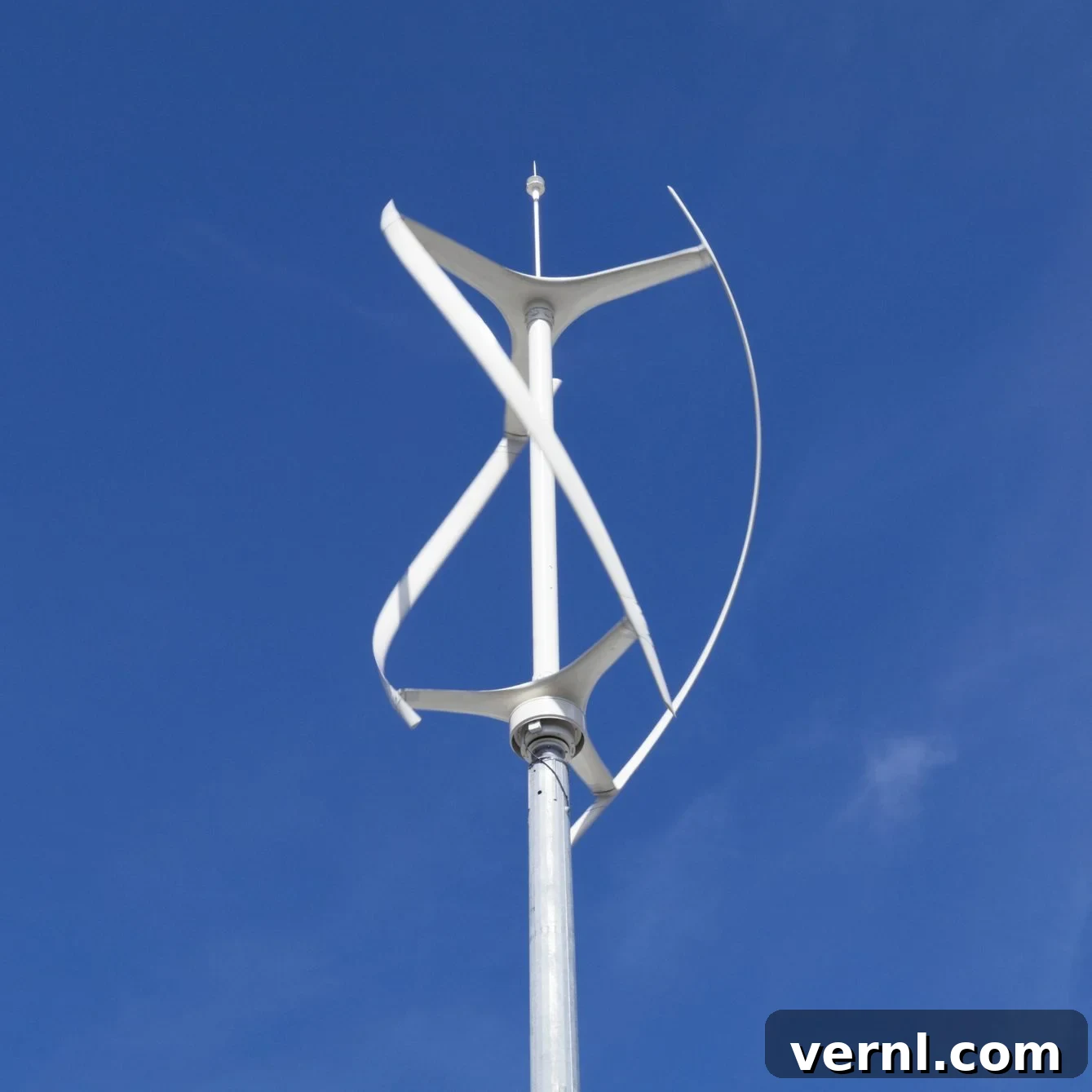
- Design: Unlike HAWTs, VAWTs have a main rotor shaft that extends vertically from the ground, with the generator typically located at the base. Their blades can take various forms, such as “S”-shaped (Savonius type), “H”-shaped (Darrieus type), or even semicircular designs reminiscent of a whisk blender.
- Operation: VAWTs are omni-directional, meaning they can capture wind from any direction without needing to orient themselves. This simplifies their mechanical design by eliminating the yaw mechanism.
- Compactness and Installation: Their more compact and often aesthetically pleasing designs allow for greater installation flexibility. They can be installed on rooftops, integrated into building facades, or placed directly on the ground in locations where space or visual impact is a concern.
- Advantages: VAWTs tend to be quieter, less of a hazard to birds due to slower blade speeds and visibility, and perform better in turbulent wind conditions often found closer to the ground or buildings.
- Disadvantages: Historically, VAWTs have been less efficient than HAWTs at converting wind energy into electricity, particularly at very high wind speeds, although modern designs are continually improving.
Regardless of type, the electricity generated by a home wind turbine is rarely used directly. Due to the unpredictable nature of wind, this energy is typically either stored in a battery bank – often one already established for an existing PV system – or fed back into the electrical panel to reduce grid consumption and lower energy costs. Some advanced turbines come with integrated battery storage, while others are specifically designed for seamless grid-tie or off-grid battery integration.
The Mechanics of Residential Wind Power
At its core, a wind turbine is a marvel of engineering designed to convert kinetic energy (from moving air) into electrical energy. The process begins with the wind’s kinetic energy pushing against the turbine’s blades, causing them to rotate. This rotational force drives a shaft, which is connected to a generator. Inside the generator, magnetic fields interact to produce an electric current. For home use, this raw electrical output, often AC (alternating current) but sometimes DC (direct current) depending on the turbine, needs to be conditioned and managed. This involves an inverter to convert DC to AC if necessary, and a charge controller to regulate the flow of power, especially when charging batteries or interfacing with the electrical grid. Understanding these components is key to appreciating how a home wind turbine contributes to a household’s energy independence.
Benefits of Home Wind Turbines
The allure of generating free, clean energy from the wind is undeniable. When compared to solar PV panels, which also offer significant environmental and economic advantages, home wind turbines present several distinct benefits that make them an attractive option for many:
- Remarkable Space Efficiency: For homeowners with limited yard space, wind turbines offer a compelling solution. A typical budget-friendly turbine capable of generating 1,500 watts of electricity occupies a mere 10 to 20 square feet of ground space. In stark contrast, a solar panel array producing the same wattage demands a much larger footprint, typically ranging from 80 to 150 square feet, depending on the individual panel’s power rating and efficiency. This makes wind power a viable option for smaller properties or those where roof space is already maximized.
- 24/7 Power Generation Potential: One of the most significant advantages of wind turbines is their ability to generate power around the clock. As long as sufficient wind is blowing, turbines can produce electricity during cloudy days, heavy overcast conditions, and throughout the night – times when solar panels are inactive or significantly less effective. This continuous power generation capability offers a valuable complement to solar systems, providing a more consistent and reliable energy supply, especially in hybrid renewable energy setups.
- Higher Energy Conversion Efficiency: Wind turbines are impressively efficient at converting the kinetic energy of wind into usable electricity. Modern designs can convert as much as 40-50% of the absorbed wind energy into electricity, a figure often referred to as their power coefficient. By comparison, even high-efficiency solar panels typically hover around 20-23% efficiency in converting sunlight into electricity. While both technologies face theoretical limits, wind turbines generally boast a higher conversion rate for the energy they capture.
- Lower Manufacturing Environmental Impact: The production process for wind turbines generally releases fewer atmospheric pollutants compared to the manufacturing of solar panels. While both technologies are environmentally friendly over their operational lifespan, lifecycle assessments often indicate that wind turbine production has a comparatively smaller carbon footprint, contributing to a quicker “energy payback time” where the energy expended in manufacturing is recouped through clean energy generation.
- Enhanced Energy Independence: Installing a home wind turbine contributes significantly to reducing reliance on the conventional power grid. This translates into greater energy independence, protection against rising utility costs, and enhanced resilience during grid outages, especially when combined with battery storage.
Drawbacks and Challenges of Home Wind Turbines
Despite their compelling benefits, home wind turbines come with several significant drawbacks that can make them a less suitable choice than PV panels for certain situations. A thorough understanding of these challenges is crucial for any homeowner considering wind energy:
- Inconsistent Wind Resource: While turbines work when the sun isn’t out, they are entirely dependent on the wind blowing consistently and at sufficient speeds. Wind is inherently unpredictable, fluctuating with daily weather patterns, seasons, and local topography. Unlike the predictable cycles of sun exposure, average wind speeds can vary wildly, leading to inconsistent power generation. A property with insufficient average wind speed, even if it experiences occasional gusts, may not justify the investment, as the turbine won’t generate enough electricity to be practical.
- Higher Maintenance Requirements: In contrast to solar panels, which are largely maintenance-free once installed, wind turbines require regular upkeep. They possess numerous moving parts – blades, gearboxes, bearings, generators, and yaw mechanisms (for HAWTs) – all of which are subject to wear and tear. Routine maintenance includes lubrication, bolt tightening, inspection for blade damage, and electrical system checks. This translates to ongoing time and potential costs for inspections and repairs, a significant factor compared to the minimal upkeep of a solar array.
- Noise and Visual Impact: The operation of wind turbines can generate noise, often described as a “swishing” or “whooshing” sound, particularly from horizontal-axis models. While modern turbines are quieter than older versions, noise can still be a concern in residential areas, especially at night or in very still conditions. Furthermore, their visual presence, often requiring tall towers to access optimal wind, can be an aesthetic concern for homeowners and neighbors alike. This visual impact and noise factor often lead to community resistance and stringent zoning regulations, making permitting difficult or impossible in densely populated neighborhoods.
- Wildlife Hazard: Horizontal-axis wind turbines, with their rapidly rotating blades, pose a documented hazard to birds and bats. While the actual mortality rate compared to other human-made structures is debated, it remains a serious environmental concern, particularly for migratory species or in areas with high wildlife activity. Efforts are ongoing to mitigate this, including design changes, slower rotation speeds, and strategic placement, but it remains a consideration. Vertical-axis turbines generally present less of a risk due to their different blade movement and often slower speeds.
- Complex and Potentially Costly Installation: Installing a home wind turbine, especially a tower-mounted HAWT, is a complex endeavor. It often requires heavy equipment for tower erection, specialized electrical knowledge for system integration, and significant site preparation. These factors contribute to higher installation costs compared to solar panels. The need for expert site assessment and professional installation further adds to the initial investment, which can sometimes outweigh the perceived affordability of the turbine unit itself.
Is a Home Wind Turbine Worth the Investment?
For homeowners whose residential situation aligns with the operational requirements of a wind turbine, it can undoubtedly be a fantastic long-term investment. The upfront cost of a small wind turbine itself can be surprisingly affordable – some vertical-axis models capable of pumping 1.5 kW of power into a solar battery bank or feeding directly to the grid can cost less than $500 for the unit alone. However, this figure does not include the tower, installation, permitting, or electrical integration, which can significantly escalate the total project cost.
A wind turbine becomes a poor investment if your property doesn’t receive enough consistent wind to make it spin effectively and generate meaningful amounts of electricity. This crucial factor necessitates a thorough wind resource assessment before any purchase. The good news is that advancements in turbine technology have dramatically improved efficiency at lower wind speeds. Many modern models boast very low cut-in speeds, often less than five miles per hour (mph), and can achieve optimal energy production at wind speeds around 30 mph. This represents a significant improvement compared to models available a decade ago, broadening the range of properties where wind power is now a viable consideration. This technological leap is precisely why many, myself included, are rethinking previous decisions about residential wind energy.
Key Considerations Before Installation
Before committing to a home wind turbine, several critical factors must be thoroughly evaluated to ensure the investment is sound and the system performs optimally:
- Wind Resource Assessment: This is arguably the most critical step. It involves determining the average wind speed and consistency at your specific location. Tools like an anemometer (wind speed meter) can be used for on-site monitoring over time, or you can consult local wind maps and data from nearby weather stations. The higher and more consistent the wind, the better the turbine’s performance and return on investment.
- Zoning and Permitting: Local regulations are a major hurdle for wind turbine installations. Many municipalities have strict zoning ordinances regarding height restrictions, setback requirements from property lines, noise limits, and aesthetic guidelines. Before purchasing, contact your local planning and zoning department to understand all necessary permits, approvals, and potential restrictions.
- Structural Integrity: If considering a rooftop-mounted turbine (typically VAWTs), ensure your roof structure can safely support the additional weight and withstand the dynamic forces (vibrations, wind loads) generated by the turbine. For ground-mounted systems, the tower foundation must be engineered to securely anchor the turbine against strong winds.
- Interconnection with Electrical System: The turbine must be safely and compliantly integrated into your home’s existing electrical system, whether it’s an off-grid battery bank or a grid-tied setup. This involves selecting appropriate inverters, charge controllers, and safety disconnects. Incorrect wiring can be dangerous and non-compliant with electrical codes.
- Proximity to Obstacles: Trees, tall buildings, and even hilly terrain can create turbulence and block wind flow, significantly reducing a turbine’s efficiency. Turbines need clear, unobstructed wind paths. For HAWTs, this often means installing on a tall tower above surrounding obstacles.
Home Wind Turbine Installation: Can You DIY?
While some turbine manufacturers may advertise “DIY-friendly” installation kits, the general consensus among energy experts, including the U.S. Department of Energy, strongly advises against homeowners attempting the entire installation process themselves. As Energy.gov points out, choosing the optimal site placement and physically mounting the turbine, while challenging, represent only a portion of the overall job. The most critical and complex aspect involves connecting the unit safely and correctly to your home’s electrical system.
Electrical work, especially involving high-voltage renewable energy systems, requires specialized knowledge and adherence to strict electrical codes. A professional installer possesses the necessary expertise to ensure the system is wired safely, efficiently, and in full compliance with local building and electrical regulations. Furthermore, licensed professionals are adept at navigating the often-complex permitting process, handling all required documentation and inspections. Attempting a DIY installation without proper qualifications can lead to dangerous electrical hazards, system malfunctions, voided warranties, and potential legal issues if codes are not met. For a safe, reliable, and compliant home wind energy system, engaging certified professionals is almost always the recommended path.
Maintenance for Longevity of Your Wind Turbine
Unlike the relatively hands-off nature of solar panels, maintaining a home wind turbine is crucial for its long-term performance, efficiency, and safety. Regular maintenance extends the life of the system and ensures it continues to generate optimal power. Key maintenance tasks include:
- Visual Inspections: Periodically check the turbine blades for any signs of damage, cracks, or debris. Inspect the tower for corrosion, loose bolts, or structural issues. Listen for unusual noises during operation, which could indicate mechanical problems.
- Lubrication: Many moving parts, especially in HAWTs (bearings, gearboxes, yaw mechanisms), require regular lubrication according to the manufacturer’s schedule. This prevents friction and wear, ensuring smooth operation.
- Electrical System Checks: Regularly inspect all electrical connections for corrosion, looseness, or damage. Check the performance of the inverter and charge controller. It’s advisable to have these components inspected by a qualified electrician periodically.
- Brake System Check: Turbines are equipped with braking mechanisms (manual or automatic) to stop the blades during extremely high winds or for maintenance. Ensure these systems are functioning correctly.
- Annual Professional Servicing: Even with homeowner checks, it’s highly recommended to have a certified wind turbine technician conduct a comprehensive inspection and service annually or biennially. They can identify potential issues before they become major problems, perform specialized adjustments, and ensure all components are operating within specifications.
Proper and consistent maintenance not only safeguards your investment but also ensures a reliable and efficient source of clean energy for your home for years to come.
The Future of Residential Wind Energy
The landscape of home renewable energy is constantly evolving, and residential wind power is no exception. Ongoing research and development are focusing on creating quieter, more efficient, and aesthetically integrated turbine designs. Innovations in blade aerodynamics, generator technology, and smart control systems promise to make wind turbines even more accessible and effective for urban and suburban environments. As manufacturing processes become more streamlined and materials more sustainable, the overall cost and environmental footprint of these systems are also expected to decrease. Paired with advancements in battery storage and smart grid technologies, home wind turbines are poised to play an increasingly important role in a diversified, resilient, and independent home energy future.
Ultimately, the decision to invest in a home wind turbine requires careful consideration of your property’s specific conditions, local regulations, and personal energy goals. While challenges exist, the potential for clean, consistent energy generation, especially when complementing a solar PV system, makes exploring residential wind power a worthwhile endeavor for any homeowner seeking greater energy independence and a reduced carbon footprint.