
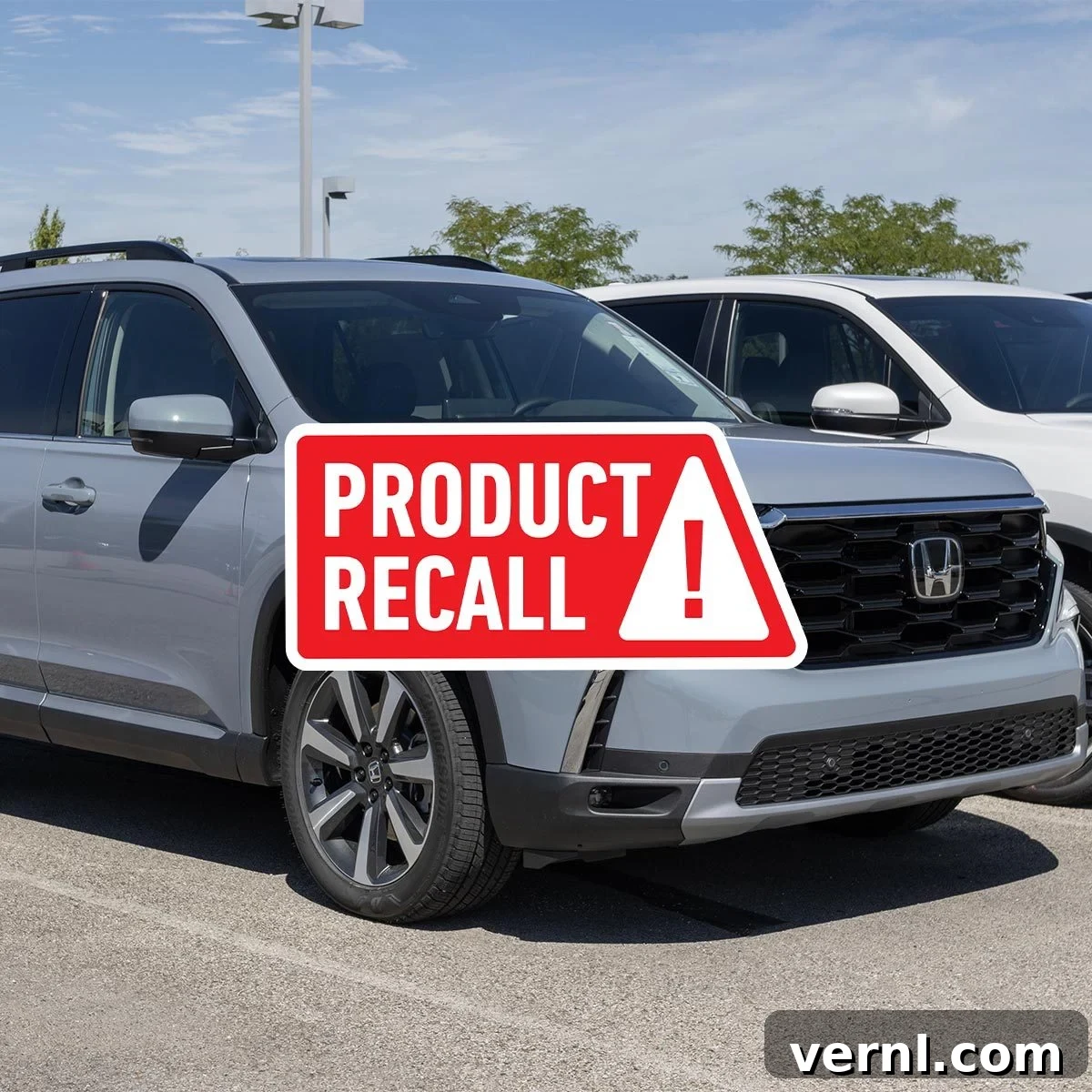
Urgent Honda and Acura Recall: Software Glitch Puts Hundreds of Thousands at Crash Risk
In a significant development for vehicle safety, Honda has announced a widespread recall affecting hundreds of thousands of its popular Honda and Acura models. The recall stems from a critical software error within the fuel injection electronic control unit (FI-ECU) that significantly increases the risk of engine stalls and power loss, thereby elevating the potential for serious crashes and injuries. This proactive measure underscores the growing complexity of modern vehicle systems and the paramount importance of prompt owner action.
The National Highway Traffic Safety Administration (NHTSA), the U.S. government agency responsible for vehicle safety, has issued a detailed brief outlining the specifics of this concerning issue. For owners of affected Honda and Acura vehicles, understanding the implications of this recall and acting swiftly is not merely recommended but absolutely crucial for personal safety and the safety of others on the road. Software-related malfunctions, particularly those affecting fundamental operational components like the engine, demand immediate attention and resolution.
Understanding the Critical Software Flaw: Why Your Honda or Acura is Being Recalled
At the heart of this recall is a profound software anomaly affecting the Fuel Injection Electronic Control Unit (FI-ECU). This sophisticated component is the brain behind your engine’s fuel delivery system, meticulously controlling the timing and quantity of fuel injected into the engine cylinders. Its precise operation is vital for smooth engine performance, optimal fuel efficiency, and consistent power delivery across all driving conditions.
According to the official NHTSA brief, the software error within the FI-ECU can lead to an abrupt and unexpected engine stall or a significant loss of engine power. Imagine cruising at highway speeds or navigating a busy intersection, only for your engine to suddenly cut out or dramatically lose its ability to accelerate. This scenario is not only startling but inherently dangerous, removing your control over critical vehicle functions at potentially life-threatening moments.
An engine stall, especially when it occurs without warning, can render your vehicle immobile in traffic, disabling power steering and power brakes and making it incredibly difficult to maneuver safely to the side of the road. On a busy highway, this could lead to rear-end collisions, while in an intersection, it could cause broadside impacts. The loss of power, even if the engine doesn’t completely stall, can prevent you from accelerating to avoid hazards or maintaining speed in critical situations, increasing the risk of being struck by other vehicles. This inherent risk is why authorities and manufacturers take such software glitches with the utmost seriousness, prompting these large-scale recalls.
The Role of the FI-ECU in Vehicle Performance
The FI-ECU is a central nervous system component for your vehicle’s engine. It receives data from various sensors monitoring everything from oxygen levels in the exhaust to throttle position and engine temperature. Based on this real-time data, it calculates the precise amount of fuel needed for combustion and directs the fuel injectors accordingly. A perfectly functioning FI-ECU ensures:
- Optimal fuel-air mixture for efficient combustion.
- Smooth acceleration and deceleration.
- Reduced emissions.
- Reliable engine starting and running.
When a software error compromises this unit, the delicate balance is disrupted, leading to the severe symptoms observed in the recalled vehicles.
Identifying the Affected Honda and Acura Models
This recall encompasses a substantial number of vehicles, nearing 300,000 units across both the Honda and Acura brands. It’s crucial for owners to verify if their specific model and year are included in this advisory. The list of recalled vehicles includes a range of popular SUVs and sedans, indicating a common underlying software platform or component shared across these models.
The models subject to this critical recall are:
- 2022 Acura MDX Type-S
- 2023 Acura MDX Type-S
- 2024 Acura MDX Type-S
- 2025 Acura MDX Type-S
- 2023 Honda Pilot
- 2024 Honda Pilot
- 2025 Honda Pilot
- 2021 Acura TLX Type-S
- 2022 Acura TLX Type-S
- 2023 Acura TLX Type-S
- 2024 Acura TLX Type-S
- 2025 Acura TLX Type-S
If your vehicle appears on this list, it is imperative to remain vigilant for official communications from Honda. The manufacturer is expected to commence mailing recall notification letters to all impacted owners in mid-March 2025. These letters will contain specific instructions on how to proceed with the necessary repairs. Even if you haven’t received a letter yet, or if you believe your vehicle might be affected, it is always a good practice to proactively check your vehicle’s recall status using its 17-digit Vehicle Identification Number (VIN) on the NHTSA website.
The NHTSA explicitly warns that “an engine stall or loss of power can increase the risk of a crash or injury.” Given this severe warning, owners of affected vehicles are strongly advised to limit driving as much as possible until the required software update has been performed. This cautionary measure is intended to minimize exposure to the dangerous conditions that could arise from the software error.
Immediate Steps for Owners of Recalled Honda and Acura Vehicles
Receiving a recall notification can be unsettling, but knowing the proper steps to take can ensure your safety and that of your passengers. Honda has made provisions to address this issue free of charge, demonstrating their commitment to resolving the defect efficiently.
1. Confirm Your Vehicle’s Status
Even if your model year is listed, confirm your specific vehicle is part of the recall. The most reliable method is to enter your 17-digit Vehicle Identification Number (VIN) into the NHTSA’s recall search tool on their official website (NHTSA.gov/recalls). This will provide immediate information on any open recalls associated with your car.
2. Await Official Notification (or Act Proactively)
Honda will mail formal owner notification letters starting in mid-March 2025. These letters will detail the specific problem, the remedy, and instructions on how to schedule your service appointment. However, if you are concerned and wish to expedite the process, you do not necessarily have to wait for the letter. You can contact Honda or Acura customer service directly or reach out to your local authorized dealership immediately after confirming your recall status.
3. Schedule Your Free Repair
Honda dealers are equipped and instructed to reprogram the faulty FI-ECU software. This service will be provided entirely free of charge to you, the owner. Once you receive your owner letter or confirm your recall status, contact your nearest Honda or Acura dealership to schedule a service appointment. Be prepared to provide your VIN when making the appointment to help the dealership verify your vehicle’s eligibility and prepare for the repair.
4. Exercise Caution Before the Fix
As the NHTSA advises, limiting your driving is the safest course of action until the repair is completed. If driving is unavoidable, be extra vigilant. Avoid long trips, congested highways, or situations where an unexpected engine stall could lead to immediate danger. Pay close attention to any unusual engine behavior, such as sputtering, hesitation, or sudden loss of power. If you experience an engine stall, safely pull over to the side of the road, restart your vehicle if possible, and contact roadside assistance.
5. Important Contact Information
Should you have any further questions about this specific recall, or if you prefer not to wait for your official letter, you can reach out to Honda’s customer service directly at 1-888-234-2138. When you call, it’s helpful to clarify that your inquiry pertains to recalls EL1 and AL0, which are the internal reference codes for this specific issue. For general vehicle safety concerns or to report a safety defect, you can also contact the NHTSA at 1-888-327-4236. The NHTSA’s recall number for this particular issue is 25V031000.
The Broader Landscape of Automotive Software Recalls
This Honda/Acura recall serves as a timely reminder of the increasing prevalence and critical nature of software-related issues in modern vehicles. As cars become more technologically advanced, integrating complex electronic systems and countless lines of code, the potential for software glitches grows. These aren’t just minor inconveniences; as this recall demonstrates, they can directly impact fundamental safety mechanisms.
Modern vehicles rely on an intricate network of electronic control units (ECUs) managing everything from engine and transmission performance to braking, steering, and advanced driver-assistance systems (ADAS). A single line of faulty code in one of these interconnected systems can have cascading effects, leading to unforeseen dangers. This trend highlights the need for robust software development, rigorous testing protocols, and efficient recall mechanisms within the automotive industry.
While this particular recall requires a dealership visit for software reprogramming, the future of vehicle safety may increasingly involve over-the-air (OTA) updates, similar to how smartphones receive updates. OTA updates have the potential to deliver critical software patches quickly and conveniently, reducing the time vehicles spend with known safety defects and minimizing the burden on owners. However, the implementation of such systems also brings new challenges related to cybersecurity and ensuring the integrity of the updates.
Ensuring Continuous Vehicle Safety
Beyond this specific recall, all vehicle owners should cultivate a habit of proactive safety awareness. This includes:
- Registering your vehicle: Ensure your contact information is up-to-date with the manufacturer so you receive recall notices promptly.
- Regularly checking for recalls: Even if you don’t receive a letter, periodically check the NHTSA website using your VIN for any open recalls. Vehicles can have multiple recalls over their lifetime.
- Paying attention to warning signs: Never ignore dashboard warning lights, unusual noises, or changes in vehicle performance. These could be early indicators of a safety defect.
- Maintaining your vehicle: Regular maintenance by qualified technicians can help identify potential issues before they escalate.
Conclusion: Prioritizing Your Safety and Prompt Action
The Honda and Acura recall due to the FI-ECU software error is a serious safety concern that demands the immediate attention of all affected owners. The potential for unexpected engine stalls or power loss directly translates to a heightened risk of crashes and injuries, making this a non-negotiable repair.
Honda and Acura are committed to rectifying this issue by providing the necessary software reprogramming at no cost to vehicle owners. By understanding the severity of the defect, identifying if your vehicle is affected, and taking prompt action to schedule the repair, you are taking crucial steps to protect yourself, your passengers, and others sharing the road. Do not delay in addressing this recall; your safety is paramount.
Source
Engine Stall from Software Error, National Highway Traffic Safety Administration, 2025.