Don’t Fall for It: A Deep Dive into the Latest DMV Text Message Scams
DMV scams, while unfortunately common, are constantly evolving. Scammers are always refining their techniques to make their fraudulent messages more convincing. The latest iteration involves a text message claiming to be from the DMV, and it’s crucial to be aware of its specific characteristics to avoid becoming a victim. If you receive a group text message about a new notification from the DMV, it’s highly likely to be a scam. This article will provide you with a comprehensive understanding of this emerging scam and equip you with the knowledge to protect yourself.
Understanding the Anatomy of the DMV Text Scam
Like most scams designed to deceive and defraud, the primary objective is to entice you to click on a suspicious link and ultimately extract money from you. In this particular scam, the message masquerades as an official communication from the DMV, falsely claiming that you have an “outstanding toll balance linked to your vehicle.” The message typically includes a sense of urgency, asserting that you must resolve the alleged issue immediately, often within the same day. Failure to comply, the message threatens, could result in the suspension of your driver’s license and the hold of your vehicle registration. The scam concludes with a vague yet alarming threat of “license suspension or other legal issues,” further amplifying the pressure to act quickly and without critical thought.
Identifying Red Flags: How to Spot a Fake DMV Text
Fortunately, these scam messages often contain several telltale signs that can help you identify them as fraudulent. Paying close attention to these red flags can significantly reduce your risk of falling victim to the scam.
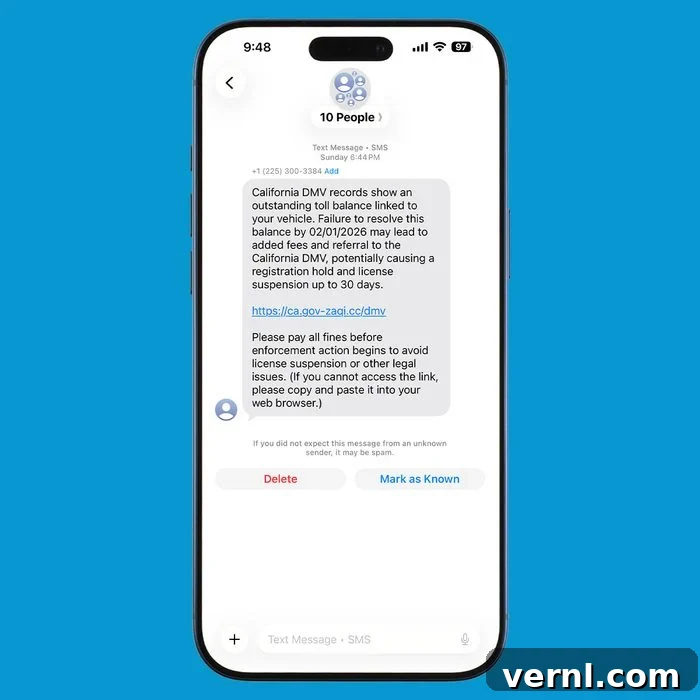
- The Group Text Anomaly: One of the most immediate and obvious indicators of a scam is the fact that the message arrives as part of a group text. Reputable organizations like the DMV simply do not communicate personal information or legal infractions through group text messages. If you receive a DMV-related message in a group text, it’s almost certainly a scam.
- Suspicious Link Structure: The link provided in the message should also raise suspicion. While these links may try to mimic legitimate DMV URLs by including terms like “DMV” and your state abbreviation, they often contain additional characters or unrelated words that don’t align with official DMV website addresses. Always scrutinize the URL carefully before clicking on it. Hover over the link (without clicking) to see the full URL and assess its legitimacy.
- The Urgency Tactic: Scammers frequently employ the tactic of creating a false sense of urgency to pressure victims into acting impulsively. The message might demand immediate action, often within a very short timeframe, such as “resolve this balance by the end of the day.” This tactic is designed to prevent you from thinking critically about the message’s authenticity and potentially overlooking red flags. Remember, legitimate communication from the DMV will generally provide ample time to address any issues.
- Generic Greetings and Lack of Personalization: A legitimate communication from the DMV would typically address you by name and include specific details related to your vehicle or driver’s license. Scam messages, on the other hand, often use generic greetings such as “Dear Customer” or “Dear Vehicle Owner,” and lack personalized information. This lack of personalization is a significant warning sign.
- Grammatical Errors and Typos: While not always the case, scam messages often contain grammatical errors, typos, and awkward phrasing. Legitimate organizations like the DMV have professional communication standards, and their official messages are typically well-written and error-free.
- Requests for Sensitive Information: The DMV will never request sensitive information, such as your Social Security number, bank account details, or credit card information, via text message or email. If a message asks you to provide such information, it is undoubtedly a scam.
Staying Safe: Protecting Yourself from DMV Text Scams
Even when you are aware of the red flags, the potential consequences of ignoring a legitimate DMV communication can be concerning. Fortunately, there are several proactive steps you can take to ensure you are receiving genuine information from the DMV and not falling prey to a scam.
- Directly Contact the DMV: The most reliable way to verify the legitimacy of any communication claiming to be from the DMV is to contact them directly through their official website or phone number. Do not use the contact information provided in the suspicious text message. Look up the DMV’s official contact information independently.
- Check Your Account Online: Most state DMVs offer online portals where you can access your vehicle and driver’s license information, check for outstanding balances, and review official communications. Regularly check your account online to stay informed about any potential issues.
- Be Wary of Unsolicited Messages: Exercise caution with any unsolicited text message or email claiming to be from the DMV, even if it appears legitimate at first glance. Always verify the information through official channels.
- Never Click on Suspicious Links: Avoid clicking on any links in a suspicious text message or email. These links could lead to phishing websites designed to steal your personal information or install malware on your device.
- Report Suspicious Activity: If you receive a suspicious text message claiming to be from the DMV, report it to the Federal Trade Commission (FTC) and your state’s attorney general. Reporting these scams helps law enforcement track and prosecute scammers.
- Install Security Software: Ensure that your computer and mobile devices have up-to-date security software, including antivirus and anti-malware programs. This software can help protect you from phishing websites and other online threats.
- Educate Yourself and Others: Stay informed about the latest scams and share this information with your friends and family. By raising awareness, you can help prevent others from becoming victims of these fraudulent schemes.
Official DMV Stance on Text Communication
Many state DMVs have issued statements explicitly addressing the issue of text message scams. For example, the Wisconsin DMV clearly states that it “will never text you to demand payment for a service.” This is a common policy among DMVs across the country. Be aware that any text message requesting payment or personal information from the DMV should be considered highly suspicious. The Wisconsin DMV also advises being cautious of messages requesting gift cards, personal details, or claiming to sell official DMV products.
Staying Vigilant in the Digital Age
DMV text scams are a persistent threat, and staying informed and vigilant is crucial for protecting yourself. By understanding the tactics used by scammers, recognizing the red flags, and following the safety tips outlined in this guide, you can significantly reduce your risk of falling victim to these fraudulent schemes. Remember, the DMV will generally communicate important information through official channels, such as mail or your online account. Always verify any suspicious communication directly with the DMV to ensure its legitimacy. In today’s digital age, a healthy dose of skepticism is your best defense against online scams.