
Banishing the Funk: Your Ultimate Guide to a Mold-Free Washing Machine
Mold, an ever-present microscopic fungus, exists virtually everywhere – in the air we breathe, the soil beneath our feet, and, often unexpectedly, within the confines of our homes. Its spores are remarkably resilient travelers, hitchhiking effortlessly on a gentle breeze or even clinging to a favorite cashmere sweater. Once these spores land on a damp surface with a food source, they begin to proliferate, establishing colonies that can cause myriad problems.
While mold plays a vital role in nature, breaking down organic matter and contributing to ecosystems (think forest floors decomposing leaves or the delightful molds that create blue cheese), its presence indoors, especially in appliances like our washing machines, is far from beneficial. Mold can be incredibly persistent, making complete eradication a significant challenge. It feeds on building materials such as wood, drywall, and paint, causing considerable structural damage over time. However, the immediate concern for many homeowners is the dreaded stinky washing machine, a tell-tale sign of mold infestation, regardless of how much one might appreciate a good cheddar. Beyond the unpleasant odor, washing machine mold can exacerbate allergies, trigger respiratory issues, and contribute to millions of dollars in property damage annually.
Since returning to the rudimentary method of washing clothes by hand on a river rock isn’t a practical solution, effectively managing and preventing mold in our washing machines is a modern necessity. This comprehensive guide will equip you with expert tips and proven strategies to keep your washing machine pristine, fresh, and decisively mold-free.
Why Does Mold Thrive in Your Washing Machine?
Understanding why mold establishes itself in your washing machine is the first step toward effective prevention and removal. Mold requires three fundamental elements to grow: water, oxygen, and a food source. While water and oxygen are inherently abundant in a washing machine environment, the “food” component often surprises people. According to the Centers for Disease Control and Prevention (CDC), mold is incredibly opportunistic and can consume a wide array of organic materials.
In the context of a washing machine, this “food” primarily consists of detergent residues, fabric softener buildup, dirt, lint, skin cells, and other organic debris flushed from your clothes during wash cycles. Modern washing machines, particularly high-efficiency models, often use less water and cooler wash temperatures compared to older models. While environmentally beneficial, these conditions can inadvertently create a more hospitable environment for mold. Less water means residues are less thoroughly rinsed away, and cooler temperatures are less effective at inhibiting mold growth. These factors combine to create a persistently damp, nutrient-rich environment – an ideal breeding ground for mold and mildew, particularly in crevices, gaskets, and detergent dispensers.
Comprehensive Strategies to Eliminate Washing Machine Mold
Effectively eliminating mold involves a two-pronged approach: actively killing and removing existing mold colonies, and subsequently minimizing the conditions that allow it to flourish. By addressing both aspects, you can prevent mold from returning and maintain a consistently fresh appliance. Here are several highly effective methods to eradicate mold and mildew from your washing machine.
Powerful DIY Mold Removal Solutions
Let’s begin by focusing on proven methods to get rid of established mold in your washer’s drum, hoses, and hidden compartments. These solutions leverage common household products known for their antifungal properties.
Borax and Vinegar: A Natural Power Duo
For those seeking natural yet potent solutions, a combination of Borax and distilled white vinegar comes highly recommended by laundry experts like Patric Richardson, the Laundry Evangelist. Both Borax and vinegar are naturally occurring antifungals and deodorizers. When used together, they create a formidable mold-killing concoction.
To employ this method, first add one cup of Borax directly into the washing machine drum. Next, pour a gallon of distilled white vinegar into the detergent dispenser. Run your washing machine on its longest and hottest wash cycle. The high temperature combined with the antifungal action of Borax and vinegar will effectively penetrate and kill mold spores and existing colonies within the drum, hoses, and other internal components. For optimal prevention, repeat this routine every three to six months, especially if you notice a recurring musty odor.
Chlorine Bleach: A Potent Sanitizer
For a powerful and widely recognized disinfectant, chlorine bleach remains an extremely effective mold killer, as affirmed by the CDC. Its strong oxidizing properties destroy mold spores and their cellular structure, preventing regrowth.
To use chlorine bleach for mold removal, pour one cup of liquid chlorine bleach into the detergent dispenser or directly into the drum (check your machine’s manual for specific instructions). Select the longest and hottest wash cycle available. Allow the cycle to complete. Once the cycle has finished, carefully wipe down the inside of the washing machine door and the rubber gasket with a solution of one-third cup of bleach mixed into three-quarters of a gallon of water. Always ensure good ventilation when using bleach and wear protective gloves.
Vinegar and Baking Soda: A Synergistic Duo
Vinegar stands out as a true washing machine miracle worker, capable of tackling mold on its own, with Borax, or in combination with baking soda. This combination is particularly effective at deodorizing and gently scrubbing away residue. Baking soda is a natural abrasive and odor absorber, while vinegar’s acidity breaks down mold and mildew.
To utilize this method, sprinkle approximately one cup of baking soda into the empty washing machine drum. Then, fill the liquid detergent dispenser with distilled white vinegar. Initiate a hot water wash cycle, preferably the longest setting. This dynamic duo will work together to dislodge buildup, neutralize odors, and eliminate mold spores, leaving your machine cleaner and fresher.
Physical Removal: Targeting Hidden Mold
While chemical treatments cleanse the internal components, physical scrubbing is indispensable for removing visible mold and addressing stubborn residues, especially in easily accessible areas. Combine any of the aforementioned cleaning solutions (Borax/vinegar, bleach solution, or vinegar/baking soda paste) in a spray bottle or bucket. Using a microfiber cloth, sponge, or dedicated scrub brush, meticulously clean all accessible surfaces. A toothbrush can be particularly effective for reaching tight spots, nooks, and crannies.
- Detergent Tray and Dispenser: Remove the detergent dispenser tray if possible. Scrub it thoroughly with your cleaning solution, paying attention to any caked-on detergent or fabric softener residue, which are prime food sources for mold. Rinse it well and allow it to air dry completely before reinserting.
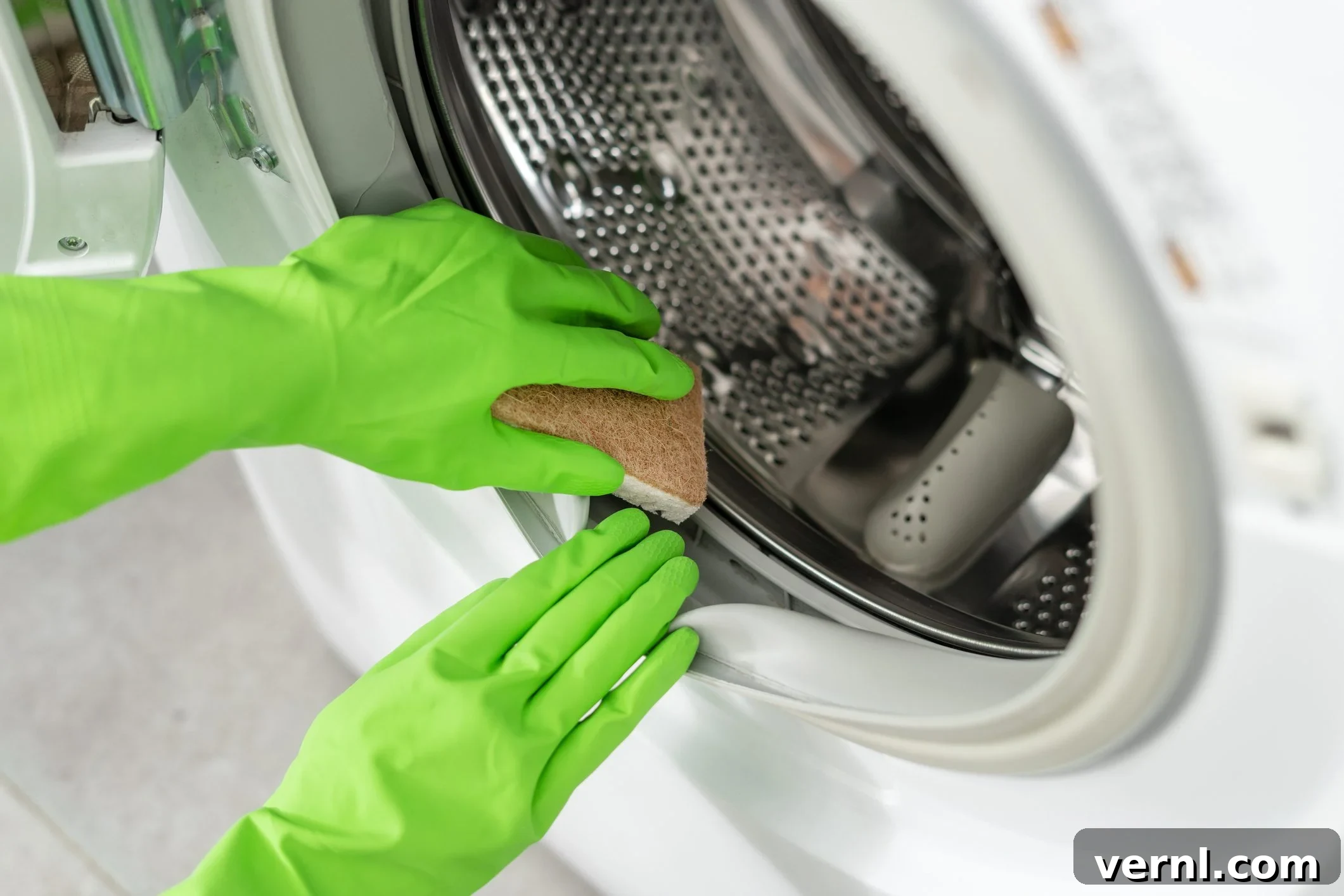
- Door, Drum, and Gasket: Soak a microfiber cloth in your chosen disinfecting solution. Wipe down the entire inner surface of the washing machine door. Pay special attention to the drum interior, wiping away any visible stains or slime. Most critically, clean the rubber door gasket (or bellows) on front-loading machines. Pull back the folds of the gasket to reveal hidden mold, grime, and trapped moisture. Scrub vigorously until clean.
- Washing Machine Filter: The washing machine filter (sometimes called a lint trap or coin trap) is often overlooked but can harbor significant mold, lint, and debris. Consult your user manual for instructions on how to access and clean this filter. Remove any accumulated gunk and wash the filter with hot, soapy water or your mold-killing solution.
Preventing Mold: A Proactive Approach for Long-Term Freshness
Once you’ve successfully removed existing mold from your washing machine, the next crucial step is preventing its return. Mold can re-establish itself with surprising speed given the right environment. In as little as 24 to 48 hours, a damp, untreated washing machine can become a haven for mold, even if it was thoroughly cleaned just days before. By implementing simple, consistent habits, you can keep your machine mold-free and smelling fresh.
Post-Laundry Habits for a Dry Environment
Creating an inhospitable environment for mold is primarily about reducing moisture and improving airflow. These daily practices can make a significant difference:
Leave the Door and Tray Open
Mold doesn’t require standing puddles of water to thrive; a consistently damp, humid environment – such as the interior of your washing machine immediately after a laundry cycle – is perfectly sufficient. After you finish a load of laundry, make it a habit to leave the washing machine door ajar. This simple action allows air to circulate freely within the drum, promoting evaporation and significantly reducing internal humidity levels. The same principle applies to the detergent dispenser tray. Remove it or leave it open between washes to ensure it dries completely and prevents detergent buildup from turning into mold food. A quick wipe-down of the dispenser once a month with vinegar can also help prevent residue accumulation.
Dry the Door Seal Gasket
Front-loading washing machines are highly efficient, using less water and often providing a superior clean compared to traditional top-loaders. However, they have one common vulnerability: the rubber door gasket (or bellows). This seal is designed to prevent leaks but can inadvertently trap moisture, lint, and detergent residue, making it a prime location for mold growth. After your final load of laundry for the day, make it a priority to thoroughly dry the inside of the gasket all the way around the door with a clean cloth. This removes trapped water and prevents mold spores from taking hold.
Beyond daily drying, perform a deeper clean once a month. Wipe down the entire gasket with a solution of one-third cup bleach mixed into three-quarters of a gallon of water, or a strong vinegar solution, to sanitize and kill any nascent mold. Remember to wear gloves and ensure good ventilation.
Wipe Down the Door Interior
If you have pets, you’ve likely noticed that dog and cat hair often clings to the inside of the washing machine door, especially in front-loaders. Pet hair, along with other fibers and lint, can trap moisture and detergent residues, creating another micro-environment conducive to mold. After each use, grab a clean towel and wipe down the interior of the door. This not only removes pet hair but also cleans off excess detergent, fabric softener, and other mold-friendly residues. Incorporate a monthly wipe-down of the door’s interior with a bleach and water solution (as described for the gasket) for deeper sanitization.
Leveraging Your Washer’s Features & Smart Usage
Beyond manual cleaning, optimizing your washing machine’s operation and product usage can significantly deter mold.
Utilize the Self-Clean Cycle
Many newer washing machines, particularly front-loaders, come equipped with a dedicated “self-clean,” “tub clean,” or “pure cycle” feature. These cycles typically employ extremely hot water, sometimes combined with a special spin action or chemical additive, to effectively remove and prevent mold, mildew, and detergent buildup from the drum and internal components. If your model has this feature, consult your user manual for specific instructions on how often to run it and if any cleaning agents are recommended by the manufacturer. If your washing machine does not have a self-clean cycle, regularly performing the DIY bleach or Borax and vinegar methods mentioned earlier will achieve similar results.
Optimize Detergent and Fabric Softener Use
One of the most common culprits behind washing machine mold is the overuse of laundry products. As Patric Richardson points out, most people use far too much detergent. Modern detergents are highly concentrated, and for a medium-sized load, you typically only need about two tablespoons. Excess detergent creates a thick, sticky residue that the rinse cycle cannot fully remove. This leftover residue coats the inside of your machine, providing a rich food source for mold and contributing to that musty odor.
Similarly, fabric softeners are designed to remain on clothing fibers, which also means they tend to linger within the washing machine itself, coating surfaces and attracting mold. Consider using less fabric softener, or opting for alternatives like distilled white vinegar in the rinse cycle, which naturally softens clothes and helps remove detergent residue without leaving a film. To effectively de-gunk your washing machine from accumulated residues, regular treatments with Borax and vinegar are excellent. Alternatively, commercial washing machine cleaners like Affresh are specifically designed to tackle these buildups, especially if you’re a heavy user of laundry products.
The Broader Impact of Washing Machine Mold
Beyond the immediate unpleasantness, ignoring mold in your washing machine can lead to several adverse consequences. The lingering musty smell can transfer to your freshly laundered clothes, making them feel less clean and forcing re-washes. For individuals sensitive to mold, exposure can trigger or worsen allergies, asthma, and other respiratory problems, affecting indoor air quality throughout your home. Moreover, mold can slowly degrade the rubber and plastic components of your washing machine over time, potentially leading to costly repairs or a shortened lifespan for the appliance itself. Proactive mold management not only ensures fresh laundry but also protects your health and your investment.
Essential Tools and Supplies for Mold Management
To keep your washing machine in top condition and effectively combat mold, having the right tools and supplies on hand is crucial. Here’s a quick checklist:
- Distilled White Vinegar: Your all-purpose natural cleaner, deodorizer, and mold inhibitor.
- Borax: A natural antifungal and cleaning booster.
- Chlorine Bleach: For powerful disinfection and mold killing (use with caution).
- Baking Soda: A mild abrasive and odor neutralizer.
- Microfiber Cloths: Excellent for wiping down surfaces and drying gaskets.
- Scrub Brush or Old Toothbrush: For tackling grime in tight spaces and crevices.
- Spray Bottle: Handy for applying cleaning solutions.
- Protective Gloves: Essential for handling cleaning agents, especially bleach.
Conclusion: A Fresh Start for Every Load
A mold-free washing machine is not merely a matter of aesthetics or odor; it’s fundamental to maintaining hygienic clothes, a healthy home environment, and the longevity of your appliance. While mold spores are ubiquitous, their proliferation in your washing machine can be effectively controlled through consistent cleaning and mindful usage habits. By adopting the strategies outlined in this guide – from leveraging powerful DIY cleaning solutions to incorporating simple post-laundry routines – you can transform your washing machine from a potential mold sanctuary into a reliably fresh and efficient workhorse. Embrace these practices, and say goodbye to the musty smell, welcoming a new era of truly clean and fresh laundry. Remember, a little prevention goes a long way in ensuring your washing machine serves you well for years to come.
Next, find out if heat is good for killing mold.