When discussing electric vehicles (EVs), the conversation frequently revolves around the large, high-voltage battery that powers the motor. Questions abound: How long do these advanced batteries typically last? What is the financial implication of their replacement? How many miles can one expect to travel between charges? And a crucial environmental consideration: what procedures are in place for their recycling once they reach their end-of-life?
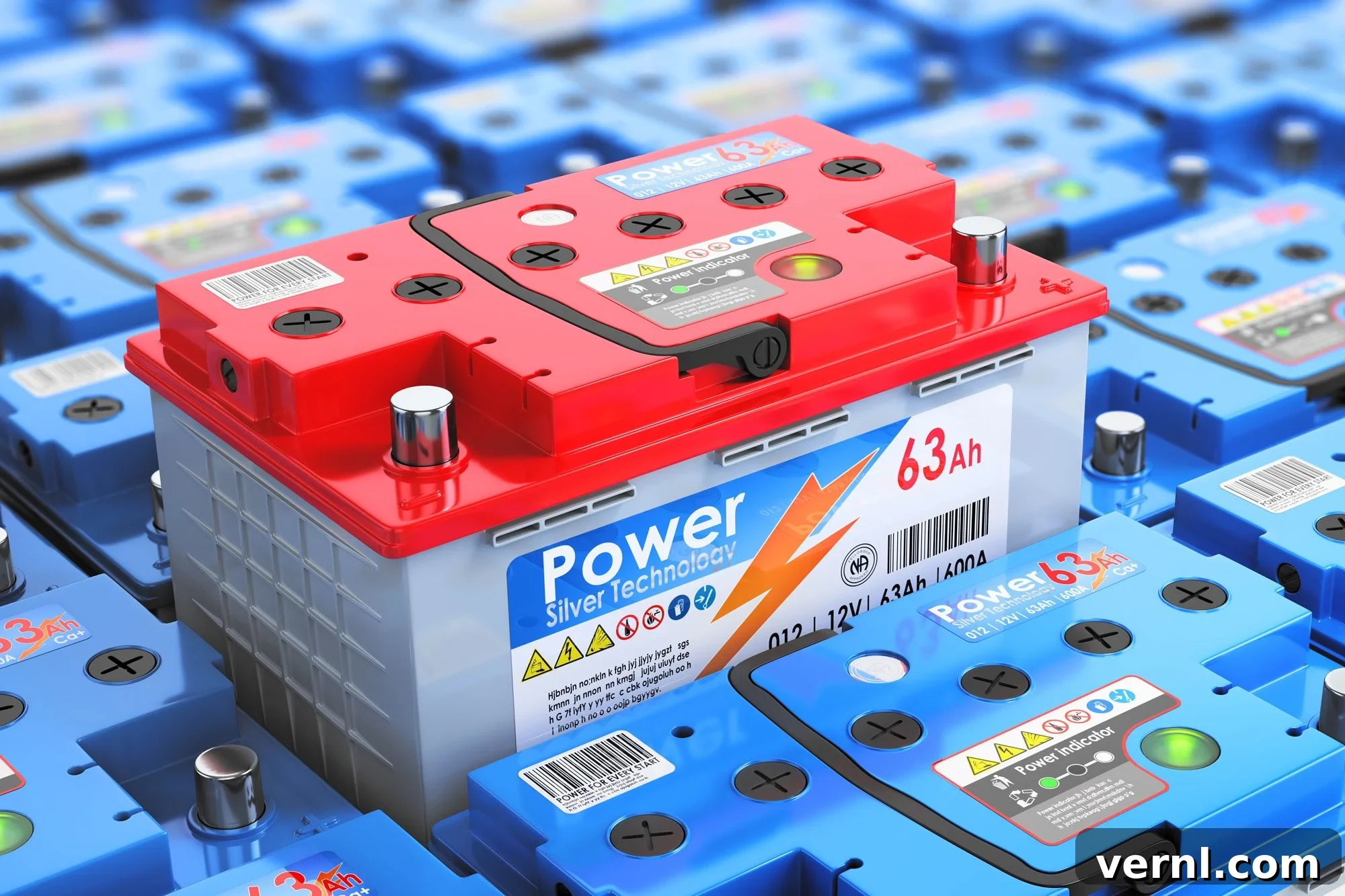
Yet, an often-overlooked component of every electric vehicle is a familiar friend: the traditional 12-volt battery. While most EVs utilize a lead-acid 12-volt battery, Tesla notably opts for a lithium-ion 12-volt alternative. Regardless of its chemistry, this seemingly conventional battery plays an indispensable role. Much like its counterpart in an internal combustion engine (ICE) vehicle, an EV will refuse to start if its 12-volt battery is completely drained.
The good news is that the process of jump-starting a dead 12-volt battery in an EV mirrors that of an ICE vehicle, making it a skill many drivers already possess. However, this familiarity should not lead to complacency. There are several critical safety considerations specific to electric vehicles that must be understood before attempting a jump-start. This comprehensive guide will equip you with the knowledge needed to safely revive a dead EV 12-volt battery, ensuring you won’t need to discard those trusty jumper cables just yet.
Why Do EVs Still Need 12-Volt Batteries?
Despite the immense power stored in their primary high-voltage battery, electric vehicles retain a conventional 12-volt battery for several crucial functions. It might seem counterintuitive at first glance, but this smaller battery acts as the vehicle’s operational lifeline for its myriad low-voltage systems and the critical starting sequence. Here’s a breakdown of its vital roles:
- Powering Accessories: The 12-volt battery supplies power to all the “creature comforts” and essential systems we rely on daily. This includes the headlights, taillights, interior lights, windshield wipers, power windows, electric seats, infotainment system, and the heater blower fan. These components are designed to operate on a low-voltage circuit, making the 12-volt battery their dedicated power source.
- Enabling Computer Systems: Modern vehicles, especially EVs, are essentially computers on wheels. The 12-volt battery powers the low-power computer systems, control modules, and the modem. These systems manage everything from the vehicle’s overall operational logic to communication with external networks and critical safety features like airbags.
- Activating the Starting Circuit: This is arguably its most critical function. When you press the “start” button in an EV, the 12-volt battery doesn’t crank a starter motor in the traditional sense. Instead, it energizes a critical component known as the motor controller relay (or contactor). This powerful electromagnet then allows the flow of high-voltage power from the main battery pack to the electric drive motor, effectively “starting” the vehicle. Without a functional 12-volt battery, this relay cannot be activated, leaving the vehicle immobilized, even if the high-voltage battery is fully charged.
- Charging Mechanism: Unlike ICE vehicles which use an alternator to recharge the 12-volt battery, EVs integrate a DC-to-DC converter. This converter draws power from the high-voltage battery and steps it down to the 12-volt level, continuously recharging the 12-volt battery while the vehicle is running or sometimes even when it’s plugged in. Therefore, if the 12-volt battery is dead, the vehicle’s electrical system, including this converter, cannot initiate, preventing the crucial “start” signal from reaching the high-voltage system.
In essence, the 12-volt battery is the gatekeeper for an EV’s entire electrical architecture. It’s the essential link that bridges the user’s input to the immense power of the high-voltage system.
How Do I Know the 12-Volt Battery Is Dead?
Identifying a dead 12-volt battery in an EV is quite similar to diagnosing the issue in a conventional vehicle. The symptoms often manifest as a complete lack of response from various electrical systems. If you encounter any of the following, it’s a strong indicator that your EV’s 12-volt battery might be depleted:
- No Response from Key Fob or Door Handles: The power doors may not unlock or open, and the key fob might seem unresponsive, failing to lock or unlock the vehicle.
- Lack of Dashboard Lights or Warnings: When you attempt to “start” the vehicle or depress the brake pedal, you may notice no dashboard lights illuminating, or critical warning indicators fail to appear.
- Inactive Brake Lights: The brake lights might not illuminate when the brake pedal is pressed, indicating a failure in the low-voltage system responsible for activating them.
- Non-functional Accessories: Wipers, headlights, interior lights, or the infotainment system may not turn on or operate sluggishly.
- Clicking Sounds or Complete Silence: Instead of the usual system boot-up, you might hear a faint clicking sound from relays attempting to engage, or simply complete silence.
A dead 12-volt battery can stem from several common causes unique to, or exacerbated by, the nature of electric vehicles:
- Extended Periods of Inactivity: If an EV sits unused for a prolonged duration, the 12-volt battery can gradually discharge. Even when “off,” modern vehicles, including EVs, have a constant low-voltage draw (often called “parasitic drain”) to power various control modules, security systems, and telematics. This constant drain can eventually deplete a battery, especially if it’s already older or less efficient.
- “Phantom Drain” and Software Glitches: In some cases, specific software bugs or components drawing more power than intended can accelerate this discharge, leading to what some refer to as “phantom drain.”
- Accidental Accessory Usage: Simply leaving an interior light on, or an accessory plugged in and active, can drain the 12-volt battery overnight or over a few days.
- Malfunctioning Low-Voltage Charging System: The DC-to-DC converter responsible for recharging the 12-volt battery from the high-voltage pack can sometimes malfunction. If this system isn’t working correctly, the 12-volt battery won’t receive the necessary charge, leading to its eventual depletion.
- Battery Age and Degradation: Like all batteries, the 12-volt battery has a finite lifespan. Over time, its capacity to hold a charge diminishes. An aging or failing 12-volt battery is more susceptible to discharge and less able to recover, even with proper charging.
If you experience any of these symptoms, it’s wise to consider that your EV’s 12-volt battery may be the culprit before investigating more complex issues.
Where Is the 12-Volt Battery Located?
The placement of the 12-volt battery in an electric vehicle can vary significantly depending on the specific year, make, and model. Unlike ICE vehicles where the battery is almost universally under the hood, EV manufacturers have more flexibility in its placement due to the absence of a large engine block.
- The Frunk (Front Trunk): Many EVs, particularly those with a traditional “hood” design, house the 12-volt battery in the frunk, often beneath a plastic trim panel or protective cover. This location is convenient for accessibility, mirroring the familiar layout of an ICE vehicle.
- The Trunk/Boot: Some manufacturers opt to place the 12-volt battery in the rear of the vehicle, within the trunk compartment or underneath its floor panel. This placement helps with weight distribution and can free up space in the front.
- Under the Rear Seat or Floor: In certain models, the 12-volt battery might be located under the rear passenger seats or integrated into the vehicle’s floor pan. These locations are less common but do exist.
Always consult your EV’s owner’s manual if you are unsure of the exact location. The manual will provide precise diagrams and instructions for accessing the battery or its remote terminals.
Remote Battery Terminals and Emergency Access Points
Given the diverse battery placements and the desire for safety and accessibility, many EVs come equipped with remote battery terminals. These terminals are positive (+) and negative (-) connection points deliberately placed away from the actual 12-volt battery, often in an easily accessible spot in the frunk or engine bay. Their primary purpose is to provide a safer and more convenient location for connecting jumper cables, minimizing the risk of sparks occurring directly near the battery itself, especially if it’s producing hydrogen gas.
Furthermore, in situations where the 12-volt battery is completely dead and the power doors cannot be opened, some manufacturers provide an emergency connector. This is typically located behind a removable plug on the front bumper. By applying a small 12-volt power source to this connector, you can temporarily energize the low-voltage system enough to unlock the doors and access the vehicle’s interior or the main 12-volt battery/remote terminals.
Steps To Jump-Start an EV With a Dead 12-Volt Battery
Successfully jump-starting an EV’s 12-volt battery requires adherence to a specific sequence and, most importantly, strict attention to safety protocols. This guide is designed for using either a quality set of jumper cables with a helper vehicle or a spark-proof portable jump starter with reverse polarity protection. NOTE: If you are jump-starting a Tesla’s 12-volt lithium-ion battery, always use a portable jump starter, not another lead-acid battery from a helper vehicle, to avoid potential compatibility or charging issues.
CRITICAL SAFETY WARNINGS: READ BEFORE PROCEEDING!
This information deals exclusively with jump-starting an EV’s low-voltage, 12-volt battery. It is paramount to understand the following prohibitions:
- NEVER attempt to jump-start an EV’s high-voltage lithium-ion battery pack. This system operates at significantly higher voltages (often several hundred volts) and can cause severe injury or death if mishandled.
- NEVER jump-start an EV’s 12-volt battery while the high-voltage battery is simultaneously being charged. Disconnect any charging cables from the EV before attempting a jump-start.
- NEVER use another EV as a “helper” car to jump-start another EV or any other vehicle. The DC-to-DC converter in EVs is designed to charge its own 12-volt battery, not to provide a high current surge to another vehicle. This can damage the helper EV’s electrical system.
- Always wear personal protective equipment: This includes heavy-duty gloves and eye protection (safety glasses or goggles) to shield against potential sparks or battery acid.
- Never attempt to jump-start a frozen battery. A frozen battery can explode when current is applied.
- Never smoke or allow open flames near a battery. Batteries can emit highly flammable hydrogen gas. Sparks, flames, or smoking can cause the battery to explode.
- Ensure adequate ventilation. If working in an enclosed space, make sure there is proper airflow to disperse any potential hydrogen gas buildup.
- Battery Acid Contact: In the event of contact with battery acid, immediately flush the affected area with large amounts of water for at least 15 minutes and seek immediate medical attention.
Tools You’ll Need:
- A quality set of jumper cables with good insulation and sturdy clamps.
- Alternatively, a spark-proof portable jump starter with reverse polarity protection. This is often the safer and more convenient option.
- A helper vehicle (if using jumper cables) with a fully charged 12-volt battery.
1. Safely Position the Vehicles (If Using Jumper Cables)
Position the helper vehicle close enough to the disabled EV so that the jumper cables can reach comfortably without being taut. Crucially, never allow the vehicles to touch each other, as this can create an electrical short circuit or cause damage.
2. Prep Both Vehicles
Before connecting any cables, take the following precautions:
- Place the transmissions of both vehicles (the EV and the helper vehicle) into park (P) or neutral (N).
- Fully set the parking brakes on both vehicles to prevent any accidental movement.
- Switch off all lights, radios, climate control, and other accessories in both vehicles.
- If possible, visually inspect all battery terminals on both vehicles (or remote terminals on the EV) to ensure they are clean, free of corrosion, and tightly secured. Loose or corroded connections can impede current flow and increase resistance.
3. Connect the Positive (+) Clamps
With extreme care, attach one red positive (+) jumper or jump starter cable clamp to the positive (+) terminal of the dead EV’s 12-volt battery or its designated remote positive (+) battery terminal. Ensure the clamp has a firm, secure grip.
Next, attach the other end of the red positive (+) jumper cable to the positive (+) terminal of the helper vehicle’s battery. Double-check that both positive clamps are securely connected and will not accidentally detach.
4. Connect the Negative (-) Clamps
Now, attach one black negative (-) jumper cable clamp to the negative (-) terminal of the helper battery. This ensures a stable ground connection from the power source.
This step is critical for safety: Attach the other end of the black negative (-) jumper cable or jump starter to a clean, unpainted metal part of the dead EV’s chassis, engine block, or a designated remote negative (-) battery terminal. This point should be as far away from the 12-volt battery as possible. NEVER connect the black (-) jumper or jump starter cable clamp directly to the dead battery’s negative (-) terminal. This practice is designed to prevent sparks from occurring directly over the battery, which could ignite hydrogen gas that may have accumulated around a discharged battery.
5. Perform a Visual Check
Before proceeding, take a moment to visually inspect all connections. Ensure that the jumper cables or jump starter are clear of any moving parts (such as fan belts or pulleys) in both engine bays. Verify that all four clamps are tightly latched onto their respective terminals or grounding points.
6. Start the Helper Vehicle (If Using Cables)
If using a helper vehicle, start its engine. Allow the helper vehicle to run for approximately five minutes. This duration gives the helper vehicle’s alternator a chance to begin sending a charge to the dead EV battery, providing it with a preliminary boost.
If using a portable jump starter, simply activate it according to the manufacturer’s instructions.
7. Attempt to Start the EV
After the brief charging period, attempt to start the electric vehicle. Once the EV successfully starts, it is crucial not to disconnect the cables immediately. Leave the cables connected to the helper car or portable jump starter for an additional five to ten minutes. This allows the EV’s internal DC-to-DC converter to continue charging its 12-volt battery and helps stabilize the vehicle’s entire electrical system, ensuring it stays running independently.
8. Disconnect the Cables in Reverse Sequence
This step is absolutely critical for safety and to prevent damage. Disconnect the jumper cables in the exact reverse order of connection:
- Remove the black negative (-) cable from the chassis or remote negative (-) terminal of the vehicle that was dead (the EV).
- Remove the black negative (-) cable from the negative (-) terminal of the helper vehicle’s battery.
- Remove the red positive (+) cable from the positive (+) terminal of the helper vehicle’s battery.
- Remove the red positive (+) cable from the positive (+) terminal or remote positive (+) terminal of the vehicle that was dead (the EV).
9. Post-Jump-Start Procedure
After successfully disconnecting the cables, allow your EV to run for at least 20 minutes, or ideally, take it for a short drive. This continuous operation will give the EV’s internal DC-to-DC converter ample time to thoroughly recharge the low-voltage battery, bringing it back to a healthy state and ensuring the stability of the entire electrical system.
What if it Doesn’t Start?
If the EV does not start after the initial attempt:
- Shut off the helper vehicle’s engine (if applicable).
- Carefully recheck all cable connections to ensure they are firm and properly attached.
- Wait approximately five minutes, then try the starting procedure again from Step 6.
- If the EV still doesn’t start after a second attempt, it may indicate a more serious issue with the 12-volt battery (it might be too degraded to hold a charge) or another component in the starting system. In such cases, it is advisable to seek professional assistance.
Preventative Measures to Avoid a Dead 12-Volt EV Battery
While knowing how to jump-start is valuable, preventing a dead 12-volt battery is always the best approach. Here are some tips to help extend the life of your EV’s 12-volt battery and avoid unexpected roadside issues:
- Regular Driving: The simplest way to keep the 12-volt battery charged is to drive your EV regularly. The vehicle’s DC-to-DC converter will ensure the battery stays topped up.
- Utilize Trickle Chargers for Long Storage: If you plan to store your EV for an extended period (several weeks or months), consider connecting a smart 12-volt trickle charger or battery maintainer. This device will prevent the battery from slowly draining due to parasitic loads.
- Avoid Leaving Accessories On: Double-check that interior lights, infotainment systems, or any aftermarket accessories are turned off when you leave the vehicle. Even small drains can add up over time.
- Monitor Battery Health: Pay attention to any warning lights or messages on your dashboard related to the 12-volt system. Some EVs provide alerts for low 12-volt battery voltage.
- Regular Maintenance Checks: During scheduled service appointments, ask your technician to inspect the 12-volt battery’s health, connections, and the operation of the DC-to-DC converter.
- Consider Battery Age: If your EV is several years old, its 12-volt battery may be nearing the end of its typical lifespan (usually 3-5 years). Proactive replacement can prevent a breakdown.
When to Call a Professional
While jump-starting a 12-volt EV battery is a manageable DIY task, there are instances when professional help is the safest and most efficient option:
- Repeated Failures: If your EV’s 12-volt battery repeatedly dies, or if it doesn’t hold a charge after a successful jump-start and extended driving, it indicates a deeper problem. The battery itself might be faulty, or there could be an issue with the charging system (DC-to-DC converter) or a persistent parasitic drain.
- Uncertainty or Discomfort: If you are uncomfortable with any step of the jump-starting process, or if you cannot locate the battery/terminals, do not hesitate to call roadside assistance or a qualified EV technician. Safety should always be your top priority.
- Physical Damage to the Battery: If you notice any swelling, leaks, or corrosion on the battery, do not attempt to jump-start it. A damaged battery poses a significant safety risk.
- No Response After Multiple Attempts: If the EV still shows no signs of life after carefully following all jump-starting steps and ensuring good connections, it’s time to involve a professional for diagnosis.
Understanding and respecting the 12-volt battery’s role in your electric vehicle is key to hassle-free ownership. By following these guidelines, you can confidently address a dead 12-volt battery, keeping your EV reliably on the road.