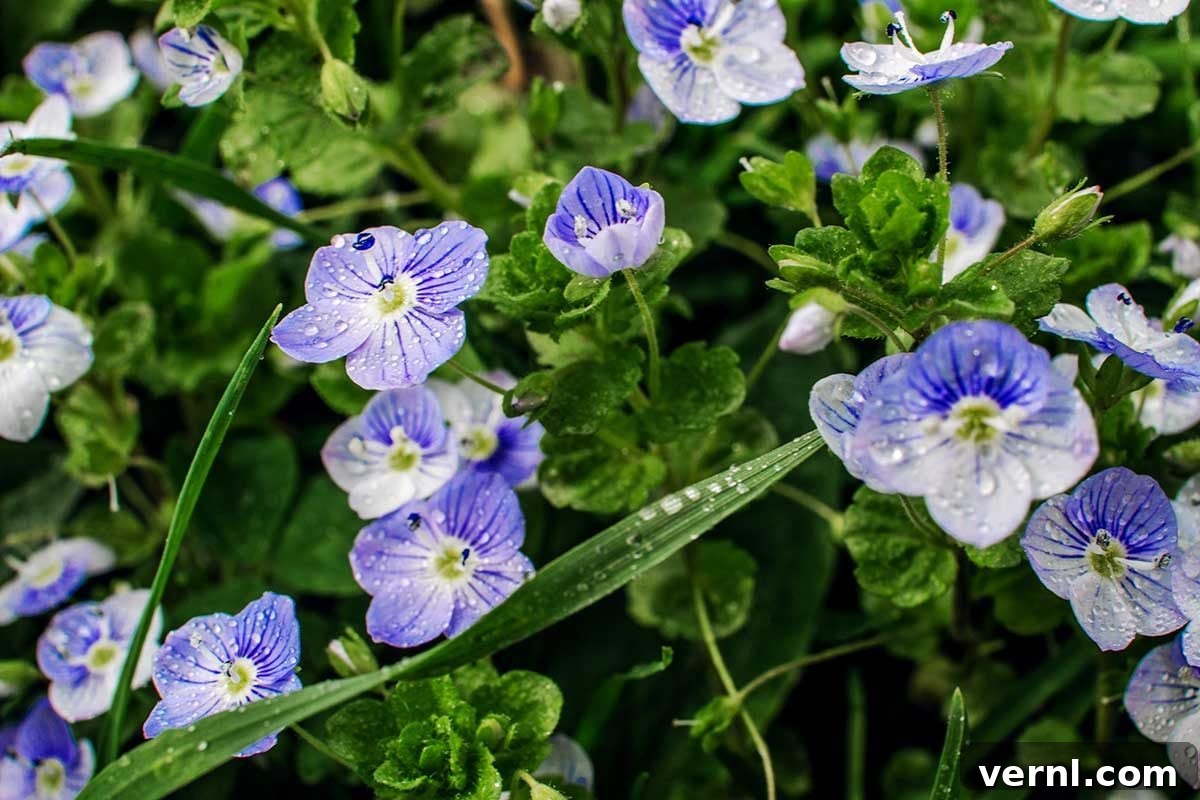
Speedwell: Understanding, Controlling, and Preventing This Common Lawn Weed
Speedwell, known for its vibrant blossoms, has a fascinating history. Travelers once tucked these flowers into their clothing, believing they would “speed one well” and protect them on their journeys. This charming tradition is how the plant earned its cheerful name.
With over 500 species found across the globe, speedwell (also known as creeping Veronica, bird’s eye, and gypsyweed) can be a welcome addition to a garden or a persistent nuisance, depending on where it appears. This common wildflower can be challenging to eliminate once it begins to spread across your lawn. This guide provides information on identifying speedwell, determining if it is a weed and how to manage it, and preventing it from taking over your yard.
What is Speedwell?
Speedwell is a low-growing, broadleaf plant that spreads rapidly and can quickly cover a lawn if left unchecked. However, it typically doesn’t completely crowd out turfgrass, so there is usually a balance.
Additionally, speedwell can be a valuable source of nectar for hummingbirds and pollinating insects. Many homeowners tolerate a limited amount of these wildflowers in their lawns because they provide habitat and food for beneficial insects.
While many varieties of speedwell exist, most share similar characteristics. They typically have four-petaled blue or white flowers and heart-shaped seed pods. However, these seed pods usually do not produce mature seeds, meaning the plant rarely reproduces through seeds. Instead, speedwell is a perennial that primarily reproduces through creeping runners that root at nodes where they come into contact with the soil.
Is Speedwell a Weed?
The classification of speedwell as a weed depends on its context. Some speedwell species are cultivated as ornamental plants, adding beauty to rock gardens and flower beds. However, other species are considered weeds due to their aggressive spreading habits and the difficulty in eradicating them from lawns.
Common weed species of speedwell include germander speedwell, creeping speedwell, corn speedwell, Persian speedwell, and ivy leaf speedwell. These varieties can quickly overtake a lawn, making them a nuisance for homeowners who prefer a tidy, weed-free appearance.
Is Speedwell Safe?
According to gardening expert Bryan McKenzie of The Bumper Crop Times, speedwell is generally safe for humans and pets to consume, though excessive consumption may cause vomiting. However, it’s essential to exercise caution and moderation.
McKenzie notes, “In herbal medicine, speedwell is used as a tea component that can reduce asthma or allergy symptoms. Though it’s an edible plant, I wouldn’t recommend consuming it for medical purposes without a doctor’s recommendation.” While speedwell may offer some health benefits, it’s crucial to consult a healthcare professional before using it for medicinal purposes.
How to Get Rid of Speedwell
Removing speedwell from your lawn requires a strategic approach. Due to the fine hairs on the leaves of many speedwell weed species, herbicides can be ineffective. Hand-pulling is often the most effective method for eradicating this wildflower.
-
Hand Pulling: Begin by raking the area surrounding each speedwell plant. This step helps loosen the runners and roots, making it easier to remove them completely. Use a garden trowel or weeding hoe to dig out the entire plant, including at least six inches of soil around the base, to ensure you remove all root fragments and broken stems. Dispose of the plant and debris in a trash bag to prevent root or stem pieces from re-establishing themselves in the soil.
-
Chemical Herbicides: Chemical herbicides should be considered a last resort due to their potential harm to children, pets, and wildlife. If necessary, spot-treat individual plants with a post-emergent broadleaf herbicide during the late spring or early summer, when the plant is actively growing. For optimal results, apply the herbicide in cool, moist, and still conditions. Avoid application if rain is expected for at least three days after treatment. Always follow the manufacturer’s instructions and safety precautions when using herbicides.
How to Prevent Speedwell from Coming Back
After the labor-intensive process of removing speedwell, it’s crucial to implement preventive measures to keep it from returning. By following these steps, you can help maintain a healthy, weed-free lawn.
-
Lawn Care Best Practices: A healthy lawn is the best defense against weed infestations. Ensure your lawn thrives by fertilizing appropriately for your turfgrass type and region, aerating the soil in the autumn, and mowing regularly. Speedwell thrives in moist, shady areas, so promote adequate drainage and ensure your lawn receives ample sunlight to discourage its growth.
-
Flower and Seed Pod Removal: Before speedwell flowers bloom and release their seeds, carefully remove the flower heads. Removing the flower heads will significantly reduce the chance of the weed returning the following season. This will help prevent the plant from spreading via seed.
-
Chemical Herbicides: For severe infestations, consider using a pre-emergent broadleaf herbicide in the spring. Remember to exercise caution when using herbicides, as they can harm pets, children, pollinators, and other wildlife. Applying herbicides to large areas can also contaminate nearby groundwater. Always follow label instructions and prioritize safety when using any chemical treatment.
By understanding speedwell’s characteristics, employing effective removal techniques, and implementing preventative measures, you can successfully manage this common lawn weed and maintain a beautiful, healthy yard.