
Masking tape, cellophane packing tape, duct tape, electrical tape – these essential tools are ubiquitous in our homes, workshops, and offices. We rely on them for an incredibly diverse range of tasks, from precise painting projects and secure packaging to quick repairs and intricate crafting. Yet, despite their undeniable utility, they share a common, maddening flaw: the elusive tape end. After you meticulously tear off a piece, the sticky edge inevitably seals itself back onto the roll, often becoming virtually invisible. The next time you reach for the roll, you’re faced with a frustrating search, picking and peeling at the edge, often damaging your nails or compromising the tape’s integrity. This seemingly minor annoyance can quickly escalate into a significant time-waster, particularly when you’re in the middle of a time-sensitive project.
The quest for a simple, effective solution to this universal tape problem has led many to concoct various strategies, ranging from marking the end with a small fold to sticking foreign objects like paper clips or toothpicks onto the roll. While some of these methods offer temporary relief, they often require extra tools or time, detracting from the very convenience tape is meant to provide. However, a recent viral sensation on TikTok, posted by the ingenious creator @mancrafting, promises a game-changing hack that stands out for its sheer simplicity and effectiveness, requiring absolutely no external tools like knives, scissors, paper clips, or toothpicks. It’s a method so straightforward, it’s hard to believe it wasn’t common knowledge sooner.
This article dives deep into this brilliant TikTok solution, explaining precisely how it works, its significant advantages, and its potential limitations. We’ll explore its effectiveness across different types of tape, offering insights and alternative strategies for those tapes where the hack might not be the perfect fit. Get ready to banish tape-end frustration from your life and streamline your projects with this truly clever trick.
The End of Frustration: How the Viral Tape Hack Works
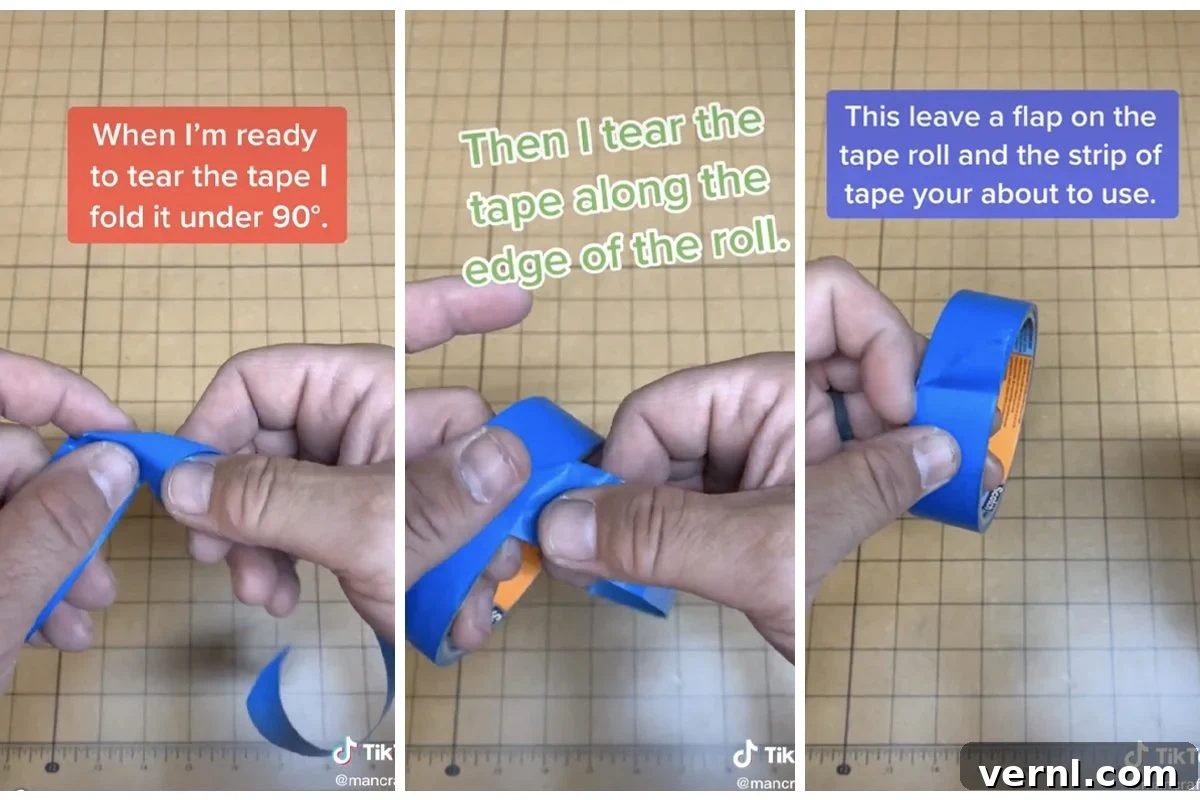
The core of @mancrafting’s ingenious tape hack lies in a simple, pre-emptive fold that transforms the act of tearing tape from a potential source of future frustration into an act of proactive organization. This method is particularly effective with masking tape, a staple in painting, crafting, and general DIY projects, where clean tears and easy access are paramount. Let’s break down the steps to mastering this time-saving technique:
- The Pre-Tear Fold: Before you even think about tearing off the desired piece of tape, take a moment to prepare the end that remains on the roll. With the roll in one hand, grasp the very end of the tape that’s still attached.
- The 90-Degree Angle: Carefully fold this end of the tape back onto itself, creating a neat 90-degree angle. The goal here is to create a small, non-sticky tab.
- Press and Seal: Once you’ve made the fold, gently press the sticky sides of the tape together at the fold line. This creates a small, non-adhesive flap that will serve as your beacon for finding the tape end next time.
- The Clean Tear: With the fold secured, proceed to tear off your piece of tape as you normally would. The original video beautifully demonstrates how to use the edge of the tape roll itself to achieve a remarkably clean and straight tear, which is a significant bonus for precision work like painting.
What makes this hack so brilliant is the dual benefit it provides. Firstly, by folding and pressing, you create a small, triangular tab on the roll. This tab effectively prevents the tape from sticking flush against the roll’s body, making the end instantly visible and effortlessly accessible for your next use. No more fumbling, no more picking, no more wasted minutes. Secondly, the very same action leaves a corresponding non-sticky tab on the end of the piece of tape you’ve just torn off. This second tab is incredibly useful when you’re applying tape to a surface and later need to remove it quickly and cleanly, such as after painting or when temporarily securing items. It provides a convenient grip point, minimizing the risk of tearing the tape or damaging the surface underneath during removal.
From countless hours spent on painting projects, I can attest to the value of a clean tear. Using the edge of the roll for precision tearing, as demonstrated in the original hack, allows for much easier application, especially when trying to get tape perfectly into corners for the best possible coverage. While I sometimes achieve a clean tear by pressing the tape down with my thumb, the remaining tape almost invariably seals itself to the roll, making subsequent retrieval a frustrating and time-consuming chore. This inefficiency becomes particularly noticeable and costly during large-scale masking projects, where these repeated small delays can significantly impact productivity. The TikTok hack elegantly resolves these issues, streamlining the entire taping process and turning a common nuisance into a seamless, efficient workflow.
Unlocking Efficiency: Benefits of This Simple Tape Solution
The appeal of the TikTok tape hack extends far beyond mere convenience; it offers tangible benefits that enhance productivity, reduce frustration, and even contribute to more professional-looking results in various applications. Let’s delve deeper into the advantages this simple folding technique brings to the table:
- Eliminates the “Lost End” Frustration: This is arguably the primary benefit. The carefully crafted non-sticky tab instantly solves the age-old problem of finding the tape end. No more scraping with fingernails, no more futile peeling attempts, and certainly no more damaged tape rolls due to aggressive searching. The tab is always visible and easily graspable, making every subsequent tape retrieval effortless. This might seem like a small detail, but over the course of a project, the cumulative time and mental energy saved are substantial.
- Significant Time Savings: Imagine a painting project requiring dozens of tape applications and removals. If each instance of finding the tape end costs you even just 5-10 seconds, that quickly adds up to minutes, then potentially hours, especially on larger tasks. This hack effectively shaves off those wasted seconds from every single interaction with the tape roll, allowing you to maintain momentum and focus on the task at hand rather than wrestling with your supplies. For professionals, this translates directly to increased efficiency and better project timelines.
- Promotes Clean and Precise Tears: The method often involves tearing the tape against the edge of the roll itself. This provides a surprisingly clean, straight, and consistent tear compared to haphazard hand-tearing. For masking tape, this precision is invaluable. A clean edge means sharper paint lines, better adhesion, and a more professional finish, minimizing the need for touch-ups later. It elevates the quality of your work by ensuring the tape itself is applied flawlessly.
- Facilitates Easy Tape Removal: The ingenious design leaves a non-sticky tab on the end of the piece you’ve just torn off and applied. This tab serves as a convenient handle when it’s time to remove the tape from a surface. Whether you’re peeling masking tape after painting or removing temporary hold tape, this tab allows for quick, clean removal without tearing the tape into tiny pieces or leaving sticky residue. It protects your freshly painted surfaces or delicate materials from accidental damage during removal, offering peace of mind and preserving the quality of your work.
- Reduces Tape Waste: When you struggle to find the tape end, you often end up peeling off small, unusable scraps of tape or damaging the roll’s edge in the process. This leads to unnecessary waste. By making the end instantly accessible, this hack ensures you only take the amount of tape you need, every time, reducing overall consumption and making your tape rolls last longer.
While the poster highlights the tab on the detached piece as a key feature, it’s worth noting a minor potential drawback: the tabs can sometimes get in the way when working in very tight corners or when trying to achieve a perfectly flush application. However, this isn’t a deal-breaker. A simple workaround is to just tear off the small tab from the detached piece before laying the tape in such intricate areas. This minor adjustment ensures you still benefit from the easy-to-find end on the roll while maintaining maximum precision where needed. The overall advantages far outweigh this minimal consideration, solidifying this hack as a must-try for anyone who frequently uses masking tape.
Beyond Masking Tape: Does the Hack Work for Other Types of Tape?
Inspired by the success of the TikTok hack with masking tape, a natural question arises: can this brilliant technique be universally applied to other types of adhesive tapes? To answer this, I put the method to the test with some of the most common tapes found in households and workshops. My findings reveal that while the concept is clever, the physical properties of different tapes significantly impact its effectiveness.
Cellophane Packing Tape: A Sticky Wicket
- The Hope: I was particularly eager for this hack to work with clear, thin cellophane packing tape. The end of this tape is notoriously difficult to locate on the roll, often becoming practically invisible, making it nearly impossible to find with just your finger. It’s a prime candidate for frustration, especially when you’re trying to quickly seal boxes.
- The Reality: Unfortunately, my hopes were dashed. When I attempted to fold the cellophane tape at a 90-degree angle, it simply crumpled and resisted a clean fold. The material is too thin and lacks the necessary rigidity to maintain the fold. Consequently, when I tried to tear it against the edge of the roll, it either stretched awkwardly or tore unevenly, leaving messy, jagged edges.
- Conclusion: For cellophane packing tape, this hack is a definite “no go.” You truly need scissors, a dedicated tape dispenser with a serrated edge, or a sharp blade for a clean and efficient tear. The material’s inherent properties make it unsuitable for the folding and tearing mechanism required by this specific hack.
Electrical Tape: Too Stretchy for Its Own Good
- The Attempt: Electrical tape, known for its flexibility and insulative properties, presented another set of challenges. I tried to apply the folding technique.
- The Outcome: While I could create a fold, the tape proved to be far too stretchy to tear cleanly against the edge of the roll. Instead of a crisp tear, it simply stretched and distorted, creating an uneven and weak edge. The fold did leave a small tab on the roll, but the effort required to make the fold and then deal with the poor tear quality made it impractical.
- Conclusion: Due to its high elasticity, electrical tape is not a good candidate for this specific hack. There are much easier and more effective ways to manage electrical tape ends, such as simply pulling it taut and tearing it with a sharp motion, or using a quick fold-back method after each use.
Duct Tape: The Self-Adhesion Conundrum
- The Test: Duct tape, a household hero for its strength and versatility, was next. I found that I could indeed fold and tear duct tape cleanly using the hack’s method. The material is robust enough to hold a fold and tear with a relatively straight edge.
- The Problem: However, I encountered a different, fundamental problem: when you perform the initial 90-degree fold, the sticky side of the tape faces upward, ready to meet the sticky side of the roll. Because duct tape is significantly stickier and generally more flexible than masking tape, it tended to aggressively stick to itself during the folding process. This self-adhesion made the process cumbersome and negated the “easy to find” benefit. The tab created was often difficult to unfold from the rest of the sticky tape.
- Conclusion: While duct tape can technically be folded and torn, the hack didn’t make the job of tearing or finding the end any easier. In fact, it often introduced more stickiness issues. Again, simpler methods, such as a quick fold-back, prove to be far more efficient for duct tape. The aggressive adhesive and flexibility work against the hack’s core principle of creating a non-sticky, easily separable tab.
Alternative Solutions for Different Tape Types
Given that the TikTok hack truly shines brightest with masking tape, it’s important to have a repertoire of alternative strategies for efficiently managing the ends of other tape varieties. No single hack is a one-size-fits-all solution, and understanding the properties of each tape type allows for more effective handling. Here are some tried-and-true methods:
For All Tapes (Especially When a Hack Fails): The Simple Fold-Back
This is perhaps the oldest and most universally applicable method. After you’ve torn off a piece of tape, simply fold a small portion of the remaining end back onto itself. This creates a tiny, non-sticky tab that sticks out from the roll, making it incredibly easy to spot and grasp the next time you need it. It works with nearly every type of tape, from delicate craft tape to heavy-duty duct tape, and requires zero tools.
For Precision and Visibility: The Toothpick or Paper Clip Method
A classic solution for making tape ends visible involves using a small, reusable marker. After tearing off a piece, stick a toothpick, a paper clip, or even a pushpin onto the very end of the tape that remains on the roll. The object protrudes, making the end instantly identifiable. When you need tape again, simply pull off the piece, remove the marker, and re-attach it to the new end. This method is particularly effective for clear tapes like cellophane or Scotch tape where the end can be virtually invisible. The added benefit is that these markers can be reused indefinitely.
For High-Volume Packing: Dedicated Tape Dispensers
For those who frequently use packing tape, investing in a good quality tape dispenser is a game-changer. These ergonomic tools are designed to hold a large roll of tape, provide a comfortable grip, and feature a sharp, serrated edge for effortless, clean cuts every time. They not only ensure easy access to the tape end but also significantly speed up the packing process, making them indispensable for moving, shipping, or e-commerce businesses.
For Clean Cuts and Tough Tapes: Scissors or Utility Knives
Sometimes, the simplest tools are the most effective. For tapes that resist clean tearing, like some heavy-duty duct tapes or very thin vinyl tapes, a pair of sharp scissors or a utility knife is the most reliable option. While it requires an extra tool, it guarantees a perfectly clean and straight edge, which can be crucial for aesthetics or specific applications. Always exercise caution when using sharp blades.
For Specialized Tapes: Follow Manufacturer Recommendations
Some highly specialized tapes, such as certain electrical tapes or heavy-duty construction tapes, may have unique properties that necessitate specific handling instructions. Always refer to the manufacturer’s recommendations for best practices in tearing, applying, and storing such tapes to ensure optimal performance and longevity.
My conclusion, after extensive testing, remains firm: the viral TikTok hack truly excels and is most effective when used with masking tape. Its unique mechanism of creating both a tab on the roll and a tab on the detached piece is perfectly suited to the properties of painter’s tape, enhancing both application and removal. For other types of tape, while the frustration of a lost end persists, simpler, more universally applicable methods like a quick fold-back or the strategic use of a toothpick or tape dispenser often prove to be more practical and efficient. Ultimately, building a versatile toolkit of tape-management strategies will save you time and aggravation across all your projects.