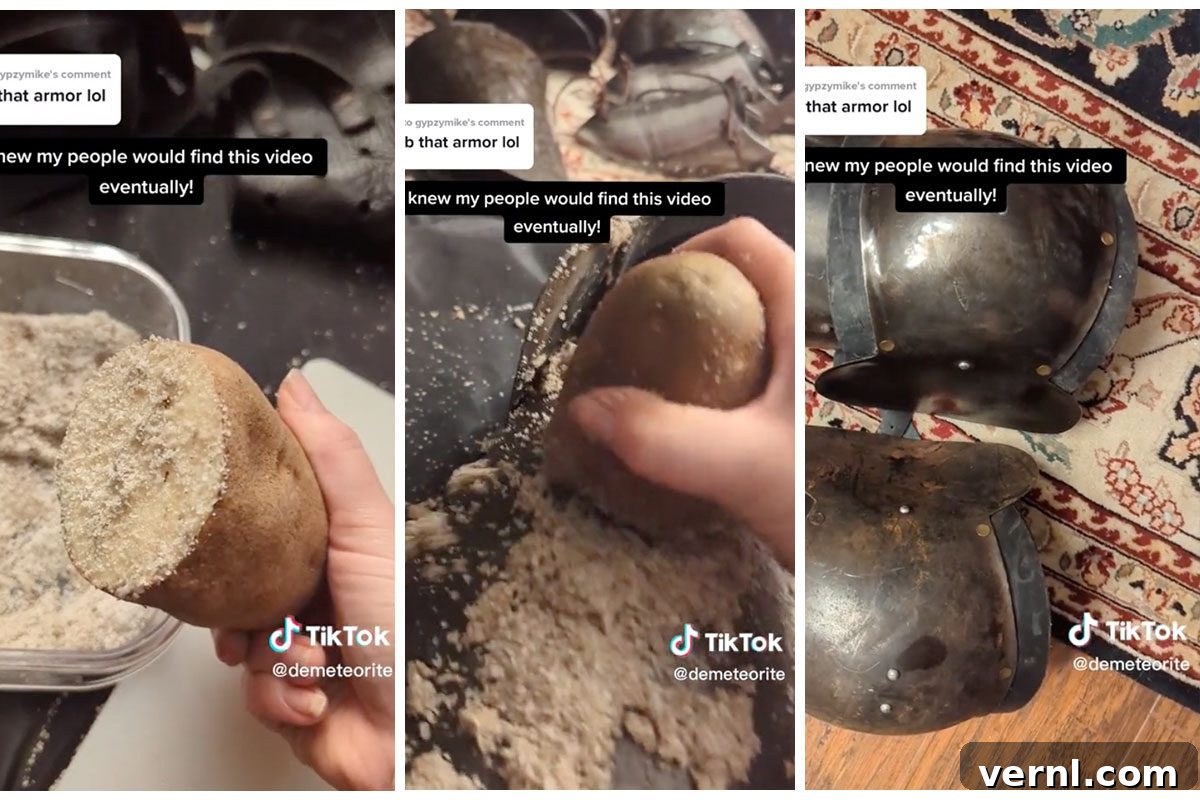
Few experiences are as universally frustrating as discovering rust on your cherished cast iron skillet, a trusty set of steel tools, or even a once-gleaming bicycle chain. While some metals, like high-grade stainless steel, boast impressive rust resistance, even they can succumb to corrosion if neglected or exposed to harsh conditions. For other materials, particularly those rich in iron, rust is an inevitable adversary without proper care and maintenance. But before you reach for expensive commercial rust remover products, consider an unexpected hero hiding in your kitchen pantry: the humble potato.
Unlocking Nature’s Rust Remover: The Potato Method
The idea of using a potato to banish rust might sound like an old wives’ tale, but there’s solid science behind this surprisingly effective, natural method. Potatoes are rich in a naturally occurring organic compound known as oxalic acid. As highlighted by Encyclopedia Britannica, oxalic acid is widely recognized for its ability to dissolve rust and ink stains. It works by transforming insoluble iron compounds—the very essence of rust—into a soluble complex ion, which can then be easily wiped away. This chemical reaction essentially breaks down the rust at a molecular level, making it detachable from the metal surface.
When combined with an abrasive agent like salt, the potato’s oxalic acid becomes an even more formidable rust-fighting duo. The salt acts as a gentle yet effective scrubber, helping to physically lift the loosened rust particles, while the acid continues its chemical work. This synergistic action allows you to restore many of your rusty items, from cast iron cookware to garden tools, to their former, unblemished glory with just a little effort and some simple scrubbing.
While standard potatoes contain a moderate amount of oxalic acid, research, including lists of oxalic acid foods from institutions like the University of Pittsburgh Medical Center, suggests that sweet potatoes contain an even higher concentration. This makes the vibrant orange root vegetable a potentially more potent rust remover if you happen to have one on hand, offering an enhanced cleaning power compared to its paler cousin.
Step-by-Step Guide: How to Remove Rust with a Potato and Salt
Ready to put this natural hack to the test? Here’s a detailed guide to effectively remove rust from your metal items using a potato and salt:
- Prepare Your Workspace: Gather your rusty item, a potato (or sweet potato), and a generous amount of table salt (coarse salt works well for extra abrasive power). It’s advisable to work over a sink or a surface that can handle salt and rust residue.
- Halve the Potato: Carefully cut the potato in half. The fresh, exposed surface is where the oxalic acid will be most concentrated and readily available to react with the rust.
- Coat with Salt: Dip the cut side of one potato half directly into a pile of salt. Ensure it’s generously coated. The salt will adhere to the moist surface of the potato, creating an abrasive pad.
- Scrub the Rust: Take the salt-coated potato half and firmly rub it over the rusted areas of your item. Apply steady pressure and use a circular or back-and-forth motion. You’ll notice the salt and potato juices working to lift the rust.
- Refresh as Needed: As you scrub, the potato’s surface might become discolored with rust, and the salt might wear off. To maintain effectiveness, periodically cut off a thin slice from the end of the potato half to expose a fresh surface, and then re-dip it in salt. Repeat this process as many times as necessary until the rust begins to fade and ultimately disappears.
- Rinse and Dry Thoroughly: Once the rust is gone, rinse your item under running water to remove any lingering salt, potato residue, and detached rust particles. It is absolutely crucial to dry the item immediately and thoroughly with a clean cloth or towel. Leaving any moisture will invite rust to return.
- Apply Protective Layer (Optional but Recommended): For items like cast iron pans, follow up with proper seasoning using cooking oil. For tools, a light coating of machine oil or a specialized rust preventative spray can create a protective barrier against future corrosion.
This method is particularly effective for light to moderate rust on cast iron, steel tools, and other smaller metal objects. For severely rusted items, you might need to repeat the process or combine it with other methods.
Understanding Rust: The Science Behind Corrosion
Before diving into more removal methods, it’s helpful to understand what rust truly is and why it forms. Rust is the common term for iron oxides, specifically the reddish-brown coating that forms on iron and its alloys, such as steel, when they are exposed to oxygen and moisture. This process is known as oxidation, or more specifically, electrochemical corrosion.
At its core, rust forms when iron atoms lose electrons to oxygen atoms in the presence of water (or even high humidity). The chemical reaction is commonly summarized as: Iron + Oxygen + Water = Hydrated Iron Oxide (Rust). Several factors can accelerate this process:
- Moisture: Water is a crucial component. High humidity, rain, dew, or direct contact with water all contribute significantly.
- Oxygen: Exposure to air, which contains oxygen, is fundamental to the reaction.
- Salts: Salt (like sodium chloride) acts as an electrolyte, significantly speeding up the corrosive process. This is why items exposed to saltwater or road salt rust much faster.
- Acids: While acids like oxalic acid *remove* rust, other acids can weaken protective layers and initiate the rusting process.
- Temperature: Higher temperatures can often accelerate chemical reactions, including oxidation.
Understanding these elements underscores the importance of both effective rust removal and, more critically, proactive rust prevention strategies. By minimizing exposure to these culprits, you can significantly extend the life and appearance of your metal goods.
Other Effective Rust Removal Hacks to Know
While the potato and salt method is surprisingly effective, it’s always good to have a few other tricks up your sleeve. If you don’t have potatoes handy or are dealing with a different type of rust, these common household items can also come to your rescue:
1. The Overnight Vinegar Soak
White vinegar, with its mild acetic acid content, is a fantastic natural rust dissolver. It’s particularly well-suited for smaller metal items or tools that can be fully submerged.
- Method: Submerge your rusty metal tools or small items completely in a bowl of white vinegar. For optimal results, let them soak overnight (8-12 hours). For larger items that cannot be submerged, soak a cloth in vinegar and wrap it around the rusted area, or use a spray bottle to keep the area moist.
- Scrubbing: The next day, remove the items from the vinegar. You’ll find that much of the rust has softened and dissolved. Use steel wool, a wire brush, or even a crumpled aluminum foil ball to scrub away any remaining rust particles.
- Post-Treatment: Rinse the items thoroughly with water to remove any vinegar residue, then dry them immediately and completely. For metal tools, applying a light machine oil or a rust-preventative spray will create a protective barrier and prevent rust from reoccurring. For cast iron, ensure to re-season it properly after drying.
2. The Coca-Cola Cleanse
Surprisingly, a can of Coca-Cola isn’t just for quenching thirst; it can also quench rust! The secret lies in the phosphoric acid found in carbonated beverages. Phosphoric acid reacts with iron oxide, converting it into a water-soluble compound called iron phosphate, which can then be easily rinsed away.
- Method: Pour Coca-Cola over the rusted area. For small items, you can soak them in a bowl of Coke for a few hours or overnight. For larger surfaces, you can dampen a sponge or aluminum foil with Coca-Cola and rub it onto the rust.
- Scrubbing: After soaking or applying, use a scrub brush, steel wool, or even a piece of aluminum foil (which also reacts with the rust) to scrub the treated area. The rust should loosen and come off fairly easily.
- Post-Treatment: Rinse the item thoroughly with clean water and dry it immediately and completely to prevent new rust from forming. This method is particularly popular for cleaning cast iron skillets, but always remember to re-season cast iron after using any acidic cleaner.
3. Baking Soda Paste
Baking soda (sodium bicarbonate) offers a gentler, yet effective, abrasive and alkaline approach to rust removal. It’s excellent for lighter rust stains and on items where you want to avoid harsh acids.
- Method: Create a thick paste by mixing baking soda with a small amount of water. You want a consistency similar to toothpaste. For added power, a squeeze of lemon juice can be added to the mixture, introducing citric acid to the equation.
- Application: Apply the paste liberally to the rusted areas, ensuring complete coverage. Let the paste sit on the rust for at least an hour, or even several hours for more stubborn spots.
- Scrubbing: Once the paste has had time to work, use a scrubbing brush, an old toothbrush, or steel wool to vigorously scrub the rust spots. The abrasive nature of the baking soda combined with the scrubbing action will lift the rust.
- Post-Treatment: Rinse the item thoroughly with water, making sure all baking soda residue is gone. Dry immediately and completely to ward off future rust.
4. Lemon Juice and Salt
Similar to the potato method, the combination of lemon juice (citric acid) and salt provides a powerful natural rust remover. Citric acid is a common organic acid found in citrus fruits.
- Method: Sprinkle a generous layer of salt over the rusted area. Then, squeeze fresh lemon juice over the salted area, enough to thoroughly dampen the salt. For tougher rust, you can let this mixture sit for a few hours.
- Scrubbing: Use the lemon rind itself, steel wool, or a stiff brush to scrub the rust away. The salt acts as the abrasive, while the citric acid in the lemon juice works to dissolve the rust.
- Post-Treatment: Rinse well with water and dry immediately and completely to prevent recurrence.
Beyond Removal: Preventing Rust Recurrence
Removing rust is only half the battle; preventing its return is equally, if not more, important. Since rust is primarily formed through oxidation—the combination of water and oxygen with iron—keeping your items dry and protected is key.
- Thorough Drying: This is the golden rule after any rust removal or exposure to moisture. Always dry metal items completely and immediately. For intricate tools, consider using a hairdryer or air compressor to ensure all crevices are dry.
- Oiling and Seasoning: For cast iron cookware, proper seasoning with cooking oil creates a non-stick surface and a vital protective barrier against moisture. For steel tools, applying a thin coat of machine oil, mineral oil, or a specialized tool protectant (like WD-40 or Camellia oil) after each use can significantly reduce the risk of rust.
- Protective Coatings: For items exposed to the elements, such as outdoor furniture, railings, or car parts, consider using rust-inhibiting primers and paints, clear coats, or waxes. These coatings provide a physical barrier between the metal and the environment.
- Proper Storage: Store metal tools and equipment in a dry environment. Toolboxes with moisture-absorbing desiccants (like silica gel packets) can be very effective in humid climates. Avoid storing items directly on concrete floors, as concrete can wick moisture.
- Humidity Control: In workshops, garages, or basements where metal items are stored, a dehumidifier can help maintain low humidity levels, thereby reducing the likelihood of rust formation.
- Regular Maintenance: Periodically inspect your metal items for any signs of rust. Catching rust early makes removal much easier and prevents it from spreading. Wipe down tools after use, especially if they’ve come into contact with water or corrosive substances.
Rust might seem like an inevitable nuisance, but with the right knowledge and a few common household items, it’s a battle you can confidently win. Whether you opt for the surprising power of a potato, the acidic punch of vinegar or cola, or the gentle abrasion of baking soda, effective solutions are often closer than you think. And by implementing consistent preventative measures, you can ensure your metal items remain rust-free and ready for use for years to come.
[cf]skyword_tracking_tag[/cf]