
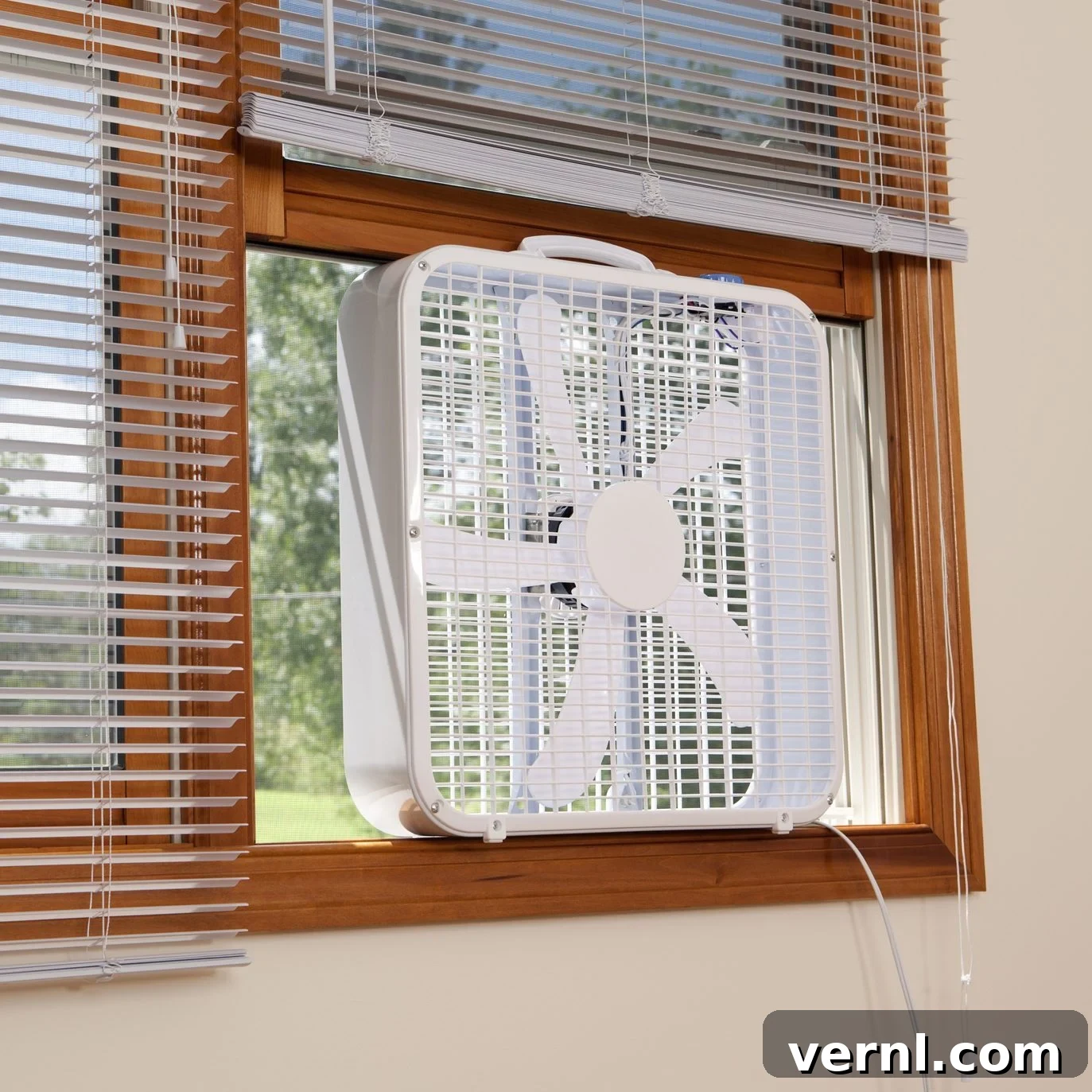
For generations, families have relied on box fans to conquer the summer heat. In an era when air conditioning was not universally accessible, these unassuming devices served as the primary cooling solution, diligently moved from room to room throughout the warmer months. Their straightforward design, reliable performance, and budget-friendly price point have cemented their status as a household staple. Whether you’re seeking a serene box fan for your bedroom sanctuary or aiming to master the art of whole-space cooling, this comprehensive guide will equip you with the knowledge to harness the full potential of these indispensable cooling companions.
Understanding the Basics: What is a Box Fan and How Does it Operate?
As their name aptly suggests, box fans feature fan blades encased within a shallow, square-shaped housing. Both the front and back of this enclosure are fitted with grilles, meticulously designed to facilitate unobstructed airflow. While the term “box fan” typically refers to the iconic square models, some manufacturers may produce oval or round variations, often categorized more broadly as “floor fans.” A key distinction from alternatives like pedestal fans is that most traditional box fans do not offer oscillation or side-to-side rotation. While they are highly adaptable and can be positioned in windows, it’s worth noting they aren’t exclusively engineered for window-specific mounting, giving them a versatility that many other fan types lack.
Key Features to Consider When Selecting Your Ideal Box Fan
Choosing the perfect box fan involves more than just picking the first one you see. Your specific cooling needs and environmental factors should guide your decision. Here are the crucial features to evaluate when searching for the best box fan for your space:
- Size and Dimensions: Box fans typically range from 10 to 20 inches in width and height. Generally, larger fans are capable of circulating a greater volume of air, making them more effective for cooling expansive rooms. However, their larger footprint might pose a challenge in confined areas or tight spaces. The most common size is a 20-inch model, which usually measures approximately 20 inches tall by 20 inches wide and three to four inches deep. It’s important to remember that the actual outer dimensions, including the frame, can be slightly larger than the blade size, so always double-check specifications if you have precise space constraints.
- Airflow Capacity (CFM): Airflow, quantified in cubic feet per minute (CFM), is a direct indicator of a fan’s cooling power. A higher CFM rating signifies that the fan moves more air, leading to more effective cooling. However, an excessively high airflow might inadvertently disrupt lightweight items such as papers or curtains. Manufacturers usually provide the maximum CFM a fan can achieve, which commonly falls between 1,400 and 2,400 CFM. For general room circulation, a fan in this range is usually sufficient, but for targeted cooling or exhaust, higher CFM might be desirable.
- Variable Speed Settings: Most box fans come equipped with multiple speed options, typically three, allowing you to tailor the airflow and corresponding noise level to your preference. Lower speeds are an excellent choice for creating a gentle, quiet breeze, making them ideal for bedrooms, nurseries, or office environments where minimal disturbance is preferred. Higher settings are perfect for quickly circulating air in larger spaces or during peak heat.
- Remote Control Functionality: The convenience of a remote control cannot be overstated. Fans featuring remotes empower you to effortlessly start, stop, or adjust the speed from a comfortable distance. This functionality is especially beneficial for fans placed in less accessible locations, or for quickly quieting a fan during important video calls or conversations. It adds a layer of modern convenience to an otherwise simple appliance.
- Noise Level (Decibels): All fans produce some level of noise, originating from both the movement of air and the mechanical operation of the motor and blades. Noise levels are measured in decibels (dB). A fan rated at 65 dB or less is comparable to the volume of a typical conversation, making it generally acceptable for most settings. In contrast, models approaching 30 dB are as quiet as a whisper, perfect for light sleepers or environments demanding utmost tranquility. If noise sensitivity is a concern, prioritize models explicitly marketed as “quiet box fans” or diligently check their specified dB ratings before purchase.
- Energy Efficiency: While box fans are inherently far more energy-efficient than traditional air conditioners, prioritizing models with an Energy Star rating can lead to even greater electricity savings. Energy Star certified fans are designed to consume less power while delivering effective airflow. According to industry experts, when integrated with natural ventilation techniques—such as strategically opening windows—modern fans can substantially reduce overall energy consumption, contributing to both lower utility bills and a smaller carbon footprint.
- Durability and Build Quality: The longevity of your box fan largely depends on its construction materials and overall build quality. Fans with metal frames often provide superior durability and stability compared to their all-plastic counterparts. However, advancements in material science mean that many high-quality plastic fans are also built to last, offering a lighter yet robust alternative. Inspect the housing, grilles, and base for sturdy construction to ensure years of reliable service.
The Undeniable Benefits of Embracing a Box Fan
Box fans stand out as an incredibly advantageous cooling solution for numerous reasons. Their primary appeal lies in their exceptional energy efficiency; they consume significantly less electricity than air conditioners, translating into considerable savings on utility bills throughout the cooling season. Furthermore, their affordability, typically ranging from $10 to $50, makes them accessible to virtually all homeowners and renters, providing an effective cooling option without breaking the bank.
Beyond cost, the unparalleled portability of box fans is a major draw. Unlike permanently installed fixtures such as ceiling fans, these lightweight and compact units can be effortlessly carried to any part of your home – be it the living room, bedroom, home office, garage, or even outdoor spaces like a porch or patio. This versatility ensures that you can direct cooling power exactly where and when it’s needed most. Moreover, their portable nature means you can easily take your cooling comfort with you when you move, making them a practical, long-term investment in personal comfort.
Mastering Effective Box Fan Usage for Optimal Cooling
While operating a box fan seems intuitive, a few strategic considerations can dramatically enhance its effectiveness. Proper placement and mindful usage are key to maximizing airflow and ensuring safety.
Strategic Box Fan Placement for Maximum Airflow
Effective cooling hinges on strategic fan placement, prioritizing both optimal airflow and user safety. Even the most powerful box fan will underperform if not positioned correctly. Always place your fan on a stable, level surface to prevent accidental tipping. Furthermore, ensure that the power cord is routed safely to avoid becoming a tripping hazard for family members or pets.
The most efficient setup for a box fan is to create a clear path for air circulation across the room, ideally from one side to the other. To optimize airflow, avoid positioning the front or back of the fan too close to a wall. A good rule of thumb is to maintain a gap equivalent to at least one fan blade length, or roughly half the fan’s total width. For instance, a 20-inch fan should be placed at least 10 inches away from any wall or obstruction. The gold standard for whole-room cooling involves a cross-ventilation technique: place one box fan facing outwards in an open window on one side of the room or house to actively exhaust hot, stale air. Simultaneously, position another box fan facing inwards in an open window or doorway on the opposite side to draw in cooler, fresh air from outside. This creates a powerful and energy-efficient airflow current.
Direct Personal Cooling
For immediate relief from the heat, position the box fan to blow air directly over your body. The consistent airflow accelerates the evaporation of perspiration from your skin, a natural cooling process that provides instant comfort. This method is particularly effective for individual cooling in a specific area, such as while working at a desk or relaxing on a couch.
Essential Cord Safety Measures
While a box fan can function with a high-quality extension cord, it is always preferable to use a fan equipped with a sufficiently long power cord that can reach a convenient wall outlet without strain. If an extension cord is necessary, ensure it is rated for the fan’s power requirements and is in excellent condition. Critically, never place any cord in areas prone to high moisture, under rugs, or across walkways where it could pose a tripping hazard or become damaged. Regularly inspect cords for fraying or damage.
Ensuring Child and Pet Safety
Always exercise caution when placing a box fan in areas accessible to children or playful pets. Never position a fan where a curious toddler or an energetic animal might easily tip it over. Modern box fan bearings are typically designed not to generate excessive heat if the fan is knocked over, minimizing the risk of a fire hazard. The protective grilles are effective at preventing small fingers from reaching the spinning blades; however, they may not deter a determined child from inserting smaller objects like pencils or toys. Some fan models feature rounded corners and fully enclosed plastic housings, which can make them slightly less hazardous for young children who might accidentally bump into them. Nevertheless, if your child or pet will be unattended, even for a brief moment, it is paramount to place the box fan completely out of their reach.
Can a Box Fan Run Continuously (24/7)?
Yes, most modern box fans are designed for continuous operation. Like any mechanical device with moving parts, the internal bearings and motor will eventually experience wear and tear over time. However, a well-built box fan should reliably perform for many years, regardless of how frequently or extensively it is used. Running it overnight or for extended periods during a heatwave is generally safe and within its design parameters.
Maintaining Your Box Fan for Enduring Performance
To ensure your box fan provides consistent and efficient cooling for years to come, a simple but crucial maintenance task is essential: regular cleaning of the grilles and fan blades. The frequency of this cleaning depends on several factors, including how often the fan is used, its location within your home, and the ambient levels of dust, pet hair, and other airborne debris.
To thoroughly clean your box fan, follow these straightforward steps:
- Power Down and Unplug: Before beginning any cleaning, always ensure the fan is completely turned off and unplugged from its power source. If it’s a battery-operated model, remove the batteries to prevent accidental activation.
- Remove the Protective Grille: Most box fans feature a removable grille for easy access to the blades. Some grilles detach from the rear, while others unclip from the front. Some might simply snap off, but many are secured with a series of screws, which you’ll need a screwdriver to remove.
- Clean Blades, Motor, and Grille: With the grille removed, use a soft brush or the brush attachment of your vacuum cleaner to gently remove any accumulated dust, lint, and debris from the fan blades, around the motor housing, and from the grille itself. Pay close attention to nooks and crannies where dust tends to collect.
- Wipe Down Surfaces: After vacuuming or brushing, take a damp (not wet) cloth and carefully wipe down the fan blades and any accessible interior surfaces to remove any remaining stubborn dust or grime. Avoid getting water into the motor components.
- Reattach and Reconnect: Once all components are clean and dry, carefully reattach the protective grille, ensuring it is securely fastened. Finally, plug the fan back into the power outlet.
For optimal longevity, it’s also wise to periodically monitor the fan’s motor performance. If you notice the fan running slower than usual, or if it starts emitting unusual noises (such as grinding or whining) even after a thorough cleaning, the motor bearings might be nearing the end of their lifespan or could require lubrication. Always consult your owner’s manual for specific lubrication instructions, if applicable, as not all fans are designed for user lubrication. In some cases, a significant decline in performance may indicate it’s time to consider a replacement unit.
Frequently Asked Questions About Box Fans
Are box fans superior to pedestal fans?
The “better” fan depends entirely on your intended application. Box fans generally excel at moving a large volume of air in a broader, more diffuse pattern at a lower velocity. This makes them outstanding for creating general room circulation, facilitating cross-ventilation when placed in a window, or moving air throughout a larger area. Pedestal fans, conversely, are often designed with oscillation, adjustable height, and a more focused, directional airflow, making them ideal for targeted personal cooling or directing air to a specific zone within a room. If you need wide-area air movement, a box fan is often preferable; for direct, adjustable cooling, a pedestal fan might be better suited.
How much energy does a box fan consume compared to an air conditioner?
Box fans are dramatically more energy-efficient than air conditioners. An average box fan typically uses between 50 to 100 watts of power. In stark contrast, a central air conditioning system can consume a massive 3000-5000 watts, while even window AC units require 500-1500 watts. This vast difference highlights the significant energy savings offered by fans. In fact, strategically pairing box fans with your air conditioning system can help you save energy by allowing you to set your AC thermostat a few degrees higher while still feeling comfortable, as the fan helps distribute the cooled air more effectively.
What’s the best way to utilize a box fan for maximum airflow?
To achieve maximum airflow and create an effective cooling system in a room, implement a cross-ventilation strategy. Position one box fan facing outwards in an open window on one side of the room. This fan will actively exhaust hot, stale air from the interior. Simultaneously, place another box fan facing inwards in a different open window or doorway on the opposite side of the room or house. This second fan will draw in cooler, fresh air from the outside. This dual-fan setup creates a powerful and continuous current of air, efficiently replacing warm indoor air with cooler outdoor air, significantly enhancing comfort and cooling efficiency.
Sources
- Amazon: “Pelonis Box Fan 20 Inch – Adjustable 3 Speeds For the Perfect Noise Level for Sleeping – 5 Blade Technology Provides Powerful Airflow to Beat the Heat – Sleek Design, Lightweight, Durable, Black”
- Energy Star: “Ventilation Fans”
- U.S. Department of Energy: “Fans for Cooling”
- REenergizeCO: “How To Get Air Moving In Your Home”
- University of California San Francisco: “DIY Box Fan Air Cleaner Safety Tips”