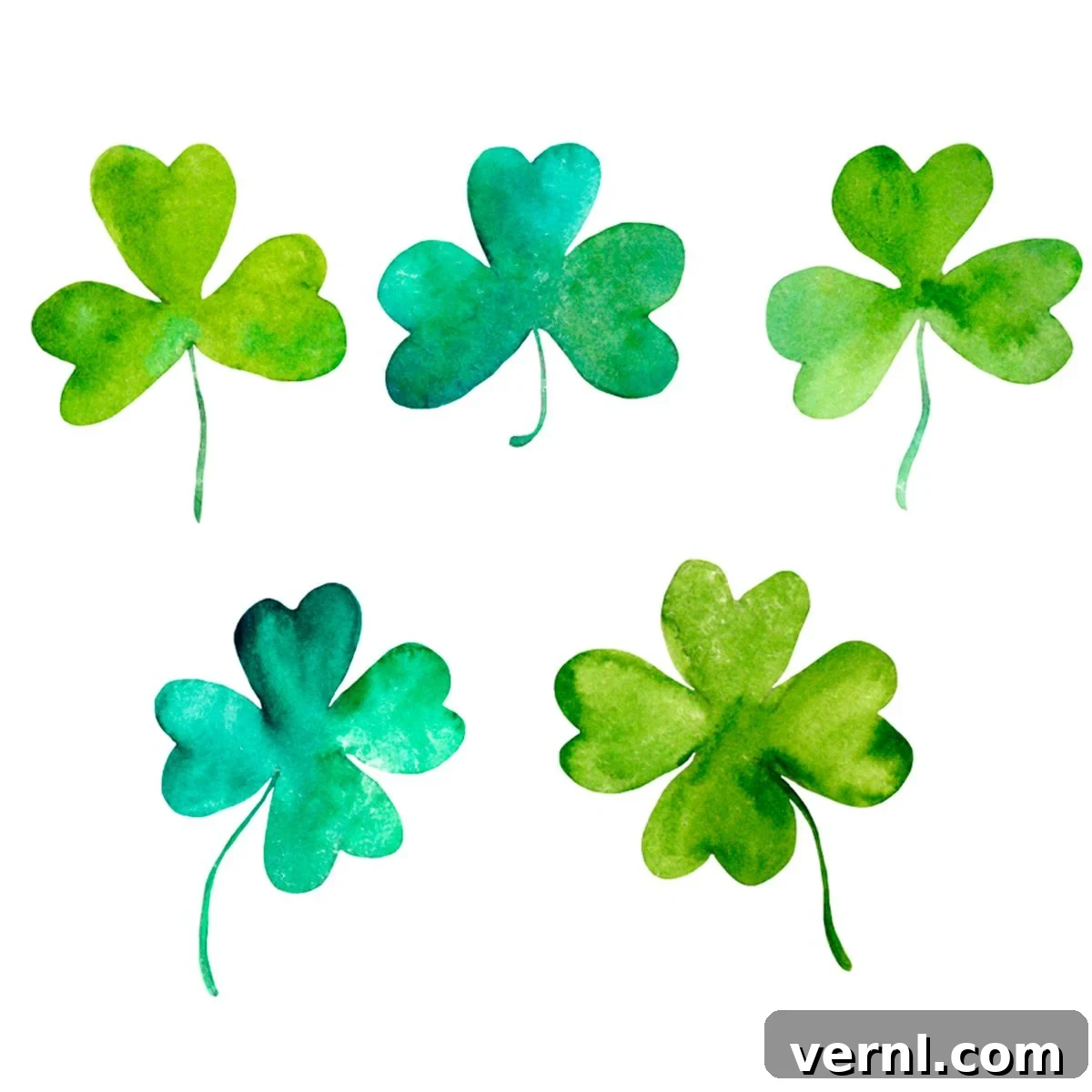
Shamrock vs. Four-Leaf Clover: Unraveling Ireland’s Iconic Symbols
As St. Patrick’s Day approaches, a sea of green washes over cities worldwide, adorned with festive attire and celebratory spirits. Amidst the vibrant parades and lively gatherings, a common botanical confusion often arises: the distinction between the shamrock and the four-leaf clover. While both are deeply intertwined with Irish imagery and popular culture, their origins, symbolism, and botanical realities are quite distinct. Often, revelers in the U.S. and beyond don the lucky four-leaf clover, mistaking it for Ireland’s true national emblem. This comprehensive guide aims to clarify the differences between these two iconic plants, allowing you to celebrate the holiday with a deeper, more accurate understanding of Irish tradition and lore.
Understanding the Shamrock: Ireland’s Enduring Emblem
The shamrock, or “seamróg” in Irish Gaelic, meaning “little clover,” holds a revered place in Irish culture and history. Despite its ubiquitous presence as a national symbol, its precise botanical identification has been a subject of ongoing debate among scientists for centuries. This botanical elusiveness adds a layer of mystery to its charm.
Botanical Debate and Identification
Botanists continue to dispute the exact species that constitutes the true shamrock. The most commonly accepted candidates include Trifolium dubium, often referred to as lesser clover, and Trifolium repens, commonly known as white clover. Interestingly, it is from the latter species, Trifolium repens, that the rare four-leaf varieties occasionally emerge. Some researchers have even suggested that the shamrock might belong to an entirely different genus, such as Oxalis, or wood sorrel, which visually resembles clover but possesses distinctively shaped leaves. This ongoing scientific discussion highlights the deep historical and cultural roots of the shamrock, making its exact botanical lineage less critical than its symbolic power.
Cultural and Spiritual Significance
What remains undisputed is the shamrock’s signature characteristic: its three leaves. This tripartite structure is fundamental to its profound meaning and cultural significance in Ireland. While a four-leaf clover is globally recognized as a harbinger of good fortune, the shamrock carries a much deeper resonance within Irish culture. It is not merely a lucky charm but a powerful symbol of spirituality, tradition, and national identity. Legend has it that Saint Patrick, Ireland’s patron saint, used the three leaves of the shamrock to illustrate the Christian doctrine of the Holy Trinity—Father, Son, and Holy Spirit—during his mission to convert the pagan Irish to Christianity in the 5th century. This narrative cemented the shamrock’s place as a sacred emblem, intertwining it with the very fabric of Irish faith and heritage long before it became a popular emblem for St. Patrick’s Day celebrations. Its historical context far surpasses that of mere luck, embodying centuries of Irish resilience and spiritual depth.
The Enigmatic Four-Leaf Clover: A Universal Symbol of Luck
In contrast to the shamrock’s spiritual and national significance, the four-leaf clover is primarily celebrated as a universal symbol of good luck and fortune. This rare variant, botanically known as an unusual mutation of Trifolium repens (white clover), captivates with its distinct extra leaflet.
The Science Behind Its Rarity (Genetic Mutation)
The presence of a fourth leaflet in a clover is not a standard occurrence but rather the result of a rare recessive genetic mutation. While belonging to the same family as the common three-leaf clover, this specific genetic anomaly makes the four-leaf clover a botanical curiosity. Its scarcity is precisely what fuels its mystique and association with good fortune, making it a highly sought-after find. The genetic makeup of these clovers is complex, contributing to the infrequency of this unique trait.
Global Distribution and Environmental Factors
Historically, lucky four-leaf clovers were thought to grow predominantly in Central Asia and Europe. However, they can now be found worldwide, particularly in temperate regions where white clover thrives. While genetics play the most crucial role in their formation, environmental factors can also influence their growth frequency. Conditions such as specific soil compositions, climate variations, and even plant stress have been observed to increase the likelihood of finding four-leaf clovers in certain areas. Despite these contributing factors, the genetic predisposition remains the primary driver of this enchanting mutation, underscoring its inherent rarity.
Ecological Importance Beyond Luck
Beyond its symbolic charm and rarity, the four-leaf clover, like its three-leaf counterpart, contributes significantly to the ecosystem. As members of the legume family, clovers are vital for soil health. They possess the remarkable ability to fix nitrogen in the soil, converting atmospheric nitrogen into a usable form for plants. This natural process enriches the soil, reducing the need for synthetic fertilizers and supporting healthier plant growth in surrounding areas. Furthermore, clover blossoms provide an essential food source for pollinators, including honey bees, bumblebees, and other beneficial insects. By supporting pollinator populations, clovers play a crucial role in maintaining biodiversity and ensuring the health and productivity of gardens, agricultural fields, and wild landscapes. This ecological function adds a layer of practical value to these symbolically rich plants.
A Tale of Two Clovers: Symbolism and Historical Roots
The intertwining histories of the shamrock and the four-leaf clover offer a fascinating glimpse into how different cultures ascribe meaning to nature. While both evoke images of lush green fields, their symbolic journeys diverged centuries ago.
St. Patrick and the Shamrock’s Sacred Message
The most enduring historical narrative surrounding the shamrock is its connection to Saint Patrick. During the 5th century, as he embarked on his mission to convert the pagan Celtic tribes of Ireland to Christianity, he faced the challenge of explaining complex theological concepts in a way that resonated with the local populace. Legend asserts that St. Patrick used the readily available, three-leaved shamrock as a simple yet powerful metaphor for the Holy Trinity: three distinct leaves unified on a single stem, representing God the Father, God the Son, and God the Holy Spirit. This ingenious teaching tool made the abstract concept tangible, cementing the shamrock’s association with Irish Christianity and, subsequently, Irish national identity. Its presence in art, literature, and folklore from that period onwards underscores its profound spiritual and cultural impact.
The Shamrock’s Deep-Seated Irish Heritage
Even before Saint Patrick’s era, the ancient Celtic Druids revered three-leaf clovers, likely for their medicinal properties and perhaps for their symbolic representation of natural cycles or spiritual triads in pre-Christian Celtic belief systems. The shamrock, therefore, is not merely a post-Christian emblem but possesses roots that stretch back into Ireland’s ancient past, making it an intrinsic part of Celtic heritage. Over centuries, it has evolved to represent Ireland itself—its spirit, its resilience, and its deep connection to faith and tradition. On St. Patrick’s Day, wearing a shamrock is not just a festive gesture; it is an act of acknowledging and honoring a rich lineage of Irish history, spirituality, and national pride. It serves as a reminder of Ireland’s enduring cultural legacy, cherished by those of Irish descent and admirers of Irish culture worldwide.
The Four-Leaf Clover: A Modern Icon of Fortune
In contrast to the shamrock’s specific cultural and religious ties, the four-leaf clover has garnered a more universal appeal as a general token of good luck. Its rarity is the primary reason for this association; finding something so uncommon is inherently considered fortunate. Each leaf of the four-leaf clover is often attributed a specific meaning: the first for faith, the second for hope, the third for love, and the fourth for luck. This charming attribution has only deepened its popular appeal across various cultures. While the four-leaf clover is a delightful symbol of serendipity any time of year, it does not carry the historical weight or specific cultural representation of Irish tradition and St. Patrick’s Day. For the Irish, and for those who wish to honor Irish heritage authentically, the celebration unequivocally revolves around the revered shamrock.
Unmistakable Differences: Visual and Biological Distinctions
While often confused, the visual and biological characteristics of the shamrock and the four-leaf clover offer clear distinctions that, once understood, make identification straightforward.
Leaflet Count: The Primary Visual Cue
The most immediate and obvious difference between the two lies in their leaflet count. Shamrocks, by definition and tradition, possess three leaflets. This tripartite structure is not merely a botanical feature but the very foundation of its symbolic significance in Irish culture. Conversely, a four-leaf clover, as its name suggests, is distinguished by having four leaflets. This extra leaflet is a rare occurrence, making the four-leaf variety stand out dramatically in a patch of ordinary three-leaf clovers. It is important to note that botanically speaking, these are “leaflets” that collectively form a compound leaf, rather than individual leaves.
The Botanical Identity: “Seamrag” and Beyond
The term “shamrock,” derived from the Gaelic “seamróg” meaning “little clover,” fittingly describes its botanical nature. Both shamrocks (typically Trifolium dubium or Trifolium repens) and four-leaf clovers (a mutation of Trifolium repens) belong to the broader white clover plant family. However, as noted earlier, the exact botanical identity of the historical shamrock is a subject of ongoing debate among botanists. This debate underscores the cultural rather than strictly scientific definition of the shamrock. Regardless of the precise species, the defining characteristic of three leaflets for the shamrock, and four for the lucky clover, remains the most reliable identifier.
The Elusive Search: Odds of Finding a Four-Leaf Clover
The rarity of the four-leaf clover is not an exaggeration; it is a scientifically recognized phenomenon. Research indicates that the odds of finding a natural four-leaf clover are approximately 1 in 10,000. This low probability is precisely what gives it its unique appeal and strengthens its association with luck. For those eager to test their fortune, popular science publications like Scientific American suggest that one would need to diligently scan an area of approximately 1.2 square meters (roughly the size of a standard office desk) to have a reasonable chance of spotting one. This incredible scarcity makes each discovery a genuinely special moment, further cementing its status as a highly prized natural lucky charm.
Delving Deeper: Fascinating Facts About Clovers
Beyond their iconic status, clovers present a host of intriguing botanical and genetic facts that shed light on their diversity and the rarity of the famed four-leaf variant.
A World of Clovers: Beyond the Iconic Few
The genus Trifolium, to which most clovers belong, is remarkably diverse, encompassing over 300 distinct species globally. While a vast number, only a select handful are culturally associated with the concept of shamrocks or four-leaf clovers. In many regions, including North America, common varieties such as red clover (Trifolium pratense), white clover (Trifolium repens), and alsike clover (Trifolium hybridum) are widespread. The plants most commonly believed to be the true shamrock—suckling clover (Trifolium dubium) and white clover (Trifolium repens)—are not exclusive to Ireland but thrive across many temperate regions, including significant portions of Europe, North America, and Asia. This widespread distribution highlights the global presence of these humble yet powerful plants, even as their symbolism remains uniquely tied to Irish heritage.
The Genetic Marvel: Why Four-Leaf Clovers Are Unique
From a scientific standpoint, the four-leaf clover is often described as an allotetraploid. This complex genetic term refers to an organism that possesses four sets of chromosomes, rather than the typical two found in most diploid organisms. This unusual chromosomal makeup in four-leaf clovers typically arises from the fusion of different clover species or a duplication of chromosomes within a single species, followed by subsequent genetic modifications. This unique and intricate genetic structure is a major reason why these rare mutations appear sporadically and unpredictably. The presence of extra genetic material can lead to variations in development, one of which is the growth of an additional leaflet. Understanding this genetic basis helps to demystify the four-leaf clover’s rarity, demonstrating it as a marvel of natural genetic variation rather than just a simple random occurrence.
Frequently Asked Questions (FAQs)
Do Shamrocks Only Grow in Ireland?
Despite their deep roots in Irish folklore and identity, shamrocks are not exclusive to Ireland. The plant species most commonly associated with the shamrock—Trifolium dubium (suckling clover) and Trifolium repens (white clover)—are native to Europe but have successfully spread and now flourish in various temperate regions across the globe. You can find them growing wild in North America, parts of Asia, and other areas with suitable climates and soil conditions. So, while the shamrock undoubtedly holds profound cultural and historical significance for Ireland, its botanical presence extends far beyond the Emerald Isle.
Can You Cultivate Shamrocks or Four-Leaf Clovers in Your Yard?
Yes, it is possible to grow both types of clovers, but with some crucial distinctions regarding predictability. Shamrocks, particularly species like Trifolium dubium or Trifolium repens, are relatively easy to cultivate. They thrive in garden beds or pots, requiring moderate sunlight and well-drained soil. Growing them can be a delightful way to enjoy their aesthetic appeal and honor the rich symbolism of Irish culture right in your own backyard. They serve as excellent ground cover or ornamental plants.
Four-leaf clovers, however, present a much greater challenge for intentional cultivation. As they are a rare genetic mutation of white clover (Trifolium repens), you cannot directly plant “four-leaf clover seeds” with guaranteed results. While you can certainly plant white clover in your yard—perhaps as an eco-friendly lawn alternative or a natural ground cover—the chances of naturally growing a lucky four-leaf clover remain slim. Estimates for their spontaneous appearance range from just 1 in 5,000 to 1 in 10,000. You cannot intentionally grow four-leaf clovers in the same way you would cultivate a specific flower variety. However, by planting a larger patch of white clover, you might subtly increase your odds of spotting one of these elusive symbols of good fortune. In essence, while you can reliably grow the plants associated with the shamrock, the appearance of a four-leaf clover remains largely a matter of chance and nature’s whims.
Conclusion
The shamrock and the four-leaf clover, though often conflated, embody distinct facets of history, culture, and botany. The shamrock, with its humble three leaves, stands as Ireland’s enduring national symbol, a poignant reminder of St. Patrick’s teachings and centuries of rich Irish heritage. It represents faith, tradition, and the very spirit of the Emerald Isle. The four-leaf clover, on the other hand, is a rare genetic anomaly, a universal emblem of good luck and serendipity, cherished across cultures for its scarcity and beauty. As you celebrate St. Patrick’s Day or simply ponder the wonders of the natural world, understanding these differences enriches your appreciation for both plants. Whether you wear the symbolic shamrock or seek the elusive four-leaf clover, each carries a unique magic, connecting us to stories and beliefs that transcend time.
Sources:
- Shanore: “Celtic Shamrock Meaning – Luck and the Holy Trinity”
- Smithsonian Magazine: “No One Really Knows What a Shamrock Is”
- Scientific American: “How Science Can Help You Find a 4-Leaf Clover”