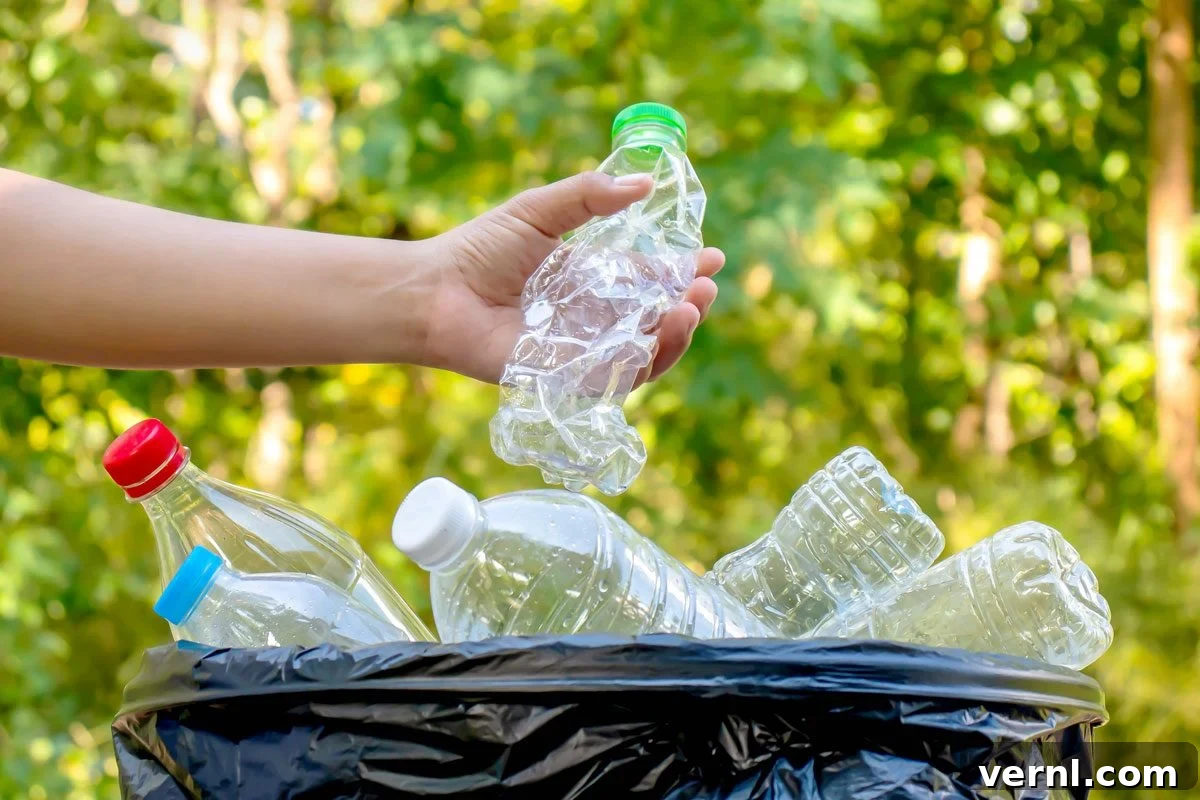
We all understand the fundamental importance of recycling as a cornerstone of environmental stewardship. Our planet faces increasing pressures from waste accumulation, and responsible disposal, particularly of plastics, is crucial for mitigating these challenges. However, the act of recycling is often more intricate than it appears. Plastics, in particular, present a complex challenge due to their diverse compositions and the varied methods required for their reprocessing. Consider the ubiquitous plastic bottle, a seemingly simple item that often comprises multiple types of plastic. Whether you diligently collect your bottles for a trip to a specialized center or simply place them in your curbside recycling bin, grasping the correct procedure for recycling plastic bottles is paramount to ensuring their effective repurposing.
Demystifying the Plastic Recycling Process: From Your Bin to a New Beginning
The journey of a plastic bottle from your home to becoming a new product is a sophisticated multi-step operation, far removed from a simple sorting process. According to the Association of Plastic Recyclers (APR), a leading authority in the field, this process is meticulously managed to maximize efficiency and material recovery. Once collected from homes and businesses, recyclable materials embark on their initial trip to Material Recovery Facilities (MRFs).
At the MRF, the first crucial stage is a preliminary sort, often involving both automated and manual checks. This pre-sort process is designed to remove contaminants – items that are not recyclable or could damage machinery, such as plastic bags (which often tangle equipment), electronics, or food waste. Removing these non-recyclables at this early stage is vital for maintaining the purity of the recycling stream and preventing costly interruptions.
Following the pre-sort, the remaining materials are then subjected to an array of advanced sorting technologies. These include large rotating screens that separate materials by size, powerful magnets that extract ferrous metals, and eddy current separators for non-ferrous metals. For plastics, the sorting becomes even more precise. Optical sorters play a critical role here, using infrared light to identify different types of plastic polymers based on their unique chemical signatures. For instance, polyethylene terephthalate (PET) plastic, commonly used for beverage bottles, can be distinguished from high-density polyethylene (HDPE), frequently found in milk jugs or detergent bottles.
Despite the sophistication of these machines, human oversight remains indispensable. Employees at MRFs conduct ongoing quality checks to monitor machine performance and manually remove any mis-sorted items or remaining contaminants. This combination of advanced technology and human precision ensures that plastics are meticulously sorted into their respective types. Once sorted, these different types of plastic are compressed into large, dense bales, which are then sold to recycling facilities, also known as reclaimers, to be transformed into new resources. At these reclaiming facilities, the bales are broken apart, plastics are typically washed, then ground into flakes, and often sorted once more to achieve the highest possible purity before being melted down and pelletized for manufacturing.
The Crucial Role of Bottle Caps in Plastic Recycling Efficiency
One of the most frequently asked questions regarding plastic bottle recycling concerns the caps. Should you keep them on or take them off? For years, advice varied, leading to confusion among well-meaning recyclers. However, current best practices, heavily influenced by the APR, strongly advocate for keeping the caps on. The reason lies in the inherent differences in plastic densities, which become critical during the advanced stages of recycling.
As the APR elucidates, plastic bottles and their caps are frequently made from different types of plastic, each possessing distinct physical properties, including density. A typical beverage bottle, for example, is often made from PET plastic, which is relatively dense. Its cap, on the other hand, is commonly manufactured from HDPE plastic, which is less dense. This difference in density is ingeniously exploited at the recycling facility during a process known as “float-sink separation.”
After the plastics have been ground into small flakes, they are introduced into large tanks filled with water. In these float-sink tanks, the principle of buoyancy takes over. The lighter HDPE plastic cap flakes will float to the surface, while the denser PET plastic bottle flakes will sink to the bottom. This allows for an efficient and clean separation of the two plastic types. Both PET and HDPE plastics are highly valuable commodities in the recycling market, each destined for different new products due to their unique properties (e.g., PET for new bottles, fibers; HDPE for pipes, containers, lumber).
Keeping the cap on your bottle ensures that these two valuable materials remain together as a single unit throughout the initial collection and sorting stages at the MRF. If caps are removed, especially smaller ones, they are highly likely to be lost during the mechanical sorting process. Their small size often causes them to fall through screens or be misdirected by air classifiers, ending up as residual waste rather than being recycled. By keeping the cap securely fastened, it travels safely with its larger bottle companion, ensuring both materials make it through the initial sorting and into the specialized float-sink tanks where they can be effectively separated and recycled. This simple act significantly increases the yield of both PET and HDPE plastics, enhancing the overall efficiency and economic viability of the plastic recycling process.
Navigating the Nuances: Are Recycling Rules for Bottle Caps Universal?
As with many aspects of life and particularly environmental practices, the answer to whether keeping caps on is always the best approach is nuanced. While the “keep the cap on” recommendation has become a widely accepted industry standard, primarily driven by advancements in recycling technology and the APR’s guidelines, local variations can still exist. It’s always prudent to be informed about the specific guidelines in your area.
If you prefer to take your recyclable bottles directly to a local recycling center or drop-off point, it’s an excellent opportunity to engage with the staff. They are the most authoritative source for local best practices and can provide clarity on their specific processing capabilities. Some older facilities or smaller local operations might still have different requirements based on their equipment or the market for recycled materials in their region. Following their specific instructions will undoubtedly save them time and ensure your items are recycled as efficiently as possible within their operational framework.
However, for the vast majority of individuals who utilize curbside recycling bins, the general assumption should be that keeping the caps on when recycling plastic bottles is the preferred and most effective method. Modern Material Recovery Facilities are increasingly equipped to handle capped bottles, relying on the advanced separation techniques described earlier. The trend in the recycling industry is towards accepting capped bottles precisely because it reduces the loss of valuable plastic material that would otherwise be discarded as non-recyclable.
Furthermore, this recommendation often extends to ensuring bottles are empty and, ideally, lightly rinsed. While labels are generally fine to leave on (they are typically removed during the reclaimer’s process), removing any plastic rings around the bottle neck is not necessary; these too will be handled by the processing machinery. The overarching goal is to present recyclable materials in a way that minimizes contamination and maximizes the efficiency of the sorting and reprocessing stages, contributing to a more robust and sustainable recycling infrastructure.
Making an Impact: Your Role in Effective Plastic Recycling
Understanding the intricacies of plastic bottle recycling, particularly the simple yet impactful act of keeping caps on, empowers each of us to be more effective participants in the global effort toward sustainability. It transforms recycling from a mere chore into a conscious contribution to a circular economy. By adhering to the most current best practices, we help ensure that valuable resources like PET and HDPE plastics are recovered and repurposed, reducing the demand for virgin plastics, conserving energy, and minimizing landfill waste.
The journey of a plastic bottle from your home to its new life as a recycled product is a testament to human ingenuity and our collective commitment to a healthier planet. Every bottle recycled correctly contributes to this vital chain, fostering environmental resilience and economic benefits. Let’s embrace these simple guidelines, stay informed about local recycling protocols, and continue to make a tangible difference through responsible consumption and disposal. Your small actions, multiplied across communities, create a powerful wave of positive environmental change.
Source
The Plastic Recycling Process, Association of Plastic Recyclers.