Optimize Your Cuts: The Essential Guide to Waxing Your Table Saw Surface
For any woodworking enthusiast or professional, a table saw is the undisputed heart of the workshop. Its precision and power are paramount for achieving clean, accurate cuts. However, even the most high-quality table saw can suffer from friction, which can lead to frustrating project setbacks, compromised safety, and premature wear. The simple, yet profoundly effective, solution lies in regularly lubricating your table saw’s surface with paste wax. This guide will walk you through the undeniable benefits and the straightforward process of waxing your table saw, ensuring your projects glide smoothly and safely from start to finish.
Why Lubricate Your Table Saw with Paste Wax?
A table saw’s cast iron or steel surface is designed to be smooth, but over time, it can accumulate microscopic imperfections, sawdust residue, and even light rust, all of which increase friction. This friction directly impacts your woodworking in several critical ways:
- Improved Cut Quality: When wood drags across a sticky or rough surface, it can cause the material to bind, leading to uneven cuts, tear-out, or even burning. A properly waxed surface allows the workpiece to glide effortlessly, resulting in cleaner, more precise cuts with less effort.
- Enhanced Safety: Friction isn’t just a nuisance; it’s a safety hazard. Increased resistance can make it harder to push wood through the blade, increasing the risk of kickback, where the workpiece is violently thrown back towards the operator. A lubricated surface drastically reduces this risk by ensuring smooth, controlled material feeding.
- Reduced Wear and Tear: Both on your machine and on you. Less friction means less strain on the saw’s motor and moving parts, extending its lifespan. It also means less physical exertion for you, making long woodworking sessions more enjoyable and less tiring.
- Rust Prevention: Many quality woodworking paste waxes contain properties that create a protective barrier against moisture and humidity, key culprits in rust formation. This is particularly crucial for cast iron surfaces common on many table saws, which are highly susceptible to corrosion.
- Cleanliness and Maintenance: A waxed surface is less likely to hold onto sawdust and grime, making daily clean-up quicker and more efficient. It also helps prevent the buildup of pitch and resin, which can further impede smooth operation.
The Superiority of Paste Wax for Table Saws
While various lubricants exist, paste wax stands out as the optimal choice for table saw surfaces for several reasons:
- Non-Transferable to Wood: Unlike many oil-based lubricants or silicone sprays, a properly buffed paste wax layer will not transfer to your workpiece. This is a critical advantage, as any residue on the wood can interfere with subsequent finishing steps like staining, painting, or gluing.
- Durable and Long-Lasting: Paste wax creates a solid, slick layer that adheres well to metal surfaces. It doesn’t evaporate quickly like some sprays and provides lasting lubrication even under consistent use.
- Cleans as it Protects: The application process of paste wax, especially with a bit of elbow grease, helps to lift away embedded grime and light surface oxidation, leaving behind a clean, polished, and protected surface.
- Easy to Apply and Reapply: No special tools or extensive setup are required. It’s a simple, quick maintenance task that yields significant benefits.
Choosing the Right Paste Wax for Your Table Saw
Not all waxes are created equal, especially when it comes to woodworking tools. Selecting the correct type of paste wax is paramount to avoid potential issues:
- Avoid Automotive Waxes: This is a crucial distinction. Automotive waxes often contain silicone-based ingredients, abrasives, or color enhancers that are detrimental to woodworking. Silicone can contaminate wood surfaces, making it impossible for finishes to adhere properly later on. Abrasives can damage the precision-ground surface of your table saw.
- Look for Woodworking-Specific Waxes: Many brands offer paste waxes specifically formulated for woodworking tools. These are typically free of silicones and harmful additives.
- Key Ingredients to Seek: Waxes containing Carnauba wax or beeswax are excellent choices. These natural waxes provide a hard, durable, and very slick finish. Traditional furniture paste waxes that are silicone-free can also be effective.
- Check the Label: Always read the product label carefully to ensure it explicitly states “silicone-free” and is suitable for metal tools or woodworking surfaces.
Step-by-Step Guide to Waxing Your Table Saw
Maintaining a smooth table saw surface is an easy process that yields immediate and lasting benefits. Follow these steps for optimal results:
1. Safety First: Prepare Your Table Saw
Before you begin any maintenance, always prioritize safety. Unplug your table saw from the power outlet. This eliminates any risk of accidental startup while your hands are near the blade and table surface. Clear the table of any tools or debris.
2. Thoroughly Clean the Surface
A clean surface is essential for the wax to adhere properly and provide maximum lubrication. Use a stiff brush or an air compressor to remove all loose sawdust. For stubborn grime, pitch buildup, or light surface rust, you can use a cloth dampened with mineral spirits or a dedicated rust remover (if necessary). Ensure the surface is completely dry before proceeding. Any moisture or oil residue will prevent the wax from bonding effectively.
3. Apply a Light, Even Coat of Paste Wax
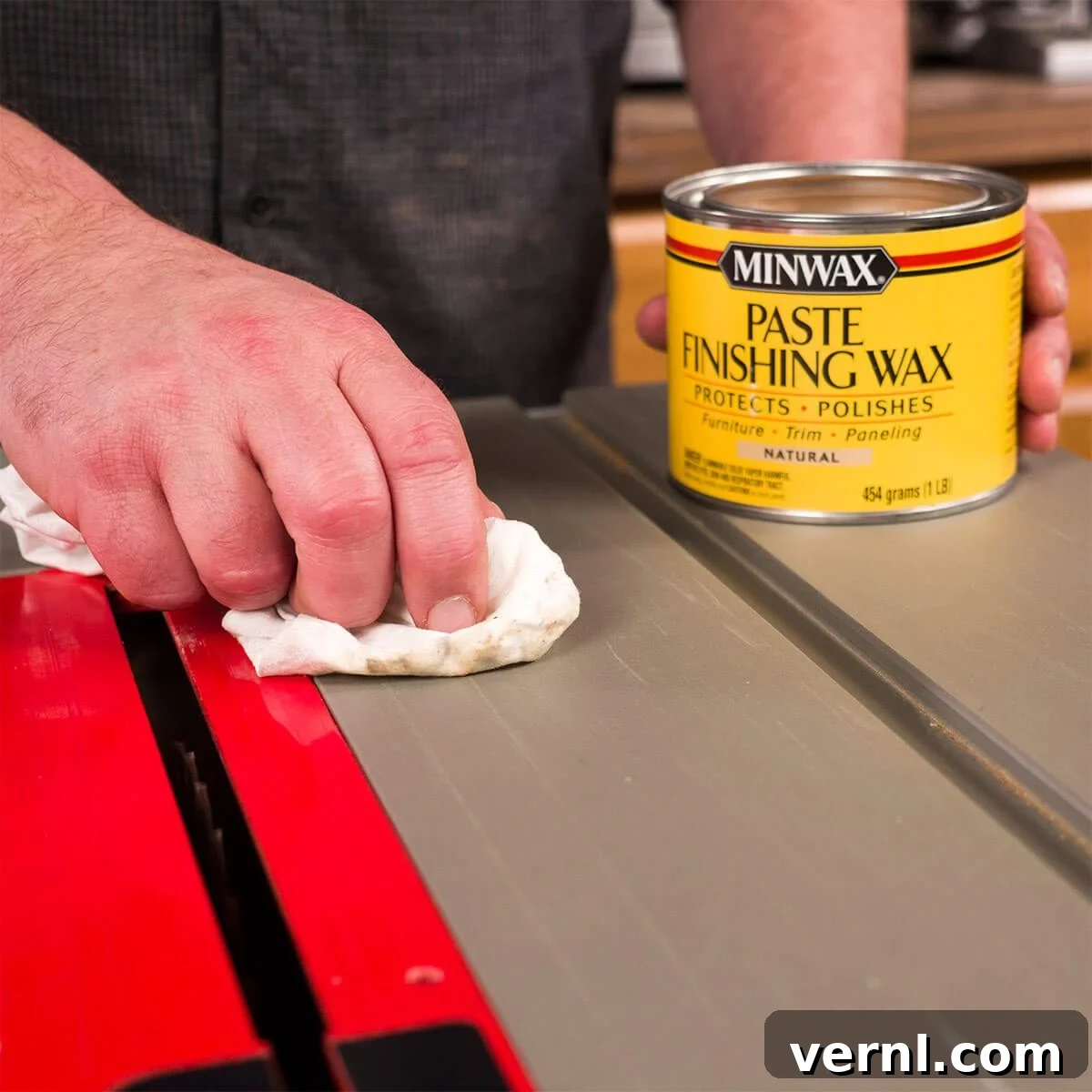
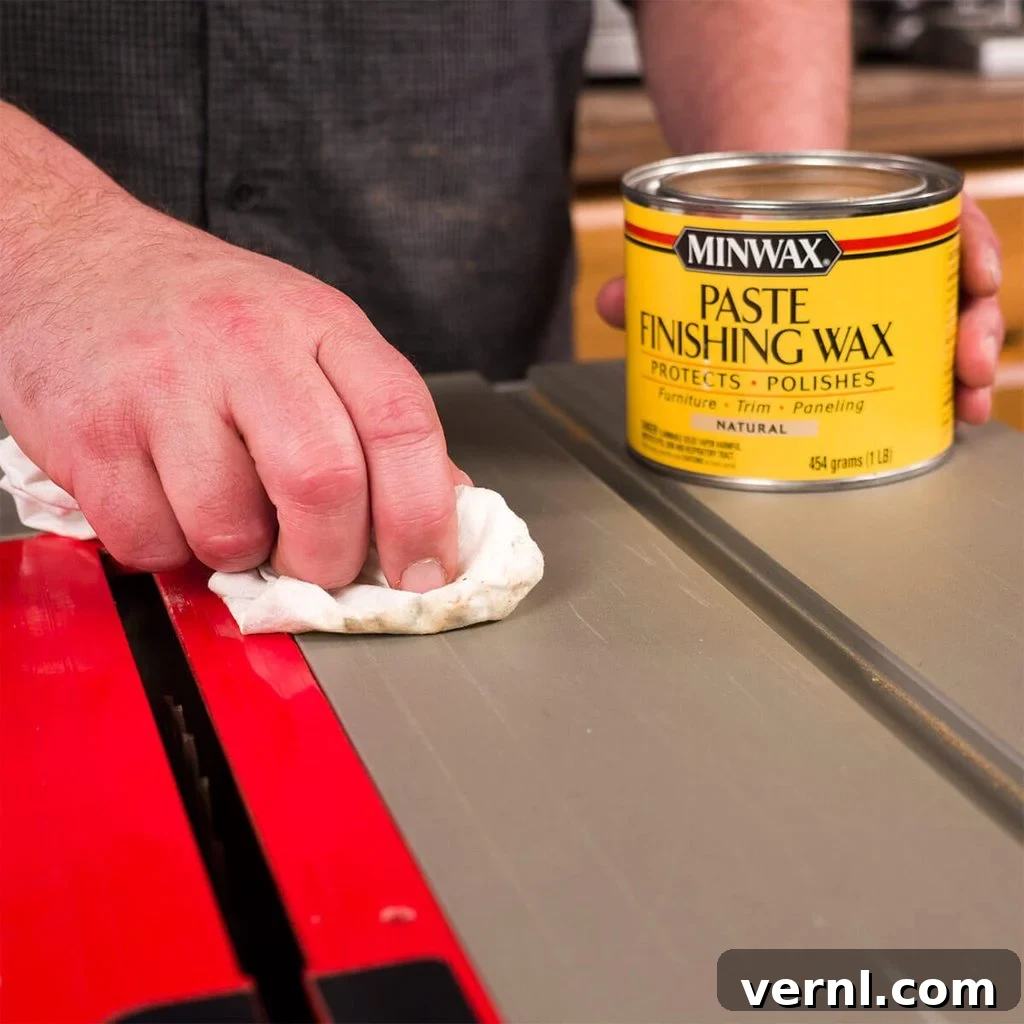
Using a clean, soft cloth (an old T-shirt or a microfiber cloth works well), take a small amount of paste wax. Apply a thin, even layer across the entire top surface of the table saw. Make sure to cover all areas that come into contact with wood during operation, including the main tabletop, the fence rails, and the miter gauge slots. The goal is a light, uniform film, not a thick, gloopy layer.
4. Allow the Wax to Dry
Once applied, give the paste wax sufficient time to dry and haze over. This typically takes about 10 to 20 minutes, depending on the product, ambient temperature, and humidity. Drying allows the solvents in the wax to evaporate, leaving behind the solid wax particles which will then harden and bond to the metal surface. Attempting to buff too soon will result in a greasy mess rather than a slick finish.
5. Buff for a Flawless Finish
Using a separate, clean, dry cloth (again, a clean, soft cloth is ideal), buff the waxed surface with small, firm circular motions. The goal is to remove any haze and polish the wax into a smooth, slick, almost invisible layer. Continue buffing until the surface feels exceptionally slick and no wax residue transfers to your fingers or the cloth. This final buffing step is critical for achieving the non-transferable, low-friction surface you desire.
6. Verify Smoothness
As a final check, run a piece of scrap wood across the table surface. It should glide effortlessly with minimal resistance. This confirms that your table saw surface is now perfectly lubricated and ready for action.
Frequency of Waxing: How Often Should You Re-Wax?
The ideal frequency for waxing your table saw depends on several factors, including how often you use it, the types of wood you cut (some woods produce more pitch than others), and the humidity levels in your workshop. As a general guideline:
- Moderate Use: For hobbyists or those with moderate use, re-waxing every 1 to 3 months is usually sufficient.
- Heavy Use: Professional woodworkers or those who use their saw daily might find it beneficial to re-wax every few weeks.
- Signs to Re-Wax: The most straightforward indicator is when you notice increased friction. If wood no longer glides smoothly, or you feel increased resistance when pushing material, it’s definitely time for another application. You might also notice a dulling of the surface or the return of very light surface rust (if in a humid environment).
Think of it as routine maintenance—a quick, simple task that prevents bigger problems down the line.
Beyond the Tabletop: Other Applications for Paste Wax
The benefits of paste wax extend beyond just your table saw’s main surface. Consider applying it to other critical woodworking tool surfaces to enhance performance and protect against rust:
- Table Saw Fence: A waxed fence allows wood to slide smoothly against it, improving accuracy and reducing binding.
- Miter Gauge: Waxing the underside of your miter gauge helps it glide effortlessly in the miter slots.
- Hand Plane Soles: A waxed sole drastically reduces friction, making hand planing smoother and less fatiguing.
- Jointer and Planer Beds: Similar to the table saw, a slick surface on these tools ensures wood feeds consistently and smoothly.
- Drill Press Tables: Prevents workpieces from sticking and allows for easier repositioning.
Common Questions About Table Saw Wax
Can you use finish wax on a table saw?
Yes, absolutely. As detailed in this guide, “finishing wax” is often synonymous with “paste wax” in a woodworking context and is an excellent lubricant for your table saw top. It effectively finishes and polishes the flat table surface, making for significantly easier sliding of wood across the top during saw operation. Just ensure it is silicone-free and designed for tools or furniture, not automotive use.
What type of wax do you use on a table saw?
You should use a woodworking-specific paste wax or a high-quality, silicone-free furniture paste wax. Often referred to simply as “finishing wax” or “paste wax,” the critical factor is to avoid automotive paste waxes. These often contain additional silicone-based ingredients, colorants, or abrasives that are not ideal for saws and can contaminate your wood, affecting subsequent finishes like stains or glues.
Why wax my table saw surface?
Waxing your table saw surface is a vital maintenance step that offers numerous benefits. Regularly applying table saw paste wax will not only help keep your table saw surface clean and protected from rust, but it can also prevent dangerous hang-ups from occurring as wood snags on a high-friction surface, thereby drastically reducing the risk of kickback. It helps remove any blemishes or buildup that may have occurred during extended operation, ensuring your saw stays looking as clean, performing as smoothly, and remaining as functional as the day you bought it.
Does paste wax prevent rust on a table saw?
Yes, one of the significant benefits of using paste wax on your table saw is its ability to prevent rust. The wax creates a thin, protective barrier on the metal surface that repels moisture and humidity, which are the primary causes of rust, especially on cast iron tables. This barrier is particularly effective in humid workshop environments.
Will wax transfer to wood and affect finishes?
When applied correctly and buffed thoroughly, woodworking-specific paste wax will not transfer to your wood and will not affect subsequent finishes like stains, paints, or glues. The key is to apply a thin coat and ensure it is fully buffed off, leaving only a slick, dry film. Silicone-based waxes are the culprits that cause finish adhesion problems, which is why choosing the right type of wax is so important.
Is silicone spray an alternative to paste wax?
No, silicone spray is generally not recommended as an alternative to paste wax for table saw lubrication. While it might offer temporary slickness, silicone has a strong tendency to transfer to wood, creating an invisible film that can severely impede the adhesion of glues, stains, paints, and other finishes. This can ruin a project and is very difficult to remove once it has contaminated the wood.
Conclusion: A Simple Step for Superior Woodworking
Waxing your table saw surface with paste wax is one of the simplest, yet most impactful, maintenance tasks you can perform for your primary woodworking tool. It’s an inexpensive habit that significantly enhances safety by reducing kickback risks, improves the quality of your cuts by allowing smooth material flow, and extends the life of your table saw by preventing rust and reducing motor strain. By incorporating this quick routine into your workshop practice, you’ll ensure your table saw remains a reliable, high-performing asset for countless projects to come. Embrace the slickness, embrace the safety, and enjoy the unparalleled performance that a well-maintained, waxed table saw provides.