
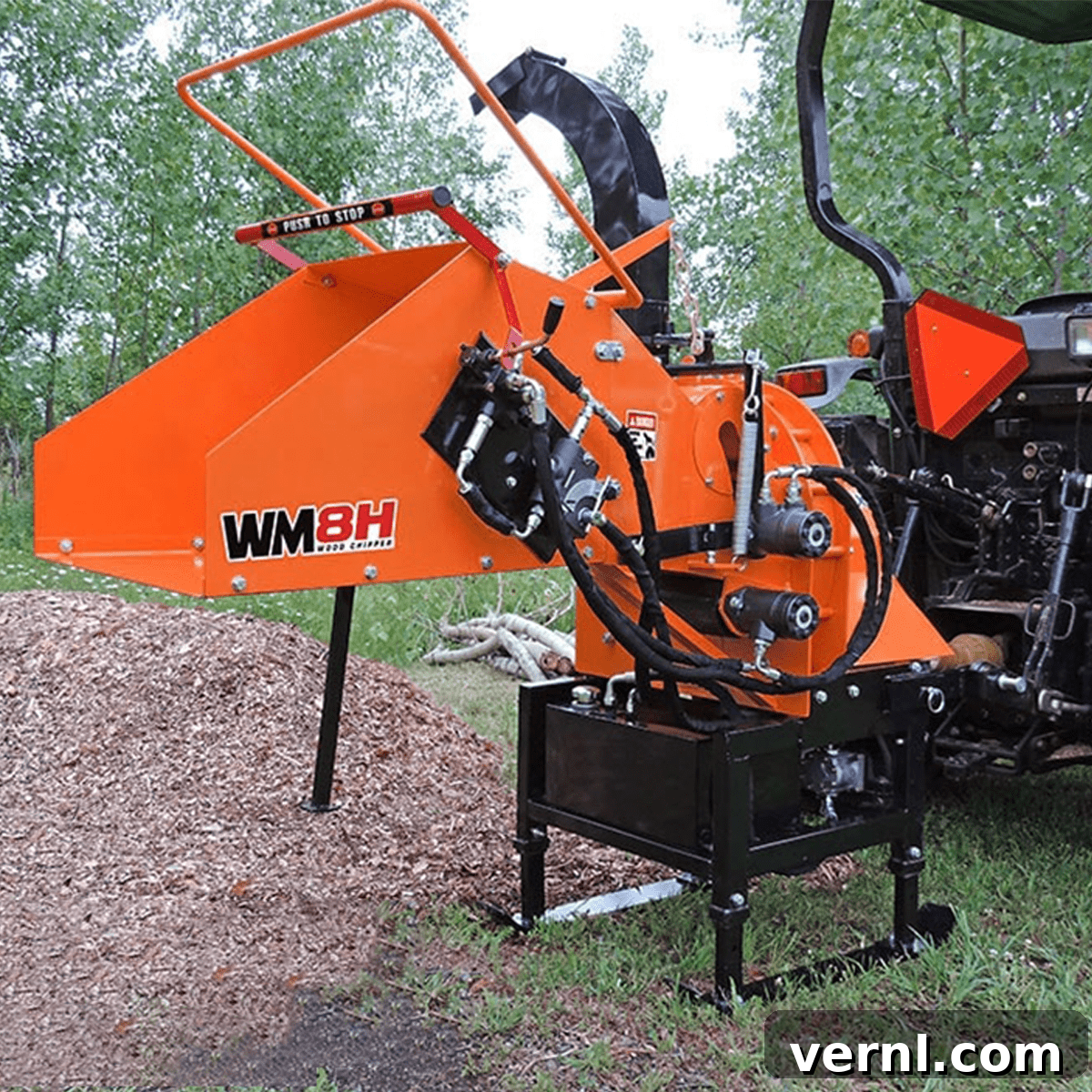
For landowners in wildfire-prone regions, particularly throughout the Western states, proactive brush clearing isn’t just a recommendation—it’s an absolute necessity. Managing dense undergrowth and fallen branches is crucial for creating defensible space and safeguarding properties. While various tools can aid in this vital task, many individuals and property managers find themselves needing a powerful and efficient wood chipper to process significant volumes of debris.
If you own a tractor, which is a common asset for managing larger properties, a mobile Power Take-Off (PTO) wood chipper can be an exceptionally valuable addition to your equipment arsenal. This specialized attachment transforms your tractor into a formidable brush-processing machine, offering unparalleled advantages. Unlike stationary chippers, a PTO chipper allows you to take the processing power directly to the source of the wood, eliminating the laborious task of hauling countless branches back and forth. Furthermore, by harnessing the robust engine of your tractor, these chippers deliver significantly more power than most standalone units. Some heavy-duty PTO chippers are capable of handling logs up to eight inches in diameter, a feat far surpassing the capabilities of any electric wood chipper and outperforming the majority of gas-powered models on the market.
The inherent off-road capability of a tractor means it can access remote or challenging parts of a wooded property that a truck simply cannot reach. This makes a PTO chipper an indispensable tool for anyone with expansive land, whether located within an official fire zone or simply seeking to maintain a pristine and hazard-free environment. However, it’s important to set realistic expectations. As Steve Mercer, an experienced professional from Northampton Rental Center, advises, “a PTO chipper is more than most DIYers will need.” They are designed for substantial tasks and require a suitable tractor to operate effectively.
What Exactly Is a PTO Wood Chipper?
A PTO wood chipper is an innovative piece of equipment designed to attach directly to the Power Take-Off (PTO) drive shaft, which typically extends from the rear of most utility and agricultural tractors. This shaft acts as a mechanical interface, allowing the chipper to draw its operational power directly from the tractor’s engine. Once engaged, the tractor’s engine spins the PTO shaft, which in turn powers the chipper’s internal mechanisms. This usually involves a heavy flywheel that either directly incorporates cutting blades or is connected via gears to a drum at the base of the hopper, where the actual chipping occurs. The centrifugal force and sheer mass of the flywheel, combined with sharp blades, effectively pulverize branches and brush into uniform wood chips.
While some PTO chipper models are designed to be towed, offering a degree of independent maneuverability, the majority are engineered to attach directly to a tractor’s three-point mounting brackets (Category 1, 2, or 3, depending on the chipper and tractor size). All PTO chippers feature a robust in-feed hopper, which may be fixed or adjustable, where material is fed. They also include an out-feed chute, typically adjustable, allowing operators to direct the produced chips precisely into a neatly formed pile, a trailer, or a truck bed. This precision control over chip dispersal is invaluable for various applications, from creating organized mulch piles to efficiently loading material for off-site disposal.
The power requirements for PTO wood chippers vary significantly based on their capacity and design. Most entry-level PTO chippers necessitate at least a 15 horsepower (hp) tractor engine, sufficient for processing smaller branches and maintaining average properties. However, larger, more robust chippers—those capable of handling wider diameter logs—often demand 30 hp or more, with some commercial-grade units requiring upwards of 60-90 hp. As Mercer emphasizes, “Most homeowners would not be able to tow a PTO wood chipper. You need a large tractor, like one used in farming—not a lawn tractor.” This distinction is critical for potential buyers; a subcompact utility tractor might suffice for smaller PTO chippers, but significant brush clearing jobs will demand a more powerful compact utility or agricultural tractor.
Diverse Applications: What Is a PTO Wood Chipper Used For?
A PTO wood chipper is far more than just a tool for disposing of branches; it’s a versatile machine that transforms piles of organic debris into valuable wood chips, which can then be utilized or left to decompose naturally, enriching the forest floor. The practical applications for a PTO wood chipper are extensive, making it an excellent investment for property owners focused on land management and environmental stewardship. You may find a PTO wood chipper indispensable for these crucial tasks:
- Proactive Wildfire Prevention: In fire-prone areas, clearing your property of dry, burnable brush and ladder fuels is paramount. A PTO chipper rapidly reduces these hazardous materials into manageable chips, significantly reducing the risk of fire spreading to your home and structures. This creates a critical “defensible space.”
- Pest and Vermin Control: Untidy brush piles are notorious breeding grounds and shelters for a variety of unwelcome pests, including rats, mice, snakes, and insects. Chipping these piles eliminates these habitats, contributing to a healthier and safer living environment around your property.
- Efficient Vegetation Management: Whether you’re trimming overgrown shrubs, removing small trees, or clearing unwanted invasive growth, a PTO chipper offers an incredibly efficient method for disposing of the resulting debris, saving immense time and labor compared to manual hauling.
- Producing Nutrient-Rich Mulch: The wood chips generated by a PTO chipper are an excellent, organic material for mulching your garden beds, landscape plantings, and agricultural fields. Mulch helps retain soil moisture, suppress weed growth, regulate soil temperature, and slowly releases nutrients as it decomposes, improving soil health.
- Creating Landscape Features: Beyond functional benefits, wood chips are a popular and aesthetically pleasing material for various landscape designs. They can be used to define garden paths, create natural-looking walkways, or provide ground cover in play areas, adding both beauty and utility to your outdoor space.
- Erosion Control: On slopes or disturbed areas, a layer of wood chips can help stabilize soil, prevent erosion, and promote the establishment of new vegetation by protecting young plants.
- Composting and Soil Amendment: While wood chips decompose slowly on their own, they can be an excellent carbon source when added to a compost pile, balancing nitrogen-rich green materials. Once fully composted, they significantly enhance soil structure and fertility.
If you already own a tractor or are contemplating purchasing one, the decision to opt for a PTO chipper over a standalone gas or electric model often comes down to two primary advantages: unparalleled mobility and superior power. Because they draw directly from the vehicle’s engine, PTO chippers are consistently among the most powerful wood chipping machines you can acquire. This power is not merely a luxury; it’s a necessity when confronting large diameter branches, tough hardwoods, or extensive clearing projects that would overwhelm lesser machines. For those exploring tractor options, understanding the capabilities of a subcompact tractor can be a good starting point, though larger chippers will demand more robust tractors.
Understanding the Types of PTO Wood Chippers
While all PTO wood chippers share the core function of turning organic material into chips, they can generally be categorized based on their cutting mechanism and the type of output they produce. The primary distinction lies between models designed primarily as “shredders” and those built as dedicated “chippers,” though some units offer a combination of both functionalities.
- Chippers (Disc or Drum Style): These are the most common type and focus on producing uniform wood chips suitable for landscaping, pathways, or burning.
- Disc Chippers: Utilize a heavy steel disc with blades mounted on its face. Material is fed into the disc, and as it spins at high speed, the blades slice off chips. These typically produce a more uniform, often larger, chip.
- Drum Chippers: Employ a rotating steel drum with knives attached. Material is fed into the drum, which “eats” the wood and chips it against an anvil. Drum chippers are often known for their aggressive pulling action and ability to handle various types of material, including stringy bark and small branches, with less jamming. They tend to produce a less uniform, but still very usable, chip.
- Shredders: Some models incorporate a shredder function, often featuring finer knives or hammers that pulverize material rather than cleanly cut it. These produce a smaller, more irregular, and sometimes stringy output, often preferred for composting or creating fine mulch. Because of the finer reduction process, shredder-focused models are typically less powerful in terms of raw branch diameter capacity compared to dedicated chippers. They excel with leafy materials, small twigs, and garden waste.
The choice between a chipper, a shredder, or a combined unit depends heavily on your intended use for the output and the typical type of material you’ll be processing. If large branches and clean chips for pathways are your priority, a dedicated disc or drum chipper is best. If you’re dealing with a lot of garden waste, leaves, and smaller, softer material for compost or fine mulch, a shredder might be more suitable. Some advanced models offer interchangeable screens or cutting configurations to vary chip size and texture.
Is a PTO Wood Chipper the Right Investment for You?
Deciding whether a PTO wood chipper is the appropriate tool for your needs involves carefully weighing its unique benefits against its specific requirements and limitations. These powerful machines are not a one-size-fits-all solution, and understanding their pros and cons is essential before making a significant investment.
PTO Chipper Pros:
- Unmatched Power and Capacity: Drawing power directly from your tractor’s engine, PTO chippers are significantly more powerful than most electric or standalone gas-powered units. This enables them to process larger diameter branches and tougher wood types with ease, saving immense time and effort on demanding projects.
- Superior Mobility for Large Properties: The ability to attach the chipper to a tractor means you can transport the chipping unit directly to the brush piles, even in rugged, uneven, or remote terrain. This eliminates the strenuous and time-consuming task of dragging heavy branches across long distances, making it the best choice for large properties or those with challenging topography.
- Cost-Effective Fueling: Since a PTO chipper operates off your tractor’s fuel tank, there’s no need to purchase and store separate fuel for another engine. You’re already fueling your tractor for other tasks, streamlining your operational logistics and potentially reducing overall fuel costs compared to running multiple independent engines.
- Durability and Longevity: Built for heavy-duty work, PTO chippers are generally constructed with robust materials and simpler mechanical designs (as they lack their own engine), leading to greater durability and a longer lifespan, especially with proper maintenance.
- Environmental Benefits: Converting yard waste into mulch reduces landfill waste, enriches soil, and supports healthy plant growth, contributing to sustainable land management practices.
PTO Chipper Cons:
- Tractor Dependency: The most significant drawback is the absolute requirement of owning a compatible tractor with a functioning PTO shaft. Without a suitable tractor, a PTO chipper is merely an inert piece of equipment. This makes it an unsuitable option for those without this existing machinery.
- Overkill for Smaller Tasks: For small residential properties with limited brush to clear, a PTO chipper is likely overkill. Its size, power, and cost are disproportionate to the scale of such jobs, making simpler, less expensive electric or small gas chippers a more practical choice.
- Not Ideal for Stationary Mulch Production: While highly mobile, if your primary need is a stationary unit for continuously producing mulch from small branches or garden waste in a centralized location, a dedicated standalone chipper might offer better ergonomics and easier setup for that specific purpose.
- Maintenance Complexity: While the chipper itself might be simpler, you’re now maintaining two pieces of equipment (tractor and chipper), which can increase the overall complexity and cost of upkeep.
- Storage Requirements: PTO chippers, along with the tractors they attach to, require significant storage space, which might be a consideration for property owners with limited shed or garage capacity.
Key Considerations When Buying a PTO Wood Chipper
Investing in a PTO wood chipper is a significant decision that requires careful evaluation to ensure you select a model that perfectly aligns with your tractor’s capabilities and your specific property management needs. Consider the following critical factors when shopping for a PTO wood chipper:
- Feed System: The method by which material is drawn into the chipper dramatically impacts efficiency and safety.
- Gravity Feed (Self-Powered In-feed): These simpler and generally less expensive units rely on gravity and the chipper’s blades to pull material in. They require more user effort to push branches and typically handle logs up to about four inches in diameter. They are suitable for lighter duty use.
- Hydraulic Feed (Auto-Feed): Equipped with an onboard hydraulic pump (powered by the PTO or your tractor’s hydraulics) that drives an in-feed roller, these systems automatically pull material into the chipper. They significantly speed up the process, reduce manual effort, enhance safety, and can handle larger logs (often up to 6-8+ inches) with greater consistency and less jamming. This system is crucial for heavy-duty work.
- Tractor Compatibility: This is arguably the most critical factor. Not all wood chippers fit every tractor.
- Hitch Type: Ensure the chipper’s three-point hitch category (Category 1, 2, or 3) matches your tractor’s hitch.
- PTO Horsepower (HP) Requirement: Match the chipper’s minimum and ideal HP requirements to your tractor’s PTO horsepower output. Operating a chipper with an underpowered tractor can lead to poor performance, frequent jamming, and potential damage to both the chipper and the tractor.
- PTO Speed: Most PTO chippers operate at 540 RPM, which is standard for many utility tractors. Confirm your tractor’s PTO speed matches the chipper’s requirements.
- Hydraulic Flow (for Auto-Feed): If you opt for a hydraulic auto-feed chipper, ensure your tractor’s hydraulic system can provide sufficient flow and pressure, or that the chipper has its own self-contained hydraulic pump.
- Weight and Stability: The flywheel is often the heaviest component, contributing significantly to the chipper’s overall weight. Most weigh around 200 pounds, but larger commercial units can be much heavier. Before purchasing a large chipper, verify that your tractor’s three-point hitch lift capacity and overall stability (especially on slopes) can safely handle the chipper’s weight, both during operation and transport. An imbalance can be dangerous.
- Adjustable Chip Size: While not all chippers offer this feature, some models allow you to adjust the size of the output chips, typically by changing screens or adjusting blade gaps. This can be very useful if you have varied needs, such as fine mulch for gardens and coarser chips for pathways or biochar production.
- Cost: PTO wood chippers represent a broad investment range, with prices varying from around $1,000 for basic, smaller capacity units to well over $20,000 for professional-grade, high-capacity models. The most expensive models are designed for the most demanding, heavy-duty commercial applications. For most general property owners with significant brush clearing needs, a high-quality model in the $3,000 to $5,000 range should offer an excellent balance of capacity, features, and durability. Factor in potential shipping costs and any necessary accessories.
- Safety Features: Prioritize models with robust safety features, including emergency stop buttons, clear safety guards, easily accessible controls, and thorough instruction manuals for safe operation.
- Durability and Warranty: Look for chippers constructed from heavy-gauge steel and high-quality components designed to withstand rigorous use. A good warranty indicates the manufacturer’s confidence in their product and provides peace of mind.
Top PTO Wood Chippers for Diverse Needs
To help you navigate the market, here are some examples of highly-regarded PTO wood chippers that cater to different requirements and budgets:
Best Shredder Model:
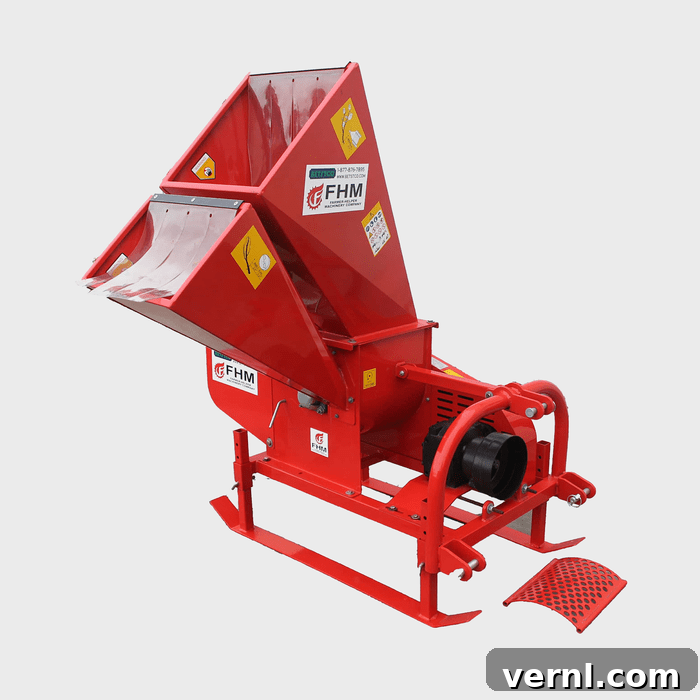
The budget-friendly Farmer Helper Chipper/Shredder stands out for its versatile dual hoppers, allowing for both chipping and shredding capabilities. With a three-inch capacity, it is well-suited for processing a variety of smaller branches and garden debris. Requiring only 15 HP, it’s compatible with most small to subcompact tractors, making it an accessible option for many homeowners. A key feature is its changeable grate, which provides control over the output chip size, allowing you to tailor the material for specific uses like fine mulch or coarser chips.
Best Non-Shredder Model (High Capacity):
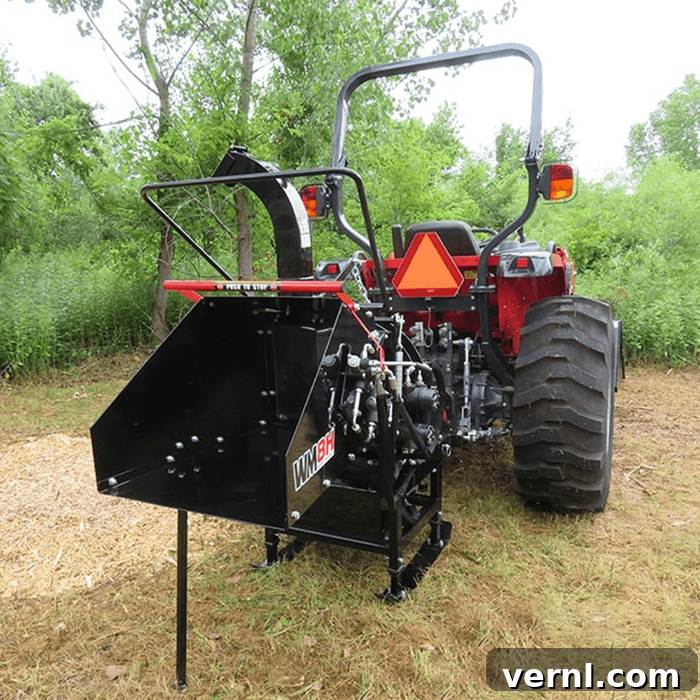
For those tackling larger logs and demanding commercial-grade performance, the WoodMaxx WM-8H is an exceptional choice. This robust PTO chipper can effortlessly handle material up to eight inches in diameter, making quick work of substantial branches. It operates effectively with tractors capable of supplying at least 19 HP, though its performance truly shines at higher power outputs. The WM-8H comes equipped with a sturdy three-point attachment, a highly efficient hydraulic feed system for effortless material intake, and an adjustable base for various operating positions. A particularly handy and safety-enhancing feature is its reverse mode, which allows operators to easily back out any material that might become stuck, preventing jams and improving operational flow.
Best High-End Model (Professional Grade):
When maximum capacity, advanced features, and professional-grade durability are paramount, the Wallenstein 10-inch PTO Chipper represents the pinnacle of PTO chipper technology. This top-tier model boasts a sophisticated hydraulic system that intelligently and automatically adjusts the in-feed speed based on the density and size of the material you’re feeding into it, optimizing efficiency and preventing overfeeding. While it commands a price tag nearly five times that of most utility models and requires a powerful tractor (needing 90 HP to operate at its maximum 10-inch diameter capacity), its capabilities are unparalleled. It can easily process substantial 10-inch diameter wood and includes a robust winch system to assist in pulling in large, heavy logs, further enhancing its productivity and reducing manual labor.
About the Experts
Our insights are informed by decades of practical experience. Steve Mercer has dedicated 41 years to the tool supply rental industry, currently serving as the manager at Northampton Rental Center in Northampton, Massachusetts. His extensive knowledge provides invaluable perspectives on equipment suitability and performance in real-world scenarios.
[cf]skyword_tracking_tag[/cf]