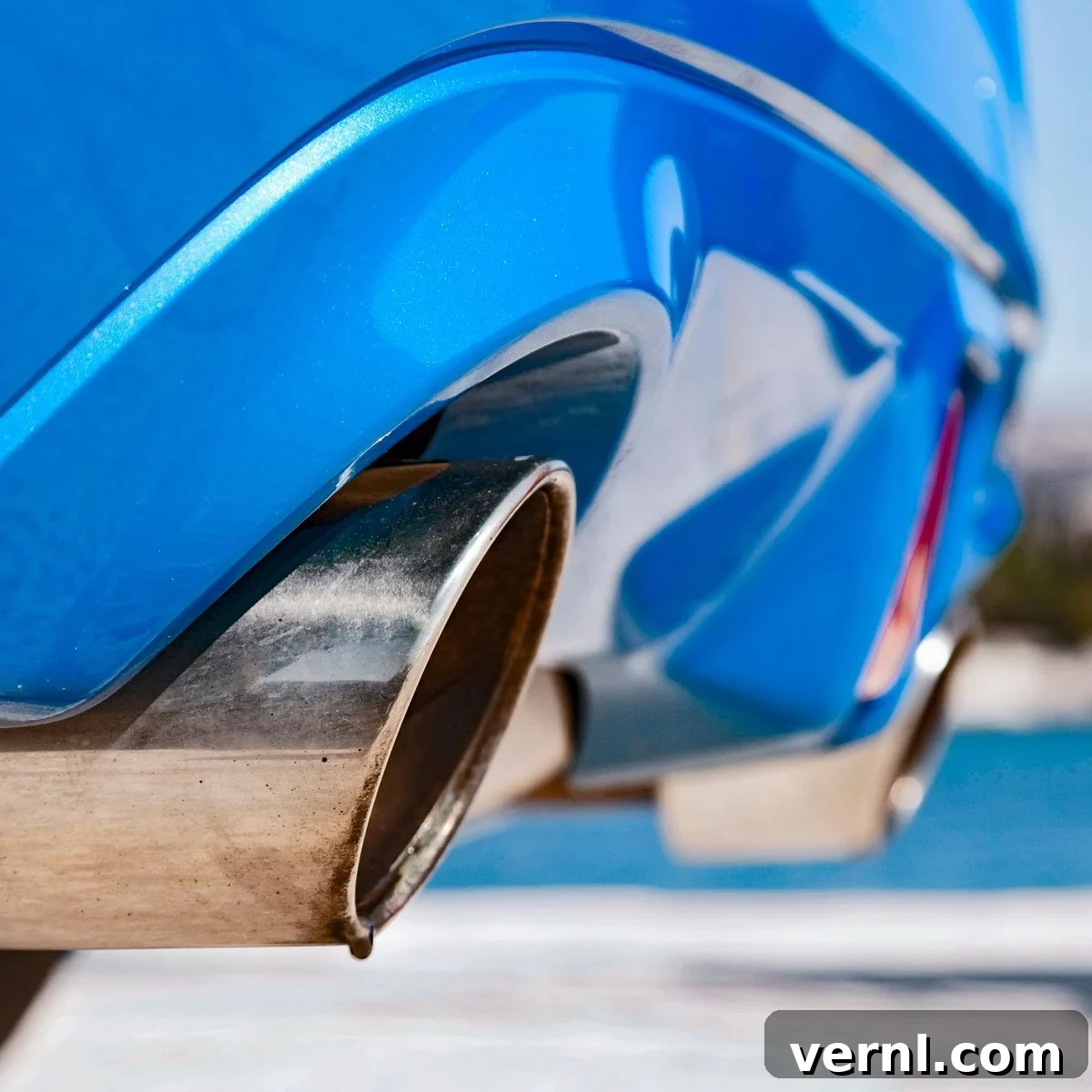
An engine backfire is more than just a startling noise; it's an auditory clue signaling that something within your vehicle's intricate system isn't operating as it should. This unusual sound could indicate a component is failing or nearing the end of its operational life, necessitating prompt attention to prevent further damage. Ignoring a backfire can lead to significant mechanical issues and compromise both your vehicle's performance and safety.
The sound of a backfire can vary significantly. It might manifest as a subtle, throaty gurgle or a series of mild popping noises. However, a more serious problem is indicated by a loud, explosive sound, akin to a firecracker detonating either under the hood or directly from the tailpipe. In some instances, you might even observe a visible flame accompanying the sound, particularly from the exhaust. This phenomenon occurs when fuel vapors ignite outside their intended location – specifically, within the exhaust system or intake manifold – instead of the engine's combustion chamber. Thanks to sophisticated computer-controlled systems, modern engines meticulously manage fuel and spark delivery with unparalleled precision, making engine backfires in newer vehicles a relatively rare occurrence.
Decoding Engine Backfires: Common Causes and Solutions
Understanding what causes an engine to backfire is the first step toward resolution. According to Jorge Pinto, an experienced auto mechanic based in New Jersey, the most frequent culprit behind an engine backfire often boils down to neglected maintenance. "Adhering strictly to your vehicle's recommended service intervals is undoubtedly the most effective strategy to prevent issues like backfires from ever occurring," he emphasizes. Contemporary vehicles benefit from significant advancements, including highly efficient fuel injection systems and refined ignition components, which inherently reduce the likelihood of engine backfires compared to older models. Let's delve into the specific reasons your engine might be backfiring.
Air Filter: A Crucial Component
One of the simplest yet most overlooked components is the air filter. It's always prudent to begin your investigation here. A clogged air filter severely restricts the vital airflow to the engine, effectively starving it of the oxygen it desperately needs for proper combustion. This restriction inevitably skews the delicate air/fuel mixture, creating an imbalance that can directly lead to an engine backfire. The good news is that replacing the air filter is typically a straightforward, inexpensive do-it-yourself repair that can make a significant difference in your engine's performance and prevent backfiring.
The Critical Balance: Out-of-Proportion Air/Fuel Mixture
The precise balance of air and fuel is paramount for efficient combustion. Any deviation from this ideal ratio can lead to significant engine problems, including backfiring.
A **lean air/fuel mixture** signifies an excess of air relative to fuel. This imbalanced mixture burns slower and at a lower temperature, preventing some of the fuel from completely combusting within the cylinder during the power stroke. This unburned fuel then exits the combustion chamber and can ignite unexpectedly within the hot exhaust system. Several factors can contribute to a lean-running engine, such as a faulty oxygen sensor, a malfunctioning mass air flow sensor, an inaccurate manifold pressure sensor, a miscalibrated throttle position sensor, a stuck-open exhaust gas recirculation (EGR) valve, or even an engine vacuum leak. Each of these components plays a vital role in regulating the air intake or exhaust flow, and their failure can disrupt the air/fuel ratio, causing your car to backfire.
Conversely, a **rich air/fuel mixture** means there's an excessive amount of fuel vapor entering the combustion chamber, more than can be efficiently burned during the engine's combustion cycle. The surplus, unburned fuel then travels into the exhaust system, where the intense heat can cause it to ignite, resulting in a backfire. A rich fuel mixture can be triggered by a number of issues, including a malfunctioning oxygen sensor, a faulty mass air flow sensor, an inaccurate engine air intake sensor, a defective coolant temperature sensor, a misadjusted throttle position sensor, or problems within the fuel or ignition system itself. Given the complexity and numerous potential origins, accurately diagnosing and rectifying proper air/fuel mixture issues is generally best entrusted to qualified automotive professionals equipped with specialized diagnostic tools.
Precision Timing: Engine Ignition
Engine timing refers to the precise moment the spark plugs fire to ignite the air/fuel mixture. When ignition timing is out of sync, the ignition cycle initiates either too early or too late, fundamentally disrupting the engine's designed combustion process. If the fuel ignites prematurely, while the intake valves are still partially open, the rapidly expanding gases that are meant to force the pistons downward are instead expelled into the air intake system or carburetor, leading to a loud backfire.
Conversely, if the timing is delayed, unburned fuel can exit the combustion chamber through the exhaust valves. When these unburned fuel vapors mix with oxygen in the hot exhaust system, they can spontaneously ignite, causing a distinct backfire from the tailpipe. It’s important to note that various sensors, including the camshaft, crankshaft, throttle position, and knock sensors, all play crucial roles in influencing engine timing. Furthermore, a loose or excessively worn timing belt or chain can severely compromise the accuracy of these timing events. Due to the intricate nature of these components and the precision required, repairs involving sensors and timing belts/chains are best performed by an experienced mechanic.
The Unsung Hero: Oxygen Sensor
Oxygen (O2) sensors are vital input devices in your engine's control system, playing a critical role in regulating fuel delivery and ensuring optimal air/fuel ratios. These sensors monitor the amount of unburned oxygen in the exhaust gases and send this data to the engine control unit (ECU). A contaminated, damaged, or slow-reacting O2 sensor provides inaccurate information to the ECU, causing it to miscalculate fuel requirements. This often results in either a rich or lean air/fuel mixture, both of which are common precursors to engine backfiring. While replacing an O2 sensor can sometimes be a feasible DIY project, it often requires specialized tools and expertise to accurately diagnose if the sensor is truly faulty. Therefore, it's advisable to have your repair shop perform a definitive diagnosis.
Fuel System Integrity: Fuel Injectors and Beyond
The integrity of your vehicle's fuel system is paramount for delivering the correct amount of fuel at the right pressure. Issues stemming from either low or high fuel pressure can significantly disrupt the air/fuel mixture, leading to backfiring. Common culprits include a dirty fuel filter, a defective fuel pump, a clogged fuel tank strainer, or a faulty fuel pressure regulator. Moreover, the fuel injectors themselves can be a source of trouble if they are dirty, clogged, slow to react, partially stuck open, leaking, or physically damaged.
Any of these conditions can lead to an improper spray pattern or incorrect fuel delivery, resulting in an imbalanced air/fuel ratio and subsequent backfiring. A practical first step for a DIY enthusiast is to replace the fuel filter and consider adding a fuel injector cleaning treatment to your fuel tank. These measures can often resolve minor fuel delivery issues. However, if these steps do not alleviate the backfiring, it's a clear indication that it's time to schedule professional service for a more thorough diagnosis and repair.
The Spark of Life: Ignition Systems
The ignition system is responsible for creating the spark that ignites the air/fuel mixture within the combustion chamber. Most modern vehicles are equipped with advanced distributorless, coil-over-plug (COP) ignition systems, which have eliminated the need for traditional spark plug wires and distributor caps, improving efficiency and reliability. However, even with these advancements, problems can still arise.
Dirty or worn spark plugs can deliver a weak or inconsistent spark, preventing the fuel from burning completely. Similarly, a failing ignition coil may produce a weak or no spark at all, leading to unburned fuel exiting the chamber and backfiring. Replacing spark plugs is often a manageable DIY task for many car owners. In contrast, diagnosing and replacing faulty ignition coils typically requires specialized knowledge and tools, making it a job best left to your trusted mechanic to ensure proper installation and avoid further complications.
The Silent Intruder: Leaky Exhaust
A compromised exhaust system can also be a surprising cause of engine backfiring. When exhaust gases flow over a leak in the exhaust manifold, header pipe, or a damaged sealing gasket, it creates a localized vacuum effect. This vacuum can draw in fresh, oxygen-rich air from the outside atmosphere. When this fresh air mixes with partially burned fuel that has exited the combustion chamber, it creates a combustible mixture within the exhaust system. The intense heat of the exhaust then ignites this mixture, resulting in a distinct backfire. Identifying and repairing these types of exhaust leaks often requires lifting the vehicle and specialized welding or sealing techniques, making this fix best suited for automotive professionals.
Grave Concerns: Mechanical Failures
Unfortunately, some backfiring incidents point to more severe and often costly mechanical failures within the engine itself. These serious issues can include burned or cracked engine valves, which can compromise cylinder sealing and allow unburned fuel to escape. Weak or broken valve springs can also prevent valves from seating properly, leading to similar issues. Furthermore, a camshaft with a worn lobe can alter valve timing, significantly disrupting the engine's breathing and combustion cycle. Given the complexity and critical nature of these internal engine components, such repairs demand extensive expertise, specialized tools, and a deep understanding of engine mechanics. Therefore, these repairs are unequivocally best left to certified experts and professional engine technicians.
Understanding Backfires in Older Car Engines
Backfiring issues were far more prevalent and often a routine concern in older vehicles, particularly those equipped with carburetors and non-computer-controlled engines. Carburetors, being mechanical devices, frequently required manual adjustments to maintain the precise air/fuel mixture, a task that was often neglected or performed incorrectly. Beyond common culprits like worn spark plugs and failing ignition coils, the lengthy spark plug wires found in older cars were a significant source of engine misfires and subsequent backfiring.
These spark plug wires must be connected in a specific, sequential order, known as the firing order. If spark plugs fire out of this precise sequence, it can lead to severe engine backfires. Moreover, wires that are haphazardly installed, improperly routed (e.g., too close to each other, rubbing against engine parts, bent at extreme angles, or stretched taut), can create "short circuits." In such cases, the ignition spark can jump from one wire to another or to the ground, causing spark plugs to fire at the wrong time or not at all, thus disturbing the combustion cycle and leading to backfires.
Furthermore, the distributor cap, a crucial component in older ignition systems, was a frequent source of trouble. Moisture ingress inside a distributor cap could lead to "carbon tracking." This phenomenon causes the ignition spark intended for one cylinder to "track" along a carbon path to an incorrect cylinder. This results in spark plugs firing when they shouldn't, and crucially, failing to fire when they should, leading to misfires and noticeable backfiring. Fortunately, replacing the spark plugs, spark plug wires, and the distributor cap (along with its rotor) are often straightforward DIY operations that can effectively resolve many backfiring issues in older vehicles.
Immediate Action: What to Do If Your Car Backfires?
If you experience a backfire from a computer-controlled engine (typically built after 1996), your first priority should be to immediately check if the Check Engine Light has illuminated on your dashboard. This light indicates that the engine's computer has detected a fault. In response to a potentially damaging issue like backfiring, the computer may engage a protective feature known as "Limp Home Mode." This mode significantly reduces engine power and alters operational parameters to safeguard the drivetrain and other critical components from further damage. If your car enters Limp Home Mode or if the Check Engine Light is on, it is imperative to drive slowly and carefully to your trusted mechanic for a professional diagnostic scan and repair. Continuing to drive aggressively or for extended periods with an active backfire can lead to irreparable damage.
Should the backfire manifest as a more subdued muffled pop or a low rumble, it's wise to allow the engine to cool down completely before conducting a visual inspection. Carefully examine under the hood for any obvious signs of disconnected or damaged hoses, as well as frayed or loose wires that could be affecting electrical signals or vacuum pressure. Once the engine is cool, restart it and listen attentively. You might hear an unmistakable exhaust leak, or a distinct hissing or sucking noise, which typically indicates a vacuum leak. Minor wire and hose repairs are often manageable as DIY fixes, but exercise caution and consult a professional if you're unsure.
Regardless of its severity or sound, engine backfiring should never be ignored. It serves as a clear warning sign of underlying mechanical problems that, if left unaddressed, can escalate into significant engine or exhaust system damage. Prompt diagnosis and repair are crucial not only for preventing costly repairs but also for maintaining optimal fuel economy and ensuring the long-term reliability and safety of your vehicle. Prioritize addressing backfires to keep your engine running smoothly and efficiently.
About the Experts
Jorge Pinto is an esteemed auto mechanic with extensive experience, based in New Jersey. His insights and practical knowledge contribute significantly to understanding complex vehicle issues.