
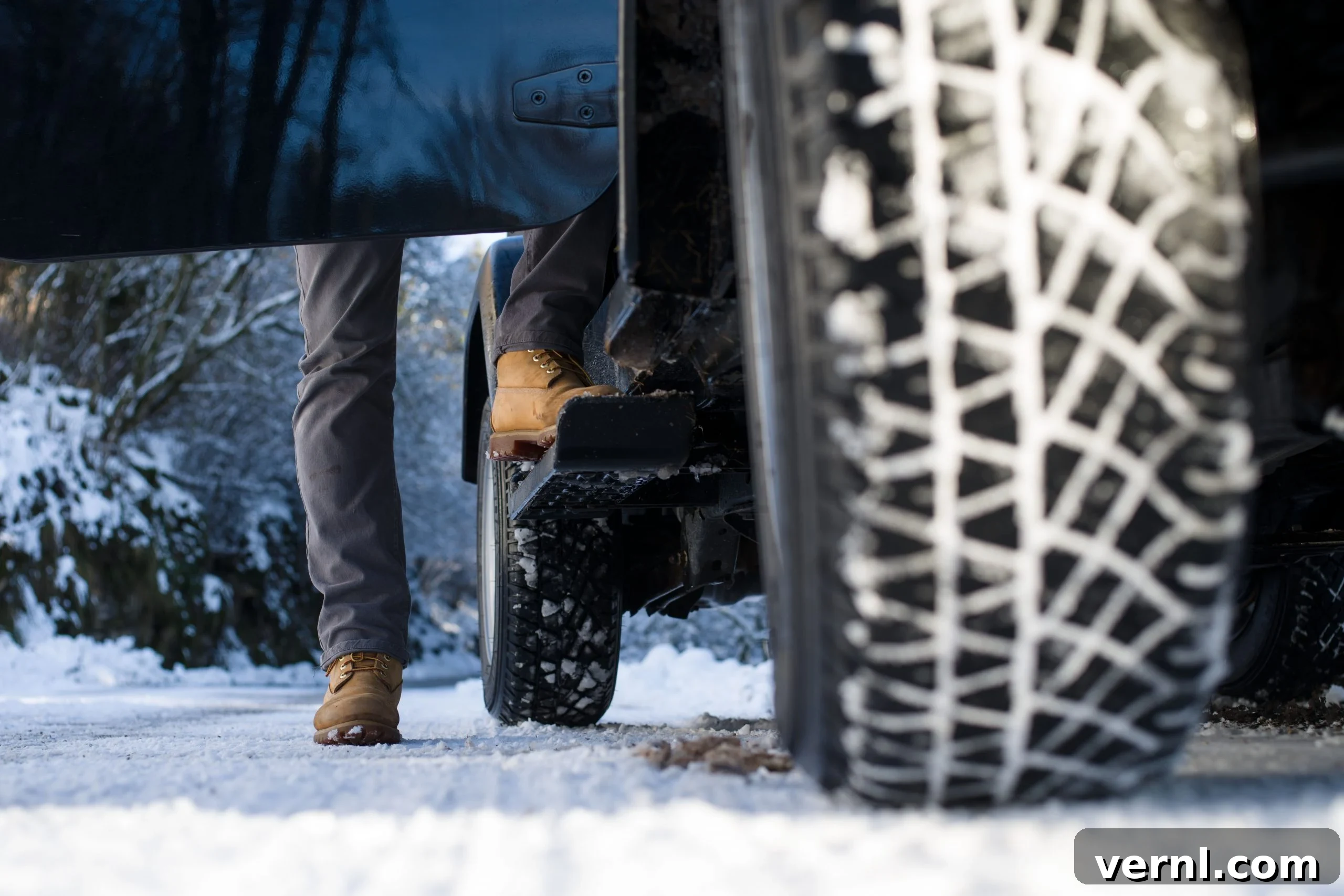
Welcome to Family Handyman‘s Guide to Winterization, where you’ll find expert advice on how to get your home and vehicle in shape for the cold season — because frozen pipes, sky-high heating bills, and dangerous driving conditions do not have to be an inevitability this winter. Preparing your car for the colder months is just as crucial as readying your home, with tire maintenance standing out as a critical component for safety and efficiency.
As temperatures plummet, ensuring your vehicle is properly maintained becomes paramount for both safety and performance. One of the most overlooked, yet vital, aspects of winter car preparation is tire pressure. While cars typically require a tire pressure of 30 to 35 psi (pounds of force per square inch), which remains the ideal year-round recommendation, the actual pressure inside your tires is highly sensitive to temperature fluctuations. There aren’t different target numbers for summer or winter; instead, vigilance is key to maintaining the recommended psi consistently. When the temperature drops, you’ll almost certainly need to inflate your tires more often to ensure they remain at their optimal pressure for safe and efficient cold-weather driving.
The Physics of Cold: How Winter Weather Impacts Tire Pressure
The relationship between temperature and tire pressure is governed by basic physics. When outdoor temperatures drop significantly, the air molecules inside your tires become less active. This reduction in molecular motion causes them to slow down and occupy less space, resulting in a measurable drop in air pressure. This phenomenon can lead to potentially underinflated tires, which pose various risks. Conversely, during warmer weather, air molecules move around faster, increasing collisions within the tire and raising the internal pressure. This can sometimes lead to an overinflated level, though cold weather is far more likely to cause underinflation.
Many leading tire manufacturers, including Firestone and Goodyear, provide a helpful guideline: tires typically lose approximately one psi for every 10 degrees Fahrenheit drop in the outside temperature. This means that a significant cold snap can quickly lead to critically low tire pressure. For instance, if your tires were perfectly inflated at 60°F and the temperature suddenly drops to 20°F, you could lose 4 psi, which is a substantial reduction. Modern vehicles often come equipped with a Tire Pressure Monitoring System (TPMS), a crucial safety feature that illuminates a warning light on your dashboard when tire pressure drops by at least 25 percent below the recommended level. This system is especially invaluable for keeping track of tire pressure in cold weather, providing an early alert before issues become severe.
A Step-by-Step Guide to Checking Tire Pressure in Cold Weather
Regularly checking your tire pressure is a simple yet essential maintenance task, particularly during the winter months. For the most accurate reading, it’s best to check your tires when they are “cold.” This means after your car has been parked for at least three hours, or before driving more than a mile. Driving generates friction and heat, which temporarily raises the air temperature and pressure inside the tires, leading to an inaccurate reading.
Finding the Right PSI for Your Vehicle
Your car’s ideal tire pressure is specific to your make and model. This crucial information is usually listed on a sticker located inside the driver-side door jamb or within the car’s owner’s manual. A common and potentially dangerous mistake is to inflate tires to the max pressure listed on the tire sidewall. This figure represents the maximum pressure the tire can safely hold, not the recommended operating pressure for your specific vehicle. Always follow the auto manufacturer’s recommendation. Also, be sure to check the recommended pressure for the front and rear tires separately, as they may differ depending on the vehicle’s weight distribution.
Using a Tire Pressure Gauge
To get an accurate reading, remove the valve cap from the tire stem and swiftly and firmly insert a quality pressure gauge onto the valve. Listen for a brief hiss of air before the gauge provides a reading. Immediately after, replace the air valve cap to prevent any air from escaping and to protect the valve from dirt and moisture. If your tires are below the recommendation, use an air compressor to inflate them until you reach the correct reading. Many gas stations offer free air pumps, or you can invest in a portable air compressor for convenience at home.
While it’s generally best practice to check your tires once a month, you might need to check your tire pressure more often in cold weather, especially during periods of significant temperature fluctuations. Beyond a gauge reading, there are other tell-tale signs that your tires might be underinflated:
- They look noticeably flatter or softer than usual, even if not entirely flat.
- The steering wheel shakes or feels heavier and less responsive.
- It takes longer to come to a complete stop when braking, indicating reduced traction.
- Your vehicle feels sluggish or less stable, particularly around corners.
The Perils of Driving on Underinflated Tires in Winter
A persistent misconception, especially in snowier locales, is that underinflated tires are better for driving on snow because they supposedly create a larger contact patch with the road surface, enhancing traction. While it’s technically true that the contact patch might slightly increase, it is never safe to intentionally drive with low tire pressure, even in cold weather or snowy conditions. The risks far outweigh any perceived benefit.
When tires are underinflated, the sidewalls flex excessively, leading to significantly poor handling and reduced vehicle control. The car won’t turn as responsively, and you might experience a sensation of swaying or “mushiness” around corners, making emergency maneuvers extremely hazardous. Chris Pyle, an auto expert with JustAnswer.com, explains that under-inflated tires expose the softer sidewall to road imperfections and hazards, greatly increasing the risk of punctures and tire damage. He adds, “The center of the tires also cup up, causing the sides of the contact surface to wear but not the center. Basically, the tires wear faster, your MPG will be less, and it can be dangerous to you and others on the road.” This uneven wear not only shortens tire lifespan but also compromises the tire’s ability to grip the road effectively.
Furthermore, underinflated tires cause more friction with the road. This increased friction generates excessive heat, which can weaken the tire structure, potentially leading to delamination and a sudden blowout. Justin Dugan, brand ambassador at American Trucks, cautions, “They also provide less stability, making it harder to control the vehicle, especially during turns or emergency maneuvers, which increases the risk of accidents.” The consequences of driving with improperly inflated tires are severe. According to a 2012 study by the National Highway Traffic Safety Administration (NHTSA), driving with underinflated tires makes you three times more likely to be involved in a collision related to tire issues. This statistic alone underscores the critical importance of maintaining correct tire pressure.
The Dangers of Over-Inflating Tires in Winter
While underinflation is a more common cold-weather problem, overinflating tires also carries significant risks and should be avoided. Overinflating tires generally causes them to wear out prematurely, particularly in the center of the tread, and can lead to unexpected blowouts, especially if the tire strikes a pothole or other road hazard. In winter, driving on over-inflated tires is particularly dangerous because it severely reduces traction.
Justin Dugan explains, “With over-inflated tires, less of the tire makes contact with the road, which can be especially risky on icy or snowy surfaces.” A reduced contact patch means less grip, making the vehicle more prone to skidding, increasing braking distances, and decreasing overall stability. The ride quality also suffers, becoming harsher and less comfortable, as the tire loses some of its ability to absorb road imperfections. In icy or snowy conditions, this loss of traction can quickly lead to a loss of control, transforming a minor inconvenience into a serious accident risk.
Beyond Pressure: Comprehensive Tire Care for Winter Driving Safety
Maintaining correct tire pressure is the cornerstone of winter tire care, but it’s part of a larger picture of vehicle readiness. To truly optimize your safety and performance during the colder months, consider these additional aspects of tire maintenance:
Dedicated Winter Tires vs. All-Season Tires
For those in regions experiencing severe winters with consistent snow, ice, and temperatures below 45°F (7°C), investing in a set of dedicated winter tires is highly recommended. Unlike all-season tires, winter tires feature a specialized rubber compound that remains pliable in cold temperatures, ensuring superior grip. Their unique tread patterns, with deeper grooves and numerous sipes (small slits), are designed to effectively bite into snow and ice, vastly improving traction, braking, and handling on slippery surfaces. While all-season tires offer versatility, their performance significantly diminishes in extreme cold.
Tread Depth: A Crucial Factor for Winter Traction
Adequate tire tread depth is vital for maintaining traction, especially on wet, snowy, or icy roads. As tires wear down, their ability to channel water and grip slippery surfaces decreases dramatically. A simple way to check your tread depth is with the “penny test”: insert a penny into a tread groove with Lincoln’s head upside down. If you can see the top of Lincoln’s head, your tread is too shallow (less than 2/32 inch) and your tires should be replaced. For winter driving, many experts recommend at least 4/32 inch of tread depth for optimal performance.
Tire Rotation and Alignment
Regular tire rotation ensures even wear across all four tires, extending their lifespan and maintaining balanced performance. This is particularly important in winter when consistent grip from all tires is crucial. Similarly, proper wheel alignment helps prevent uneven tire wear and ensures your vehicle tracks straight, improving handling and reducing stress on other steering components. Getting an alignment check before winter can save you money on new tires and improve your driving experience.
Prepare for Winter: A Comprehensive Approach
Tire pressure and condition are critical but represent just one facet of comprehensive winter vehicle preparation. To ensure your car is fully ready for the challenges of winter, consider a broader check-up: inspect your battery and charging system (cold temperatures reduce battery efficiency), top off all fluids (windshield washer, coolant, oil), check your wipers and defrosters, and assemble an emergency kit with blankets, a shovel, jumper cables, and non-perishable food. By being proactive with these checks, you can significantly enhance your safety and peace of mind on winter roads.
About the Experts
- Chris “Moose” Pyle is a master-certified technician with over 20 years of automotive experience. He has served as an expert for JustAnswer.com since 2006, where he provides answers to hundreds of car maintenance and repair questions daily, offering practical and insightful advice to vehicle owners.
- Justin Dugan is a respected brand ambassador at American Trucks. With a career spanning since 2011, he has become a recognizable figure as an automotive writer and TV host, sharing his extensive knowledge and passion for vehicles with a wide audience.