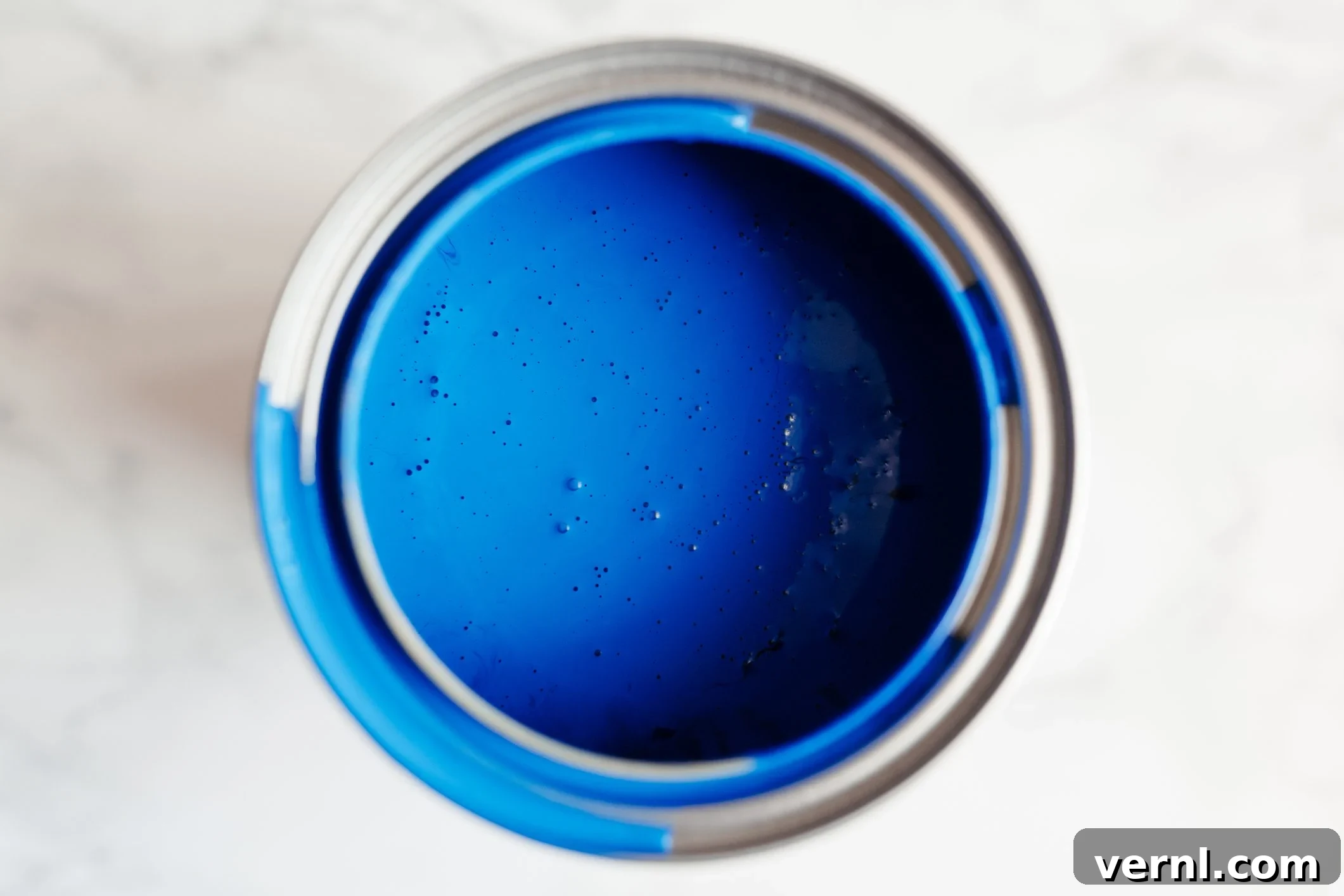
Every spring, homeowners across America engage in a familiar ritual: the rediscovery of old paint cans stored away in garages, sheds, or basements. As you gingerly pry open a lid, a flicker of hope might accompany the thought, “Is this still good?” This moment often sparks a frantic internet search for answers to pressing questions like, “Can paint freeze?” or “Is my paint ruined if it froze?” The good news is, you’re not alone, and we’ve got you covered. Understanding the impact of freezing temperatures on paint is crucial for preserving its quality and ensuring your next painting project goes smoothly.
This comprehensive guide will delve into the intricacies of paint and freezing temperatures. We’ll explore which types of paint are most susceptible to cold, the precise temperatures at which damage occurs, and, most importantly, actionable strategies for preventing paint from freezing in the first place. Furthermore, we’ll address the critical question of whether frozen paint can ever be salvaged and offer practical advice on how to properly handle and store your valuable paint supplies to extend their shelf life and maintain their pristine condition.
Can Paint Freeze? Understanding the Vulnerability of Your Coatings
The straightforward answer is a resounding yes, paint can indeed freeze. However, the more detailed explanation reveals that its susceptibility depends significantly on the paint’s composition and the severity of the cold conditions it’s exposed to. Residential paints typically fall into two main categories: latex (water-based) and oil-based formulations, each reacting distinctively to frigid temperatures.
Latex paints, as their name suggests, contain a significant amount of water. This water content is the primary factor that makes them vulnerable to freezing. Water expands when it freezes, and this expansion can disrupt the delicate balance of polymers, pigments, and binders within the paint. When these components are forced apart, the paint’s uniform emulsion can break down, leading to irreversible damage.
In contrast, oil-based paints are formulated with alkyd resins and petroleum-derived solvents like naphtha, rather than water. This fundamental difference in composition grants them a much higher tolerance for cold. “For the most part, DIYers only really need to worry about water-based paint freezing,” advises Brandon Walker, Superintendent with ASAP Restoration. “Oil-based paint will freeze, but only in extreme conditions like the Alaskan tundra during winter.” This distinction is critical for homeowners, as it dictates the necessary precautions for storage and handling during colder months.
At What Temperature Does Paint Freeze? Differentiating Between Paint Types
The precise freezing point of paint is a critical piece of information for proper storage. Water-based paints will typically begin to freeze at or below 32ºF (0ºC). However, it’s important to note that the exact temperature can vary slightly depending on the specific ingredients and additives present in a particular paint formula. Just as salt lowers the freezing point of water, certain chemicals in paint formulations can slightly depress its freezing point, offering a minor degree of protection during mild cold snaps. While this doesn’t drastically change the overall vulnerability, it can provide a small buffer.
Conversely, oil-based house paints exhibit remarkable resilience to cold. Unlike some oil-based craft paints that might use linseed oil and could freeze around -4ºF (-20ºC), the heavy-duty oil-based house paints found in hardware stores are engineered to withstand temperatures far below what most residential garages or sheds in the continental US experience. Their non-water content makes them virtually impervious to the freezing temperatures that would utterly destroy a latex paint. This robust characteristic means that, under normal winter conditions, your oil-based paints are highly unlikely to suffer freezing damage.
However, even if oil-based paints don’t freeze, extreme cold can still affect their usability. They can become significantly thicker, more viscous, and harder to apply. This doesn’t necessarily mean they are ruined, but it can make application a challenge until they warm up. Optimal storage for all paints, regardless of type, generally falls between 50ºF and 77ºF (10ºC and 25ºC) to maintain their ideal consistency and performance.
Does Paint Get Ruined if It Freezes? Understanding Irreversible Damage
In almost all instances, the answer is a definitive yes: paint, especially water-based paint, is irrevocably ruined once it freezes. The damage inflicted by the freezing process goes far beyond a temporary change in consistency; it fundamentally alters the paint’s chemical and physical structure, rendering it unusable for its intended purpose.
“All paint will be denatured if it freezes,” explains Brandon Walker. “When water-based paint freezes, it ruins the texture and consistency of the paint. This means that even when it thaws out again, it won’t work the way it did before the freeze occurred.” He offers a vivid and relatable analogy: “It’s a lot like freezing milk — when it thaws out, you have milky water, and a lot of clumps that don’t look right. Paint will do the same thing.”
The science behind this phenomenon is straightforward. Water, a key component of latex paint, expands as it crystallizes into ice. This expansion exerts immense pressure on the finely dispersed pigments, binders, and other solids that form the paint’s emulsion. The delicate balance of these components, which are designed to remain suspended evenly, is shattered. When the paint thaws, these solids can no longer re-disperse properly. Instead, they separate from the liquid, forming unsightly clumps, crystals, or a cottage cheese-like texture.
Beyond the visual and textural changes, this denaturing process severely compromises the paint’s performance characteristics. The ability of the paint to adhere properly to surfaces, to dry evenly, and to provide a consistent color and sheen is destroyed. You might experience poor coverage, an uneven finish, streaking, bubbling, or premature peeling. Furthermore, paint that has been compromised by freezing often loses its intended color integrity, leading to discrepancies even if it appears superficially similar. Making matters worse, paint stored in unheated environments often endures multiple freeze/thaw cycles over a single winter, compounding the damage with each iteration. Therefore, the most effective strategy to deal with frozen paint is to prevent it from freezing in the first place.
How To Keep Paint From Freezing: Essential Storage Strategies
Protecting your paint from the damaging effects of freezing temperatures is primarily about intelligent storage. The most straightforward and effective method is to store your paint indoors, within a temperature-controlled environment where temperatures consistently remain above freezing. This proactive approach ensures the longevity and usability of your paint supplies.
Industry professionals strongly recommend specific practices to safeguard your paint. Anthony Kulikowski, Franchise Owner of Five Star Painting of South Bend Indiana, emphasizes, “We always recommend inside the house and never in the garage or a storage shed unless they are heated.” Ideal storage locations include basements, utility closets, or even temperature-controlled pantries – any space within your home that maintains a stable, moderate temperature throughout the year. Avoid uninsulated areas like attics, unheated garages, outdoor sheds, or vehicles, which are prone to drastic temperature fluctuations.
Beyond simply bringing paint indoors, several other crucial steps can significantly reduce the risk of freezing and extend your paint’s shelf life:
- Ensure Lids are Fully Sealed: Before storing, make sure the lid of your paint can is completely and securely sealed. Evaporation of the water content from water-based paints can make the remaining paint even more susceptible to freezing, as well as altering its consistency. Use a rubber mallet to firmly tap the lid down all around the rim. For added security, you can place a layer of plastic wrap over the opening before replacing the lid, creating an even tighter seal.
- Minimize Air Exposure: If you have only a small amount of paint left in a large can, consider transferring it to a smaller, airtight container. Less air space above the paint reduces the chance of skinning over and evaporation, which helps maintain its quality and consistency. Glass jars with tight-fitting lids or smaller plastic paint storage containers are excellent options.
- Label Clearly: Always label your paint cans with the date of purchase, the room it was used in, and the color name/code. This simple step ensures you can easily identify and use the correct paint for touch-ups, preventing unnecessary opening and re-sealing, which can introduce air and contamination.
- Elevate Cans: If storing paint on concrete floors in a basement or garage (even if heated), consider placing cans on shelves or on a piece of wood. Concrete can wick away heat and make the bottom of the can colder than the ambient air, increasing the risk of freezing, especially for cans stored directly on the floor.
- Monitor Temperature: For those who absolutely must store paint in a garage or shed, invest in a simple indoor/outdoor thermometer to monitor temperatures. If temperatures are predicted to drop below freezing for an extended period, bring vulnerable latex paints indoors temporarily.
By implementing these practical storage tips, you can confidently protect your investment in paint and ensure it remains in pristine, usable condition for future projects.
Can You Use Paint That Has Frozen? Assessing the Risks and Salvageability
It’s crucial to reiterate that in the vast majority of cases, paint that has frozen and subsequently thawed will be ruined. While it might be tempting to try and salvage it, the risks associated with using compromised paint usually outweigh any potential cost savings. “Frozen paint will be denatured and clumpy even after it thaws,” says Walker, who vividly compares applying thawed paint to “applying cottage cheese to your walls. If you don’t mind bubbles, inconsistencies, and defects, then it’ll work but not look good.”
The consequences of using previously frozen paint can be extensive:
- Poor Adhesion: The binders in the paint may no longer effectively adhere to the surface, leading to peeling, flaking, and a generally poor finish.
- Uneven Color and Sheen: Pigments can separate, resulting in blotchy, inconsistent color application and a non-uniform sheen across the painted surface.
- Difficult Application: The altered texture makes the paint difficult to spread smoothly, leading to streaks, brush marks, and an unprofessional appearance.
- Reduced Durability: The paint film may be weakened, offering less protection against moisture, wear, and tear, ultimately shortening the lifespan of your paint job.
- Bubbling and Texture Issues: Clumps and broken emulsion can cause unsightly bubbles, bumps, and an uneven texture on your walls.
Despite these significant risks, if you’re determined to attempt using thawed paint, perhaps for a project where appearance and durability are not paramount (e.g., priming an unseen area or painting a utility shed), here’s a cautious approach:
- Allow for Slow Thawing: Bring the frozen paint indoors and allow it to warm up to room temperature slowly and naturally. Do not try to accelerate the thawing process with heat guns, hot water baths, or direct heat, as this can further damage the paint.
- Thorough Stirring: Once thawed, stir the paint vigorously and thoroughly for several minutes. Use a paint stirrer or a drill attachment mixer to ensure all components are mixed as best as possible.
- Inspect Consistency: After stirring, carefully inspect the paint. If it still looks like cottage cheese, has obvious clumps, crystals, or a watery consistency that won’t blend, it’s a loss. In this case, you should dispose of it properly.
- Perform a Test Patch: If the color and consistency appear relatively normal after thorough stirring, apply a small test patch to an inconspicuous area or a piece of scrap material. Let it dry completely and observe its adhesion, color uniformity, and overall finish.
Even if the paint seems acceptable after a test, exercise caution. “Once a paint has frozen,” cautions Kulikowski, “the color and sheen may not match any longer, and you may have issues with getting it to bond properly as well.” In summary, while nothing might physically stop you from trying to use thawed paint, it’s a gamble that almost always compromises the quality of your project. For any paint job where a professional finish and lasting durability are desired, investing in new, unfrozen paint is always the recommended and safer option.
Frequently Asked Questions About Frozen Paint
Are there any types of paint that won’t freeze?
While no paint is entirely immune to extreme cold, oil-based paints are highly unlikely to freeze under typical conditions encountered in residential settings. Their solvent-based composition, free from water, gives them exceptional resistance. However, even oil-based paints are affected by very low temperatures. As Brandon Walker explains, “When oil-based paint gets too cold, the viscosity of the paint is affected, and it starts to run more like molasses than syrup.” This increased viscosity makes application incredibly challenging. Furthermore, all paints have specific temperature ranges for optimal drying and curing, meaning even unfrozen oil-based paint may not perform or cure correctly in freezing ambient conditions.
Does wood stain freeze, too?
Absolutely, wood stain, particularly water-based formulations, is also highly susceptible to freezing. Scott Paul, Owner of DeckStainHelp.com, advises homeowners to be vigilant for signs that their wood stain has been compromised by cold temperatures. Key indicators include “excessive thickening, gelling/clumping of the material, or skinning on the top portion.” Similar to paint, once a stain freezes, its ability to penetrate and protect wood effectively is severely diminished, potentially leading to an uneven finish and poor long-term performance. Always store stains in a climate-controlled environment.
How can I tell if paint has frozen without opening the can?
It can be challenging to determine if paint has frozen without opening the can, but there are a few clues. If the can feels unusually light, it might indicate that some of the liquid has evaporated, making it more prone to freezing. A bulging can might suggest expansion due to freezing, though this is less common with paint cans than with other liquids. The most reliable way, however, is to bring the can into a warm environment and let it sit for at least 24-48 hours. Then, open it carefully and inspect its consistency. If it looks like a solid block of ice, it’s obviously frozen. If it’s thawed, proceed with the visual inspection as described in the “Can You Use Paint That Has Frozen?” section.
What about paint primer? Does it also freeze?
Yes, primers, especially water-based (latex) primers, are just as vulnerable to freezing as their paint counterparts. Primers are essentially specialized paint formulations designed to prepare surfaces, and their chemical makeup often includes water. Therefore, the same rules and precautions for preventing freezing apply to primers. Oil-based primers, similar to oil-based paints, will have a much higher resistance to freezing but can still become very thick and difficult to apply in cold conditions.
How should I dispose of paint that has been ruined by freezing?
Frozen and ruined paint, even if it’s water-based, should not simply be poured down the drain. It’s considered household hazardous waste. The best approach is to allow the paint to completely dry out in the can (you can add kitty litter or a paint hardener to speed up the process). Once it’s solid, check with your local waste management facility to see if it can be disposed of with regular household trash. For liquid paint, you’ll need to take it to a household hazardous waste collection site or participate in a local paint recycling program. Never dispose of liquid paint in landfills or pour it into storm drains.
About the Experts
Anthony Kulikowski has been a painter since high school, working as a contractor just before opening Five Star Painting, a Neighborly company, in 2017. He loves seeing his team succeed, giving back to the community, and working with his mentors, gathering knowledge he can share with future franchise owners.
Brandon Walker has been in the painting and construction industry for more than 20 years. After running his own company, he decided to advance his skills as a Superintendent with ASAP Restoration. Brandon cut his teeth as a teenage painter working for Walker Paint Masters doing commercial projects for Planet Hollywood and Elizabeth Arden’s Red Door Spa among others.
Scott Paul has used and sold enough decking and wood stain to cover over 100 million square feet. The owner of DeckStainHelp.com, he started his first decking company in 1993. That business evolved into exterior wood and deck restoration, and today Scott and his companies have restored over 10,000 decks in the Metro Detroit area. He is an authority in the deck restoration industry and has contributed to numerous wood restoration forums and informative sites.