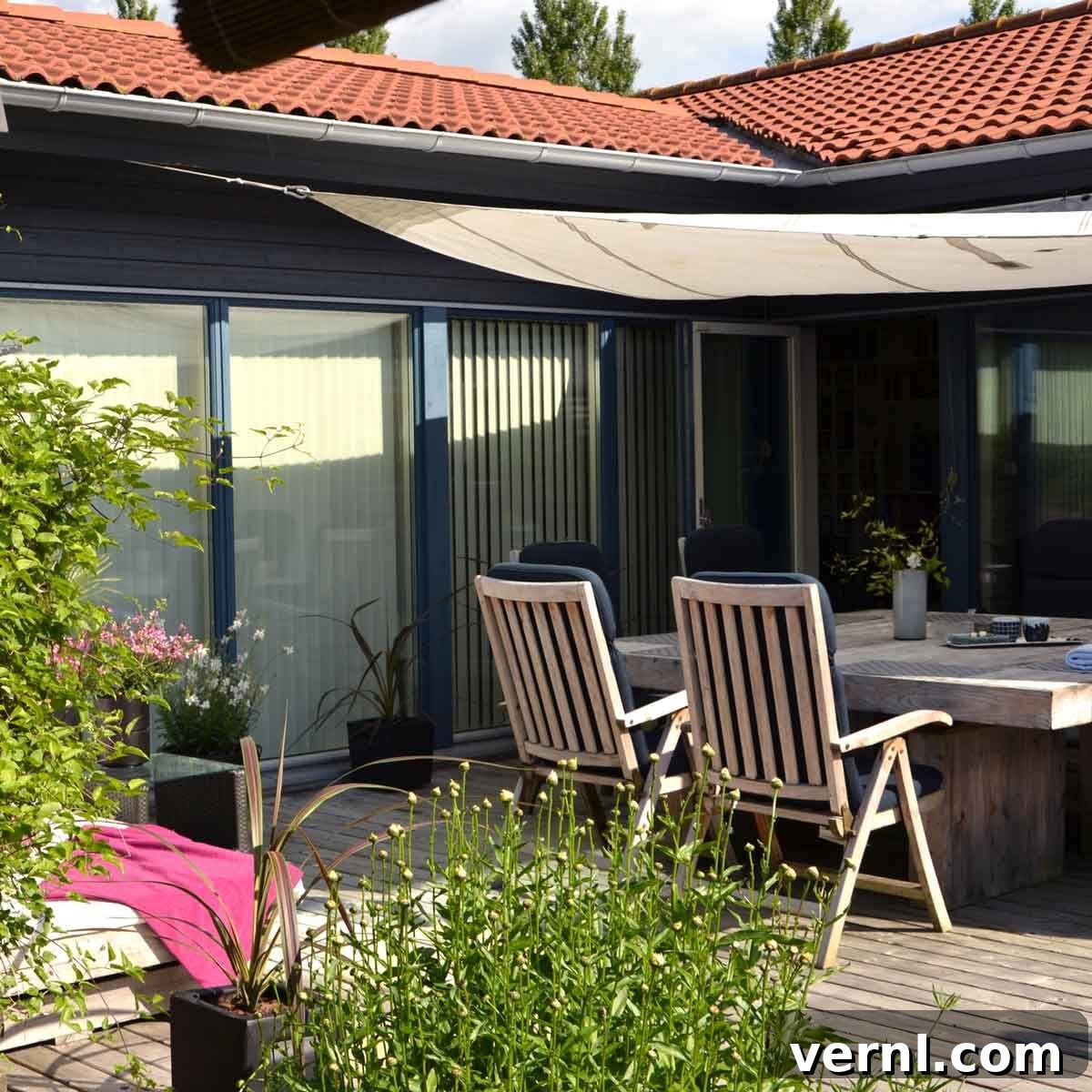
If you’re looking to transform your outdoor space into a comfortable and stylish oasis, a shade sail might be the perfect solution. These innovative tensioned fabric structures offer far more than just protection from the sun’s harsh rays; they introduce a striking, modern design element that elevates the aesthetic appeal of any yard, patio, or deck. Far from being merely functional, shade sails merge architectural elegance with practical benefits, making them a cornerstone of contemporary outdoor living.
What is a Shade Sail?
At its core, a shade sail is a versatile patio or deck covering crafted from durable, weather-resistant outdoor fabric. Its primary purpose is to provide significant protection from the sun’s relentless heat and harmful ultraviolet (UV) radiation. Installation involves stretching the fabric taut, creating a dynamic, sculptural form, and securing its corners to robust mounting points. These anchor points can range from existing structures like a pergola, sturdy posts, mature trees, or even the walls of your home or garage. This method of installation, relying on tension, allows for incredible flexibility in design and positioning.
Superior Sun Protection and UV Blocking
One of the most compelling advantages of shade sails is their exceptional ability to block UV rays. Most high-quality shade sails are engineered to intercept between 90 to 95 percent of these damaging rays, offering a crucial layer of defense against sunburn and long-term skin damage. While there can be minor variations in UV absorption based on the fabric’s weight, color, and weave tightness—typically less than five percent difference—it’s generally true that heavier fabrics with a tighter weave and darker colors offer the most robust UV protection. This makes them an invaluable addition to any outdoor area where prolonged sun exposure is a concern, such as children’s play zones, poolside lounging areas, or outdoor dining spaces.
Temperature Reduction and Breathability
Beyond UV defense, shade sails contribute significantly to temperature regulation. The unique woven fabric construction, commonly high-density polyethylene (HDPE), allows air to circulate freely through the material. This breathability is key to creating a cooler environment beneath the sail, often reducing ambient temperatures by a noticeable 15 to 20 degrees Fahrenheit. Unlike solid roofs that can trap heat, shade sails allow warm air to escape while providing shade, ensuring a refreshing breeze can still pass through. This makes your outdoor areas far more enjoyable during hot summer months, inviting you to spend more time outdoors in comfort.
Understanding Rain Protection
It’s important to differentiate between water-resistant and waterproof shade sails when considering rain protection. Standard shade sails are typically water-resistant, meaning they can effectively repel a light sprinkle, especially if installed at a proper angle to allow water to run off. This angled installation is crucial, preventing water from pooling and stretching the fabric. However, because most shade sails are made from breathable woven fabric, designed to allow air circulation, water will eventually drip through during a heavy downpour. If complete protection from rain is a priority, you should specifically seek out shade sails categorized as waterproof. These are usually made from different materials, such as PVC, which are non-breathable and offer full rain blockage, though they may feel warmer underneath due to the lack of airflow.
Types of Shade Sails
The world of shade sails offers immense creative freedom, allowing you to tailor solutions to virtually any outdoor space or aesthetic vision. While they are typically available in three fundamental shapes—triangle, square, and rectangle—the combinations of styles, installation techniques, and colors are truly limitless, enabling personalized designs that reflect your unique taste.
Common Shapes and Their Applications
- Triangle Shade Sails: These are incredibly versatile, offering the least amount of overall coverage but excelling in adaptability. Their geometric simplicity makes them ideal for smaller, awkward spaces, tight corners, or creating dynamic, artistic installations. By layering multiple triangle sails at varying heights and angles, you can achieve broader coverage while simultaneously enhancing the “wow” factor with a visually stunning, overlapping design.
- Square Shade Sails: Offering uniform and substantial coverage, square sails are a popular choice for central areas like dining patios or lounge zones. They provide a more traditional and predictable shaded footprint, making them straightforward to plan and install for maximum practical shade.
- Rectangle Shade Sails: Similar to squares but elongated, rectangular sails are perfect for covering longer areas such as pathways, side decks, or a stretch of a swimming pool. They provide extensive coverage while maintaining a clean, linear aesthetic.
Beyond Standard Shapes: Customization and Materials
For those with a grand vision or unique architectural requirements, custom shade sails are an excellent option. Specialized companies like Backyard City, Shazeebo, and Patio Products USA can custom-design and fabricate a shade sail precisely to fit the dimensions and contours of your specific patio or deck. This level of customization ensures a seamless integration with your existing architecture and landscape. When choosing a shade sail, consider the material: HDPE (high-density polyethylene) is renowned for its breathability and UV stability, while PVC (polyvinyl chloride) offers waterproof capabilities and increased durability, albeit with less airflow. The color choice also plays a role, with darker colors absorbing more heat but often blocking more UV, while lighter colors reflect more light and heat.
If you’re considering a DIY approach, here are a few tips for hanging a shade sail effectively and safely.
Pros and Cons of Shade Sails
Before investing in a shade sail, it’s wise to weigh its distinct advantages against potential drawbacks to ensure it aligns perfectly with your needs and expectations.
Advantages of Shade Sails (Pros)
- Unmatched Versatility: Shade sails can be installed in almost any outdoor setting, thanks to an extensive array of mounting options—walls, poles, trees, pergolas—and their varied shapes and sizes. This adaptability makes them suitable for a wide range of spaces, from small urban balconies to expansive garden areas.
- Exceptional Cooling Effect: The breathable fabric inherent in most shade sails allows refreshing breezes to pass through, significantly lowering the temperature beneath the shade. This natural ventilation can reduce the shaded area’s temperature by as much as 15 to 20 degrees Fahrenheit, creating a genuinely comfortable retreat even on the hottest days.
- Superior UV Protection and Some Rain Protection: Offering robust defense against harmful UV rays, shade sails protect both you and your outdoor furnishings from sun damage. Furthermore, while most are water-resistant, specifically designed waterproof varieties offer complete rain protection, allowing you to enjoy your outdoor space regardless of light showers.
- Cost-Effective Outdoor Shade Solution: Compared to permanent shade structures like custom-built pergolas, gazebos, or hard-structure roofs, shade sails represent a considerably more affordable initial investment, providing significant shade benefits without breaking the bank.
- Modern Aesthetic Appeal: Shade sails inject a contemporary, architectural flair into any outdoor environment. Their sleek lines and dynamic forms can transform a mundane patio into a chic, resort-like setting, instantly enhancing curb appeal and property value.
- Protection for Outdoor Furnishings: By blocking a high percentage of UV rays, shade sails help prevent fading and degradation of outdoor furniture, cushions, and decking, extending their lifespan and preserving their appearance.
Disadvantages of Shade Sails (Cons)
- Installation Complexity: While appearing simple, installing a shade sail, especially ensuring proper tension and secure anchor points, can be more challenging than the average DIYer might anticipate. Achieving the correct tension is critical for both the sail’s longevity and its effectiveness.
- Potential for Increased Costs with Professional Installation: Although the shade sail itself is often affordable, the overall cost can rise substantially if you require professional installation, particularly if new mounting posts need to be set in concrete or custom engineering is involved. Expect labor and hardware costs to add up.
- Limited Lifespan: A typical shade sail might last approximately eight to 10 years. However, this lifespan can fluctuate dramatically based on local weather conditions, UV exposure intensity, and maintenance. Areas prone to high winds, frequent storms, or extreme temperatures can accelerate deterioration.
- Vulnerability to Extreme Weather: If frequently subjected to high winds, improper tensioning can lead to flapping, stretching, and premature wear. While some robust shade sails can handle light snow loads, heavy snow or ice can stretch the fabric and compromise its integrity over time. In snowy climates, most manufacturers strongly recommend taking your shade sail down during the winter months to prevent damage and extend its life.
- Incompatibility with Outdoor Cooking Areas: Shade sails should never be installed directly over an outdoor cooking area or barbecue. The intense heat, sparks, and chemicals present in cooking fumes can severely damage the fabric, posing a fire hazard and drastically reducing the sail’s durability.
- Waterproofing Trade-offs: While waterproof options exist, standard breathable sails offer limited rain protection. Waterproof sails, conversely, may not offer the same cooling ventilation due to their non-breathable nature.
Cost of Shade Sails
The total cost of adding a shade sail to your outdoor space is highly variable, influenced by factors such as the size and quality of the sail, the complexity of installation, and whether you opt for a DIY approach or professional services.
DIY Shade Sail Installation Costs
If you decide to undertake the installation yourself, it’s generally advisable for it to be a two-person job, with at least one individual possessing experienced DIY skills. The shade sail itself can be purchased from major retailers like Amazon or Home Depot, with prices ranging from as little as $30 for smaller, basic models to $400 or more for larger, higher-quality sails. In addition to the sail, you will need to purchase mounting hardware, which is usually sold separately. This hardware includes essential components such as turnbuckles for tensioning, shackles, eye bolts, and possibly poles (wood, aluminum, or steel) if existing structures aren’t sufficient. The cost of hardware can easily add another $50 to $200+, depending on the quality and quantity needed.
Professional Shade Sail Installation Costs
Engaging a licensed contractor for professional installation will naturally entail a significantly higher investment. This cost encompasses not only the sail and hardware but also labor, any necessary customization, the expense of setting sturdy mounting posts in concrete, and potentially engineering consultations to ensure structural integrity and compliance with local building codes. Factoring in all these elements, professional shade sail installation could cost as much as $20 per square foot. To put this into perspective, according to Arizona Shade Sails, a substantial 20 ft. x 20 ft. four-column shade sail system, which provides extensive coverage, could command a price tag of $8,000 to $10,000 for a complete, professionally installed solution. While the initial outlay is higher, professional installation offers peace of mind regarding safety, durability, and optimal performance, especially for complex designs or large-scale projects.
Conclusion: Enhancing Your Outdoor Living
Shade sails represent a compelling fusion of modern design and practical utility, offering an elegant and effective way to enhance any outdoor living area. From providing crucial UV protection and creating cooler, more comfortable spaces to adding a sophisticated aesthetic touch, their benefits are numerous. While installation requires careful planning and execution, and some considerations regarding weather vulnerability exist, the versatility and transformative power of shade sails make them an increasingly popular choice for homeowners seeking to maximize their enjoyment of their outdoor environments. Whether you opt for a budget-friendly DIY project or a custom professional installation, a shade sail can dramatically improve the comfort, usability, and visual appeal of your patio, deck, or garden for years to come.