
Mastering the Bandsaw: Essential Tips, Tricks, and Safety Guidelines for Precision Cuts
The bandsaw is an indispensable tool in any woodworking shop, celebrated for its remarkable versatility in making precise straight cuts, intricate curves, and even efficient resawing of large stock. However, like all specialized machinery, fully harnessing its capabilities demands a deep understanding of its mechanisms, the application of smart techniques, and an unwavering commitment to safety. This comprehensive guide aims to elevate your bandsaw skills, offering essential tips, advanced tricks, and crucial maintenance advice to help you achieve cleaner cuts, enhance your workshop’s efficiency, and ensure a secure working environment.
Understanding Your Bandsaw: More Than Just a Cutting Tool
Before exploring advanced cutting techniques, it’s vital to have a solid grasp of your bandsaw’s fundamental components and operational principles. A bandsaw functions by employing a continuous loop of a metal blade, which is stretched taut over two or more wheels, with one wheel typically powered by an electric motor. This innovative design facilitates a continuous cutting action, setting it apart from reciprocating saws like jigsaws or sabre saws.
Its primary advantages include the ability to make deep cuts into thick materials, effortlessly create non-linear (curved) cuts, and perform highly efficient resawing to produce thinner lumber from thicker planks. To truly unlock these benefits, meticulous setup, consistent maintenance, and refined operational techniques are absolutely paramount.
Safety First: Non-Negotiable Bandsaw Operation Protocols
Operating a bandsaw, much like any power tool, requires absolute attention to safety. Overlooking proper safety precautions can lead to severe injuries and workshop hazards. It is imperative to integrate the following guidelines into your regular workflow and adhere to them without exception:
- Personal Protective Equipment (PPE): Always wear safety glasses or a full face shield to protect your eyes and face from flying wood chips and dust. Hearing protection is also strongly recommended, especially during prolonged use. Ensure you avoid loose clothing, dangling jewelry, and tie back long hair that could become entangled in the moving machinery.
- Blade Guard Adjustment: Properly adjust the blade guard so it sits just above the workpiece. This critical step not only protects your hands from the blade but also significantly contributes to stabilizing the blade during the cutting process, improving cut accuracy.
- Maintain a Clear Workspace: Keep your work area impeccably tidy and free of any clutter. Ensure that your workshop is well-lit and remove any potential tripping hazards to prevent accidents.
- Secure Your Workpiece: Always ensure that your material is firmly supported before initiating a cut. Never attempt to freehand cut small or unstable pieces, as they can easily bind, kick back violently, or cause the blade to deflect. Utilize push sticks for small workpieces or whenever your hands come close to the moving blade.
- Never Force a Cut: Allow the bandsaw blade to perform the cutting action at its own pace. Forcing material through the blade can cause it to bind, deflect dangerously, or even break, potentially leading to hazardous kickbacks or the violent ejection of the blade.
- Pre-Operation Blade Inspection: Before each use, thoroughly inspect the blade for any signs of damage such as cracks, missing teeth, or excessive wear. A compromised or damaged blade is inherently dangerous and must be replaced immediately.
- Power Disconnection: Always disconnect the bandsaw from its power source before attempting any adjustments, changing blades, performing maintenance, or clearing jams. This simple step prevents accidental startup.
Optimizing Your Blade: The Heart of Bandsaw Performance
The bandsaw blade is undoubtedly the most critical component, directly influencing the quality, speed, and safety of your cuts. Making the correct blade selection and ensuring its meticulous maintenance are foundational to achieving successful bandsaw operations.
Choosing the Right Blade for Every Task
- Blade Width: Wider blades offer superior stability, making them ideal for straight cuts and resawing tasks as they effectively resist blade drift. Conversely, narrower blades (e.g., 1/8″ to 1/4″) are specifically designed for intricate curves and tighter radii. The minimum radius a blade can cut is directly proportional to its width; the narrower the blade, the tighter the curve it can achieve.
- Teeth Per Inch (TPI):
- Fewer TPI (e.g., 2-6 TPI): These blades are best suited for cutting thick stock and resawing operations. Their larger gullets efficiently clear sawdust, allowing for faster cutting, though they produce a coarser finish.
- More TPI (e.g., 10-14 TPI): Blades with a higher TPI are perfect for thinner materials, delicate work, and achieving smoother finishes. While they cut slower, the resulting surface requires less post-processing.
- Blade Material:
- Carbon Steel: A common and economical choice, excellent for general-purpose woodworking with softwoods and many hardwoods.
- Bi-metal: Featuring hardened teeth, bi-metal blades offer greater durability and longevity, capable of cutting tougher materials and lasting considerably longer than carbon steel.
- Carbide-tipped: These are the most durable and highest-performing blades, albeit the most expensive. They excel in cutting very hard or exotic woods and provide extended service life even under heavy use.
- Blade Type (Tooth Configuration):
- Hook Tooth: Characterized by an aggressive positive hook angle, these teeth are excellent for fast cutting through thick materials.
- Skip Tooth: Designed with widely spaced teeth and large gullets, skip tooth blades are ideal for cutting softwoods and preventing burning due to efficient chip clearance.
- Regular Tooth: A general-purpose tooth configuration that offers a finer finish and is suitable for various applications, though cutting speed is moderate.
Blade Tension and Tracking: Fundamentals for Precision
Achieving correct blade tension and accurate tracking are absolutely critical for both safety and optimal cutting performance. These adjustments prevent blade wandering, premature wear, and potential breakage.
- Blade Tension: Insufficient tension will cause the blade to deflect and wander, leading to inaccurate and inconsistent cuts. Conversely, excessive tension places undue stress on the blade, wheel bearings, and wheels themselves, significantly increasing the risk of blade breakage. Most bandsaws feature a tension scale; always aim for the recommended setting specific to your blade’s width. A traditional test involves deflecting the blade with your thumb; it should move approximately 1/4 inch with moderate, firm pressure.
- Blade Tracking: The blade must run perfectly centered on the crown of the upper wheel’s tire. Adjusting the tracking knob (typically located on the upper wheel assembly) ensures the blade maintains proper alignment, preventing it from rubbing against the wheel flange or completely coming off the wheels during operation.
Essential Bandsaw Tips & Advanced Techniques for Superior Results
Once your bandsaw is securely set up with the appropriate blade and safety measures in place, these expert tips and advanced techniques will significantly enhance your cutting capabilities, allowing for greater control, precision, and efficiency.
1. Preventing Binding in Tight Corners: The Blade Edges Rounding Trick
A common frustration, particularly when executing intricate curved cuts, is blade binding. This often occurs because the sharp, newly manufactured edges on the back of the blade can dig into the kerf, creating unwanted friction and resistance. Here’s a brilliant, time-tested trick to effectively mitigate this issue:
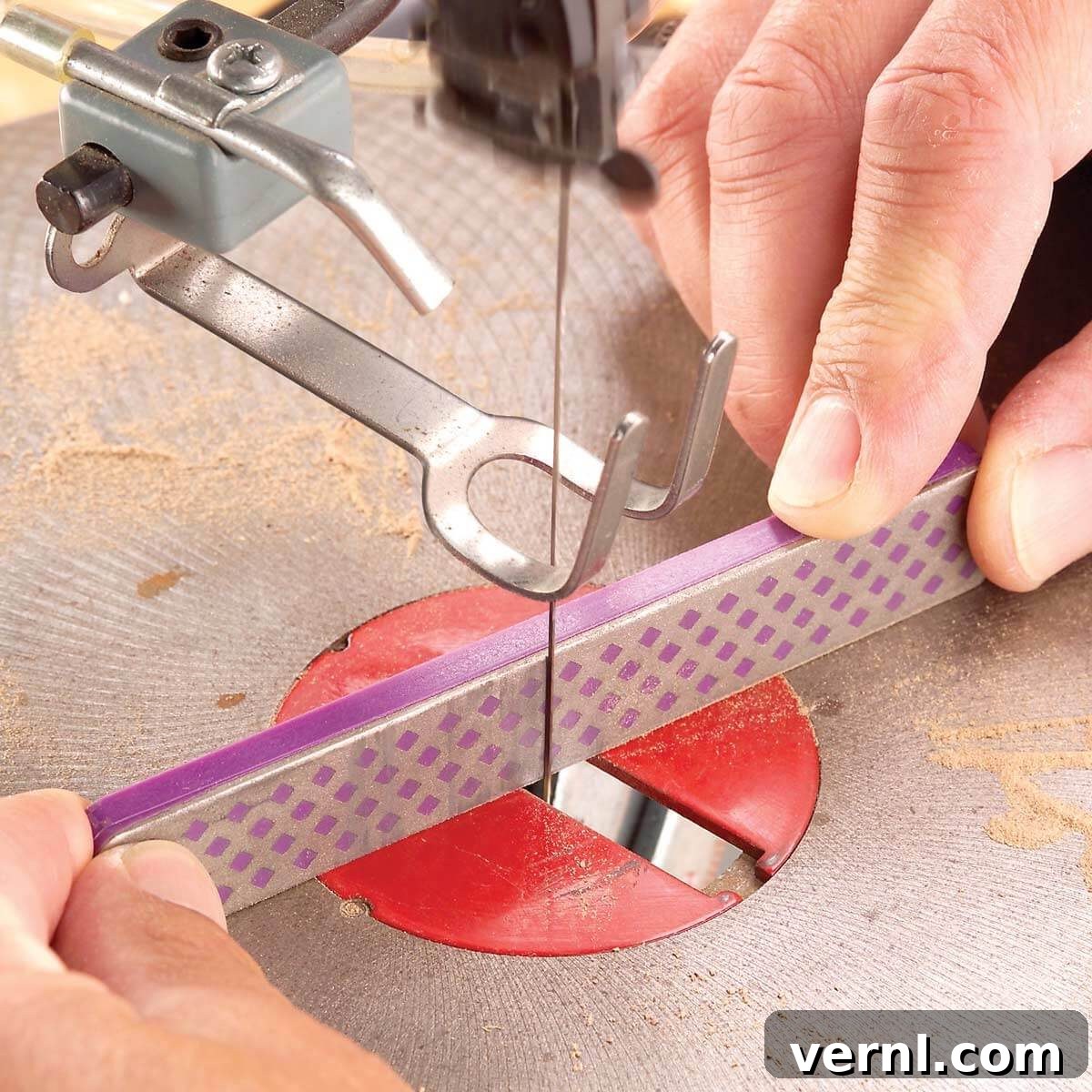
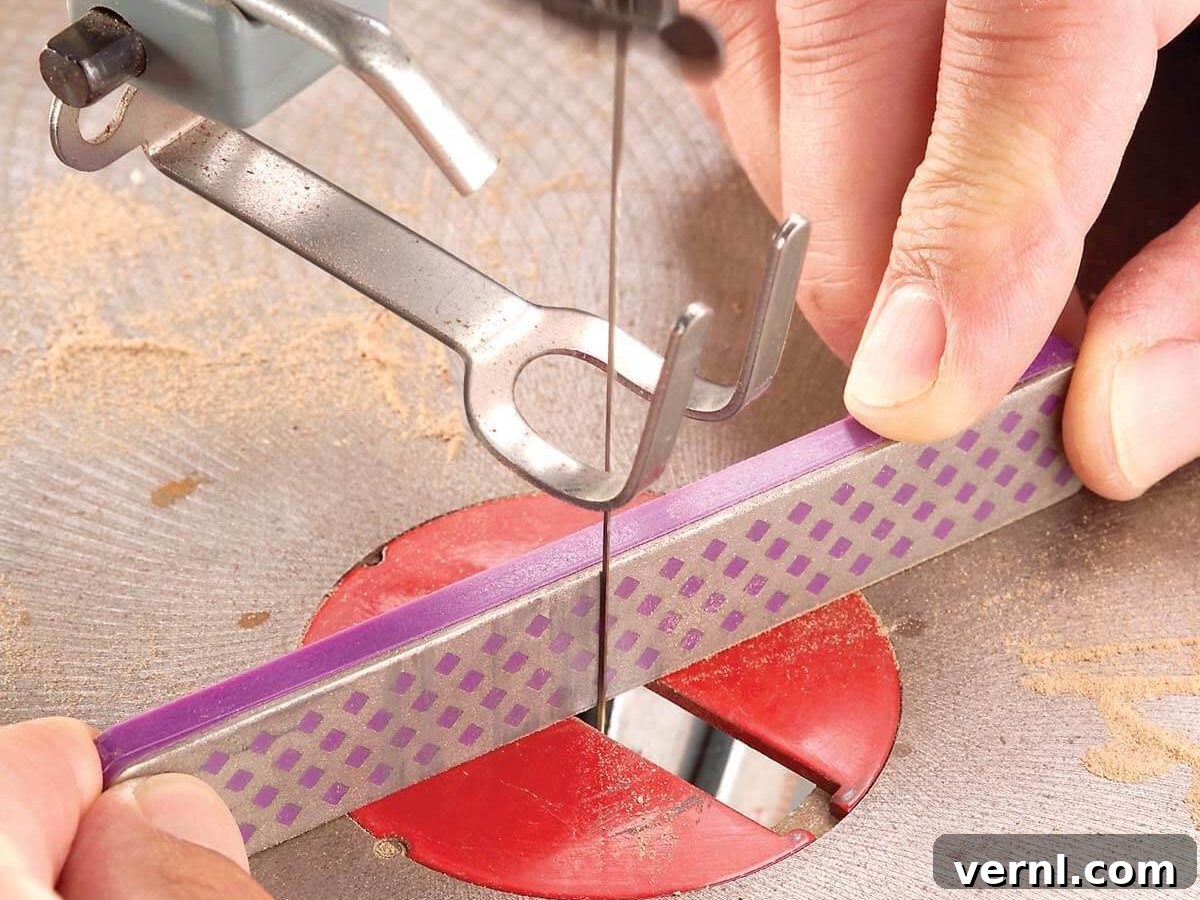
Lightly round over the back edges of the blade. With the bandsaw running at a safe speed (and always with appropriate safety precautions, including eye protection), gently rotate a fine sharpening stone or a diamond paddle along the back edge of the blade. This deliberate process effectively breaks the sharp corners or “wire edges” that are inherent to a newly manufactured blade. The subtle rounding significantly reduces friction as the back of the blade contacts the sides of the kerf during a tight turn. This allows the blade to glide more smoothly and freely, dramatically reducing binding and making it considerably easier to navigate sharp, complex curves without force or strain.
Important Note: This technique should be applied exclusively to the back edge of the blade, never near the teeth. Use only light pressure and a fine-grit stone to avoid compromising the blade’s structural integrity. Always ensure your hands are positioned safely away from the moving teeth.
2. Mastering Flawless Curved Cuts
Beyond the blade rounding trick, several other techniques are crucial for achieving superior curved cuts:
- Utilize Relief Cuts: For extremely tight curves or patterns with multiple sharp turns, make a series of straight relief cuts from the edge of the material up to the primary cut line. These preliminary cuts allow the waste material to fall away in segments as you progress, preventing the blade from binding, twisting, or getting jammed.
- Maintain a Consistent Feed Rate: Apply a steady, moderate feed rate. Feeding too fast can cause the blade to deflect or cut inaccurately; feeding too slowly risks burning the wood due to excessive friction.
- Allow the Blade to Guide You: Avoid forcing the blade through a curve. Instead, smoothly guide the material and allow the blade’s natural cutting path to define the curve. If the blade consistently struggles or twists, it might indicate that it is too wide for the desired radius.
3. Achieving Perfect Straight Cuts and Efficient Resawing
While the bandsaw excels at intricate curves, it is equally adept at producing precise straight cuts, particularly for resawing larger stock into thinner boards.
- Employ a Reliable Fence: For perfectly straight cuts and accurate resawing, a high-quality fence is indispensable. Ensure it is set precisely parallel to the blade for consistent results.
- Incorporate Featherboards: Use featherboards to securely hold the workpiece firmly against both the fence and the bandsaw table. This prevents any lateral wander and ensures a consistent cut thickness, which is crucial during resawing operations.
- Compensate for Blade Drift: Almost every bandsaw blade exhibits a slight tendency to “drift,” meaning it doesn’t cut perfectly parallel to the fence. To counteract this, you can slightly angle your fence to compensate for this natural drift. Alternatively, utilize a specialized resaw fence that allows for micro-adjustments to find the exact sweet spot where your particular blade naturally wants to cut perfectly straight.
- Apply Consistent Pressure: Maintain steady, forward pressure, allowing the blade to work at its optimal pace. For resawing, a wide blade with a low TPI (e.g., 2-3 TPI) is generally the most effective choice.
4. Effective Dust and Debris Management
Bandsaws are known for generating a significant amount of sawdust. A robust dust collection system is absolutely vital, not only for maintaining a clean and organized workshop but also for safeguarding your health by reducing airborne particles. Connect your bandsaw to a powerful shop vacuum or a dedicated dust collector. Effective dust removal also greatly improves the visibility of your cut line, leading to more accurate work.
5. Blade Break-In Period for Extended Life
New bandsaw blades can often be brittle. To prolong their lifespan and improve performance, run a new blade at a slightly slower feed rate for the initial 10-15 minutes, ideally cutting a softer material. This “breaks in” the blade by gently dulling the extremely sharp points of the teeth, making them significantly less prone to snapping off prematurely.
Bandsaw Maintenance: Extending Tool Life and Sustaining Performance
Regular and diligent maintenance is key to ensuring your bandsaw remains a reliable, safe, and high-performing tool for many years to come.
- Maintain Cleanliness: Routinely clean sawdust, resin buildup, and other debris from the wheels, tires, blade guides, and the work table. Accumulations can adversely affect blade tracking, cut quality, and overall machine efficiency.
- Inspect Tires: Periodically check the rubber tires on the bandsaw wheels for any signs of cracks, excessive wear, or hardening. Damaged tires can lead to inconsistent blade tracking, increased vibration, and potential blade damage.
- Adjust Guide Blocks/Bearings: Ensure that the blade guides (whether they are phenolic blocks or ball bearings) are set correctly. They should be close enough to provide proper blade support without pinching it (typically allowing for a paper-thin gap). The thrust bearing should be positioned just behind the blade, preventing it from being pushed backward excessively during a cut.
- Lubrication: Always adhere to your manufacturer’s specific recommendations for lubricating moving parts, which typically include bearings and blade tension mechanisms.
Troubleshooting Common Bandsaw Issues
Even with meticulous setup and proper technique, you might occasionally encounter operational issues. Here’s a quick guide to common problems and their typical solutions:
- Blade Drifting: This is frequently caused by incorrect blade tension, a dull blade, or improper blade tracking. Systematically check and adjust all three factors.
- Burning Wood: Usually an indication of a dull blade, an excessively slow feed rate, or significant resin buildup on the blade.
- Rough or Uneven Cuts: These are often signs of a dull blade, an incorrect TPI for the material being cut, or insufficient blade tension.
- Blade Breakage: Can result from excessive blade tension, the blade binding in the kerf, twisting the blade too aggressively during a curved cut, or a fatigued blade that has reached the end of its lifespan.
Conclusion: Sharpen Your Skills, Not Just Your Blades
The bandsaw is an exceptionally versatile and incredibly rewarding tool for any woodworker, offering creative freedom and precision. By consistently embracing proper safety protocols, thoroughly understanding blade dynamics, and diligently applying these essential tips and advanced techniques – including the clever trick of lightly rounding blade edges for smoother, bind-free curves – you will significantly enhance your woodworking capabilities. Consistent practice, coupled with diligent maintenance, will not only sharpen your skills but also extend the operational life of your machine, empowering you to confidently tackle increasingly complex and precise woodworking projects.
For additional insights and hands-on advice, you may also find value in exploring external resources such as this collection of essential bandsaw tips and tricks.