My career as a commercial electrician involved extensive work with conduit bending and pulling heavy metal-clad cables through vast, industrial spaces like hospitals, university dormitories, and even a sprawling sports stadium. While I gained invaluable experience in large-scale electrical installations, my knowledge of typical residential house wiring was, at that time, surprisingly limited. I had managed a few basic light fixture installations and once experienced a memorable, albeit comically disastrous, attempt at wiring a ceiling fan.
The intricate world of residential electrical systems remained largely unfamiliar territory. This changed dramatically when an incredible opportunity arose: to wire a Habitat for Humanity house. I embraced it wholeheartedly, not only to support a truly inspiring organization but also to acquire the practical, hands-on experience in home wiring that I so keenly lacked. My particular interest was in working extensively with Romex cable, officially known as nonmetallic (NM) sheathed cable. You’ve undoubtedly encountered this ubiquitous yellow or white-sheathed cable within your own home – it is, without question, the predominant method for distributing electrical power from your main service panel to countless fixtures, appliances, and outlets throughout your residence.
For anyone seeking to genuinely understand the fundamentals of home electrical systems, a thorough grasp of Romex cable is absolutely essential. This comprehensive guide compiles everything I’ve learned about Romex wiring throughout my career, from those formative days collaborating with Habitat for Humanity to my ongoing work in the electrical field today. We’ll delve into its characteristics, common applications, critical limitations, and key considerations for any homeowner or DIY enthusiast embarking on an electrical project.
What Exactly Is Romex Wiring?
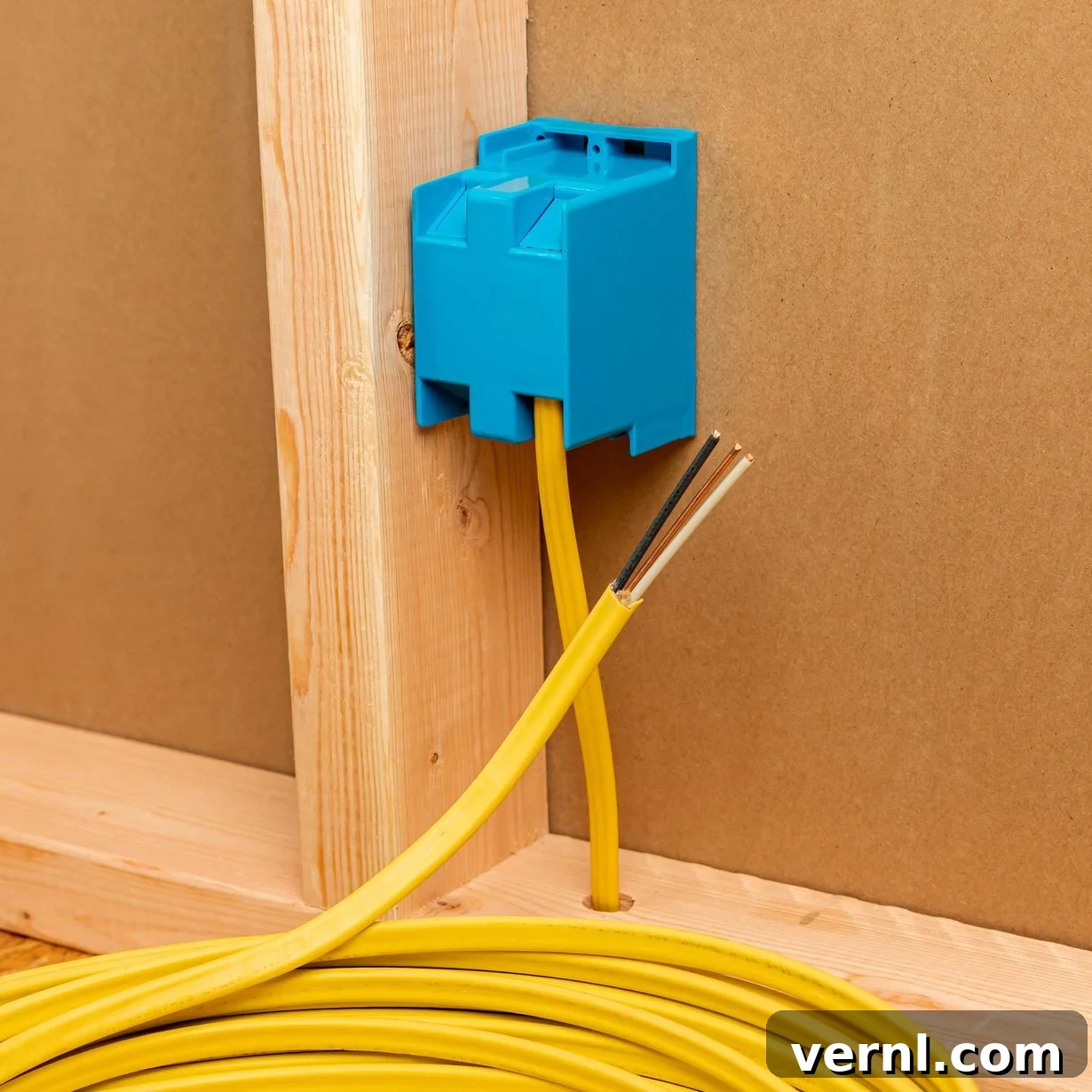
Romex is a widely recognized brand name for nonmetallic (NM) sheathed electrical cable, proudly manufactured by Southwire, a leading industry innovator. The “nonmetallic” designation specifically refers to the protective outer sheath that encases and insulates the internal electrical conductors (the wires themselves). Romex has achieved such pervasive recognition within the electrical industry that its name has become a genericized term, much like “Band-Aid” for adhesive bandages or “Kleenex” for facial tissues, despite the existence of various other reputable brands producing NM cable.
Romex cable is available in a variety of sizes, categorized according to the American Wire Gauge (AWG) system, a standard measurement for electrical conductors. In most residential applications, you’ll commonly encounter 14 AWG, 12 AWG, and 10 AWG. It’s crucial to remember that in the AWG system, a larger number denotes a smaller wire diameter, meaning 14 AWG is thinner than 12 AWG, and 12 AWG is thinner than 10 AWG. While these are the most common sizes for general home circuits, larger gauges exist, going down to 2 AWG for circuits requiring higher amperage, such as those for major appliances.
The conductors within Romex can be either single solid wires, ideal for fixed installations and easier to push through conduits, or stranded, which consist of multiple individual fine strands twisted together. Stranded wires offer greater flexibility, making them suitable for connections that might experience movement or require more pliable handling. Regardless of whether they are solid or stranded, the live (hot) and neutral electrical conductors are always individually insulated, typically with colored plastic coatings (black or red for hot, white for neutral). The ground wire, an essential safety component, is often bare (uninsulated copper) but can sometimes be insulated with a green sheath.
Romex cable assemblies typically contain two, three, or four insulated conductors, always accompanied by a bare or insulated ground wire. These cables are labeled using their AWG size followed by the number of *insulated* conductors. For instance, Romex cable designated “14/2” contains 14 AWG wire and two insulated conductors. It’s vital to understand that this numbering convention refers exclusively to the hot and neutral wires present in the cable, and *does not* include the ground wire. Therefore, a 14/2 Romex cable technically contains a hot wire, a neutral wire, and a ground wire – three wires in total – even though it’s labeled “14/2.” Similarly, a 14/3 cable would contain a hot, a second hot (for applications like 3-way switches), a neutral, and a ground wire.
Common Uses and Applications of Romex Wiring
Romex, or NM cable, is the undisputed workhorse of residential electrical wiring, found in nearly every modern home. Its versatility and ease of installation make it the preferred choice for a vast array of common power needs. Here are some of the primary applications where Romex wiring excels:
- One- and Two-Family Dwellings: This is Romex’s bread and butter. It is extensively used in single-family homes and duplexes to wire everything from lighting fixtures and standard receptacles to dedicated circuits for smaller appliances. Its application extends beyond the main living areas to include attached and detached garages, as well as outbuildings such as garden sheds, provided they meet the specific conditions outlined by local codes for dry locations. This widespread use makes understanding Romex fundamental for anyone performing electrical work in a home.
- Dry Locations Exclusively: A crucial limitation for Romex cable is that it can only be installed in locations defined as “dry” by the National Electrical Code (NEC). The NEC provides specific definitions for wet, dry, and damp environments, and NM cable is strictly prohibited in the latter two. This means you cannot run Romex along the ceiling of an outdoor porch or patio, even if the area is covered by an overhang, as these are typically considered damp or wet locations due to exposure to humidity, rain, or condensation. Choosing the correct cable type for the environment is a critical safety measure.
- Concealed Installations: One of the major advantages of Romex is its suitability for concealed installations. This implies that the cable can be safely routed behind walls, beneath floors, and above ceilings, remaining hidden from view. During new construction or major renovations, NM cable is typically run within and through the drilled holes in wall studs, floor joists, and ceiling rafters before drywall or other finishing materials are installed. Furthermore, it is possible to “fish” Romex behind existing finished walls or ceilings to add a new electrical outlet or light fixture, making it a flexible option for retrofitting.
- Exposed Runs in Specific Areas: While primarily used in concealed spaces, Romex cable can also be run exposed in certain areas of a home where primary living activities do not occur. These typically include unfinished basements, attics, and crawl spaces. In these locations, the cable must be properly secured with staples or straps at regular intervals to prevent sagging and maintain a neat, organized installation. Additionally, it must be adequately protected from potential physical damage. For instance, if Romex needs to pass through a high-traffic area or penetrate a wall between two unfinished basement rooms, it can be protected by encasing it in a short section of conduit. This ensures the cable remains safe from accidental impacts or abrasion.
When Should Romex Wiring Be Avoided? Critical Restrictions
Despite its widespread utility and adaptability in residential settings, Romex cable has specific limitations on where it can be safely and legally installed. Adhering to these restrictions is paramount for electrical safety and compliance with building codes. The National Electrical Code (NEC) provides the foundational guidelines, but it is always imperative to consult your local building codes, as some jurisdictions have additional, stricter requirements. A notable example is Chicago, Illinois, which historically has severely restricted the use of NM cable, permitting it only under very limited circumstances. While the precise historical reasoning is debated, a prevailing theory attributes this to the city’s tragic experience with the Great Chicago Fire of 1871, leading to a preference for more robust, metallic raceway systems for increased fire safety.
Beyond local amendments, here are other critical situations where Romex and other NM cable types should not be used:
- Wet and Damp Locations: As mentioned, Romex is strictly for dry locations. This means it should never be installed in areas exposed to direct moisture, high humidity, or potential water ingress. This includes outdoor environments, even if covered, and certain indoor areas like unfinished areas near plumbing leaks. If you need to extend power outdoors to a freestanding yard light, an outdoor receptacle, or under the eaves of a porch or deck, you must opt for a cable specifically rated for wet locations, such as UF (Underground Feeder) cable, which features a more robust, water-resistant outer sheath.
- As Service-Entrance Cable: The main electrical cables that enter your home from the utility company’s transformer and connect to your main electrical panel (the service entrance conductors) cannot be Romex. These cables carry high amperage and require specialized insulation and construction designed to withstand outdoor elements and rigorous demands. Service-entrance cable (often referred to as SE cable) is specifically manufactured for this critical application and is distinct from NM cable.
- Embedded in Concrete Slabs: Romex cable is unsuitable for direct embedment within concrete slabs. Any concrete or masonry that is in direct contact with the earth, such as a basement slab or a concrete foundation block wall, is considered a wet location due to the inherent moisture wicking up from the ground. Over time, this moisture can degrade the insulation and outer sheath of NM cable, leading to potential electrical hazards. For such applications, UF cable or wiring run within waterproof conduit systems would be required.
- Direct Burial in the Ground: Similarly, Romex cable cannot be directly buried in the ground. The soil environment is inherently wet and can harbor various elements that accelerate the deterioration of standard NM cable, compromising its electrical integrity and safety. For underground applications, UF cable, which is designed for direct burial, or wiring installed within approved rigid or flexible conduit, is the correct choice. It’s also important to note that merely running Romex through conduit outdoors or underground does not circumvent this rule; the *inside* of such outdoor or underground conduit is still considered a wet location due to condensation and potential water ingress. The cable itself must be rated for the wet environment.
- Commercial and Industrial Applications: While not explicitly listed as a restriction in all codes, Romex cable is generally not permitted in most commercial or industrial buildings. These environments typically require wiring methods that offer greater physical protection and fire resistance, such as metallic conduit systems, due to the increased fire load, higher occupancy, and more rigorous operational demands.
Key Considerations When Buying Romex Cable
Now that you have a clear understanding of where Romex and other NM cables can and cannot be used, selecting the right product for your home renovation or electrical project becomes straightforward. While Romex is a dominant brand, all NM cables share fundamental similarities and must meet strict industry standards. This is because the NEC mandates that all NM cable used in electrical installations be “listed” by an accredited testing laboratory, such as UL (Underwriters Laboratories) or Intertek (ETL). This “listing” signifies that the manufacturer’s product has undergone rigorous testing and conforms to stringent technical specifications for safety and performance.
In the United States, it would be extremely challenging, if not impossible, to find unlisted NM cable from a reputable supplier, as safety is paramount. Your primary concern should be purchasing from a trusted hardware store, home improvement center, or online retailer known for quality electrical supplies. Always double-check the product specifications to ensure it meets the requirements for your specific project.
Once you’ve confirmed that the NM cable is listed and readily available, your next considerations will revolve around project scale, budget, and most critically, selecting the appropriate wire gauge for your installation. Choosing the correct wire size is not merely a matter of efficiency; it is a fundamental safety requirement. Using an undersized wire for a circuit can lead to overheating, potentially causing insulation damage, short circuits, and a severe fire hazard.
For typical residential applications, here’s a general guide:
- 14/2 Romex: This cable, featuring 14 AWG conductors, is specifically designed for 15-amp circuits. It is commonly used for general-purpose lighting circuits and receptacles in areas like bedrooms, living rooms, and hallways, where the total electrical load is relatively low.
- 12/2 Romex: With its thicker 12 AWG conductors, this cable is rated for 20-amp circuits. These are often required for kitchen and bathroom receptacles, laundry rooms, workshops, and other areas where higher-wattage appliances might be plugged in, or where more simultaneous use is anticipated. Dedicated appliance circuits for items like a microwave or garbage disposal often utilize 12/2 wire.
- 10/2 or 10/3 Romex: For circuits requiring 30 amps, such as those for electric water heaters or electric clothes dryers, 10 AWG wire is typically specified. A 10/2 cable is suitable for 240V, 30A circuits that do not require a neutral for the appliance (e.g., some water heaters), while 10/3 is used when a neutral is needed (e.g., most electric dryers).
- Larger Gauges (8 AWG, 6 AWG, etc.): For much larger circuits serving major appliances like electric ranges, central air conditioning units, or sub-panels, even larger wire gauges (e.g., 8/3, 6/3 Romex or other cable types) will be necessary. These applications typically involve higher amperages (40A, 50A, or more) and require professional calculation to ensure safety.
If you have any doubts whatsoever about selecting the correct wire gauge, cable type, or proper routing for your specific electrical needs, it is always best practice to consult a licensed and qualified electrician. Their expertise ensures that your installation will be safe, compliant, and reliable.
Recommended Romex and NM Cable Brands
When you visit your local hardware store, home improvement center, or specialized electrical supply retailer in search of NM cable, you’ll likely find that Southwire’s Romex Brand SIMpull occupies a significant portion of the shelf space. This brand has maintained market dominance for decades, a testament to its consistent quality and reliability. The “SIMpull” designation refers to a proprietary, slick coating applied to the cable’s outer jacket. This innovative feature significantly reduces friction, making it remarkably easier to pull Romex through drilled holes in wall studs, joists, and various wall cavities, a substantial benefit for both professional electricians and DIY enthusiasts alike.
Depending on your chosen retailer, another highly regarded and widely available brand of NM cable is Cerrowire. Cerrowire also offers its own version of an easy-pull coating, known as SLiPWire, designed to provide similar benefits in terms of reduced effort during installation. Both Romex SIMpull and Cerrowire SLiPWire are comparable in quality and price point, making them excellent choices for most residential wiring projects. For example, a 250-foot roll of 14/2 NM cable from either brand typically costs around $100 at a standard home improvement store, though prices can vary based on location and current market conditions. When making your purchase, always ensure you’re buying from a reputable vendor to guarantee product authenticity and quality.
In conclusion, Romex (NM cable) is the cornerstone of safe and efficient residential electrical systems. Understanding its types, applications, and limitations is crucial for any homeowner contemplating electrical work. By adhering to the guidelines set forth by the National Electrical Code and local regulations, and always prioritizing safety, you can confidently undertake your wiring projects or engage with professionals, knowing you’re making informed decisions for your home.