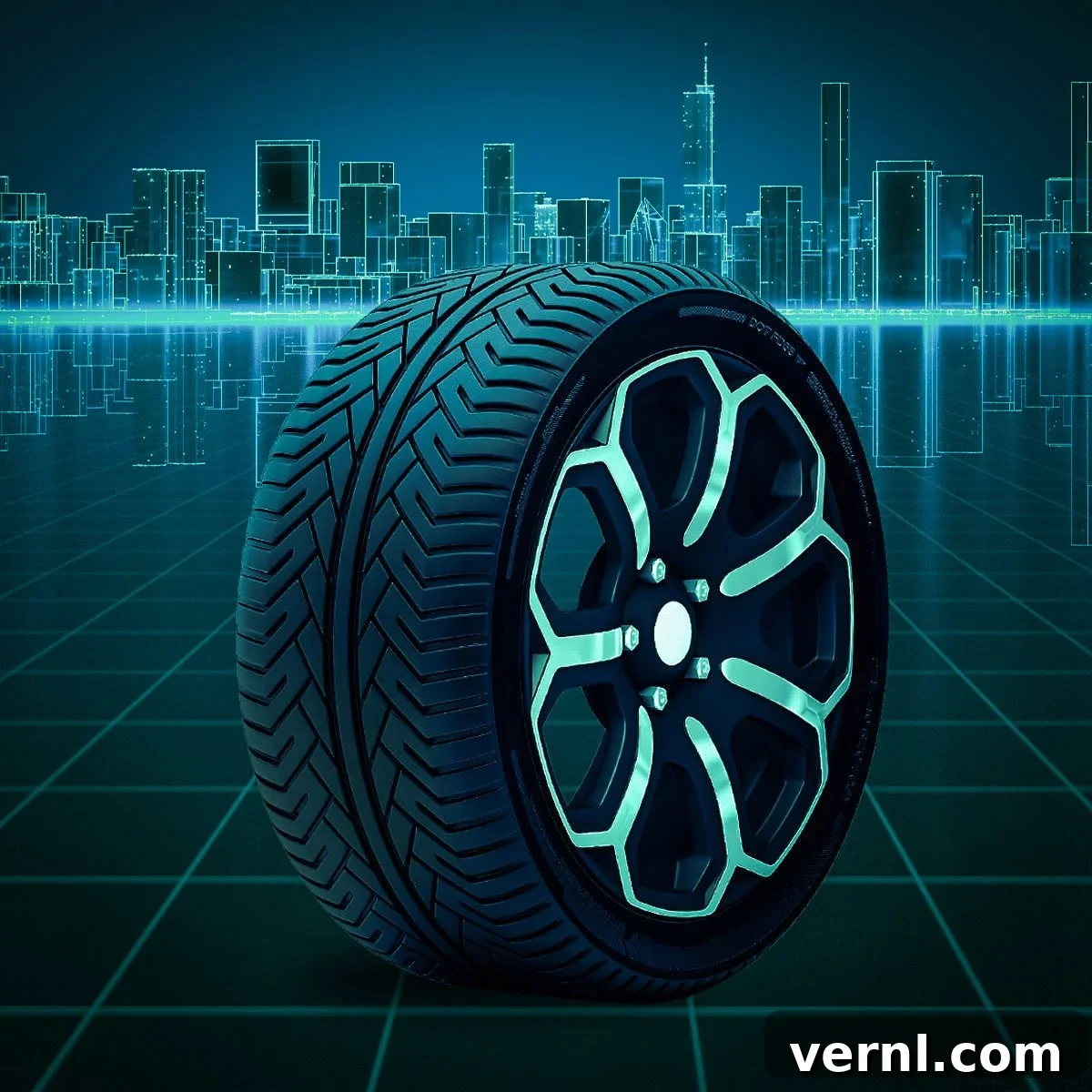
Pirelli Cyber Tires: Revolutionizing Your Drive with Intelligent Technology
When envisioning the future of personal mobility, our imaginations often conjure images of sleek flying vehicles or fully autonomous cars navigating bustling cityscapes. While innovators like Tesla and Waymo are rapidly transforming autonomous driving into a tangible reality, another revolutionary advancement is quietly emerging from the ground up – literally. Prepare to meet the cyber tires, a sophisticated evolution set to redefine our relationship with our vehicles.
The name Pirelli resonates strongly with motorsport enthusiasts and car aficionados globally. As a dedicated global Tyre Partner of Formula 1, Pirelli is synonymous with cutting-edge tire design and peak performance, crafting the very rubber that propels elite race cars to victory. Their latest innovation, the Pirelli Cyber™ Tyre, introduces a groundbreaking technology that allows your tires to communicate directly with your car, providing invaluable real-time feedback about your driving dynamics. This isn’t just a minor upgrade; it’s a paradigm shift, promising enhanced safety, optimized performance, and a deeper understanding of your vehicle’s behavior. And, according to Pirelli, this initial communication is just the beginning of a much broader, interconnected future.
What Exactly Are Cyber Tires? Understanding the Core Technology
Pirelli proudly describes its Cyber™ Tyre system as “the world’s first integrated hardware and software system capable of collecting data from sensors inside the tyres, processing them through Pirelli’s proprietary software and algorithms, and communicating in real time with the vehicle’s electronics.” This definition highlights the holistic nature of the technology, moving far beyond passive rubber to create an active, intelligent component of your vehicle.
At its heart, a cyber tire is a smart tire embedded with an array of sophisticated sensors. These miniature data gatherers continuously monitor a multitude of parameters that were previously inaccessible or only available through cumbersome external diagnostics. The raw data collected by these sensors is then fed into Pirelli’s advanced proprietary software and algorithms. This intelligent processing unit analyzes the information, transforming complex raw data into actionable insights. Crucially, this processed data is then transmitted in real-time to the vehicle’s electronic control unit (ECU) and often displayed directly to the driver.
By leveraging this continuous stream of real-time data, Pirelli is able to develop “new features that are fully integrated with the driving and control systems.” This integration opens up a vast realm of possibilities, allowing the vehicle itself to respond dynamically to tire conditions. The overarching goals are clear: to significantly enhance the driving experience by making it safer, more efficient, and more controlled, while simultaneously improving overall vehicle safety by preventing potential issues before they escalate.
The Anatomy of an Intelligent Tire: Sensors and Software
To truly appreciate the innovation, it’s worth delving deeper into the components. The hardware aspect includes highly sensitive micro-sensors strategically placed within the tire structure. These sensors can detect minute changes in pressure, temperature, and even rotational speed and acceleration. The software, on the other hand, is the brain, interpreting these signals. It employs complex algorithms to differentiate between normal operating conditions and potential anomalies, providing predictive insights rather than just raw numbers. This intelligent fusion of hardware and software is what elevates a regular tire to a cyber tire.
How Do Pirelli Cyber™ Tyres Function in Practice?
The operational elegance of Cyber™ Tyres lies in their seamless integration with your vehicle’s existing systems. Pirelli explains that each Cyber™ Tyre contains embedded sensors that establish a direct and continuous communication link with your car’s electronic system. Utilizing advanced connectivity, often leveraging 5G technology for rapid and reliable data transfer, the relevant information gathered by the tires is instantly displayed on your car’s dashboard or infotainment screen.
Imagine having access to critical tire performance metrics not just periodically, but constantly, as you drive. This level of insight is what Pirelli refers to as being “just like having a team of Pirelli’s race engineers working for you.” For motorsport professionals, real-time tire data is paramount to optimizing performance, managing wear, and ensuring safety under extreme conditions. The Cyber™ Tyre brings this professional-grade insight to everyday driving, empowering drivers with unprecedented awareness of their vehicle’s connection to the road. This direct feedback loop allows for proactive adjustments and informed decisions, transforming the driving experience from passive to truly interactive.
From Sensors to Screen: The Data Journey
The journey of data begins with the sensors detecting variables such as instantaneous internal air pressure, surface and internal tire temperature, and even the vertical load on each tire. This data is then wirelessly transmitted to a central receiver within the vehicle. The car’s ECU processes this information, cross-referencing it with other vehicle data (like speed, steering angle, and braking force) to generate a comprehensive picture of the tire-road interface. The refined information is then rendered on the vehicle’s display, often in an intuitive graphical format, allowing drivers to quickly grasp the implications of their tire conditions.
Beyond Basics: How Cyber™ Tyres Surpass Regular Tires
The distinction between conventional tires and Cyber™ Tyres is stark and significant. Your typical modern car tire is equipped with a Tire Pressure Monitoring System (TPMS), a valuable safety feature that alerts you when tire pressure drops below a safe threshold. While crucial, TPMS offers a very limited scope of information – primarily just a warning about low pressure.
Pirelli’s Cyber™ Tyres, however, extend far beyond this basic functionality. They provide a rich tapestry of data points that are critical for both performance and safety. In addition to precise tire pressure readings, Cyber™ Tyres can tell you:
- Tire Temperature: Not just a static number, but dynamic data indicating when your tires are too cold and need warming up for optimal grip, or when they’re overheating and require cooling down to prevent degradation. This is vital for performance driving and extends tire longevity.
- Recommended Top Speed: The system can inform you when you are approaching or exceeding the maximum safe speed recommended for the specific tire’s performance capabilities under current conditions. This acts as an important safety buffer, helping prevent hazardous situations due to tire overstress.
- Estimated Tread Wear: Future iterations are expected to monitor and predict tread wear more accurately, advising drivers on optimal rotation schedules and replacement times.
- Road Surface Conditions: Potentially detecting whether the road is wet, dry, icy, or uneven, and communicating this to the driver and vehicle’s stability systems.
- Tire Load and Grip Levels: Providing insights into how much load each tire is bearing and its current grip potential, which can be invaluable for advanced driver assistance systems (ADAS) to optimize braking and traction control.
This multi-faceted data allows for a far more nuanced understanding of the tire’s condition and its interaction with the road, leading to a safer, more informed, and ultimately, a more enjoyable driving experience.
Accessibility and Availability: Will Cyber™ Tyres Fit My Car?
As with many pioneering automotive technologies, the initial rollout of Cyber™ Tyre technology is focused on the premium and high-performance segments of the market. Currently, Pirelli offers its advanced Cyber™ Tyre technology in three specialized tire lines: the Pirelli P Zero™ (PZ4), the P Zero Corsa, and the P Zero Winter. These tires are engineered for the demanding requirements of high-end supercars, hypercars, and of course, F1 racing vehicles.
Realistically, unless you’re the proud owner of an elite machine from manufacturers like McLaren or Audi’s performance divisions, these specific tire models are unlikely to be compatible with your current vehicle. The integration of Cyber™ Tyre technology requires not only the specialized tires themselves but also the necessary hardware and software compatibility within the vehicle’s electronic systems to receive, process, and display the data effectively.
However, the automotive industry has a consistent track record of technological trickle-down. What starts in the high-performance and luxury sectors often makes its way into more mainstream and affordable vehicles over time. As the technology matures, production costs decrease, and integration becomes more standardized, it is widely anticipated that Pirelli will develop Cyber™ Tyre-equipped tires suitable for a much broader range of passenger cars. This expansion will eventually bring the benefits of smart tire technology to a wider audience, democratizing enhanced safety and performance for everyday drivers.
The Connected Road Ahead: Can These Tires Communicate with My City?
The concept of tires communicating with municipal infrastructure sounds like science fiction, but it’s a future Pirelli is actively working towards. While Cyber™ Tyres currently focus on the vehicle-to-tire interface, the ambition extends far beyond that. Pirelli states that “the next step for the future of Cyber™ Tyre will be the connection and consistent dialogue with other vehicles and surrounding infrastructure.”
This vision aligns with the broader development of intelligent transportation systems (ITS) and smart cities. Imagine a scenario where your tires detect a sudden patch of black ice and instantly relay that information, not just to your car, but also to nearby vehicles and even to city traffic management systems. This real-time, granular data could revolutionize road safety, traffic flow, and urban planning. It could enable:
- Hazard Warnings: Immediate alerts about slippery conditions, potholes, or debris on specific road segments.
- Traffic Optimization: Data on tire grip and road conditions influencing traffic light sequencing and route recommendations.
- Infrastructure Maintenance: Identifying areas of heavy wear or damage on roads that require attention.
- Vehicle-to-Vehicle (V2V) Communication: Your car’s tires informing other vehicles about your braking intensity or potential hazards ahead.
So, while your tires won’t be “snitching” on your driving habits to city authorities just yet, the technological framework for such comprehensive data transmission is being laid. The potential for all the rich data collected by Cyber™ Tyres to be shared in real-time within a vast, interconnected network of vehicles and infrastructure represents a profound leap forward in automotive intelligence and urban mobility.
The Broader Benefits of Smart Tires for the Modern Driver
Beyond the technical prowess, the real-world advantages of smart tires like Pirelli’s Cyber™ Tyre are compelling for any driver.
- Enhanced Safety: Knowing tire conditions in real-time allows for proactive responses to potential hazards, significantly reducing the risk of accidents caused by underinflated, overheated, or worn tires.
- Optimized Performance: Whether on the track or a spirited drive, maintaining ideal tire temperature and pressure ensures maximum grip, better handling, and a more responsive vehicle.
- Increased Efficiency and Longevity: Properly inflated and temperature-controlled tires reduce rolling resistance, leading to improved fuel economy and extended tire life, saving money and resources.
- Predictive Maintenance: The data can alert drivers to issues before they become critical, allowing for timely maintenance and preventing costly repairs or premature tire replacement.
- Greater Comfort: By ensuring optimal tire conditions, smart tires can contribute to a smoother and more stable ride, enhancing overall driving comfort.
Challenges and Future Outlook for Cyber Tires
Despite the immense potential, the widespread adoption of cyber tires faces certain challenges. Cost is a primary factor, as the advanced sensors and software naturally increase the price compared to conventional tires. Furthermore, integrating this technology seamlessly into the diverse range of existing vehicle architectures requires significant standardization and collaboration across the automotive industry. Data privacy and security will also be paramount concerns as tires begin to transmit increasingly sensitive information. However, as technology progresses and manufacturing scales, these hurdles are expected to diminish.
The future of driving is undeniably intelligent, and tires, once considered a simple component, are poised to become sophisticated data hubs. Pirelli’s Cyber™ Tyre technology is a testament to this evolution, pushing the boundaries of what’s possible and fundamentally transforming how we interact with our vehicles and the roads we travel. As these smart tires become more integrated and accessible, they promise a future where driving is not only safer and more efficient but also more connected than ever before.
Source:
Cyber™ Tyre, Pirelli.
RELATED ARTICLES:
- Do You Know What That Little Button on Your Seat Belt Is For?
- What Those Lines on Your Backup Camera Really Tell You
- Here’s What The Small Panel On Your Car’s Front Bumper Is For