
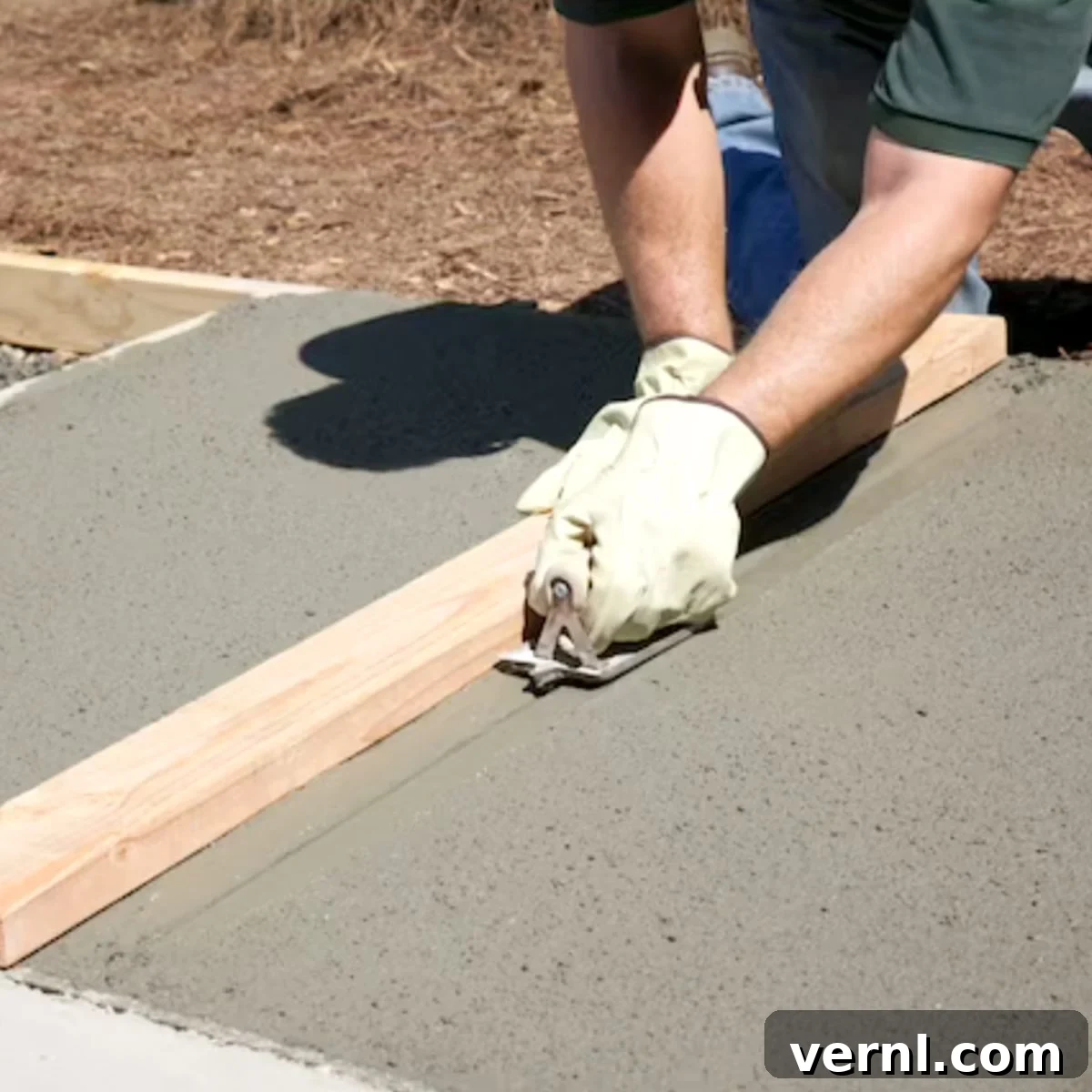
Navigating the world of construction materials can often feel like deciphering a secret code. Many commonly used terms, particularly when it comes to foundational elements, are frequently confused, leading to potential missteps in planning and execution. If the distinction between cement vs. concrete, mortar, and asphalt escapes you, you could inadvertently make a significant — and costly — mistake when you visit the building supply store.
Imagine embarking on a home improvement project, confidently asking for “cement” for your new patio, only to discover later that you’ve purchased the wrong material. While cement is an integral component in many construction mixes, it’s rarely used on its own for structural purposes. Both cement and concrete mixes often come in similar bags, contributing to this common misconception. However, if you’re pouring a concrete slab or building a robust foundation, pure cement is unequivocally not what you need. Furthermore, neither cement nor concrete is suitable for delicate tasks like laying bricks or setting tiles; for those applications, you’ll require mortar. And if your project involves surfacing a driveway or repairing potholes, you’ll be looking for asphalt, a material so distinct it might not even be found in the same section of the store.
This linguistic crossover in everyday conversation is surprisingly common. Homeowners frequently talk about their “cement patio” or the “cement foundation” of their house. Yet, if these structures were genuinely made from pure cement, they would have likely crumbled and disintegrated years ago. For instance, growing up near a massive bridge, we often referred to its robust pillars as “cement” pillars, even using them for batting practice. Needless to say, those formidable structures were made from durable concrete, not just cement, highlighting the widespread nature of this terminology mix-up.
Understanding the fundamental differences between these four critical building materials is crucial for both DIY enthusiasts and seasoned professionals. Cement acts as a binder within concrete and mortar, but it plays no part in asphalt, which is a completely separate class of material. Asphalt, with its inherent softness and flexibility, is unsuitable for supporting heavy structures. However, these very characteristics—its flexibility and resistance to cracking—coupled with a lower cost compared to concrete, make it an ideal and popular choice for roads, driveways, and various paving applications. Let’s delve deeper into each material to clarify their unique properties and ensure you make the right choice for your next project.
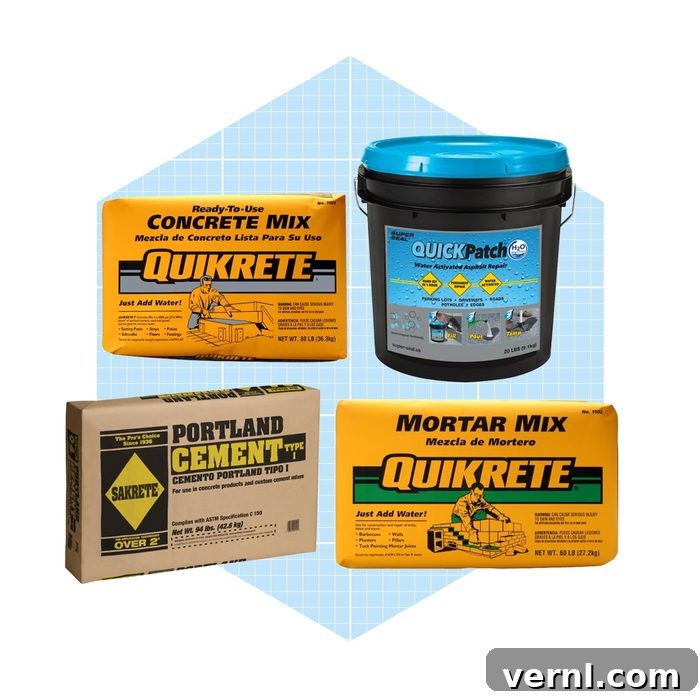
What Is Cement? The Essential Binder
In its broadest definition, cement functions as a binder or adhesive—a finely ground substance that, when mixed with water, forms a paste that can bind other materials together. However, when people discuss building products, they typically refer to a specific type: Portland cement. This term isn’t a brand name but rather a generic designation coined in the early 19th century. It received its name because the hardened product, after mixing with water, resembled the durable, greyish-white stone quarried on the Isle of Portland off the British coast. Pure Portland cement is a fine, powdery substance that, upon hydration, transforms into an incredibly hard, stone-like mass.
The Manufacturing Process of Portland Cement
The creation of Portland cement is a complex industrial process. Manufacturers begin by carefully selecting and crushing mined raw materials, primarily limestone (a source of calcium carbonate), shale, iron ore, and clay (providing silica, alumina, and iron). These ingredients are precisely mixed and then fed into massive rotating kilns, where they are heated to extremely high temperatures, ranging between 2,700 and 3,000 degrees Fahrenheit (1,480 to 1,650 degrees Celsius). This intense heat drives out water and carbon dioxide, causing the raw materials to undergo a chemical transformation.
During this pyroprocessing, the elements reconfigure into new chemical compounds, emerging from the kiln as hard, glassy pellets known as clinker. This clinker is then cooled and ground into an incredibly fine powder. Often, a small amount of gypsum (calcium sulfate) and/or limestone is added during this final grinding stage. Gypsum is crucial as it controls the setting time of the cement, preventing it from hardening too quickly when mixed with water. When this fine powder mixes with water, the chemical compounds rapidly hydrate and recombine, initiating a process called hydration, which ultimately forms a robust, hard mass.
Types and Applications of Cement
While Type I cement is the most common variety found in building supply stores, various other types of Portland cement are available, each formulated for specific conditions and applications:
- Type I: General purpose cement, suitable for most construction projects where special properties are not required.
- Type II: Offers moderate sulfate resistance and generates less heat during hydration, making it suitable for large structures to prevent cracking from thermal stress.
- Type III: High Early Strength cement, ideal when rapid strength gain is desired, such as in cold weather construction or for early removal of forms.
- Type IV: Low Heat of Hydration cement, used in massive concrete structures like large dams to minimize temperature rise and subsequent cracking.
- Type V: Sulfate Resisting cement, specifically designed for structures exposed to high levels of sulfate in soil or groundwater, which can degrade other types of cement.
Cement typically has a gray hue. However, by carefully controlling and minimizing the amounts of iron and manganese in the mixture during manufacturing, producers can also create Portland cement with a distinct whitish color, often preferred for architectural finishes or specific aesthetic requirements.
What Is Concrete? The Foundation of Modern Construction
While cement is the binder, you need to add other materials to it to create a strong, durable, and structurally sound material for construction. When you combine cement with fine aggregate (like sand) and coarse aggregate (like crushed rock or gravel), and then add water, you get concrete. Concrete is a composite material, celebrated for its versatility, strength, and longevity, making it the most widely used man-made material in the world.
The Components of Concrete and Their Roles
- Cement: As discussed, it’s the binding agent that reacts with water to form a paste, encapsulating the aggregates.
- Aggregates: These make up the bulk of the concrete, typically 60-80% of its volume.
- Fine Aggregate (Sand): Fills the voids between coarse aggregates, improving workability and helping to create a smooth finish.
- Coarse Aggregate (Gravel, Crushed Stone): Provides strength, bulk, and reduces shrinkage. The size and type of coarse aggregate can vary depending on the desired strength and finish.
- Water: Essential for the chemical reaction (hydration) with cement, which causes it to harden. It also contributes to the workability of the fresh concrete mix.
- Admixtures (Optional): Chemical additives used to modify the properties of concrete, such as accelerating or retarding setting time, improving workability, increasing durability, or reducing the amount of water needed.
Mixing Ratios and Water-Cement Ratio
The proportions of these ingredients are critical to the concrete’s final strength and workability. While ratios can vary, a common general-purpose mix often follows a 1:2:4 ratio (one part cement, two parts sand, four parts crushed rock by volume). For projects requiring greater strength, more coarse aggregate might be included, or the cement proportion slightly increased. Adding more sand, conversely, generally improves the mixture’s workability, making it easier to place and finish.
Premixed concrete is readily available in bags of various sizes (e.g., 50, 60, or 80 pounds) at most building supply stores, offering convenience for smaller projects. For larger construction endeavors, builders either mix concrete on-site using portable mixers or have it delivered by specialized trucks equipped with rotating cement mixers, ensuring a consistent and large volume supply.
A crucial factor influencing concrete strength and durability is the water-cement ratio. Generally speaking, the less water added to the dry mix (while still maintaining workability), the stronger the concrete will be once it has fully set. However, a lower water content also makes the mixture stiffer, less flowable, and can accelerate its setting time, making it harder to work with. The optimal proportion of water is typically around three quarts for every 80 pounds of premixed concrete. Adding significantly more water than this is not recommended, as it dilutes the cement paste, creates voids as the excess water evaporates, and ultimately weakens the concrete, making it more susceptible to cracking and wear.
Applications and Curing of Concrete
Concrete’s applications are vast, from foundational elements like footings and slabs, to driveways, sidewalks, patios, walls, bridges, and high-rise buildings. Once poured and shaped (within forms), concrete undergoes a crucial process called curing. Curing involves maintaining adequate moisture and temperature conditions for a specific period (typically 7 to 28 days) to allow the cement to fully hydrate and gain its intended strength. Proper curing is essential to prevent premature drying, which can lead to reduced strength, increased permeability, and surface cracking. Techniques include covering the concrete with plastic sheeting, damp burlap, or regularly spraying it with water.
What Is Mortar? The Mason’s Adhesive
Imagine concrete without the large, coarse aggregate, leaving only cement and sand as the primary solid components. This mixture, when combined with water, is mortar. Mortar is fundamentally an adhesive and binding agent designed specifically for masonry work. Masons utilize mortar to bond individual units like bricks, concrete blocks, and stones together, creating strong, continuous structures. Tilers also employ a specialized type of mortar, commonly known as thin-set or tile mortar, to securely adhere floor and wall tiles to their substrates.
Composition and Properties of Mortar
The key distinguishing feature of mortar from concrete is the absence of coarse aggregates. Its composition typically includes Portland cement, sand (fine aggregate), and water. Many mortar mixes also incorporate lime (calcium hydroxide), which is added for several beneficial properties. Lime improves the mortar’s plasticity and workability, making it smoother and easier for masons to spread. It also enhances water retention, which allows the cement to hydrate more fully, and contributes to the mortar’s long-term durability and bond strength. For tiling applications, tile setters often include latex or polymer additives in their thin-set mortar. These additives increase flexibility, improve adhesion, and enhance resistance to water and freeze-thaw cycles.
Mortar vs. Concrete: Why the Difference?
Mortar is generally not as strong in compression as concrete, nor is it designed for load-bearing in the same way. Its primary function is to bind masonry units and distribute loads evenly, accommodating minor movements and stresses. Because it lacks large aggregates, mortar forms a more consistent and pliable paste, allowing it to conform intimately to the irregular surfaces of bricks and blocks, creating a superior bond. Its finer texture also makes it more decorative, with masons often using specific joint finishes to enhance the aesthetic appeal of brickwork.
Types and Mixing Ratios of Mortar
Like concrete, mortar comes in various types, categorized by their compressive strength and suitability for different environmental exposures:
- Type M: High compressive strength, suitable for heavy loads, below-grade applications, or where exposure to severe freeze-thaw cycles is expected.
- Type S: Medium-high compressive strength, good for general purpose use and where lateral strength is important, such as walls exposed to wind.
- Type N: Medium compressive strength, the most common general-purpose mortar, suitable for above-grade exterior walls.
- Type O: Low compressive strength, primarily for interior, non-load-bearing walls or repointing historic masonry where a softer mortar is required.
- Type K: Very low strength, used specifically for delicate restoration work on historic buildings.
Proper mixing proportions are vital for optimizing mortar’s strength and workability. For general bricklaying, a common ratio is one part cement to three parts sand, with lime often added in a one-to-one ratio with the cement (e.g., 1 part cement, 1 part lime, 6 parts sand). The amount of water added is critical to achieve the right consistency—wet enough to be workable but stiff enough to hold its shape and support the weight of subsequent courses of masonry units.
What Is Asphalt? The Flexible Surface Solution
Asphalt is a distinct outlier among these materials, representing a completely different class of building product. Unlike cement, concrete, and mortar, which are water-based and rely on hydraulic reactions for hardening, asphalt is petroleum-based. It does not possess significant structural value for foundations or load-bearing elements but excels in surface applications, particularly for its waterproofing and flexible properties.
Composition and Origin of Asphalt
Asphalt is primarily composed of an asphalt binder (also known as bitumen), which is a sticky, black, highly viscous liquid or semi-solid form of petroleum. This binder is mixed with aggregates—typically small crushed stone, gravel, and sand—along with mineral fillers. The asphalt binder acts as a glue, holding the aggregate particles together. Asphalt occurs naturally in some parts of the world, but the vast majority of asphalt used today is a byproduct of petroleum distillation, refined from crude oil.
Applications and Types of Asphalt
Asphalt’s primary use is in covering flat surfaces to create durable, waterproof layers. It is the material of choice for the vast majority of roads, highways, parking lots, and driveways worldwide due to its flexibility, relatively low cost, and ease of repair. It’s also extensively used in roofing products like shingles and roll roofing, as well as in waterproofing membranes for various construction applications.
Asphalt is typically applied in different forms, depending on the scale and nature of the project:
- Hot Mix Asphalt (HMA): This is the most common type for major paving projects. The aggregate and asphalt binder are heated to high temperatures (typically 300-350°F or 150-175°C) at an asphalt plant, mixed, and then transported to the site. The hot mix is then laid and compacted while still hot, achieving optimal density and strength upon cooling.
- Warm Mix Asphalt (WMA): Similar to HMA but produced at lower temperatures (200-275°F or 95-135°C). WMA offers environmental benefits by reducing fuel consumption and emissions, and can extend the paving season or allow for longer hauls.
- Cold Mix Asphalt (CMA): Designed for smaller repairs, temporary patches, or areas where hot mix is impractical. CMA uses a cutback asphalt binder or an emulsified asphalt, allowing it to be applied at ambient temperatures without heating. This makes it ideal for filling potholes or minor pavement repair projects by homeowners.
Advantages and Disadvantages of Asphalt
One of asphalt’s key advantages is its inherent flexibility. This allows it to absorb minor ground movements and temperature fluctuations without cracking, a common issue with rigid materials like concrete. It’s also typically more cost-effective to install and repair than concrete. Modern asphalt production often incorporates recycled materials, including ground-up tires, foundry sand, old glass, and even reclaimed asphalt pavement (RAP), making it a sustainable choice. However, asphalt is susceptible to softening in extreme heat and becoming brittle in extreme cold, requiring periodic maintenance like sealing and crack filling to extend its lifespan. In contrast, concrete, once cured, is far more rigid and less affected by temperature fluctuations.
For large-scale asphalt jobs, specialized equipment for heating, laying, and compacting the material is essential, making these tasks best suited for experienced professionals. However, homeowners can readily handle smaller tasks, such as filling potholes or resurfacing small driveways, particularly by using cold patch asphalt, which does not require heating before application.
Conclusion: Making the Right Choice
The distinction between cement, concrete, mortar, and asphalt is not merely semantic; it represents fundamental differences in composition, properties, and appropriate applications. Cement is the critical binding agent, a powder that activates with water. Concrete is the robust composite material formed by mixing cement with sand, gravel, and water, ideal for structural foundations and heavy-duty surfaces. Mortar, a fine-grained mixture of cement, sand, and water (often with lime), serves as the adhesive for masonry work, bonding bricks and blocks. Finally, asphalt is a petroleum-based material primarily used for flexible paving and waterproofing, distinct in both its chemical nature and application.
Understanding these differences is paramount for the success, safety, and longevity of any construction or home improvement project. Using the wrong material can lead to structural failure, increased costs, and extensive rework. When planning your next project, take the time to identify which material is truly suited for the job. For significant construction or renovation work, always consult with experienced professionals who can provide expert guidance and ensure the correct materials and techniques are employed, ultimately saving you time, money, and headaches.