
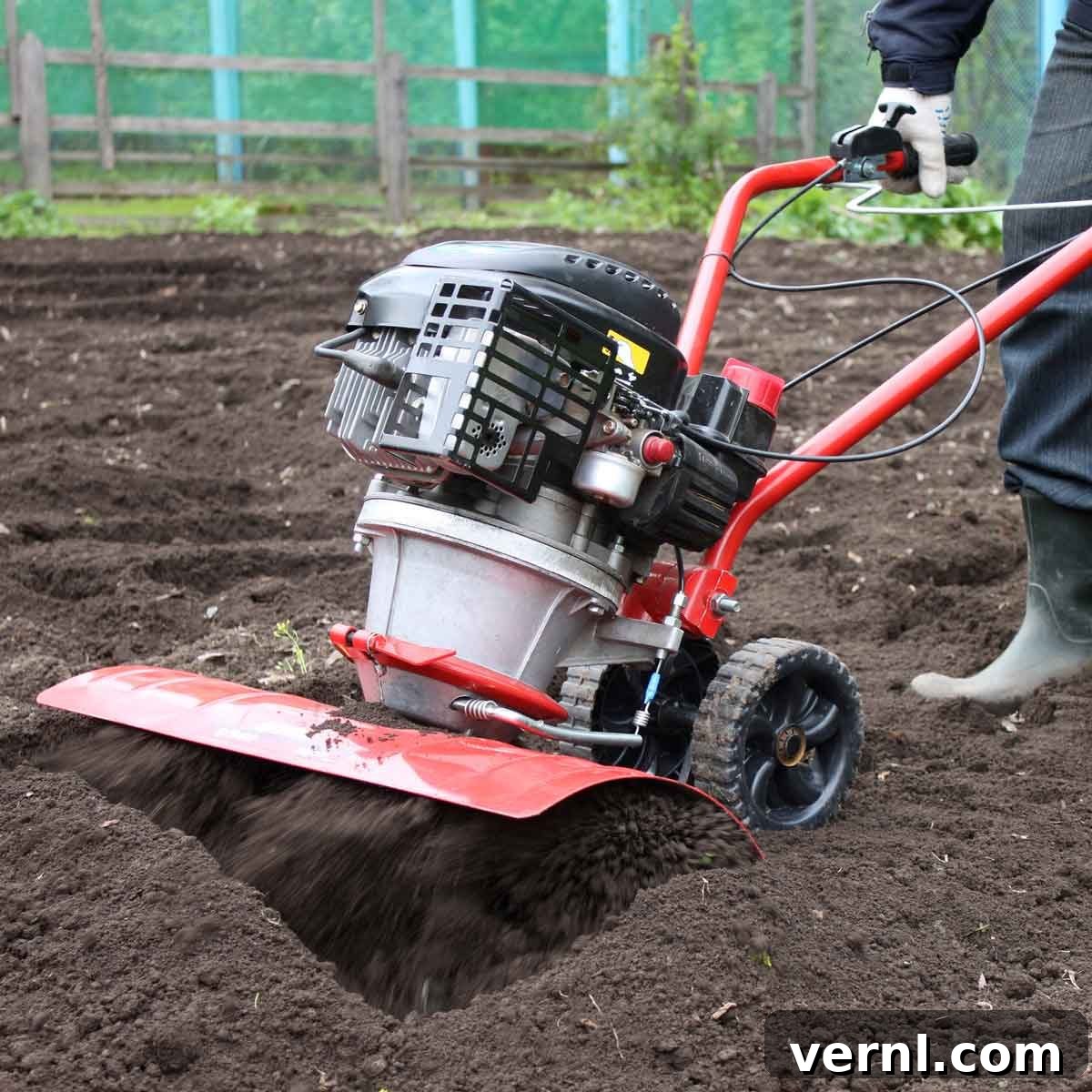
For many home gardeners, a garden tiller stands out as an indispensable power tool. These robust machines, equipped with powerful spinning metal blades, efficiently churn and loosen compacted soil. This essential process not only prepares your garden beds for planting but also significantly enhances soil health. When the soil is well-aerated, your gardening tools can dig with ease, soil amendments like compost and fertilizer can penetrate deeply, and most importantly, your plants can absorb vital nutrients more effectively, leading to stronger growth and more bountiful harvests.
However, tilling your garden isn’t a task you’ll perform weekly, unlike mowing the lawn. In fact, landscape designer Ward Dilmore advises caution against over-tilling. He highlights that excessive tilling can disrupt beneficial soil organisms and structure, suggesting that it should ideally be done only at three- to five-year intervals for most established gardens. Given this infrequent usage, investing in a garden tiller, which can represent a significant expense depending on its size and power, requires careful consideration. Fortunately, most equipment rental outlets offer a diverse selection of tillers, providing a flexible alternative to outright purchase.
This brings us to a common dilemma for homeowners and garden enthusiasts: is it more advantageous to buy a garden tiller or simply rent one when the need arises? This comprehensive guide is designed to help you navigate this decision by exploring the various facets of each option, from financial implications to practical considerations.
Should You Rent or Buy a Garden Tiller? A Complete Comparison
Pros and Cons: Garden Tiller Rental vs. Buying Explained
Understanding the advantages and disadvantages of both purchasing and renting a garden tiller is crucial for making an informed decision tailored to your specific gardening habits and needs.
Buying a Garden Tiller: Advantages and Disadvantages
Owning a garden tiller offers undeniable convenience but also comes with responsibilities.
Pros of Buying a Garden Tiller:
- Easy Access and Immediate Availability: When you own a tiller, it’s always available when you need it. This eliminates the hassle of making reservations, dealing with rental store hours, or worrying about equipment availability during peak gardening seasons. You can start tilling whenever the weather and your schedule permit, allowing for spontaneous garden work and greater flexibility in project planning.
- Potentially Less Costly in the Long Term: For avid gardeners or those with larger properties requiring regular soil preparation every few years, the initial investment in a tiller can often pay for itself over time. If you plan to use the tiller multiple times over a span of five to ten years, the cumulative cost of repeated rentals can quickly surpass the purchase price of a new machine, making ownership the more economical choice in the long run.
- Familiarity and Consistent Performance: Owning your tiller means you become familiar with its operation, quirks, and maintenance needs. This allows for consistent performance and reduces the learning curve each time you use it. You can also ensure it’s always in optimal working condition through regular maintenance, rather than relying on the upkeep standards of a rental facility.
Cons of Buying a Garden Tiller:
- Higher Up-Front Cost: The primary deterrent for many is the substantial initial financial outlay. A quality mid-range garden tiller can cost several hundred dollars, and larger, more powerful models can easily run into four figures. This significant investment might be hard to justify for equipment used only sporadically.
- Ongoing Maintenance Requirements: Like any piece of power equipment, a garden tiller demands regular maintenance to ensure its longevity and efficient operation. This includes tasks such as checking and changing oil, cleaning air filters, inspecting spark plugs, sharpening or replacing tines, and proper winterization. These tasks require time, effort, and potentially additional costs for parts or professional servicing, like an annual tune-up which can cost around $75.
- Aging and Depreciation of Equipment: Over time, even a well-maintained tiller will age, and its performance may decline. Components can wear out, parts might become harder to find, and newer, more efficient models may emerge. This depreciation means your investment loses value, and you might eventually face the decision of costly repairs versus purchasing a new unit.
- Storage Challenges: Garden tillers, especially larger models, require dedicated storage space. If you lack a shed, garage, or sufficient outdoor storage, finding a suitable, secure, and weather-protected spot for your tiller can be a significant challenge. Improper storage can lead to accelerated wear and damage.
Renting a Garden Tiller: Advantages and Disadvantages
Renting offers flexibility and avoids the long-term commitments of ownership.
Pros of Renting a Garden Tiller:
- Lower Entry Price and No Up-Front Investment: The most apparent benefit of renting is the absence of a large initial purchase price. You only pay for the time you use the equipment, making it an attractive option for single-use projects or very infrequent tilling needs. This frees up capital for other gardening essentials.
- No Tool Storage Issues: When you rent, storage is simply not your concern. Once your project is complete, you return the tiller to the rental facility, freeing up valuable space in your garage or shed. This is particularly beneficial for those with limited storage options or smaller properties.
- No Annual Maintenance or Repair Responsibilities: Rental companies are responsible for the maintenance, servicing, and repair of their equipment. This means you avoid the time, effort, and cost associated with routine upkeep, unexpected breakdowns, or replacing worn-out parts. You pick up a ready-to-use machine and return it when done.
- Access to Different Tiller Types: Rental outlets typically stock a variety of tillers, from small cultivators for light tasks to heavy-duty rear-tine models for breaking new ground. This allows you to select the precise tool best suited for your specific project, ensuring optimal efficiency and results without having to buy multiple machines.
Cons of Renting a Garden Tiller:
- Condition Depends on the Last User and Rental Facility: While rental companies maintain their equipment, the tiller’s condition upon pickup can sometimes be less than ideal if the previous user didn’t treat it well. Always inspect the machine thoroughly before leaving the facility, checking for damage, fuel levels, and overall functionality.
- Availability Varies, Especially During Peak Seasons: Garden tillers are in high demand during key planting seasons (early spring and fall). If you don’t book well in advance, you might find that the specific model you need is unavailable, potentially delaying your gardening plans.
- Usage Window Varies with Rental Policies: Rental periods are often fixed (e.g., half-day, full-day, weekend). This can create pressure to complete your tilling within a specific timeframe, especially if unexpected weather or other commitments arise. Going over the allotted time will incur additional fees.
- Must Be Transported To and From the Rental Facility: Tillers are bulky and heavy. Transporting them requires a suitable vehicle (like a truck or a large SUV) and often assistance for loading and unloading. You’ll also need tie-down straps or bungee cords to secure the equipment safely. This adds time and effort to your project.
- Long-Term Costs Often More Expensive Than Buying: If you find yourself renting a tiller annually or every couple of years, the cumulative rental fees, fuel costs, and transportation expenses can quickly exceed the purchase price of a new tiller. For consistent users, renting becomes a more expensive option over the long haul.
- “You Break It, You Bought It” (or Pay for It): Rental agreements typically hold you responsible for any damage incurred during your rental period, beyond normal wear and tear. This can result in significant repair costs or even the cost of replacing the entire unit if damage is extensive. Some rental facilities offer optional insurance, which can be a worthwhile consideration.
Garden Tiller Rental vs. Buying: A Detailed Cost Analysis
For many gardeners, the financial aspect is the biggest initial hurdle. Let’s delve into a more detailed cost calculation for both options.
Calculating Rental Costs:
The total cost of renting a garden tiller involves more than just the daily rate.
- Price of Rental: This will vary by rental facility, geographic location, and the size/type of the tiller. For a mid-range, gas-powered tiller, you can expect rates to be approximately $45 to $65 per day. Larger, more powerful models like a rear-tine tiller might cost $75-$100+ per day, while smaller cultivators could be $30-$50. Weekend rates might offer a slight discount but still require a multi-day payment.
- Fuel Expenses: Gas usage varies, but for a typical gas-powered tiller, plan on using about a tank’s worth of fuel per day, which is usually two gallons or less for mid-sized units. Remember that some older tillers might require a specific octane level or a two-cycle oil/gasoline blend. Always confirm fuel requirements with the rental facility.
- Transportation Costs: This includes the fuel for your vehicle to travel to and from the rental facility, which can be substantial if the store is far away. More importantly, it might involve renting a suitable transport vehicle (like a utility trailer or a pickup truck if you don’t own one), adding another layer of expense. Factor in the time spent on transport as well.
- Optional Insurance: Many rental companies offer damage waiver insurance for an additional fee (often 10-15% of the rental cost). This can protect you from financial liability in case of accidental damage to the tiller, which is a prudent consideration given the “you break it, you bought it” clause.
- Late Fees: Be meticulously punctual with your return. Rental companies are strict about their schedules, and late returns can incur significant additional charges, sometimes equivalent to another full day’s rental.
Calculating Buying Costs:
Purchasing a tiller involves the initial price plus ongoing expenses.
- Purchase Price: There’s a vast range in tiller prices. A small electric cultivator might start around $100-$200. Mid-range, front-tine gas tillers typically fall between $300 and $600. More robust, rear-tine tillers designed for larger gardens and tougher soil can cost anywhere from $700 to $2,000+. For comparison, a mid-range model purchased for $400 might cost you $110 for a two-day rental, highlighting the potential long-term savings of ownership if used frequently.
- Fuel Expenses: While tillers are not gas guzzlers, you’ll still need to factor in fuel costs. Two-cycle engines require an oil/gas blend, while four-cycle engines use regular gasoline. Realistically, you’re unlikely to use more than a gallon or two during a full workday, so this is a minor ongoing cost.
-
Maintenance Costs: This is where ownership costs can accumulate. Electric tillers generally have lower maintenance needs, primarily focusing on keeping them clean and checking tines. Gas-powered models, however, require regular tune-ups and occasional part replacements. Consult a tiller maintenance guide from manufacturers like Troy-Bilt for a better idea of what’s involved. An annual tune-up at a service center might cost around $75. Other potential costs include:
- Oil changes (oil and filter)
- Spark plug replacement
- Air filter cleaning/replacement
- Tine inspection, sharpening, or replacement (tines wear down over time)
- Storage preparation (fuel stabilizer, battery tender for electric start models)
- Unexpected repairs for mechanical failures
- Storage Solutions: Don’t forget the cost (or value) of the space your tiller occupies. If you need to build a shed or buy a cover, those are indirect costs of ownership.
How to Choose: Making the Best Decision for Your Garden
Price is a significant factor, but it’s far from the only consideration. Your decision should strike a balance between cost, convenience, and your specific gardening habits.
Key Factors to Consider:
- Frequency of Use: This is arguably the most critical factor. How often do you anticipate needing a tiller? If it’s a one-time project, or once every 3-5 years, renting is likely more economical. If you’re establishing new garden beds annually, have multiple plots, or regularly need to incorporate amendments, buying might be better.
-
Garden Size and Soil Type:
- Small Gardens (under 1,000 sq ft) or Raised Beds: A small electric cultivator or a mini-tiller might suffice, and these are often cheaper to buy and store.
- Medium Gardens (1,000 – 5,000 sq ft) with Softer Soil: A front-tine tiller, whether electric or gas, could be appropriate.
- Large Gardens (over 5,000 sq ft), New Beds, or Compacted/Clay Soil: You’ll likely need a powerful rear-tine tiller, which is often more expensive to buy but provides superior performance for tough jobs. For these heavy-duty tasks, renting a robust machine can save you a substantial investment.
- Storage Availability: Do you have ample, secure, and weather-protected space in a garage or shed for a tiller? If not, renting eliminates this concern.
- Budget and Financial Flexibility: Can you comfortably afford the upfront cost of a new tiller without straining your finances? If not, renting offers a more budget-friendly approach.
- Your Comfort with Maintenance: Are you comfortable performing basic maintenance tasks (oil changes, spark plugs, cleaning) on a gas engine? If not, you’ll need to factor in professional service costs, making rental more appealing.
- Convenience vs. Cost: How much do you value the ability to till on your own schedule versus saving money by renting and dealing with the associated logistics?
- Physical Capability: Larger tillers can be heavy and require some strength to operate and maneuver. Consider your physical ability for both operating the machine and transporting it.
Types of Tillers to Consider:
Before deciding, understand the different types of tillers and their best uses:
- Cultivators/Mini-Tillers: These are smaller, lighter machines perfect for aerating existing garden beds, mixing in amendments, or weeding. They are not designed for breaking new, hard ground. Often electric, some are gas-powered.
- Front-Tine Tillers: The tines are located in front of the engine and wheels. They are good for small to medium-sized gardens with previously worked soil. They tend to pull themselves forward, requiring some effort to control.
- Rear-Tine Tillers: The tines are located behind the engine and wheels, offering greater power, stability, and control. These are ideal for breaking new ground, working tough or compacted soil, and larger gardens. They are generally heavier and more expensive.
-
Electric vs. Gas-Powered Tillers:
- Electric Tillers: Lighter, quieter, zero emissions, and require less maintenance. Best for smaller gardens with softer soil. Corded models require an extension cord, limiting range. Cordless models offer freedom but have limited battery life.
- Gas-Powered Tillers: More powerful, can handle larger areas and tougher soil. Offer unrestricted mobility. Require more maintenance (fuel, oil, spark plugs) and produce emissions and noise.
It’s always a good idea to create a personalized pros and cons list for your specific situation. Use the actual cost of the tiller you’re considering buying and the cost to rent a comparable tiller in your area for your calculations. Don’t forget to learn what the difference is between a garden cultivator vs. tiller, as this can greatly influence your choice of machine.
What About a Co-Op? A Shared Ownership Approach
A cooperative arrangement, or co-op, offers a middle ground between renting and outright ownership. In a co-op, two or more individuals pool their resources to purchase an item, such as a tiller, and then share its use. This can be an excellent solution for neighbors, friends, or family members with similar gardening needs.
Pros of a Tiller Co-Op:
- Low Buy-In Cost: Sharing the purchase price significantly reduces the individual financial burden, making a high-quality tiller accessible at a fraction of the cost.
- Enhanced Access: For neighborhood co-ops, having the tiller just a few doors down means relatively easy access without the travel time and logistics of a rental facility.
- Shared Maintenance and Storage: The responsibilities and costs of maintenance and storage can be divided among members, easing the burden on any single individual.
Cons of a Tiller Co-Op:
- Scheduling Conflicts: The biggest challenge for co-ops is often scheduling. Seasonal yard tools like tillers are typically in demand by all members of the co-op at the same time, especially during peak spring planting season. Without clear communication and a fair scheduling system, this can lead to frustration.
- Logistical Inconvenience: If co-op members live far apart, driving across town to a friend or family member’s house to pick up and drop off the tiller may negate the convenience benefits and add significant travel time.
- Varying Levels of Care and Responsibility: The condition of the shared tool will depend on all members. If some individuals do not care for their tools properly, fail to clean it after use, or neglect basic maintenance, the tiller’s lifespan and performance can suffer for everyone. Clear rules and expectations regarding usage and maintenance are essential.
- Disputes Over Damage or Repairs: If the tiller breaks or is damaged, determining who is responsible for the repair costs can lead to disagreements among co-op members.
Where to Buy a Garden Tiller
If you’ve decided that buying is the right path for you, knowing where to shop can make the process easier.
- Home Improvement Stores: Big-box retailers like Lowe’s, The Home Depot, and Ace Hardware are popular choices. They typically offer a decent selection of tillers, especially mid-range electric and front-tine gas models, often with competitive pricing and seasonal sales. Their online stores usually have an even wider range available for delivery or in-store pickup.
- General Big Box Stores: Retailers like Walmart may carry smaller, more basic cultivators or mini-tillers, particularly during gardening season. These are often budget-friendly options for very light-duty work.
- Dedicated Lawn and Garden Equipment Retailers: Many cities have specialized lawn and garden equipment retailers. These stores are an excellent resource for getting a hands-on feel for different tiller models, receiving expert advice from knowledgeable staff, and often benefit from in-house service and repair departments. While prices might be slightly higher, the expertise and support can be invaluable.
- Online Marketplaces: Websites like Amazon, eBay, and directly from manufacturer websites offer an extensive selection of tillers, often with competitive online discounts. However, when buying online, be sure to meticulously check the return policy, warranty information, and note the delivery cost, as tillers are heavy and shipping can be expensive. It’s also challenging to gauge if a machine is truly right for you without seeing it in person or testing its ergonomics.
How to Rent a Garden Tiller: A Step-by-Step Guide
If renting is your chosen option, follow these steps for a smooth experience.
- 1. Find a Reputable Rental Location: Begin by researching rental facilities in your area. Good places to look include general equipment rental centers, dedicated hardware stores, lawn mower sales or repair shops, and home centers. Read reviews to find a facility known for well-maintained equipment and good customer service.
- 2. Make a Reservation: Tillers are popular, especially in spring. Call ahead or use the rental facility’s online system to reserve the specific tiller size and type you need for your desired dates. Be clear about your project to ensure you get the appropriate machine.
- 3. Arrange Transportation: Tillers are bulky. Confirm that your vehicle can safely accommodate the tiller. You might need a pickup truck, a large SUV, or even a utility trailer. Plan to lay down a tarp or thick plastic sheeting to protect your vehicle’s interior from dirt, oil, or scratches. Crucially, bring strong Bungee cords or tie-down straps to secure the tiller for the ride home, preventing it from shifting.
- 4. Pick Up and Inspect the Tiller: Arrive on time for your reservation. Before leaving, have the rental staff go over any operating instructions, safety features, and fuel requirements. This is also your opportunity to thoroughly inspect the tiller for any existing damage and ensure it’s in good working order. Ask questions about starting procedures, depth settings, and emergency shut-offs.
- 5. Get to Work Safely: Once you’ve safely transported the tiller home, read the operator’s manual again before starting. Wear appropriate safety gear, including sturdy boots, gloves, and eye protection. Clear your garden area of any rocks, roots, or debris that could damage the tines.
- 6. Return On Time: Keep a close eye on the clock. Finish your work and clean the tiller as requested by the rental company (usually just brushing off excess dirt). Refuel it if that’s part of your agreement. Ensure you return the tiller to the facility before the deadline to avoid incurring any late fees.
Frequently Asked Questions About Garden Tillers
How do I choose the right tiller for my garden?
Choosing the right tiller depends primarily on two factors: your garden’s size and your soil type. For expansive gardens or breaking new ground with hard, clay-heavy, or compacted soil, larger, more powerful rear-tine tillers are typically the most effective choice. These machines offer the necessary power and stability to handle challenging conditions. Conversely, for smaller, established gardens with softer soil, or for tasks like cultivating between rows and mixing in amendments, a small to medium-sized front-tine tiller or even a compact cultivator will work well.
You’ll also need to decide between an electric and gas-powered model. On this point, Ward Dilmore, founder of Petrus Landscape, notes: “Although electric landscape equipment has come a very long way, electric tillers have not quite caught up to the power of gas tillers for heavy-duty tasks.” He advises that if you have a smaller landscape job with looser soil, an electric tiller may perform just fine due to its lighter weight, quieter operation, and less maintenance. However, for larger plots or to break up severely compacted soil, you’re generally better off with the raw power and sustained performance of a gas model.
When is the best time to use a tiller?
The optimal time to use a tiller for preparing your primary garden beds is in early spring, specifically after the last threat of frost has passed, but before the soil becomes too dry and hard. At this point, the soil has typically thawed and has a workable moisture content, making it easier to break up and less prone to compaction. Tilling in spring helps aerate the soil, incorporate winter cover crops or amendments, and create a fine seedbed for your summer garden.
Tillers can also be used, with caution, during the growing season for specific tasks like incorporating additional organic matter or for effective weed management around established plants. When tilling during the growing season, ensure you work carefully to avoid damaging plant roots and adjust the tilling depth accordingly. Avoid tilling excessively during hot, dry periods as this can pulverize the soil structure, leading to crusting and erosion.
What safety precautions should I take when using a tiller?
Safety is paramount when operating any power equipment. Always wear appropriate personal protective equipment (PPE), including sturdy closed-toe boots, long pants, work gloves, and eye protection. Ear protection is also recommended for gas-powered models due to noise. Clear the area of rocks, sticks, and any debris that could be caught in the tines and ejected. Keep bystanders, especially children and pets, at a safe distance. Never leave a running tiller unattended, and always turn off the engine and wait for the tines to stop before clearing any jams or performing maintenance.
Are there alternatives to tilling my garden?
Yes, there are several effective alternatives to traditional tilling, especially for those interested in sustainable gardening practices:
- No-Till Gardening (No-Dig): This method involves disturbing the soil as little as possible. Instead, layers of organic matter (compost, straw, leaves) are added directly to the soil surface. This builds soil health, encourages beneficial organisms, and reduces weed growth over time.
- Raised Beds: Constructing raised garden beds allows you to bring in new, high-quality soil without needing to work your existing ground. They offer excellent drainage and warmth, extending the growing season.
- Cover Cropping: Planting cover crops like clover or vetch in the off-season helps to improve soil structure, suppress weeds, prevent erosion, and add organic matter when they are later incorporated (sometimes by light tilling, or simply left to decompose).
- Broadforking: A broadfork is a hand tool that allows you to loosen and aerate compacted soil deeply without inverting the soil layers, thus preserving the soil structure and microbial life. It’s labor-intensive but excellent for smaller areas.
About the Expert
- Ward Dilmore is the esteemed founder of Petrus, a premier luxury estate landscaping company renowned for its innovative designs and meticulous execution, based in California’s Bay Area.