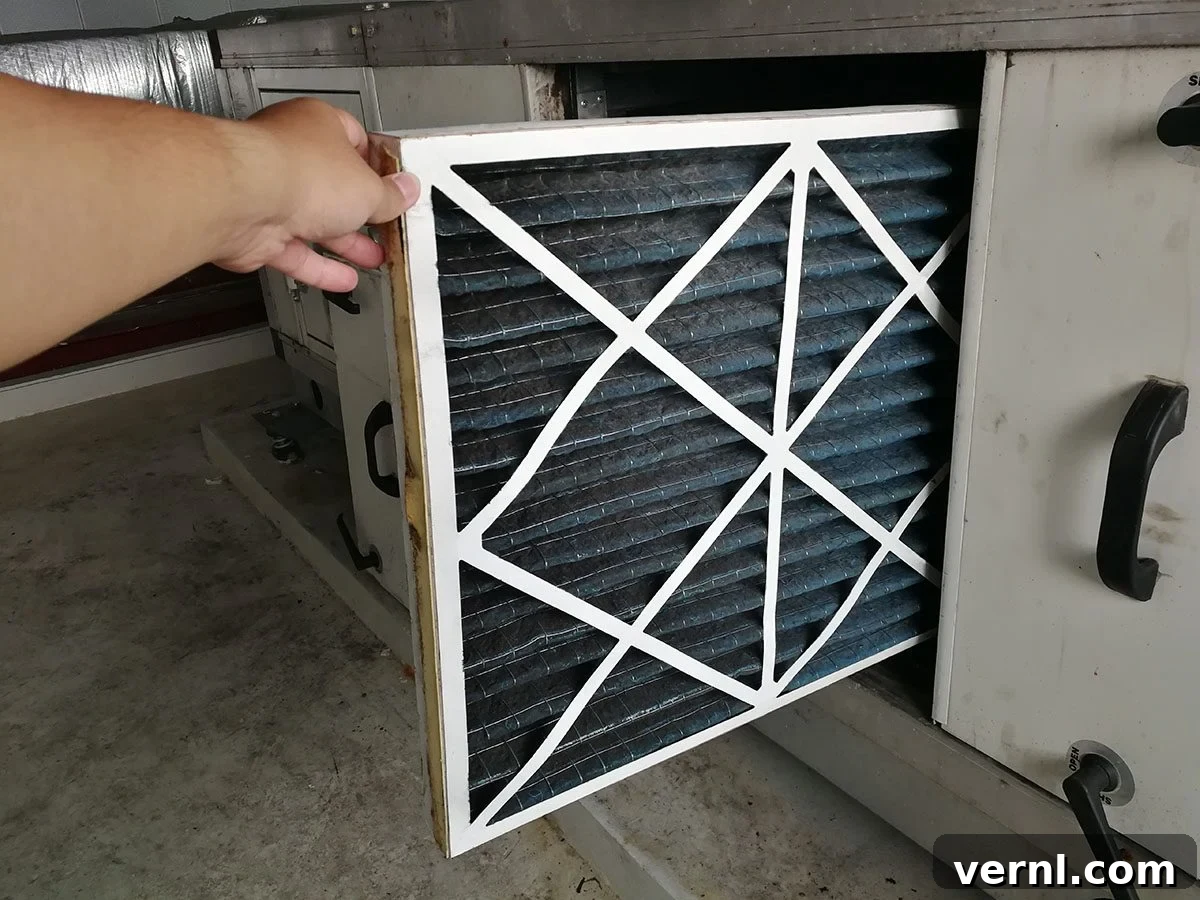
In the intricate ecosystem of your home, few components work as diligently yet remain as often misunderstood as your furnace filter. Imagine allowing unfiltered air to continuously cycle through your heating system. The immediate consequence would be a detrimental buildup of dust, dirt, and microscopic debris on critical components like the heat exchanger and blower motor. This not only impairs your furnace’s performance but significantly shortens the service life of one of your most vital home appliances.
However, protecting your furnace is only half the story. The other, equally crucial role of these essential components is to act as the silent guardians of your indoor air quality. By purifying the air circulating throughout your home, furnace filters prevent you and your family from inhaling a myriad of microscopic dust particles, allergens, pet dander, mold spores, and other airborne contaminants that can exacerbate allergies, asthma, and other respiratory issues.
Indeed, furnace filters are invaluable for ensuring your home’s heating, ventilation, and air conditioning (HVAC) system operates smoothly, efficiently, and most importantly, safely. They come in a variety of styles, each offering different levels of filtration efficiency, often measured by their MERV rating. Despite their critical function, many homeowners harbor misconceptions about how to select, use, and maintain them properly. These myths can lead to decreased HVAC efficiency, premature system wear, and even compromised indoor air quality.
To help navigate this often-confusing landscape and empower you with accurate information, we’ve enlisted the expertise of two seasoned HVAC professionals: John Gabrielli and Jimmy Hiller. Together, we’ll debunk some of the most prevalent and persistent furnace filter myths that you absolutely shouldn’t believe, providing you with practical, expert-backed advice for optimal home comfort and health.
Debunking Common Furnace Filter Myths: Expert Insights for a Healthier Home
Myth 1: Fiberglass Filters are Fine if You Change Them Regularly
One of the most enduring myths revolves around the humble fiberglass filter, often perceived as a cost-effective and adequate solution for furnace protection. Their incredibly porous design, which allows you to almost see through them, is precisely why they are often mistakenly considered “fine” as long as they are changed frequently. The truth, however, is far less reassuring. While their low cost and perceived longevity—because they don’t appear to clog quickly—might seem appealing, these filters offer minimal filtration effectiveness.
The very reason fiberglass filters last longer than higher-quality options is that they fail to capture the finer debris and microscopic particles that truly impact both your furnace’s health and your indoor air quality. Instead of trapping these minute contaminants, fiberglass filters primarily catch larger dust bunnies and debris, allowing the finer, more insidious particles to circulate freely within your home’s air and, more critically, through your HVAC system. This fine dust accumulates on sensitive internal mechanical and electronic parts, leading to accelerated wear, increased repair costs, and a significant reduction in your furnace’s overall lifespan. Furthermore, these airborne particles contribute to a less healthy indoor environment, potentially triggering allergies and respiratory discomfort for occupants.
For superior protection of both your HVAC system and your family’s health, the consensus among HVAC professionals like John Gabrielli is to opt for pleated paper filters. These filters boast a much larger surface area due to their accordion-like folds and are constructed from materials designed to trap a far broader spectrum of particles, from pollen and pet dander to mold spores and fine dust. While they may require more frequent replacement than their fiberglass counterparts, the benefits—including enhanced indoor air quality, extended furnace lifespan, and improved energy efficiency—far outweigh the minor inconvenience.
Myth 2: You Should Replace Your Filter Every 30 Days
The “change your filter every 30 days” mantra is widely propagated, often printed on filter packaging as a general guideline. While it serves as a helpful reminder for some, relying on an arbitrary schedule rather than your specific home’s needs is a significant furnace filter myth. The reality is that the ideal filter replacement period is highly variable and “depends on your specific system and environmental conditions,” as stated by HVAC expert John Gabrielli.
Several factors dictate how quickly your furnace filter accumulates debris and requires replacement. Homes with pets, especially those with multiple furry residents, will typically need more frequent filter changes due to increased pet dander and hair. Similarly, households with allergy sufferers or individuals with respiratory sensitivities should inspect and change their filters more often to maintain optimal indoor air quality. Other significant contributors include the number of occupants, recent home renovations or construction projects that generate additional dust, the general air quality in your geographical area, and even the frequency with which you operate your heating or cooling system.
Instead of adhering strictly to a calendar date, the most effective approach is a regular visual inspection. Gabrielli recommends pulling your filter from the furnace every month and comparing its appearance to that of a new, clean filter. You’ll easily discern when a significant layer of dust and debris covers the filter media, indicating it’s time for replacement. A dirty filter restricts airflow, forcing your furnace to work harder and consume more energy, which translates to higher utility bills and increased wear on the system’s blower motor. To ensure you’re always prepared for timely replacement, it’s wise to keep at least one new, appropriate replacement filter on hand.
Myth 3: The Higher the MERV Rating, the Better
When it comes to selecting furnace filters, the “MERV” rating is often presented as the ultimate indicator of quality. MERV, an acronym for “Minimum Efficiency Reporting Value,” is a standardized rating system developed by the American Society of Heating, Refrigerating and Air-Conditioning Engineers (ASHRAE). It quantifies a filter’s ability to capture airborne particles between 0.3 and 10 microns, with the range typically spanning from 1 to 16 for residential filters. A MERV rating of 1 signifies the most porous filter, capturing only the largest particles, while a MERV 16 filter boasts the finest filtration, capable of trapping microscopic contaminants like bacteria and even some viruses.
It’s a common misconception that simply opting for the highest available MERV rating guarantees the best results. While a higher MERV rating indeed indicates superior filtration, there’s a critical trade-off: airflow restriction. Filters with very high MERV ratings (above 12) have a denser filtration media, which, while excellent at trapping minute particles, also creates greater resistance to airflow. This increased resistance forces your furnace’s blower motor to work significantly harder, leading to several undesirable consequences. It can strain the motor, reduce the overall energy efficiency of your HVAC system, increase utility costs, and in severe cases, even cause the furnace to overheat or short-cycle, potentially damaging the system or reducing its lifespan.
For the vast majority of homes, a MERV rating between 8 and 12 strikes an optimal balance between effective filtration and maintaining adequate airflow. Filters in this range are highly efficient at capturing common indoor air pollutants such as pollen, dust mites, pet dander, mold spores, and even some bacteria, providing excellent indoor air quality and ample protection for your furnace components without unduly stressing the system. Higher MERV filters (13-16) clog much faster, necessitating more frequent and costly replacements. These advanced filters are typically only recommended for specific circumstances, such as homes where family members suffer from severe allergies, asthma, compromised immune systems, or other significant respiratory issues. Even in such cases, it’s crucial to consult with a qualified HVAC professional to ensure your furnace system is capable of handling the increased airflow resistance without compromising its performance or longevity. An expert can assess your specific system’s design and recommend the highest MERV rating it can safely accommodate.
Myth 4: Staying on Top of Filter Changes Means Fewer Furnace Tune-Ups
Maintaining a diligent schedule for furnace filter replacement is undeniably a cornerstone of effective HVAC maintenance. It significantly contributes to improved air quality and ensures efficient airflow, thereby reducing the strain on your furnace, as HVAC pro Jimmy Hiller affirms. However, believing that regular filter changes negate the need for professional furnace tune-ups is another persistent and potentially costly myth. While a clean filter is crucial, it’s merely one piece of a much larger, more complex puzzle.
A professional furnace tune-up is a comprehensive annual service designed to assess your entire heating system’s operation, from initial startup to shutdown. It’s an essential preventative measure that goes far beyond simply swapping out a dirty filter. During a tune-up, certified technicians will perform a meticulous multi-point inspection and a series of critical maintenance tasks. This includes cleaning internal components such as the blower assembly, heat exchanger, and burner, as well as clearing the condensate line to prevent blockages and water damage. They will also inspect and tighten electrical connections, lubricate moving parts, and check the thermostat’s calibration.
Crucially, technicians perform a thorough combustion analysis to measure oxygen (O2), carbon monoxide (CO), and carbon dioxide (CO2) levels. This analysis ensures your furnace is burning fuel efficiently and, more importantly, safely. As Jimmy Hiller emphasizes, the carbon monoxide check “is not to be overlooked” given its potential for fatal consequences if a leak occurs. Equally vital is the inspection of your heat exchanger for cracks or damage, which is a major safety concern as it separates combustion gases from the breathable air in your home. A professional tune-up proactively identifies minor issues before they escalate into expensive repairs or pose safety risks, extends the lifespan of your unit, improves energy efficiency, ensures your furnace operates safely, and often maintains your manufacturer’s warranty. Therefore, an annual furnace tune-up is an indispensable investment in your home’s comfort, safety, and the longevity of your heating system, working in conjunction with, not in place of, regular filter changes.
Myth 5: Washable Filters are Better Than Disposable Ones
The allure of washable furnace filters is undeniable, promising environmental friendliness and long-term cost savings by eliminating the need to continuously purchase disposable filters. However, while the concept of a reusable filter aligns well with ecological sensibilities, the practical realities and performance limitations often render them a less-than-ideal choice for most homeowners. The assertion that washable filters are inherently “better” than disposable ones is a widely held myth that deserves critical examination.
One of the primary challenges with washable filters lies in their cleaning process. While they can be rinsed, it is notoriously difficult to achieve a truly comprehensive clean. Microscopic particles and debris often become deeply embedded within the filter media, making complete removal almost impossible. This residual trapped matter can diminish the filter’s already limited filtration capacity over time. Furthermore, if a washable filter is not thoroughly dried before being reinstalled, it creates a damp environment conducive to the growth of mold, mildew, and bacteria, which can then be circulated throughout your home, severely compromising indoor air quality and posing health risks.
Beyond the cleaning complexities, washable filters typically offer very low MERV ratings, often falling between 1 and 4. This means they are only effective at trapping the largest airborne particles, such as lint and hair, while allowing finer dust, allergens, and other microscopic contaminants to pass through into your home’s air and furnace components. Compared to the superior filtration capabilities of even a modest MERV 8 pleated disposable filter, washable options provide substandard protection against pollutants that commonly trigger allergies and respiratory issues.
Considering their initial cost, which can range from $80 to $100, the payback period for washable filters often doesn’t justify their compromised performance and the ongoing effort required for proper maintenance. For homeowners who are strongly ecologically minded and truly detest the idea of contributing to landfill waste, washable filters might present an acceptable compromise. However, it’s crucial to enter this decision with a clear understanding and acceptance of the trade-offs: a filtration system that offers significantly less protection for both your HVAC equipment and your indoor air quality. For optimal health and system longevity, the convenience and superior filtration of high-quality disposable pleated filters typically make them the more practical and effective choice.
Understanding the truth behind these common furnace filter myths is crucial for maintaining a healthy, comfortable, and energy-efficient home. By making informed decisions based on expert advice, you can ensure your HVAC system operates at its best, protecting your investment and the well-being of your family.
About the Experts
- John Gabrielli has been deeply involved in the HVAC trades throughout his entire professional life. He is the Owner/Operator of Air Temp Solutions, a reputable HVAC service provider based in Sacramento, CA.
- Jimmy Hiller is the respected President and CEO of Happy Hiller, a prominent plumbing and HVAC company headquartered in Tennessee, known for its comprehensive home service solutions.