The Ultimate Guide to Silencing Squeaky Door Hinges for a Quieter Home
There are few household noises as persistently annoying as a squeaky door hinge. That high-pitched whine or groan can disrupt a peaceful morning, wake sleeping family members, or simply grate on your nerves every time a door is opened or closed. Fortunately, fixing a squeaky door hinge is often a simple and rewarding DIY task that requires minimal tools and effort. This comprehensive guide will walk you through various effective methods, from quick lubrication sprays to more involved cleaning and maintenance, ensuring your home enjoys the tranquility it deserves. Say goodbye to irritating squeaks and hello to silent, smoothly operating doors.
Why Do Door Hinges Squeak? Understanding the Root Cause
Before diving into fixes, it’s helpful to understand why door hinges develop that tell-tale squeak. The primary culprit is almost always friction. Over time, the metal parts of a hinge—specifically the hinge pin and the knuckles (or leaves) it passes through—start to rub against each other without adequate lubrication. Several factors contribute to this increased friction:
- Lack of Lubrication: Hinges are rarely lubricated after installation. Over years of use, any factory lubrication dries out or wears away, leaving metal-on-metal contact.
- Dirt and Grime Buildup: Dust, pet hair, paint overspray, and other debris can accumulate within the hinge barrels, creating abrasive friction points.
- Rust and Corrosion: Especially in humid environments like bathrooms or coastal areas, hinges can rust. This corrosion creates an uneven surface that grinds when the door moves.
- Wear and Tear: Continuous use causes the metal components to wear down, leading to loose fittings and increased friction.
- Environmental Factors: Changes in temperature and humidity can cause wood doors and frames to expand or contract, putting stress on hinges and altering their alignment.
Identifying the specific cause can sometimes help you choose the most effective repair method, though lubrication is almost always the first and best step.
Essential Tools and Materials for Hinge Repair
Depending on the method you choose, you’ll need a few basic items. Most of these are common household tools or easily purchased from any hardware store.
- Lubricants: Dry lubricant spray (graphite or PTFE-based), silicone spray, lithium grease, petroleum jelly, or even olive oil.
- Protective Material: Thin cardboard, newspaper, or painter’s tape to shield surrounding surfaces from overspray or drips.
- Cleaning Supplies: Paper towels, old rags, wire brush, steel wool, or fine-grit sandpaper.
- Tools for Pin Removal: Hammer, nail set, screwdriver (flat-head is often useful for prying).
- Safety Gear: Gloves (optional, but recommended for messy lubricants).
Method 1: The Quick Fix – Dry Lubricant Spray
This is often the quickest, cleanest, and most effective solution for a common squeak. Dry lubricants, often graphite or PTFE (Teflon)-based, are excellent because they don’t attract dust and dirt like wet oils can, and they dry almost instantly. This method is especially favored for its minimal mess and lasting results.
Step-by-Step Guide for Dry Lubricant Application:
-
Prepare and Protect the Area
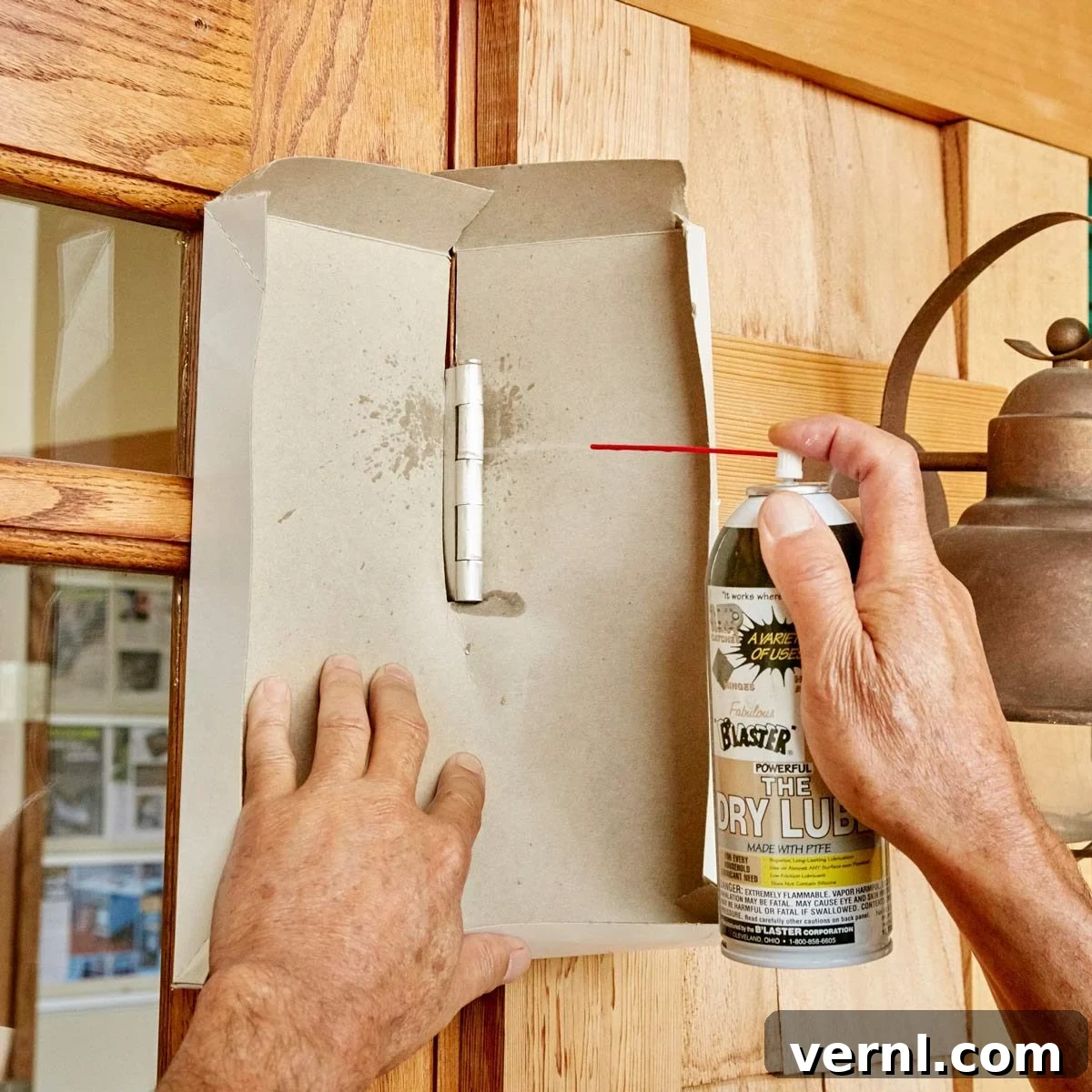
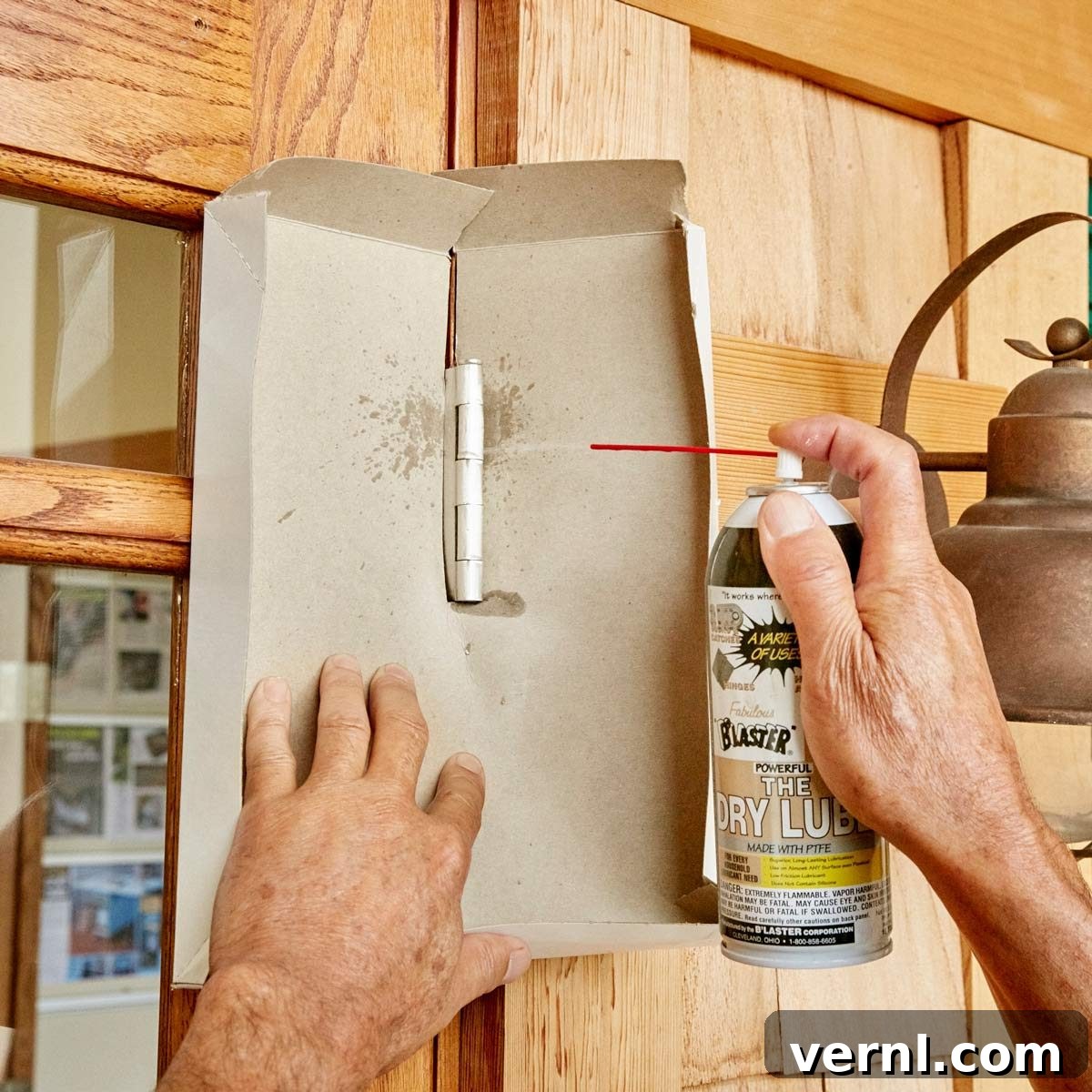
Your primary goal here is to prevent lubricant from getting on your door, frame, or walls. Dry lubricants are generally less messy than wet alternatives, but overspray can still leave a powdery residue. Take a piece of thin cardboard (a cereal box or a file folder works perfectly) and slit it from one edge to the center. Carefully slip this slit cardboard around the hinge barrel (the cylindrical part where the hinge pin goes) that you intend to lubricate. This acts as a shield, effectively blocking any errant spray. If you don’t have cardboard, painter’s tape or a piece of newspaper can also work.
-
Apply the Dry Lubricant
With the area protected, shake the can of dry lubricant vigorously. Aim the nozzle directly into the crevices of the hinge barrel, particularly where the pin meets the hinge leaves. Apply a short, controlled burst of spray. You generally only need a small amount; over-application can sometimes lead to slight build-up, though this is less of a concern with dry lubricants.
-
Work the Lubricant In
Once applied, remove the cardboard shield. Gently open and close the door a few times. This movement helps the lubricant penetrate deep into the hinge mechanism, coating the pin and the inner surfaces of the knuckles. You should notice the squeak diminishing almost immediately. Continue opening and closing until the noise is completely gone or significantly reduced.
-
Clean Up Any Excess
While dry lubricants are known for being clean, occasionally a slight powdery residue might be visible. Wipe away any excess with a clean, dry paper towel or cloth. Ensure there are no visible drips or residue left on the door or frame to maintain a neat appearance.
Method 2: Exploring Other Effective Lubricants
While dry lubricants are fantastic, several other options can also effectively silence squeaky hinges. Each has its own benefits and ideal applications.
Silicone Spray Lubricant
Silicone spray is another excellent choice for hinges. Like dry lubricants, it doesn’t attract dust, is water-resistant, and provides smooth operation. It’s safe for most surfaces and dries quickly, leaving a clean, non-greasy film. Apply it using the same cardboard-shielding technique described for dry lubricant. It’s particularly useful in outdoor settings or areas prone to moisture where rust could be a concern.
Lithium Grease
White lithium grease, often found in a spray can with a straw applicator, is a heavy-duty lubricant known for its excellent long-term protection and ability to withstand high temperatures and heavy loads. It’s thicker and messier than silicone or dry sprays, but it offers superior durability. For hinges, spray a small amount directly into the hinge. Be extra careful with overspray and wipe away any excess immediately, as it can be difficult to remove once dry.
WD-40 (and its Nuances)
WD-40 is a popular household product, and while it can temporarily silence a squeaky hinge, it’s primarily a water dispersant and penetrating oil, not a long-term lubricant. It excels at breaking down rust and displacing moisture, which can help free up a stiff hinge. However, it can also attract dust and dirt over time, potentially leading to future squeaks. If you use WD-40, it’s often best to follow it up with a more durable lubricant like silicone spray or lithium grease for lasting results.
Household Alternatives: Petroleum Jelly and Olive Oil
For those without specialized lubricants on hand, common household items can offer a temporary fix. Petroleum jelly (like Vaseline) can be dabbed onto the hinge pin and worked into the mechanism. It’s a bit messier and might need more frequent reapplication. Olive oil or other cooking oils can also provide a short-term solution by reducing friction. However, be aware that cooking oils can eventually turn rancid and attract dust, so they are not recommended for long-term use and should be cleaned and replaced with a proper lubricant when possible.
Method 3: When Lubrication Isn’t Enough – Addressing Deeper Issues
If a simple spray doesn’t solve the problem, the squeak might be coming from deeper within the hinge, or there might be other structural issues at play. This often requires removing the hinge pin for a more thorough cleaning and lubrication.
Removing and Cleaning Hinge Pins
-
Gather Your Tools
You’ll need a hammer, a nail set or a large nail (something slender and sturdy enough to push the pin), and a flat-head screwdriver (for prying if needed).
-
Support the Door (Optional but Recommended)
If you plan to remove all pins from a hinge, it’s a good idea to have someone hold the door or place shims/books underneath it to prevent it from sagging or falling. For a single squeaky hinge, you can usually remove one pin at a time without much issue.
-
Remove the Pin
Most hinge pins have a knob on the top. Place the tip of your nail set or a sturdy nail against the bottom of this knob (or the very top of the pin itself if there’s no knob). Gently tap the nail set upwards with a hammer. The pin should slowly emerge from the bottom of the hinge. Once it’s high enough, you can usually grab it with your fingers or pliers and pull it out completely. If it’s stuck, try applying some WD-40 to help loosen it, letting it sit for a few minutes.
-
Clean the Pin and Hinge Barrels
Once the pin is out, inspect it. It’s likely coated in old, dried grease, dirt, or even some rust. Use steel wool, fine-grit sandpaper, or a wire brush to thoroughly clean the pin until it’s shiny and smooth. You can also clean the inside of the hinge barrels (the knuckles) as best you can with a cotton swab or a pipe cleaner, removing any accumulated grime.
-
Lubricate and Reinsert
Apply a generous coat of your chosen lubricant (lithium grease or petroleum jelly works well here, as you can really coat the pin) to the entire length of the clean hinge pin. Gently slide the lubricated pin back into the hinge barrels from the top. Tap it down with your hammer until it’s fully seated. Open and close the door a few times to distribute the lubricant. Wipe away any excess.
Tightening Loose Hinge Screws
Sometimes, a squeak isn’t from the hinge itself but from the hinge plates rubbing against the door or frame because the screws are loose. Open the door and check all the screws on both the door and frame sides of the hinge. Use a screwdriver to tighten any that feel loose. If a screw simply spins without tightening, the screw hole might be stripped. You can fix this by removing the screw, inserting a wooden golf tee or a wood filler stick with some wood glue into the hole, letting it dry, then breaking it off flush and reinserting the screw. A longer or wider screw can also work as a quick fix.
Replacing Worn Hinge Pins or Entire Hinges
If your hinge pins are severely corroded, bent, or worn down beyond repair, you might need to replace just the pins. These are readily available at hardware stores and are relatively inexpensive. If the entire hinge is bent, cracked, or excessively worn, causing significant play in the door, it might be time to replace the whole hinge. Ensure you match the new hinge to the old one in terms of size, screw hole pattern, and finish for a seamless replacement.
Preventive Maintenance: Keeping Your Hinges Silent
Once your hinges are squeak-free, a little preventive maintenance can keep them quiet for years to come. Incorporate these simple steps into your home maintenance routine:
- Regular Cleaning: Periodically wipe down your hinges with a damp cloth to remove dust and grime.
- Annual Lubrication: A quick spray of dry or silicone lubricant once a year, particularly on high-traffic doors, can prevent squeaks from returning.
- Check for Wear: Every so often, inspect your hinges for signs of rust, bending, or excessive play. Addressing minor issues early can prevent bigger problems down the line.
- Avoid Paint Buildup: When painting doors or frames, take care to tape off or remove hinges to prevent paint from accumulating inside the barrels, which can cause sticking and squeaking.
Common Mistakes to Avoid During Hinge Repair
While fixing squeaky hinges is straightforward, avoiding these common pitfalls can save you time and frustration:
- Over-Lubrication: Too much wet lubricant can attract dust and dirt, leading to a new, grimy problem. A little goes a long way.
- Ignoring the Root Cause: If lubrication is only a temporary fix, you might have deeper issues like rust, stripped screws, or worn parts that need addressing.
- Not Protecting Surfaces: Failing to use cardboard or tape can lead to lubricant stains on your door or frame, which can be difficult to clean.
- Using the Wrong Lubricant: While household oils can work in a pinch, they’re not ideal long-term. Choose lubricants designed for metal-on-metal friction for the best results.
Frequently Asked Questions About Squeaky Hinges (FAQs)
- Q: How often should I lubricate my door hinges?
- A: For most interior doors, once a year is sufficient. High-traffic doors or hinges in humid environments might benefit from lubrication every six months. If a squeak returns, it’s a good reminder to re-lubricate.
- Q: Can I use cooking oil on my hinges?
- A: While cooking oils like olive oil can offer a temporary fix, they are not ideal for long-term use. They can attract dust, become sticky, and eventually turn rancid, leading to more problems than they solve. It’s best to use a purpose-built lubricant like silicone spray, dry lubricant, or lithium grease.
- Q: What if my hinges are painted shut?
- A: If paint has sealed the hinge, you’ll need to carefully score the paint around the hinge edges with a utility knife. This will break the paint seal, allowing the hinge to move. For a stuck pin, you may need to apply a penetrating oil like WD-40 and gently tap it until it loosens.
- Q: Is a squeaky hinge a sign of a serious problem?
- A: Usually not. A squeak primarily indicates a lack of lubrication or minor friction. However, if the door is also sticking, sagging, or difficult to close, it could indicate loose screws, a warped door, or excessively worn hinges that may need more attention.
- Q: What’s the best lubricant for outdoor gate hinges?
- A: For outdoor gates, you need a lubricant that can withstand the elements. White lithium grease or a marine-grade silicone spray are excellent choices as they offer good water resistance and durability.
Conclusion: Enjoying a Quieter Home
A squeaky door hinge is a minor inconvenience that can easily be transformed into a simple home improvement triumph. By following the methods outlined in this guide, you can effectively silence those annoying noises, enhance the functionality of your doors, and bring a greater sense of peace and quiet to your living space. With a little attention and the right lubricant, your doors will be opening and closing smoothly and silently for years to come. Embrace the quiet and enjoy your newly maintenance-free doorways!
Discover more expert tips and DIY solutions for common household maintenance challenges.