
The Viral Paper Bag Wasp Deterrent: Fact or Fiction? Unpacking TikTok’s Latest Pest Control Hack
As seasons change and outdoor activities beckon, many homeowners often find themselves in an unwelcome standoff with persistent wasp populations. These stinging insects, while vital to the ecosystem, can quickly become a nuisance or even a serious threat, especially for those with allergies. While a myriad of chemical solutions promise swift eradication, a growing number of individuals are actively seeking safer, gentler, and more environmentally friendly methods to deter these winged invaders.
This quest for natural pest control has recently propelled a rather unconventional solution into the viral spotlight: the “paper bag wasp trick.” Originating from the ever-popular platform TikTok, this ingenious hack suggests that merely hanging a plain paper bag can compel wasps to relocate. The phrase “wasp paper bag trick” has garnered over 270 million views on TikTok, captivating audiences with its surprisingly simple and somewhat humorous approach to pest management. But beyond the viral fame and anecdotal claims, the crucial question remains: Is this widely shared DIY wasp deterrent truly effective, or is it just another internet myth? In this comprehensive article, we will delve deep into the science, expert opinions, and practical realities behind this trendy eco-friendly pest control trick, helping you make informed decisions about managing wasps around your home.
What Is the Paper Bag Wasp Decoy Trick and How Does It Supposedly Work?
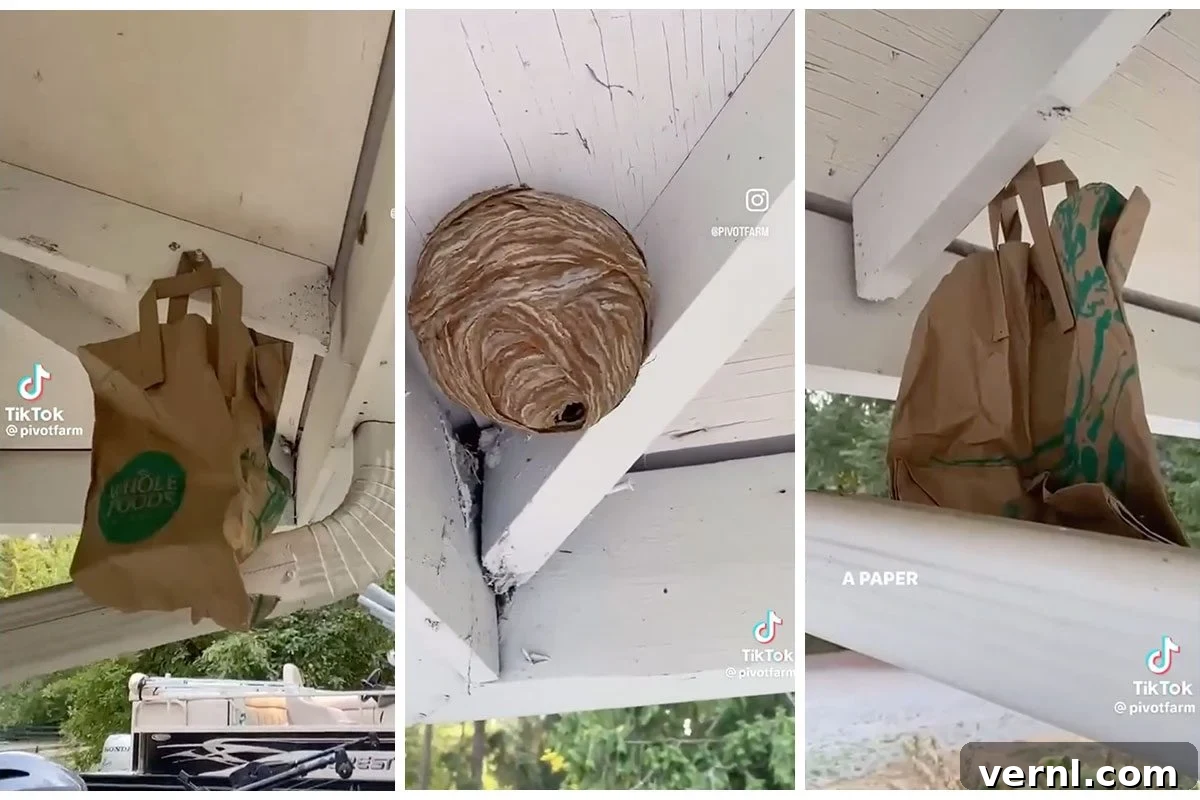
The essence of the paper bag wasp deterrent trick is remarkably straightforward yet rests on a fundamental understanding of wasp behavior. The concept gained significant traction thanks to TikTok creators like Brandelyn and Joe Tafoya, homesteaders who share their experiences on their family account, Pivot Farm (@pivotfarm). In one of their popular videos, they demonstrate the hack, with Joe narrating the discovery: “I saw somewhere on a video that said if you hang a bag next to your wasp nest, it’ll make them move out because they’re super territorial.”
The visual evidence presented in the video is compelling: a slightly inflated, crumpled brown paper bag hangs discreetly about one to two feet away from an existing wasp nest, which appears conspicuously empty of its former inhabitants. The underlying theory is elegantly simple: by hanging a paper bag that has been gently puffed out and crumpled to resemble a nascent or rival wasp nest, you trick the local wasp population. Wasps, particularly species like paper wasps, are intensely territorial creatures. They naturally seek out undisturbed and exclusive locations to establish their colonies, be it under eaves, within attics, or beneath overhangs. The sight of what they perceive to be another active nest nearby, especially a potentially larger or more established one, triggers an instinctive avoidance response. The idea is that these wasps will opt to vacate their current home rather than engage in a costly and dangerous turf war, thus offering a chemical-free way to encourage their departure without direct confrontation or harmful substances.
@pivotfarm Wish I had known this sooner! Chemical free hornet nest removal! #homehacks #househacks #farmhack #hometips #farmtips #homestead #beesnest ♬ original sound – Brandelyn Tafoya
Does This DIY Wasp Deterrent Trick Work? Fact-Checking the Viral Sensation
The TikTok video from Pivot Farm certainly presents a convincing case. Joe Tafoya himself expressed initial skepticism, admitting he “never thought [the trick] would work.” Yet, he emphatically claims a successful outcome: “In about two weeks, they all just left.” This anecdotal success story resonated deeply, prompting hundreds, if not thousands, of users to echo similar positive experiences with the method, fostering a strong belief in this natural wasp control hack.
To move beyond personal accounts and truly evaluate the efficacy of the paper bag wasp decoy, it’s essential to consult scientific expertise. Dr. Lynn Kimsey, a globally recognized expert on wasps and their intricate behaviors, and the director of the esteemed Bohart Museum of Entomology, provides valuable insight. Dr. Kimsey corroborates the fundamental principle upon which the trick is based: the highly territorial nature of paper wasps. She explains that wasps inherently prefer environments where they can build their nests without competition or disturbance. Their instinct drives them to seek out quiet, sheltered, and exclusive locations, such as under eaves, within attics, or beneath overhangs.
“Wasps don’t want to build right next to another colony,” Dr. Kimsey states. “It’s a built-in territorial response—they’re smart enough not to start turf wars they can avoid.” This expert perspective lends significant credibility to the decoy method. The theory suggests that if a wasp queen scouting for a new nest site, or an existing colony, encounters what appears to be an occupied territory (the decoy), they are likely to move on. It’s a preemptive psychological tactic that leverages their instinct for self-preservation and resource allocation.
However, Dr. Kimsey also emphasizes that while the principle is sound, successful application requires attention to detail. She outlines several practical tips for maximizing the effectiveness of these DIY wasp decoys. These include selecting the appropriate material (a brown paper bag mimics natural nest colors and textures), proper shaping (crumpling and gently inflating to create a realistic, somewhat irregular nest shape), strategic placement techniques (hanging it visibly but safely away from human traffic, near existing nests or potential nesting sites), and crucial safety tips (never approaching an active nest directly and ensuring the area is clear before attempting placement). By understanding the “why” and “how” from an entomological perspective, homeowners can significantly increase their chances of success with this eco-friendly pest control method, potentially preventing the establishment of new nests before they become a larger problem.
Potential Risks and Considerations: Is the Eco-Friendly Wasp Deterrent Truly Safe?
While the paper bag wasp decoy trick offers an appealing, chemical-free alternative for natural wasp control, it’s crucial to acknowledge that it’s not without potential drawbacks or risks. The very material that makes the decoy seem plausible can, under certain circumstances, become counterproductive. Unfortunately, simply hanging a paper bag near an existing wasp nest could inadvertently invite the very pests you’re trying to deter. This seemingly paradoxical outcome stems from the fact that many wasp species, particularly paper wasps, construct their nests using cellulose fibers, which they gather from wood and plant materials, and then chew into a paper-like pulp. A readily available paper bag might not be perceived as a rival nest, but rather as a convenient, pre-processed source of building material for their new home.
This critical distinction highlights the need for careful consideration when employing this eco-friendly pest control trick. If the wasps interpret the bag as a resource rather than a threat, you might inadvertently provide them with a welcome head start in crafting or expanding their colony. Fábio Prezoto, another expert in insect behavior, supports this concern and offers a practical modification to mitigate this risk. He suggests using plastic bags instead of paper bags. A plastic bag, while still capable of being shaped to resemble a decoy, would not offer any building material to the wasps, thus eliminating the risk of encouraging nest construction. This simple switch could make the decoy method more robust and less susceptible to misinterpretation by the wasps.
Furthermore, it’s important to consider the safety implications of placing any decoy. While the method itself is non-toxic, approaching an existing, active wasp nest to hang a decoy always carries the risk of stings. Homeowners should exercise extreme caution, preferably attempting placement during cooler parts of the day when wasps are less active, and always maintaining a safe distance. The effectiveness can also vary significantly based on the specific wasp species, the stage of the colony’s development, and the environmental conditions. Therefore, while it presents a compelling chemical-free option, it’s not a guaranteed solution and requires an understanding of its limitations and potential risks.
Comprehensive Strategies for Effective Wasp Control: Beyond the Paper Bag
For truly effective and long-lasting wasp control, a multi-faceted approach is often required, extending beyond simple decoy tactics. Dr. Lynn Kimsey emphasizes that understanding the territorial instincts, seasonal habits, and nesting preferences of wasps is paramount to successful management. Knowledge of their life cycle allows homeowners to implement deterrents at the most opportune times, significantly increasing their chances of success.
Proactive Prevention in Early Spring
The absolute best time to initiate wasp deterrents and preventative measures is in early spring. This is when queen wasps emerge from hibernation, seeking suitable locations to establish their new colonies. “The best time to act is before the queen starts her nest. If she’s already settled in, she’s not going to be scared off easily,” says Kimsey. By addressing the problem at its root – preventing the queen from settling – you can avert an entire season of wasp activity. Strategies during this period include:
- Sealing Entry Points: Inspect your home for any cracks, holes, or gaps in walls, foundations, and around windows and doors. Seal these potential entry points to deny queens access to sheltered nesting sites.
- Removing Attractants: Eliminate standing water sources, keep trash cans tightly sealed, and ensure outdoor food preparation areas are cleaned promptly.
- Early Decoy Placement: If using a decoy, place it in early spring in areas prone to wasp nesting, before any queen has had a chance to claim the territory.
Addressing Active Nests Responsibly
While prevention is ideal, sometimes a wasp nest already poses an immediate safety risk. This is particularly true if it’s located in a high-traffic area (like near a doorway, patio, or children’s play area) or if anyone in your household is allergic to wasp stings, in which case swift and safe removal becomes a priority. In these scenarios, the paper bag wasp decoy trick may still be utilized as a non-confrontational method, but more direct action might be necessary.
- Long-Distance Sprays: For hanging wasp nests that are accessible but require a safe distance, opt for specialized long-distance wasp and hornet killer sprays, such as Ortho Home Defense Hornet and Wasp Killer. These products often have a jet spray feature that allows you to target the nest from several feet away, minimizing personal risk. Always apply these products in the evening or early morning when wasps are less active and most are inside the nest.
- DIY Solutions: A simple yet effective DIY mix with Dawn dish soap and water can also be highly effective. The soap breaks down the waxy coating on a wasp’s exoskeleton, leading to dehydration and suffocation. Create a potent solution (e.g., one part dish soap to four parts water) in a spray bottle and apply it directly to the nest from a safe distance, again, preferably at dusk or dawn.
- Professional Extermination: For large, established nests, nests in difficult-to-reach locations (like inside walls or high up on eaves), or for those uncomfortable with direct confrontation, calling a professional pest control service is the safest and most reliable option.
Long-Term Wasp Management
Looking ahead, continuous vigilance and strategic planning can help minimize future wasp problems. For next year, you can also prepare to eliminate the wasp queen in springtime. This involves using queen traps (designed to lure and capture queens emerging from hibernation) or diligently inspecting your property for early signs of nest construction. Early detection and removal of small, nascent nests can prevent them from growing into formidable colonies. By combining preventative measures, responsible intervention, and long-term strategies, you can maintain a safer and more enjoyable outdoor living space. Stay safe out there!
Meet the Experts Behind the Insights
This article draws its insights from a combination of real-world application and scientific expertise, offering a balanced perspective on wasp control.
Brandelyn and Joe Tafoya, Owners of Pivot Farm
Brandelyn and Joe Tafoya are the dedicated owners and operators of Pivot Farm, a 20-acre homestead where they embody the principles of self-reliance and sustainable living. Through their efforts, they successfully grow approximately 80% of their own food, demonstrating a profound connection to the land and its resources. Beyond crop cultivation, they also raise livestock and meticulously tend to their gardens, orchards, and bee colonies. They generously share their wealth of knowledge regarding food-growing techniques, preservation methods, and general homesteading wisdom across various platforms. Their practical experience provides invaluable real-world context to the effectiveness and application of DIY solutions like the paper bag wasp trick, offering a relatable perspective for other homeowners and aspiring homesteaders seeking natural, hands-on approaches to pest management and self-sufficiency.
Dr. Lynn Kimsey, Director of the Bohart Museum of Entomology
Dr. Lynn Kimsey stands as a preeminent authority in the field of entomology, globally recognized for her extensive expertise in wasps and their intricate behaviors. As the distinguished Director of the Bohart Museum of Entomology at the University of California, Davis, she leads one of the largest insect collections in North America. Her research and educational contributions have significantly advanced our understanding of insect ecology, taxonomy, and pest management. Dr. Kimsey’s scientific insights provide the critical foundation for evaluating the efficacy of methods like the paper bag decoy, offering an evidence-based perspective that clarifies the biological principles at play and distinguishes between anecdotal success and scientifically sound solutions. Her guidance is instrumental in understanding wasp territoriality, nesting preferences, and the most effective times for intervention.
Fábio Prezoto
Fábio Prezoto is an acknowledged expert whose contributions, particularly concerning the practicalities of wasp behavior and alternative deterrent materials, add another layer of valuable insight to the discussion. His suggestion regarding the use of plastic bags instead of paper for decoys addresses a critical potential flaw in the original hack, ensuring that the deterrent method is less likely to inadvertently provide building materials for wasps and more likely to function as an actual repellent.
Frequently Asked Questions (FAQ) About Wasp Decoys
How do I make a wasp decoy at home?
Creating a DIY wasp decoy is a simple and cost-effective process. Begin by taking a standard brown paper bag. Gently crumple it slightly to give it a somewhat rounded, irregular, and organic shape, mimicking the natural appearance of a wasp nest. Once you have achieved the desired form, gently puff it out again, ensuring it retains some volume and doesn’t look completely flat. Finally, gather the top opening of the bag and tie it securely with a piece of string or twine. This string will also serve as the hanging mechanism. Position your homemade decoy in areas where wasps are known to build nests or where you wish to deter them from congregating.
Does the paper bag wasp decoy really work?
The efficacy of the paper bag wasp decoy is a topic of ongoing discussion with varying opinions. Generally, it operates on the principle of wasp territorial behavior. Wasps are highly territorial and tend to avoid building nests in areas they perceive to be already occupied by rival colonies. The decoy, when made and placed correctly, can trick wasps into believing the spot is already taken, prompting them to seek an alternative location. However, its effectiveness is not absolute; it may not work for all species of wasps, in all environmental conditions, or in every situation. Factors like the age of an existing nest, the specific species of wasp, and the realism of the decoy can all influence its success. It’s often most effective as a preventative measure in early spring rather than a solution for established, active nests.
Where is the best place to hang the wasp decoy?
Strategic placement is crucial for the paper bag wasp decoy to be effective. The best places to hang it are in areas where wasps commonly build nests or where you want to deter them from gathering. These include protected, overhead locations such as under eaves, porch ceilings, pergolas, carports, or deck undersides. You should also consider hanging them near doorways, windows, outdoor dining areas, or other high-traffic zones where wasp presence is particularly undesirable. Ensure the decoy is positioned where it’s clearly visible to approaching wasps but ideally out of direct human reach. If you are using multiple wasp decoys, maintain a reasonable distance between them (e.g., 10-20 feet) to cover a broader area effectively without making the area seem overly crowded, which could confuse the wasps or signal an abundance of resources rather than a threat.
Is this method safe for kids, pets and the environment?
Yes, the paper bag wasp decoy method is generally considered safe for children, pets, and the environment, making it an excellent natural alternative to chemical pesticides. Since it relies purely on a visual deterrent and does not involve any toxins, chemicals, or harmful substances, there is no risk of chemical exposure. It’s an eco-friendly approach that aligns with sustainable pest control practices. However, it’s vital to remember that while the decoy itself is safe, approaching an existing wasp nest to hang it still carries the inherent risk of stings from the actual wasps. Always exercise caution and prioritize safety when dealing with active wasp nests.
Reliable Sources and Further Reading:
- NLM: “Pest Control Potential of Social Wasps in Small Farms and Urban Gardens.”
- UC Davis: “UC Davis Department of Entomology and Nematology, University of California, Davis”
- The Spruce: “Need to Get Rid of Wasps Outside ASAP? Try This Simple, Effective Hack.”
- Trutech: “Expert Tips on Wasp Nest Removal.”
- UCANR: “Lynn Kimsey to Discuss Social Wasps at Jan. 20th Bohart Museum Open House.”
- USA Today: “Fact check: Paper bags and other decoy nests do not deter wasps.”