
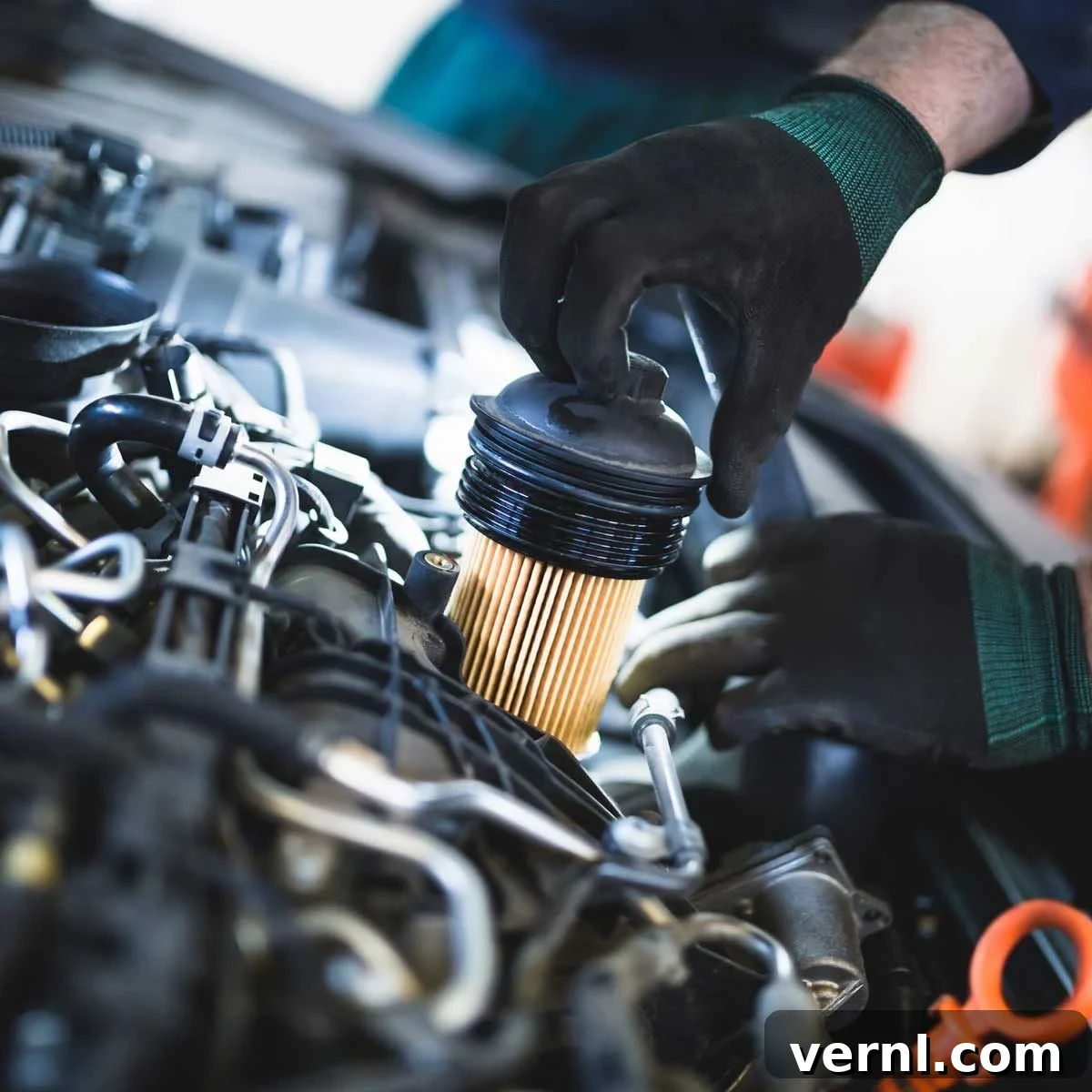
A vehicle’s engine is a complex system, and its optimal performance heavily relies on a consistent supply of clean fuel. Among the most critical components ensuring this is the fuel filter. This often-overlooked part plays an indispensable role in safeguarding your engine from harmful contaminants. When a fuel filter becomes dirty or clogged, it can severely restrict the flow of fuel, effectively starving the engine. This fuel starvation is a primary and always likely cause of diminished engine power, poor acceleration, and overall reduced drivability. Modern fuel injection systems are incredibly precise, utilizing filters designed to trap debris as minuscule as 10 to 30 microns (for perspective, a human hair is approximately 70 microns in diameter). Even microscopic particles of dirt, rust, or grit that manage to bypass a faulty or saturated fuel filter possess abrasive qualities that can lead to significant and costly engine damage, including wear on fuel injectors and critical engine components.
Understanding the Vital Role of a Fuel Filter
At its core, a fuel filter is a preventative device, meticulously engineered to protect the intricate components of your vehicle’s fuel system. While fuel filters come in a variety of shapes, sizes, and designs, their fundamental objective remains singular: to diligently prevent dirt, rust particles, scale, and various other impurities from infiltrating and causing harm to the fuel pump, fuel injectors, and ultimately, the engine itself, all without impeding the necessary fuel pressure. The fuel delivered from gas stations, even seemingly clean, can contain microscopic contaminants picked up during storage or transportation. Without an effective filtration system, these impurities would directly enter your engine, causing irreversible wear and tear.
Most contemporary vehicles are equipped with at least two distinct fuel filtration stages. The first is typically an in-tank fuel filter, often referred to as a “strainer.” This coarse filter is submerged within the fuel tank, serving as the initial line of defense by capturing larger particles before the fuel even reaches the main fuel line. The second, and often more critical, filter is located in the main fuel line, positioned between the fuel tank and the engine. This primary filter is designed with finer filtration capabilities to catch smaller contaminants that might have bypassed the in-tank strainer. The filtering material itself is typically constructed from specialized plastic or finely pleated, specially coated paper, engineered to efficiently trap foreign particles that could otherwise disrupt the precise fuel supply required by modern engines.
Recognizing the Warning Signs of a Clogged Fuel Filter
A clogged fuel filter rarely causes an immediate, catastrophic failure. Instead, it manifests through a series of progressively worsening symptoms that affect your vehicle’s performance and efficiency. Being able to identify these early warning signs can save you from more extensive and expensive repairs down the line.
Diminished Engine Performance
One of the most common and noticeable indicators of a restricted fuel filter is a noticeable drop in engine performance, particularly under specific driving conditions. When your vehicle demands extra power, such as during heavy acceleration, climbing steep hills, or attempting to pass at high speeds, a clogged fuel filter may struggle to supply the necessary volume of fuel. This fuel starvation can cause the engine to randomly hesitate, surge, or sputter. You might feel a distinct lack of responsiveness from the accelerator pedal, and the car may struggle to maintain speed or accelerate smoothly. While you might not experience symptoms under normal, light driving conditions, any situation requiring increased fuel delivery will exacerbate the issue, highlighting the filter’s inability to keep up with demand.
Difficulty Starting the Engine
While a completely blocked fuel filter can prevent your engine from starting altogether, this is a relatively rare occurrence. More commonly, a partially clogged filter can lead to longer than usual cranking times before the engine starts. This happens because the restricted flow prevents the fuel pump from quickly building up the necessary fuel pressure in the system. The starter motor has to work harder and for a longer duration to get the engine to fire. If you notice your engine turning over several times more than usual before it catches, especially after the vehicle has been sitting for a while, a dirty fuel filter could very well be the culprit, though it’s important to rule out battery or starter issues as well.
Frequent Engine Stalling
Repeated stalling while driving, particularly at low speeds, during idle, or when coming to a stop, can be a clear signal of a dirty fuel filter. As the clog worsens, fuel delivery becomes increasingly inconsistent. At idle or low speeds, the engine requires a precise amount of fuel; if this supply is interrupted even briefly, the engine can stall. Depending on the severity of the obstruction, your car might restart immediately without any noticeable loss of power, giving a false sense that the problem has resolved itself. However, as the filter becomes more saturated with contaminants, the interruptions in fuel flow will become more frequent and severe, leading to excessive and potentially dangerous stalling episodes.
Random Misfires or Rough Idling
A partially blocked fuel filter results in a reduction of fuel pressure, which, in turn, leads to a “lean fuel condition.” This means there isn’t enough fuel mixed with the air for optimal combustion in the engine cylinders. A lean fuel mixture can cause the engine to misfire, where one or more cylinders fail to ignite properly. This manifests as a rough or erratic idle, where the engine vibrates more than usual or revs inconsistently. Beyond the uncomfortable sensation, a lean condition can lead to poor fuel mileage, excessive vibration that puts stress on engine mounts, and in severe cases, even engine backfire or increased engine smog due to incomplete combustion. If you notice your car idling roughly, it’s a strong indication that your fuel system might be struggling.
Premature Fuel System Component Failure
The entire fuel system operates as a cohesive unit, and a problem in one area can quickly cascade, leading to failures in other components. A clogged fuel filter prevents the correct volume of fuel from reaching the engine, forcing the fuel pump to work harder to compensate for the restricted flow. This increased strain and constant overworking can cause the fuel pump to overheat, become excessively noisy, and ultimately fail prematurely. Furthermore, a fuel filter that has become completely saturated with dirt and debris can lose its filtration integrity, allowing contaminants to bypass the filter media. These bypass contaminants can then clog or damage the highly sensitive fuel injectors, preventing them from opening or closing fully. Such injector issues can lead to a myriad of rich or lean fuel mixture problems, severely impacting drivability and requiring costly repairs.
Illumination of the Check Engine Light (CEL)
Modern vehicles are equipped with sophisticated onboard diagnostic (OBD-II) systems designed to monitor various engine parameters. Drivability issues directly caused by a clogged fuel filter, such as insufficient fuel pressure or a persistent lean fuel condition, can trigger emission or fuel pressure sensors. When these sensors detect readings outside of acceptable parameters, they will illuminate the Check Engine Light (CEL) on your dashboard, serving as an alert to the driver that there’s a problem within the engine management system. In addition to turning on the CEL, the vehicle’s computer stores a specific “trouble code” in its memory. This code provides a diagnostic hint about the nature of the problem. Many automotive parts stores offer free code reading services, which can help identify whether fuel system issues are indeed the source of the illuminated CEL.
Common Causes Behind a Clogged Fuel Filter
Understanding what contributes to a fuel filter becoming clogged is crucial for preventative maintenance. While some factors are unavoidable, others can be mitigated through good practices.
- Rust and Corrosion: Over time, components within the fuel system, such as aging steel fuel tanks, steel fuel lines, and fittings, can succumb to rust and corrosion. These minuscule rust particles inevitably break free and are carried by the fuel stream directly towards the fuel filter, accumulating and eventually restricting flow.
- Poor Quality or Contaminated Fuel: The quality of fuel can vary significantly. Low-grade or contaminated fuel can contain a higher concentration of sediment, impurities, or even water. Regularly filling up at stations known for poor fuel quality increases the likelihood of these contaminants overwhelming your filter.
- Sediment and Water from Fuel Stations: Underground storage tanks at filling stations can accumulate silt, rust, and water over time, especially if not properly maintained. When you refuel, there’s a risk of these deposits being introduced into your vehicle’s fuel tank, subsequently making their way to the fuel filter.
- Moisture Accumulation (Condensation): Condensation is a common culprit, particularly in areas with fluctuating temperatures or if you frequently drive with a low fuel level. Air inside a partially empty fuel tank can condense moisture, which then settles at the bottom of the tank. This water can promote rust and also be drawn into the fuel system, contributing to filter clogs or causing performance issues.
- Dust and Dirt During Refueling: Simple human error or environmental factors can introduce contaminants. When the fuel cap is removed, dust and dirt from the surrounding air or the nozzle itself can inadvertently fall into the fuel tank, adding to the load on your filter.
- Degradation of Fuel System Components: While not a direct cause of clogging, the natural wear and tear or failure of other fuel system components (like internal lining of the fuel tank or parts of the fuel pump) can generate debris that eventually finds its way to the filter, accelerating its contamination.
- Off-Roading or Extreme Environments: Vehicles regularly used for off-roading or in exceptionally dusty, dirty, or muddy environments are more prone to ingesting contaminants into the fuel system, leading to quicker filter clogs.
The Solution: How To Address a Clogged Fuel Filter
When it comes to a clogged fuel filter, the only effective and recommended “fix” is replacement. Attempting to clean a fuel filter is generally ineffective and can even be counterproductive, as it’s nearly impossible to fully remove all trapped contaminants and restore the filter’s original filtration efficiency. Moreover, the integrity of the filter media can be compromised by cleaning agents, potentially allowing even more harmful particles to pass through.
However, if you find yourself constantly replacing a clogged fuel filter within a short period, it strongly suggests a more fundamental problem: a significant accumulation of muck, rust, or other debris within the fuel tank itself. In such severe cases, merely replacing the filter is a temporary band-aid. A comprehensive solution would likely involve disassembling, cleaning, and flushing the entire fuel system, which may include physically removing or replacing the fuel tank, cleaning fuel lines, and inspecting injectors. This is a labor-intensive and extremely expensive repair, best left to qualified professional mechanics due to the complexity, specialized tools required, and safety implications associated with handling fuel system components.
Estimated Cost to Replace a Clogged Fuel Filter
The cost of replacing a fuel filter can vary significantly depending on several factors, including your vehicle’s make, model, year, and engine type. Generally, a main line fuel filter component itself is relatively inexpensive, often costing around $20 to $50 for most common vehicles. For those with basic mechanical skills, replacing the main line fuel filter yourself can be a cost-effective option. If you choose the DIY route, always consult your owner’s manual for the precise location of the filter (it can be under the hood, under the vehicle, or near the fuel tank) and to confirm the correct part number. Allocate at least an hour for the job, as accessing the filter and safely depressurizing the fuel system can take time.
If you prefer professional service, the labor cost will be added to the part cost. Depending on the vehicle’s specifics and the filter’s accessibility, a mechanic can usually replace a main line fuel filter in less than half an hour, making it a relatively affordable service. However, if your vehicle has an in-tank fuel filter or strainer, the job becomes considerably more complex and labor-intensive, often requiring the removal of the fuel tank. In such cases, it is highly recommended to have a professional mechanic handle the replacement to ensure proper installation and avoid potential safety hazards.
Prioritizing Safety During Fuel Filter Replacement
Handling fuel system components requires utmost caution due to the flammable nature of gasoline and the high pressures involved. If you intend to replace a fuel filter yourself, adherence to stringent safety protocols is paramount:
- Ensure a Cool Engine: Always allow the engine to cool completely before beginning any work. Hot engine components can pose a burn hazard and increase the risk of igniting spilled fuel vapors.
- Gather Proper Tools: Have all necessary tools on hand, including eye protection, gloves, a suitable drain pan for catching residual fuel, wrenches, and specific fuel line disconnection tools if required for your vehicle.
- Release Fuel System Pressure: This step is CRITICAL. Modern fuel systems operate under significant pressure. Failure to release this pressure can result in gasoline spraying violently, creating a severe fire hazard. Consult your owner’s manual to locate the fuel pump fuse or relay. Pull the fuse/relay, then start the engine and let it run until it stalls and shuts off completely. This process depressurizes the fuel lines.
- Work in a Well-Ventilated Area: Ensure you are working in an open, well-ventilated space, away from any open flames, sparks, or heat sources.
- Have a Fire Extinguisher Nearby: Despite all precautions, accidents can happen. Always have a readily accessible fire extinguisher (rated for liquid fires, Class B) within arm’s reach.
- Replace All Seals and Gaskets: When installing the new fuel filter, always replace all O-rings, gaskets, and seals with new ones provided with the filter or purchased separately. Reusing old seals can lead to leaks.
- Secure Mounting Hardware: Double-check that all mounting brackets and retaining clips are correctly reinstalled and tightened to prevent the filter from dislodging or vibrating loose.
- Inspect for Leaks: After installing the new fuel filter and before driving, start your car and carefully check for any fuel leaks around the filter connections. If any leaks are detected, immediately shut off the engine and rectify the issue before operating the vehicle.
The Last Word: Prioritizing Fuel System Health
Maintaining a healthy fuel system, beginning with a clean and efficient fuel filter, is fundamental to your vehicle’s overall well-being. Regular fuel filter replacement contributes significantly to reducing drivability problems, maintaining optimum engine performance, minimizing tailpipe (smog) emissions, and ultimately, extending the lifespan of your vehicle. Along with the fuel filter, it is equally important to replace the air filter, oil filter, and transmission filters (and their respective fluids) according to your vehicle manufacturer’s recommended service schedule. In challenging conditions, such as harsh climates, dusty environments, or frequent heavy-duty use, these service intervals may need to be shortened to ensure your vehicle continues to perform reliably and efficiently for years to come. Neglecting these simple, preventative measures can lead to a cascade of problems that are far more costly and inconvenient to address down the road.