
Oil Changes: Your Comprehensive Guide to Engine Health
Maintaining your vehicle involves various essential fluids, but the right oil is paramount. When discussing car maintenance, especially oil changes, the focus typically centers on engine oil. This vital fluid lubricates and cools rapidly moving engine components such as pistons, bearings, valves, and cylinder walls, directly impacting your car’s operational efficiency.
The significance of engine oil cannot be overstated. Consider this: a severe oil leak while driving, leading to a complete loss of oil, can destroy an engine within minutes. Regular oil changes are therefore crucial for your vehicle’s longevity.
Engine oil, like other vehicle fluids, needs periodic changes to maintain optimal performance. Over time, it loses its lubricating properties due to contamination and chemical breakdown from heat exposure.
“Many people overlook routine oil changes, often due to a lack of awareness regarding mileage, the cost of the service, or busy schedules,” notes Nate Ryan from RepairWise. “However, oil changes are critical for engine health and longevity. Neglecting them is a common cause of future car problems.”
Here’s what you need to know about oil changes, including costs and recommended intervals.
What is an Oil Change?
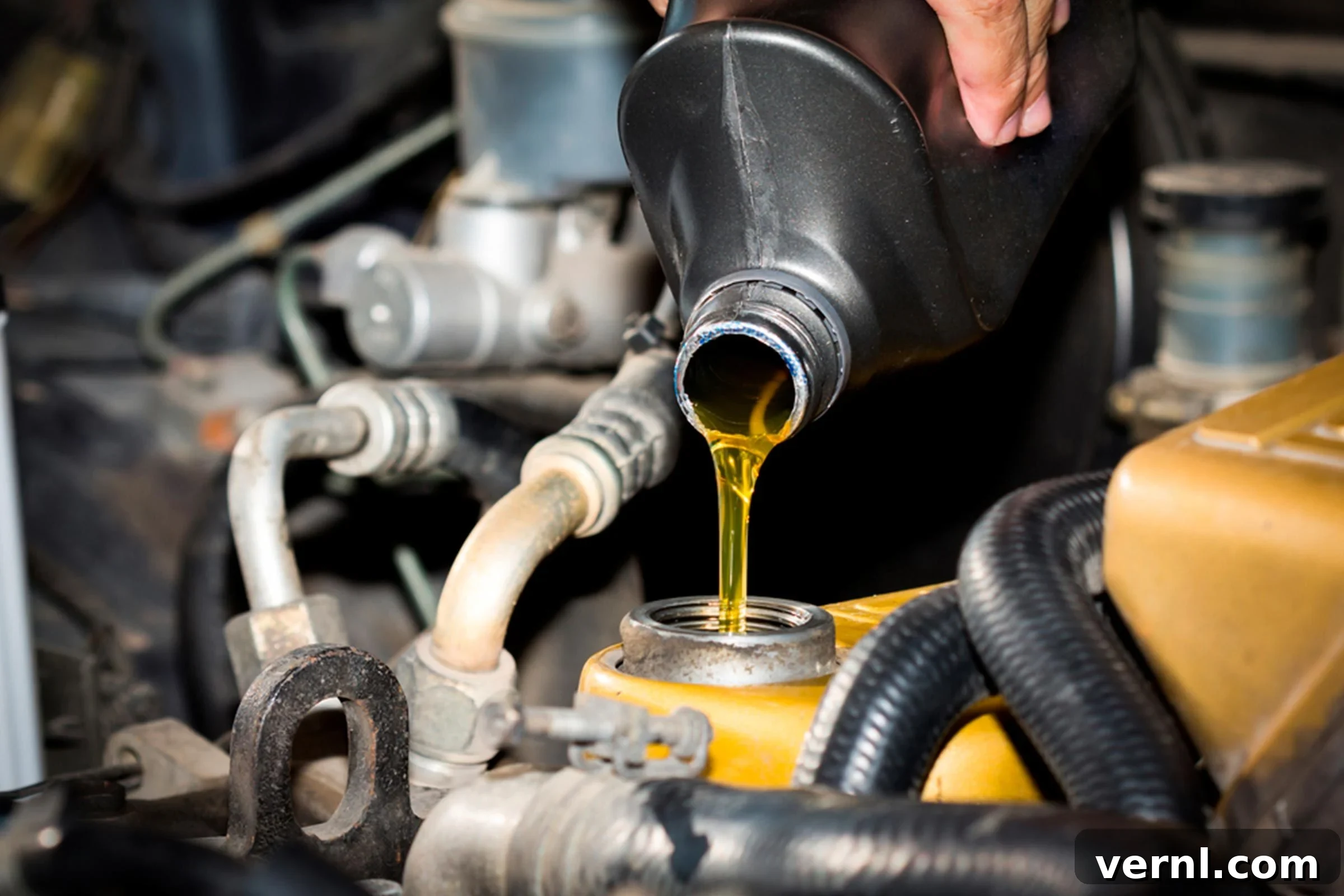
An oil change is the process of removing old, used engine oil from your vehicle and replacing it with fresh, clean oil and a new oil filter. This process keeps your engine running smoothly and efficiently.
Similar to other lubricating and cooling fluids, engine oil degrades over time. Metal particles and debris from engine components contaminate the oil, causing it to darken and thicken, reducing its effectiveness. Oil filters are designed to capture this debris but have a limited lifespan. When changing your oil, it’s always best to replace the filter as well. Wondering, do electric cars need oil changes?
How Often to Change Your Oil
The recommendation for how often to change your oil varies depending on the vehicle manufacturer and the type of oil used. However, a general rule of thumb is to change your oil and filter every six months or every 5,000 to 7,000 miles, whichever comes first. This approach provides a balance between maximizing oil life and minimizing engine wear.
“For my personal and company vehicles, we use full synthetic oil, changing it every 6,000 miles or six months,” says Tony Burns, owner of Lakeview Automotive. “This schedule coincides with tire rotations and balancing, making it easier to manage. Consider scheduling it on the same day as your dental cleaning!”
Oil Change Options and Costs
Changing Your Own Oil
Changing your own oil is a manageable task for most car owners. The cost typically ranges from $25 to $75 for five quarts of engine oil, varying depending on climate and manufacturer recommendations (synthetic oil generally costs more), and around $10 for a new oil filter. Always refer to your owner’s manual to find the correct filter model for your vehicle.
Buying two one-gallon jugs of oil might be more than needed, especially for smaller vehicles. However, it’s beneficial to have extra on hand for future oil changes or for topping off your oil between changes. To change your oil, you’ll also need a funnel, drain pan, and a wrench to loosen the drain plug bolt. An oil extractor pump is another option.
If you choose to change your own oil, make sure to dispose of the used oil safely and responsibly. There are usually multiple recycling locations in your area. Improper disposal, such as spilling oil on your driveway or in the trash, can cause significant environmental harm.
Oil Change Service
Most mechanics charge a reasonable price for an oil and filter change, often comparable to the cost of supplies if you did it yourself. You can expect to pay between $40 to $70 for the oil, filter, and labor. Costs can vary based on your vehicle size because larger engines require more oil.
The cost of having someone else change your oil isn’t the only consideration. Time saved, the convenience of avoiding a trip to the auto shop, and the simplicity of the task are reasons many people prefer to do it themselves.
Does Costco Do Oil Changes?
While many Costco locations offer tire services and other vehicle maintenance, they no longer provide oil changes. However, numerous other retail centers still offer this service, giving you the opportunity to do some shopping while you wait.
What Happens if You Don’t Change Your Oil?
Failing to change your oil regularly can lead to engine failure. Over time, the oil becomes too contaminated to function effectively, becoming thicker and more abrasive. This can lead to wear and tear on engine components such as pistons and gaskets. In the short term, the engine may overheat because the old oil can’t properly lubricate it.
In modern vehicles, timely oil changes are more critical than ever, according to Burns. “Several engine systems, like variable valve timing, rely on clean oil. Ignoring oil changes can lead to these passages clogging up, making repairs impossible without an engine rebuild.” He continues, “Prolonged neglect can lead to a costly engine rebuild instead of a simple oil service.”
Frequently Asked Questions (FAQ)
How do I know what kind of oil my car needs?
The recommended oil type is typically found on the oil filler cap, on a sticker in the engine compartment, and in your owner’s manual. Most caps indicate the required viscosity (e.g., 0W-20), and the owner’s manual specifies viscosity, specification (API/SP, ILSAC GF-6, Dexos), and whether synthetic oil is required.
“Match the specification, not just the viscosity,” advises Burns. “For instance, an oil meeting GM Dexos1 Gen 3 standards passes stricter sludge and wear tests compared to a general 5W-30 oil.”
Where do I dispose of used oil?
You can dispose of used oil at most auto parts stores, service shops, and hazardous waste collection facilities. “Used engine oil is recyclable but must remain uncontaminated,” says Burns. “Pour it into a clean, sealable jug or the original oil bottle before disposal. Never pour oil on the ground, into drains, or mix it with antifreeze or brake fluid. One gallon of waste oil can pollute a million gallons of fresh water.”
About the Experts
Tony Burns is the owner of Lakeview Automotive in Moore, South Carolina. He’s been in the auto repair field since 1991 and has been an ASE Master Certified Technician for over 25 years.
Nate Ryan is a founding member of RepairWise, the world’s first auto repair marketplace with remote diagnostics.