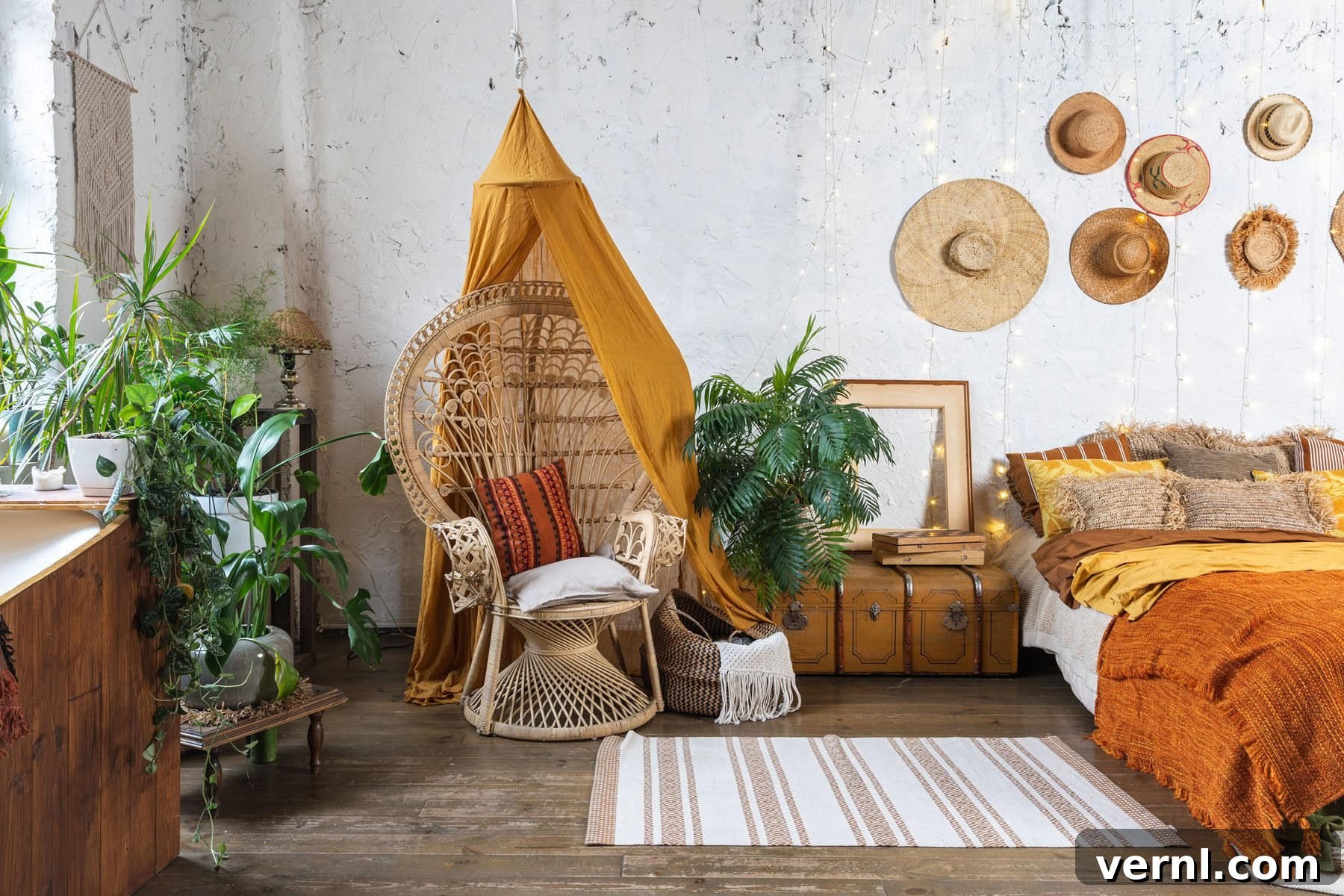
There’s an undeniable allure to bohemian style, a design philosophy that effortlessly blends comfort with an adventurous spirit. Even in settings that lean towards more structured aesthetics, like a midcentury modern home, there’s always a way to infuse that lived-in, eclectic feel characteristic of vibrant colors, wild prints, and soft, welcoming edges. It’s a captivating medley—a dash of rustic charm, a hint of rock n’ roll rebellion, and the sophisticated touch of a seasoned world traveler.
Bohemian interior design doesn’t just create a comfortable space; it crafts a unique sanctuary that reflects your journey and inspirations. It feels deeply personal because it’s a direct reflection of the world you inhabit and the cultures that move you. This style is never rigid or overly formal; instead, it embraces an authentic mix that encourages relaxation and self-expression.
The term “Bohemian” originally referred to people from Bohemia, the largest historical region within the modern-day Czech Republic. Historically, it was associated with artists, writers, and free spirits who often led unconventional, nomadic lives. This rich history informs the style’s distinctive free-flowing, artistic, and wonderfully eclectic aesthetic.
“When I think of Bohemian style, I immediately envision the undisputed queen of Bohemian vibes: Stevie Nicks of Fleetwood Mac,” shares Lindsay Boudreaux, proprietor, creative director, and interior designer at Shotgun Double Interior Design. Nicks’ iconic style—a blend of flowing fabrics, vintage pieces, and a mystical aura—perfectly encapsulates the essence of boho.
To truly capture this captivating feel, Boudreaux advises focusing on a blend of soft colors, an abundance of lush plants, and a curated selection of handmade items such as intricate macramé wall hangings and lamps adorned with delicate silk scarves. “There’s a breezy, loose, and inherently comfortable nature to how a bohemian room is composed; nothing feels overly precious or untouchable,” she explains, highlighting the style’s emphasis on livability and effortless charm.
On a broader retail scale, few brands embody the bohemian spirit as effectively as Anthropologie’s home department, with its curated collection of globally inspired furniture, textiles, and decor. For those seeking a more budget-friendly yet equally chic interpretation, Justina Blakeney’s Jungalow collaborations at Target stores offer an accessible pathway to embrace the vibrant, plant-filled aesthetic that defines modern boho.
About The Experts
Lindsay Boudreaux is the proprietor and creative director at Shotgun Double Interior Design. She brings her expertise as a seasoned interior designer to every project, creating spaces that are both beautiful and deeply personal.
Ariana Lovato is the esteemed owner and principal designer at Honeycomb Home Design. Her work is celebrated for its ability to weave together diverse elements into cohesive and inviting interiors.
Artem Kropovinsky is the visionary founder of Arsight, a renowned New York City-based interior design studio. Arsight’s innovative projects have earned national recognition, including features in prestigious publications like the New York Times.
What Is Bohemian Design? Unpacking Its Free-Spirited Aesthetic
“Bohemian, or boho, style in interior design is celebrated for its distinctly eclectic and wonderfully free-spirited aesthetic,” states Ariana Lovato, owner and principal designer at Honeycomb Home Design. “It masterfully draws inspiration from an array of diverse cultures and historical eras, culminating in a laid-back, yet sophisticated, and inherently unconventional atmosphere.” Lovato herself counts Justina Blakeney as her favorite boho designer, a testament to Blakeney’s vibrant and accessible approach to the style.
The rise of bohemian design to American prominence is deeply rooted in the cultural shifts of the 1960s and 1970s, emerging as a visual expression of the counterculture and hippie movements. This historical context explains its frequent embrace of bold color palettes, intricate global motifs, flowing lines, and an overall casual vibe that feels distinctly ’70s-inspired but timeless. Yet, the roots of bohemianism stretch back further, to the 19th-century artistic communities in Europe who embraced a nomadic, unconventional lifestyle, often incorporating elements from various cultures they encountered. This history solidifies its character as a style that champions individuality and rejects rigid conventions.
At its core, bohemian design is characterized by a fusion of soft, welcoming edges, often achieved through plush textiles and rounded furniture forms. It’s known for its courageous use of bold color palettes, where earthy tones mingle with vibrant jewel hues to create a rich visual tapestry. A hallmark of boho is the daring yet harmonious mixing and matching of patterns and textures—think intricate Persian rugs layered over jute, or velvet cushions alongside embroidered throws. Crucially, it draws heavily from natural-world and global influences, incorporating elements from far-flung locales and celebrating the beauty of handcrafted goods. In bohemian design, very little is off-limits when it comes to seeking inspiration, encouraging a truly personalized and collected look.
Key Elements of Bohemian Design: Crafting Your Eclectic Oasis
The beauty of the “anything goes” aesthetic within bohemian design is its inherent flexibility. However, to truly nail a look that feels more like casual refinement than a haphazard collection from a flea market, incorporating specific designer-approved elements is essential. These key components work in harmony to create the authentic, layered, and inviting spaces characteristic of boho style.
Color: A Rich and Vibrant Palette
“Bohemian interiors frequently showcase a rich and vibrant color palette that immediately draws the eye,” explains Lovato. “The foundation often consists of earthy tones such as warm terracotta, deep olive greens, and sandy beiges, which are then brilliantly accentuated with jewel tones and other warm hues.” This diverse color scheme might feature deep reds, fiery oranges, regal purples, tranquil greens, and serene blues. The art lies in layering these colors, often starting with a neutral base on walls or large furniture pieces, then injecting pops of saturated color through textiles, art, and decorative accents. The goal is a visually stimulating space that feels both grounded and exhilarating, avoiding stark contrasts in favor of harmonious, layered shades that tell a story.
Patterns and Textures: The Art of Layering
“Mixing patterns is a quintessential hallmark of bohemian design,” Lovato emphasizes. “You’ll often find a beautiful juxtaposition of floral prints, geometric motifs, and intricate ethnic patterns combined harmoniously.” The secret to successful pattern mixing lies in varying scale and ensuring there’s at least one unifying color or tone throughout. Textures, however, are equally crucial for adding immense depth and interest. Think tactile elements like macramé, woven rattan, coarse jute rugs, soft velvet, crinkled linen, chunky knit throws, and distressed wood. These varied textures invite touch and create a sensory richness that makes a bohemian space truly feel lived-in and comfortable, preventing it from appearing flat or one-dimensional.
Furniture: A Curated Collection of Comfort and Character
Bohemian furniture eschews uniformity, favoring a soulful mix of styles that often includes vintage and handcrafted pieces, notes Lovato. Rather than matching sets, consider a collection of items that each tell their own story. Furniture with distressed or reclaimed finishes is highly sought after, adding an instant sense of history and warmth. Look for pieces made from natural materials like rattan, wicker, bamboo, and carved wood. Comfortable, low-slung sofas, ornate chests, global-inspired accent chairs, and cushioned poufs all contribute to the relaxed and inviting atmosphere. The emphasis is on comfort, character, and uniqueness, rather than sleek modernity or rigid symmetry.
Art: Adorning Walls and Spaces with Creative Expression
“Boho spaces are generously adorned with an abundance of art, encompassing everything from paintings and intricate tapestries to unique wall hangings,” Lovato states. The key here is variety and personal connection; sticking to a single style will not achieve the desired bohemian aesthetic. Instead, embrace an eclectic mix of mediums, subjects, and origins. Art can also transcend traditional framed pieces, taking the form of handmade Moroccan lanterns that cast beautiful shadows, vibrant Indian block prints, or practical yet decorative macramé plant hangers. Gallery walls featuring a mix of framed art, textiles, and personal mementos are also a popular way to infuse personality and a collected feel.
Lighting: Cultivating a Soft and Inviting Glow
Soft and ambient lighting is paramount for creating the warm, cozy atmosphere that is another defining characteristic of boho design, Lovato advises. “Consider employing string lights, elegantly crafted lanterns, and unique fixtures paired with warm-toned bulbs,” she suggests. The aim is to create multiple light sources at varying levels, banishing harsh overhead illumination. Don’t be afraid to embrace quirkiness; floor lamps with unconventional designs, table lamps featuring artisanal bases, or pendant lights made from natural materials like bamboo or wicker are perfect. Candlelight also plays a crucial role in enhancing the intimate and relaxed vibe, making the space feel instantly more inviting.
Cultural Influences: A Journey Through Global Decor
Bohemian style inherently incorporates elements from diverse cultures, celebrating craftsmanship from around the world. This can manifest through the rich patterns of Persian rugs, the intricate metalwork of Moroccan lanterns, or subtle Asian-inspired decor. Handcrafted and artisanal items are particularly prized, including beautifully glazed ceramics, hand-woven textiles, and carved wooden artifacts. These pieces add an undeniable authenticity and a narrative depth to the space, suggesting a well-traveled individual with an appreciation for global artistry. When incorporating such elements, it’s vital to do so thoughtfully, understanding their origins and respecting their cultural significance.
Natural Elements: Bringing the Outdoors In
“Indoor plants are an absolute staple in bohemian design,” Lovato affirms. “They don’t merely bring the refreshing vibrancy of nature indoors but also contribute a lively and revitalizing element to the entire space.” From towering fiddle-leaf figs and cascading Pothos to delicate ferns and succulents, plants in various sizes and styles instantly add organic texture, improve air quality, and soften the edges of a room. For those who might not possess a green thumb, incorporating natural elements can extend to using plenty of natural materials like wood, jute, rattan, and linen, or bringing in natural jewel tones inspired by the outdoors through textiles and decor, such as emerald green, sapphire blue, or ruby red.
Open and Eclectic Spaces: Curated Comfort
Bohemian interiors are frequently characterized by their open, inviting, and highly livable spaces. While they might appear “cluttered” at first glance, there’s often a systematic, curated arrangement that contributes to a genuinely lived-in and collected-over-time feel, Lovato explains. This isn’t about mere messiness but about a thoughtful layering of personal treasures, comfortable furnishings, and diverse decorative elements that create a warm, enveloping atmosphere. It’s a style that embraces imperfections and celebrates the story behind each object, encouraging visitors to relax, explore, and feel completely at home.
Bohemian Interior Design for Your Home: Practical Tips for a Soulful Space
Embracing bohemian interior design is an excellent opportunity to explore your existing collections, turning cherished mementos into decorative statements. It’s a wonderful approach to reuse and recycle, giving new life to forgotten treasures. However, if you’re looking to acquire a few new pieces to enliven your space and truly encapsulate the boho spirit, consider these expert-approved details to guide your choices:
Tap into Texture: A Sensory Experience
Texture is the secret ingredient that transforms a room from flat to fabulous in bohemian design. “Think luxurious Moroccan rugs, intricately woven Turkish kilims, and a variety of textured throws draped over furniture,” advises Artem Kropovinsky, founder and interior designer at Arsight. “These elements are indispensable for adding immense depth, visual interest, and comforting warmth to any space.” Layering different textures—a plush shaggy rug over a smooth wooden floor, linen curtains alongside velvet cushions, or rattan furniture paired with macramé accents—creates a tactile richness that is both inviting and visually dynamic. Don’t shy away from mixing natural fibers with softer, more opulent ones.
Call in Color: Daring and Delightful Hues
“Color plays a absolutely fundamental role in defining bohemian interiors,” Kropovinsky asserts. Unlike more minimalist styles, boho revels in a spectrum of vibrant and earthy shades. Think beyond conventional color schemes and explore hues that might not typically be on the traditional radar. This includes rich, deep purples that evoke royalty, fiery oranges that ignite passion, lush emerald greens, and warm mustard yellows. The key is to blend these colors harmoniously, allowing them to create a visual feast without overwhelming the senses. Often, a base of neutral, earthy tones provides a calming backdrop against which more adventurous colors can truly pop and express their full personality.
Go Global: Showcase Your Worldly Adventures
If you possess the soul of a world traveler, bohemian design offers the perfect canvas to proudly display your adventures. Kropovinsky suggests curating and exhibiting pieces acquired during your travels, transforming them into conversation starters and personal totems. This could be anything from a beautifully handwoven basket sourced from Africa, an intricate South American tapestry, a detailed ceramic piece from a European market, or vibrant textiles from Asia. These global treasures not only add authenticity and a sense of wanderlust to your home but also infuse it with unique stories and memories, making your space truly one-of-a-kind and deeply personal.
Play with Pattern: Mix and Match with Finesse
While bohemian design celebrates an abundance of patterns, incorporating them with a touch of moderation and thoughtful consideration is key to achieving a cohesive look rather than a chaotic one. Kropovinsky advises starting with smaller, less dominant pieces to introduce patterns, such as vibrant table runners, artistic lampshades, and small accent rugs. Once comfortable, you can gradually introduce larger patterned elements like throws or curtains. The trick to successful pattern mixing is to vary the scale of the patterns (combining large prints with small ones) and to ensure there’s a common color thread or tone that ties them all together, creating visual harmony amidst the diversity.
Be Natural: Embrace Organic Beauty
“Indoor plants are an indispensable staple in bohemian design,” Lovato reiterates. “They not only effortlessly bring the invigorating presence of nature indoors but also inject a refreshing and wonderfully lively element into the space.” From trailing vines to towering foliage, plants in various forms and sizes are essential for creating that organic, earthy vibe. For those who may not possess a green thumb, there are still myriad ways to bring the outdoors in. Incorporate natural jewel tones through textiles and decor—think deep greens, blues, and browns that mimic landscapes. Furthermore, focus on furniture and accents made from natural materials like raw wood, stone, cork, and bamboo to infuse your home with an authentic connection to nature’s beauty.
Kick Back: Design for Ultimate Comfort and Relaxation
Boho is, above all, the design of ultimate comfort and unpretentious relaxation. It’s the aesthetic that gave us iconic pieces like the papasan chair, the inviting conversation pit, and even the delightfully slouchy beanbag chair. So, in true bohemian spirit, feel free to pull up a chair, or better yet, a floor cushion, and truly unwind. “Low-level seating, an abundance of plush floor cushions, and generously oversized sofas are incredibly common,” Lovato explains. When shopping for furniture, keep your eyes peeled for slouchy silhouettes, soft upholstery, and pieces that encourage lounging and easy conversation. The goal is to create a home that feels like a welcoming embrace, a true haven where comfort reigns supreme and every seat invites you to kick back and enjoy the moment.
Bohemian interior design is a celebration of individuality, global connection, and uninhibited comfort. It invites you to curate a space that tells your unique story, blending cherished memories with inspiring new finds. By focusing on rich textures, vibrant colors, natural elements, and a laid-back approach to arrangement, you can transform any home into a soulful, free-spirited oasis that is distinctly yours. Embrace the journey of discovery, and let your home reflect the beautiful tapestry of the world and your own unique spirit.