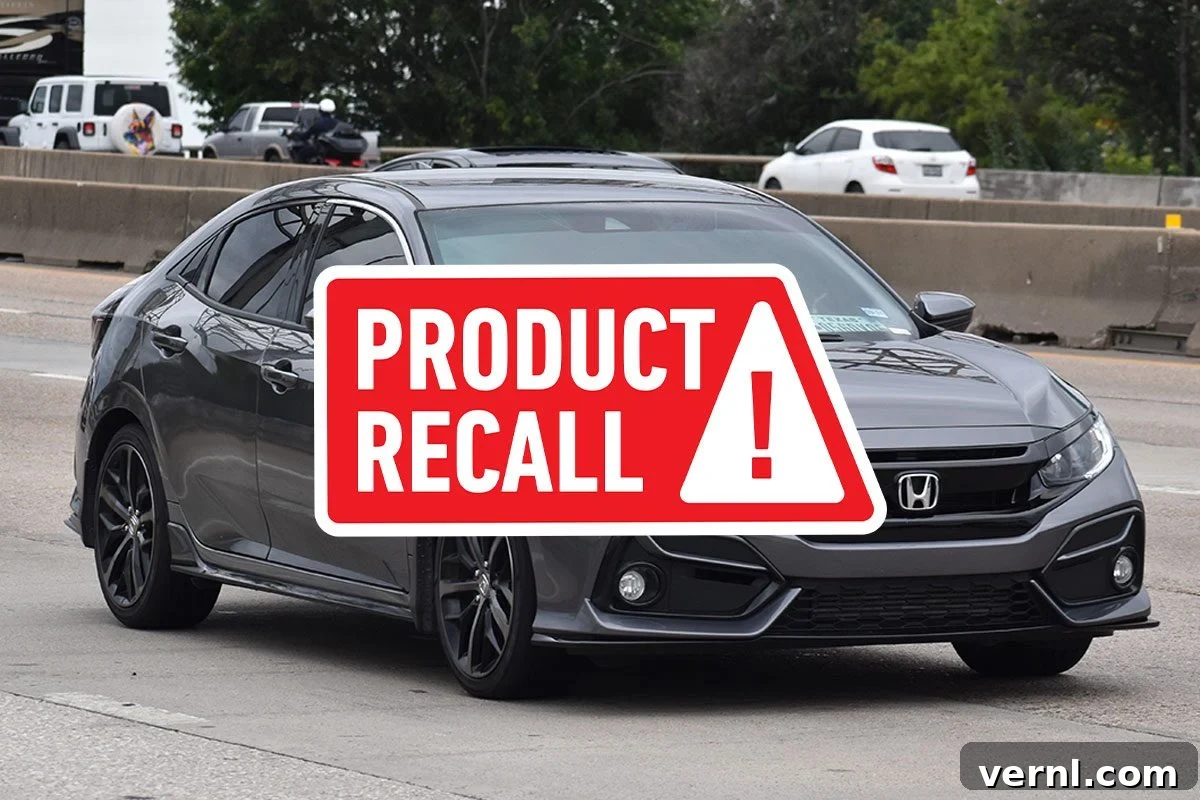
Urgent Safety Alert: Honda Civic Wheel Recall Impacts Hundreds of Thousands of Vehicles
Automotive recalls are a critical component of vehicle safety, ensuring that manufacturers address defects that could pose a risk to drivers and passengers. While major vehicle system recalls often grab headlines, it’s equally important to remember that accessories we purchase for our cars can also be subject to safety issues. These add-on components, though sometimes perceived as minor, can have serious implications when faulty. When it comes to essential elements like tires or wheels, a recall can be just as critical as any standard vehicle recall, demanding immediate attention.
A recent announcement from the National Highway Traffic Safety Administration (NHTSA) has brought a significant accessory recall to light, impacting hundreds of thousands of Honda vehicles. This urgent safety bulletin concerns a potential wheel detachment issue, a defect that could lead to catastrophic consequences. If your vehicle falls within the scope of this recall, understanding the risks and taking prompt action is paramount for your safety and the safety of others on the road.
Understanding the Gravity of the Honda Wheel Recall: A Manufacturing Error Explained
The core of this significant safety concern, as detailed in the NHTSA brief, points to a manufacturing error that could tragically allow wheels to detach from the affected vehicles. This isn’t merely an inconvenience; it represents a profound safety hazard with potentially dire outcomes. The mental image of a wheel separating from a car while in motion might seem like something out of a dramatic film, but the underlying danger is disturbingly real and presents an immediate threat to road safety.
A wheel detachment event can instantaneously lead to a severe loss of vehicle control. When a wheel separates, the vehicle’s stability is compromised, making it incredibly difficult for the driver to steer, brake, or maintain their lane. This sudden loss of control drastically increases the risk of a crash, potentially involving other vehicles, pedestrians, or stationary objects. Such incidents can result in serious injuries, extensive property damage, and, in the most tragic scenarios, fatalities. The structural integrity of a vehicle’s wheels is non-negotiable, as they are fundamental to safe operation. Any defect compromising this integrity, especially one that could lead to detachment, must be treated with the utmost seriousness. For impacted owners, prioritizing and scheduling the necessary repairs on your vehicle as quickly as possible is not just a recommendation, but a critical step to mitigate these severe risks.
Identifying Affected Vehicles: Is Your Honda Civic at Risk?
According to the official announcement, Honda is proactively recalling more than 400,000 specific 18-inch aluminum alloy wheels. These wheels were sold as accessories and are associated with several model years of the popular Honda Civic. It is crucial for owners of these vehicles to pay close attention to this recall notice, as the implications for safety are significant.
The affected models include:
- 2016 Civic
- 2017 Civic
- 2018 Civic
- 2019 Civic
- 2020 Civic
- 2021 Civic
If you are the owner of a Honda Civic from any of these model years, and especially if you have 18-inch aluminum alloy accessory wheels installed, vigilance is key. Honda plans to mail owner notification letters starting in early December 2025. These letters will contain vital information specific to your vehicle and the steps you need to take. Therefore, it is essential to ensure that your contact information with Honda is current and to keep a close eye on your mailbox for this important correspondence.
Until you have confirmed whether your specific vehicle is affected and until any necessary repairs are completed, exercising extreme caution is strongly advised. This means avoiding driving the vehicle whenever feasible. If driving is unavoidable, it is recommended to do so at reduced speeds, avoid highways, and be exceptionally aware of any unusual noises or vibrations that might indicate a problem. Prioritizing alternative transportation options, even for short distances, can significantly reduce your exposure to the potential hazard of wheel detachment. Your proactive awareness and cautious approach can make a crucial difference in preventing a serious incident.
The Recall Remedy: A Comprehensive Solution and Next Steps
The good news for affected Honda owners is that a clear and complimentary remedy has been established. The NHTSA reports that authorized Honda dealers will thoroughly inspect the wheels and, if necessary, replace the hubs and wheels completely, all free of charge to the owner. This ensures that the root cause of the manufacturing error is addressed and that your vehicle is returned to a safe operating condition.
Once you receive your official owner notification letter from Honda, the most important next step is to promptly schedule an appointment with your nearest authorized Honda dealership. Delaying this appointment could expose you to the severe risks associated with potential wheel detachment. When you contact the dealership, be prepared to provide your Vehicle Identification Number (VIN) to help them confirm your vehicle’s involvement in the recall and prepare for the service.
During the service appointment, trained technicians will conduct a detailed inspection. If the wheels are found to be defective or show signs of potential failure, they will be replaced along with the associated wheel hubs. This comprehensive approach aims to fully resolve the issue and restore your peace of mind. It is important to note that since the repair is free of charge, there should be no financial burden on vehicle owners for this safety-critical service.
For any further questions or immediate concerns, Honda’s customer service can be reached directly at 1-888-234-2138. Please reference their recall number, MMZ, when you call to ensure a streamlined inquiry. Additionally, as of November 6, 2025, you have the option to check the recall status of your specific vehicle by entering your VIN on the official NHTSA website. This provides an independent and reliable way to verify if your vehicle is involved in any open recalls. The National Highway Traffic Safety Administration Vehicle Safety Hotline is also available for general inquiries or assistance at 1-888-327-4236.
The Broader Landscape of Automotive Recalls: Ensuring Public Safety
Automotive recalls, whether for primary vehicle systems or aftermarket accessories, represent a vital mechanism in upholding public safety standards. Regulatory bodies like the NHTSA play an indispensable role in monitoring vehicle safety, investigating potential defects, and ultimately enforcing recalls when necessary. Their proactive efforts help to identify and address issues before they lead to widespread accidents or injuries. The purpose of a recall is not to penalize manufacturers but to safeguard consumers by ensuring that vehicles and their components meet stringent safety requirements.
It’s crucial to understand that recalls encompass a wide array of potential defects. While major engine or transmission issues often dominate news cycles, accessory recalls are equally significant. These can range from faulty tires, child safety seats, trailer hitches, and even lighting components. The underlying principle remains the same: if a component, regardless of its origin (factory-installed or aftermarket), poses an unreasonable risk to safety, it must be recalled and remedied. The Honda wheel recall serves as a powerful reminder that even seemingly robust parts can harbor critical defects, reinforcing the need for continuous vigilance across the entire automotive supply chain and by vehicle owners.
Your Role as a Vigilant Vehicle Owner: Staying Informed and Safe
As a vehicle owner, you play a critical role in the overall ecosystem of automotive safety. While manufacturers and regulatory agencies initiate recalls, your awareness and responsiveness are paramount. It is your responsibility to stay informed about potential safety alerts that might affect your vehicle. Beyond waiting for a letter, there are proactive steps you can take. Regularly checking the NHTSA website using your VIN is one of the most effective ways to ascertain if your vehicle has any open recalls. Furthermore, registering your vehicle with the manufacturer—especially important for second-hand owners who might not be on the original mailing list—ensures that you receive direct notifications.
Moreover, if you suspect an issue with your vehicle, even if no recall notice has been issued, it is imperative to act. Unusual noises, changes in handling, or visible defects should prompt immediate inspection by a qualified mechanic. Reporting potential defects to the NHTSA can also contribute significantly to public safety, as individual reports often form the basis for broader investigations that can lead to new recalls. Your vigilance not only protects you and your loved ones but also contributes to the safety of all road users.
The Peril of Procrastination: Why Ignoring Recalls Is Never an Option
While the immediate inconvenience of scheduling a repair might be a deterrent for some, the consequences of ignoring a recall, especially one as serious as potential wheel detachment, far outweigh any perceived hassle. Driving a vehicle with an unaddressed safety defect is a profound risk, not only to the occupants of that vehicle but also to everyone else on the road. The ethical implications are clear: knowingly operating an unsafe vehicle can lead to devastating accidents that could have been prevented.
Beyond the immediate safety concerns, there are significant legal and financial repercussions. If an accident occurs due to an unaddressed recall, your liability could be considerably higher. Insurance claims might be complicated, and in some cases, coverage could be affected if it is determined that you failed to address a known safety defect. Furthermore, a vehicle with open recalls can suffer from significant depreciation in resale value, making it harder to sell and potentially costing you more in the long run. Prioritizing recall repairs is therefore not just about safety; it’s about responsible ownership, legal prudence, and protecting your investment.
Steps to Take If Your Honda Civic Is Affected: An Actionable Guide
If you’ve identified that your Honda Civic is among the models affected by the wheel recall, taking immediate, decisive action is crucial. Here’s a clear, actionable guide:
- Verify Your VIN: The first step is to confirm your vehicle’s involvement. Visit the NHTSA recall website (nhtsa.gov/recalls) and enter your 17-character Vehicle Identification Number (VIN). This will provide the most accurate and up-to-date information regarding any open recalls specific to your car.
- Contact Your Dealer or Manufacturer: Once confirmed, immediately reach out to your authorized Honda dealership. You can also contact Honda Customer Service directly using the provided number (1-888-234-2138, referencing recall MMZ). Explain that your vehicle is part of the wheel detachment recall and inquire about scheduling the necessary service.
- Schedule the Repair: Make an appointment for the inspection and replacement of the wheels and hubs. Be prepared for the dealership to keep your vehicle for a period, though the actual repair time may vary. Remember, this service will be performed free of charge.
- Exercise Extreme Caution: Until the repair is completed, minimize driving the affected vehicle. If driving is absolutely necessary, do so with utmost caution: reduce speed, avoid sudden maneuvers, and be alert for any unusual sounds or sensations coming from the wheels. Consider alternative transportation if possible.
- Keep Records: Once the repair is complete, retain all documentation provided by the dealership, including the service invoice that details the recall work performed. This documentation serves as proof that the recall has been addressed and can be important for future vehicle sales or insurance purposes.
Conclusion: Prioritizing Safety Through Proactive Recall Management
The Honda Civic wheel recall serves as a potent reminder that vehicle safety extends beyond the factory floor to every component, including aftermarket accessories. The potential for a wheel to detach from a moving vehicle is a grave risk that demands immediate and decisive action from affected owners. By understanding the nature of the defect, identifying impacted vehicles, and leveraging the available repair remedies, we can collectively ensure safer roads for everyone.
Prioritizing vehicle safety means staying informed, acting promptly on recall notices, and utilizing the resources provided by manufacturers and regulatory bodies like the NHTSA. Your proactive involvement in addressing recalls is a testament to responsible vehicle ownership, offering not just personal peace of mind but also contributing significantly to broader public safety. Don’t delay—verify your vehicle’s status and schedule any necessary repairs without hesitation.
Source
Wheel May Detach From Vehicle, National Highway Traffic Safety Administration, 2025.
Related Safety & Maintenance Tips
- Do You Know What That Little Button on Your Seat Belt Is For?
- What Those Lines on Your Backup Camera Really Tell You
- Here’s What The Small Panel On Your Car’s Front Bumper Is For