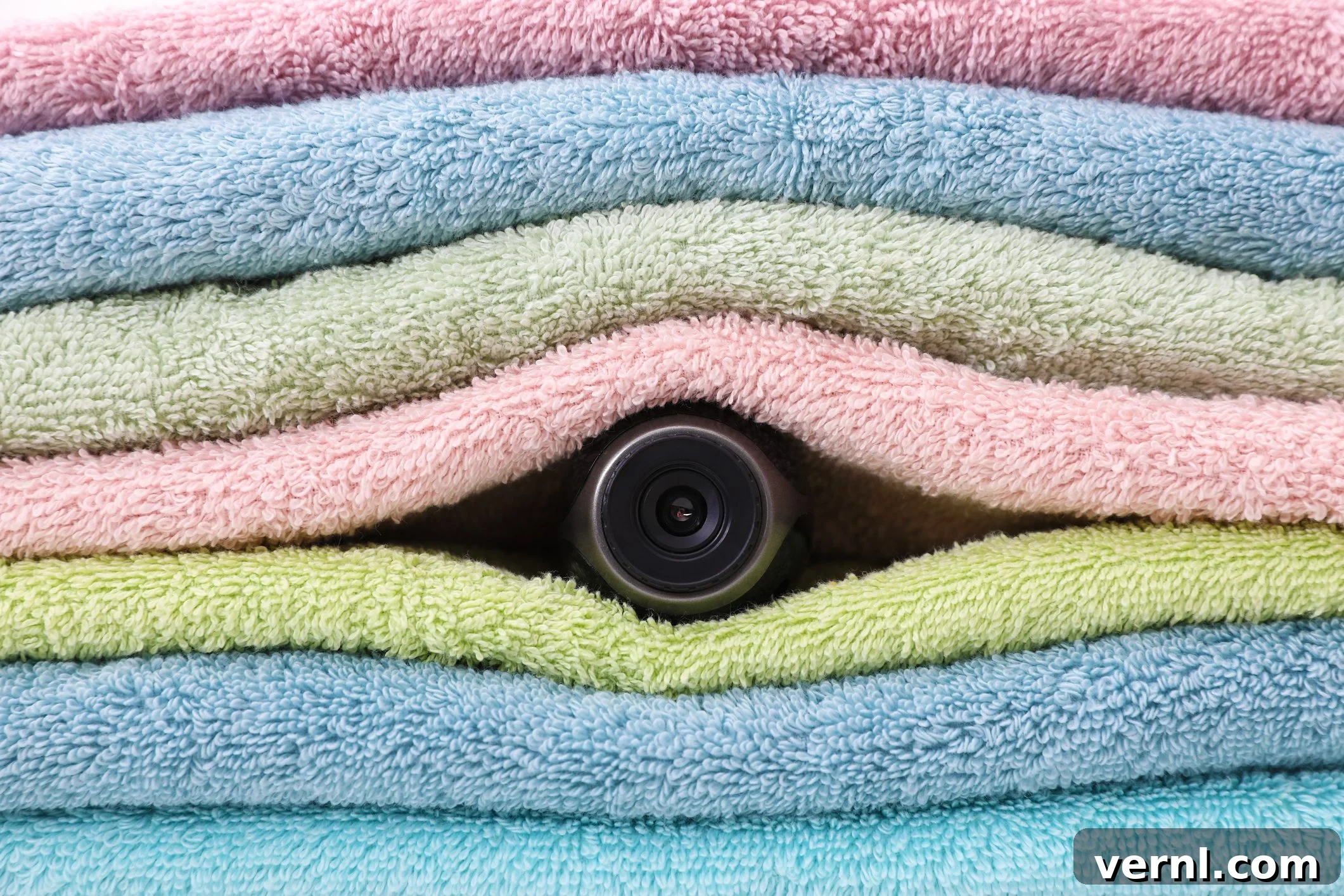
Comprehensive Guide to Detecting Hidden Cameras in Your Airbnb: Safeguarding Your Privacy
The global popularity of Airbnb and other vacation rental platforms has revolutionized the way we travel, offering unique accommodations and personalized experiences. However, the convenience of staying in someone else’s home inevitably introduces a growing concern for personal privacy and security. The unsettling thought of being recorded without consent in what you perceive as a private space is a significant worry for many travelers. If you find yourself concerned about hidden cameras during your Airbnb stay, rest assured, you are not alone in this apprehension.
This comprehensive guide is designed to empower you with the essential knowledge and practical steps needed to effectively detect potential hidden surveillance devices. Our aim is to ensure your peace of mind and enhance your personal security throughout your travels. While incidents of hidden cameras are statistically rare, adopting a proactive approach to your safety is always a prudent decision in today’s digital age.
Understanding Airbnb’s Stance on Guest Privacy and Surveillance Devices
Before delving into detection techniques, it’s crucial to be aware of Airbnb’s official policy regarding cameras. According to Airbnb’s community standards and policies, cameras are explicitly prohibited in any private spaces within a rental property. This includes, but is not limited to, bedrooms, bathrooms, and designated sleeping areas. Furthermore, any recording devices, such as cameras or noise monitors, located in common areas (like a living room, kitchen, or entryway) or outdoor spaces must be clearly disclosed to guests within the listing description prior to booking. Failure to adhere to these strict rules can lead to severe consequences for hosts, including permanent removal from the platform.
Despite these clear policies, media reports occasionally surface detailing concerning incidents, often fueling anxieties among travelers. Stories of guests discovering cameras concealed above a bed or ingeniously hidden in a bathroom are understandably alarming. These isolated incidents, while exceptionally rare, highlight why personal vigilance remains a critical aspect of travel safety.
Airbnb spokesperson Ruthie Wabula provides a reassuring perspective on the rarity of such occurrences: “With over one billion check-ins on Airbnb to date, safety-related reports are incredibly rare — less than 0.1% of reservations result in a safety report by hosts or guests.” While this statistic underscores the safety of the vast majority of stays, it simultaneously reinforces the importance of being informed and prepared.
Why Vigilance is Key: An Expert’s Perspective on Personal Security
Even with low statistical incidence rates, security experts consistently advocate for proactive checks. Bill Herzog, president of LionHeart Security Services in Tempe, Arizona, strongly advises all travelers to conduct a thorough inspection of their accommodations for any hidden devices. “No matter how many good reviews they have,” Herzog emphasizes, “it is in your best interest and safety to check for these devices to protect yourself and your family.” This expert counsel highlights that while trust is a fundamental component of the Airbnb experience, it should always be complemented by personal due diligence, especially concerning privacy in unfamiliar environments.
The potential ramifications of undetected cameras can be profound, ranging from severe privacy violations and emotional distress to potential identity theft or even blackmail. Dedicating a few minutes upon arrival to meticulously inspect your rental property can offer invaluable peace of mind, allowing you to fully relax and truly enjoy your trip without the nagging concern of unauthorized surveillance.
Comprehensive Steps to Detect Hidden Cameras in Your Airbnb
Security experts like Bill Herzog recommend a systematic approach to uncover covert surveillance. These methods combine careful visual inspection with technological aids, all guided by common sense. Implementing these steps upon your arrival can significantly enhance your security.
1. Conduct a Thorough Visual Scan of Your Rental Property
Your initial and most crucial line of defense is a meticulous visual inspection of every room, giving particular attention to areas where privacy is paramount, such as bedrooms, bathrooms, and changing areas. Hidden cameras are often incredibly small and can be cunningly disguised within ordinary household objects. Start by taking a moment to simply observe the entire space. Does anything appear out of place? Is there an object positioned unusually or angled directly towards a bed, shower, or common seating area?
Be vigilant for tiny pinholes, unusual wires, or objects that seem redundant or strangely positioned. Common hiding spots for covert cameras include:
- Smoke Detectors and Carbon Monoxide Alarms: These ceiling-mounted devices often have small openings that can easily conceal a tiny camera lens.
- Alarm Clocks and Digital Devices: Scrutinize unusually large or oddly placed alarm clocks, especially those facing beds or seating areas. Devices like smart speakers or digital picture frames can also be suspects.
- Lamps and Light Fixtures: Examine lamp bases, shades, and ceiling lights for any tiny apertures or suspicious modifications.
- Picture Frames and Wall Art: Cameras can be discreetly embedded within frames, behind artwork, or even in decorative plaques.
- USB Chargers and Power Adapters: Many modern spy cameras are cleverly disguised as fully functional USB charging blocks.
- Air Vents and HVAC Grills: Look for any unusual wiring or lenses peering through the slats of air vents or heating/cooling registers.
- Bookshelves and Decorative Items: Inspect fake books, teddy bears, potted plants, or other decorative objects for small, unexplained holes or modifications.
- Wall Sockets and Outlet Plates: These provide discreet locations for pinhole cameras.
- Bathroom Fixtures: Pay extra attention to shower heads, toothbrush holders, soap dispensers, and tissue boxes.
- Mirrors and Windows: As detailed in a later step, two-way mirrors are a serious privacy concern.
Take mental notes of any item that seems suspicious, out of place, or has small, unexplained openings, as these will be priority areas for further investigation.
2. Utilize the Power of Darkness for Night Vision Detection
Many sophisticated hidden cameras, particularly those designed for covert surveillance, incorporate night vision capabilities. This feature relies on infrared (IR) light, which is generally invisible to the naked human eye. However, these IR emitters often produce subtle red or green LED indicator lights during operation. “Almost all hidden cameras have red or green LED lights to create just enough light for the camera to capture the images,” Herzog explains. “Turning off the lights will help you spot these small LED lights.”
To conduct this crucial check, follow these steps:
- Achieve complete darkness: Turn off all lights in the room, close all blinds and curtains, and ensure the room is as dark as possible.
- Scan the room slowly and deliberately: Look for any tiny, faint red or green lights. These could be steadily glowing or intermittently blinking, indicating an active night vision camera.
- Exercise patience: Some indicator lights are extremely subtle or may only blink for brief intervals. A slow, methodical scan is key.
Leveraging Your Smartphone Camera for Infrared Detection
While infrared light is typically imperceptible to the human eye, the cameras on most modern smartphones possess the ability to detect it. This makes your phone a powerful tool for finding IR emitters:
- Use your front-facing camera: Many smartphone front cameras lack the strong IR filter present in rear cameras, making them more sensitive to infrared light. Switch to your phone’s selfie camera.
- Scan suspicious areas: Hold your phone’s camera up to any devices or areas you suspect might conceal a camera (e.g., smoke detectors, alarm clocks, vents, charging bricks).
- Look for purple/white light: If an IR emitter is present, you will observe a small purple or white light source appearing on your phone screen. Herzog notes that IR lights often blink, so hold the camera steady on the device for a few seconds to confirm the presence of any emitted light.
- Move slowly and thoroughly: Do not rush this process. Cover all angles and potential hiding spots, paying extra attention to areas with a clear line of sight to private spaces.
This method is highly effective for detecting cameras that utilize active night vision.
3. Scrutinize Mirrors for Two-Way Functionality
Two-way mirrors, which allow someone on one side to see into a room while appearing as a standard mirror from the other, are a serious privacy invasion. “Make sure mirrors are actually hanging on the wall and not built into it like a window,” Herzog advises. A mirror that appears unusually flush with the wall, without a visible frame or apparent mounting, should raise immediate suspicion.
Here are several tests you can perform on any mirror that raises your concern:
- The Fingernail Test: Gently place your fingertip directly onto the mirror’s surface. On a standard, typical mirror, you will observe a small gap between your fingertip and its reflection because the reflective coating is behind a layer of glass. On a two-way mirror, your fingertip will appear to touch the reflection directly, with no discernible gap, as the reflective surface is on the very front of the glass.
- The Knock Test: “You can also knock on the mirror to check,” Herzog suggests. “Two-way mirrors make a hollower sound than a regular mirror.” This is because two-way mirrors often have an empty space behind them to accommodate a hidden viewer or camera. A standard mirror mounted flush against a solid wall will typically produce a more solid, less hollow sound.
- The Light Test: Turn off all lights in the room to create darkness. Then, press your face very close to the mirror and cup your hands around your eyes to block out any ambient light. Shine a bright flashlight (or your phone’s flashlight) directly at the mirror. If it is a two-way mirror, you might be able to faintly glimpse through to the other side or detect a hidden space.
Be particularly cautious of mirrors in bathrooms or bedrooms that seem out of place, unusually large, or strategically positioned.
4. Employ a Flashlight to Reveal Camera Lenses
Regardless of their size, all camera lenses are made of glass and possess a distinct reflective quality. This optical property forms the basis of one of the simplest yet most effective detection methods. Marcus Hutchins, a British ex-hacker and cybersecurity expert, famously demonstrated this technique in a popular TikTok video, showing how a basic flashlight can expose hidden lenses.
To perform this quick and effective check:
- Dim the room lights: While not strictly essential, dimming the ambient lights can make the distinctive reflection of a camera lens more noticeable.
- Use a bright flashlight: Your smartphone’s flashlight is usually sufficient, but a dedicated, brighter flashlight can provide enhanced visibility.
- Sweep the room slowly and systematically: Hold the flashlight at eye level and meticulously sweep its beam across all suspicious surfaces and objects. This includes walls, vents, alarm clocks, picture frames, decorative items, and electrical outlets.
- Look for a distinct reflection: A camera lens will typically produce a small, sharp, circular, bluish, or purplish glint as the flashlight’s beam hits it. This reflection will appear distinctly different from the duller, more diffuse reflections you’d expect from plastic or metal surfaces.
- Vary your angle: Move around the room and shine the light from various angles. The reflection from a lens can be highly directional, so changing your position helps maximize your chances of detection.
This method is exceptionally useful for locating pinhole cameras concealed behind tiny openings.
5. Explore Dedicated Hidden Camera Detector Apps and Devices
“There are also many applications you can download to use when detecting hidden cameras,” Herzog states. For travelers seeking an additional layer of security, specialized technology offers further assistance:
- Smartphone Applications: Search your device’s App Store (for iOS) or Google Play Store (for Android) for “hidden camera detector” or “spy camera finder” apps. These applications often employ a variety of techniques:
- Wi-Fi Network Scanners: Some apps can scan for devices connected to the local Wi-Fi network and attempt to identify those commonly associated with surveillance cameras (e.g., IP cameras, NVRs).
- RF (Radio Frequency) Detectors: Certain apps claim to utilize your phone’s internal sensors to detect electromagnetic fields emitted by active wireless cameras, although their effectiveness and accuracy can vary significantly.
- Lens Finders: Some applications attempt to replicate the flashlight method by enhancing camera vision or providing visual cues on your screen.
Always prioritize highly-rated apps with positive reviews, as the quality and effectiveness of these tools can differ. Be prepared for potential one-time purchase fees or subscription costs for full functionality.
- Dedicated RF Detectors (Bug Sweepers): For those with heightened concerns or frequent travel, purchasing a dedicated RF signal detector can provide superior detection capabilities. These handheld devices are specifically engineered to detect and locate radio frequencies emitted by wireless cameras, microphones, and other transmitting surveillance equipment. They can alert you to the presence of active surveillance even if it’s not connected to the local Wi-Fi network.
- Dedicated Lens Finders: These specialized gadgets employ a ring of powerful LEDs to illuminate the room. When you look through the device’s viewport, any camera lens present will reflect the LED light back brightly, making it easy to identify.
While apps and dedicated devices can offer advanced detection, they should ideally be used in conjunction with manual visual inspections and flashlight checks for the most comprehensive security assessment.
6. Check Wi-Fi Networks for Suspicious Devices
A significant number of modern hidden cameras are IP cameras, meaning they connect to a local Wi-Fi network to stream or record footage remotely. You can often glean clues by simply examining the available Wi-Fi networks in your rental property:
- Open your phone’s Wi-Fi settings: Scan for all available networks in the vicinity.
- Look for unusual network names: While you’ll expect standard network names (e.g., “Guest_Wi-Fi,” “HomeNet,” or common router names), be suspicious of networks with generic or obscure names like “IP Camera,” “DVR,” or a random string of numbers that don’t seem to belong to a typical router.
- Check connected devices (if accessible): If the host has provided you with access to their Wi-Fi network, you might be able to use a dedicated network scanner app (distinct from camera detection apps) to view a list of devices currently connected to that network. Look for unknown IP addresses or device names that could indicate a surveillance camera.
It’s important to note that some sophisticated hidden cameras might utilize their own cellular connection or operate on a separate, hidden Wi-Fi network, making this method not entirely foolproof. However, it serves as another valuable layer in your detection strategy.
What to Do If You Discover a Hidden Camera
Finding a hidden camera can be a profoundly shocking and distressing experience. However, it is crucial to remain calm and follow a specific protocol to ensure your immediate safety and help facilitate justice. Bill Herzog outlines these critical steps:
- Document Everything, Do Not Touch: It is paramount not to touch or disturb the suspected device. Instead, immediately take clear pictures and videos of the suspected camera and its precise location from multiple angles. Document every area where you believe a hidden camera might be present. This photographic and video evidence is absolutely crucial for any subsequent investigation.
- Preserve the Scene: Avoid handling the device, as it may contain valuable forensic evidence such as fingerprints. If possible and safe, you might consider gently covering the device with a piece of clothing or a towel to prevent further recording, but do not attempt to remove or tamper with it.
- Contact the Property Owner and Airbnb Immediately: Promptly inform the host about your discovery. Simultaneously, contact Airbnb through their 24-hour safety line. Clearly explain the situation, providing all the documentation you’ve collected. Airbnb’s policies strictly forbid hidden cameras, and they are committed to taking forceful action, including assisting law enforcement.
- Contact the Local Police: This is a criminal matter and requires law enforcement involvement. Call the non-emergency line of the local police department immediately. If you feel an immediate threat to your safety or are in danger, do not hesitate to call emergency services (e.g., 911 in the U.S.). Provide them with all the evidence you have collected. Airbnb has a dedicated law enforcement portal, launched in 2019, specifically designed to streamline reporting and information-tracking requests, which can significantly aid police investigations.
- Secure Alternative Accommodation: For your immediate safety and peace of mind, it is highly recommended that you vacate the property immediately and seek alternative accommodation. Airbnb should assist you with this process, potentially offering refunds or helping you book a new, secure stay.
Airbnb spokesperson Wabula reaffirms the company’s commitment to guest safety: “Our policies strictly prohibit hidden cameras, and we take forceful action in the exceptionally rare circumstance such an issue is reported, including assisting law enforcement to help them hold criminals accountable.”
Conclusion: Travel with Confidence and Peace of Mind
While the vast majority of Airbnb stays are safe, enjoyable, and without incident, being aware of potential privacy risks and knowing how to effectively mitigate them is an essential aspect of responsible travel in the modern era. The thought of hidden cameras can be deeply unsettling, but by diligently following these expert-backed steps, you can significantly enhance your personal security and cultivate a greater sense of peace of mind during your travels.
Empower yourself with a thorough inspection upon arrival, thoughtfully utilize the various tools at your disposal – from your smartphone’s camera and flashlight to dedicated apps and devices – and be fully informed about the proper protocol should you ever discover something amiss. Your privacy is paramount, and armed with this comprehensive knowledge, you can ensure your next Airbnb experience is not only relaxing and enjoyable but also genuinely secure and private.