
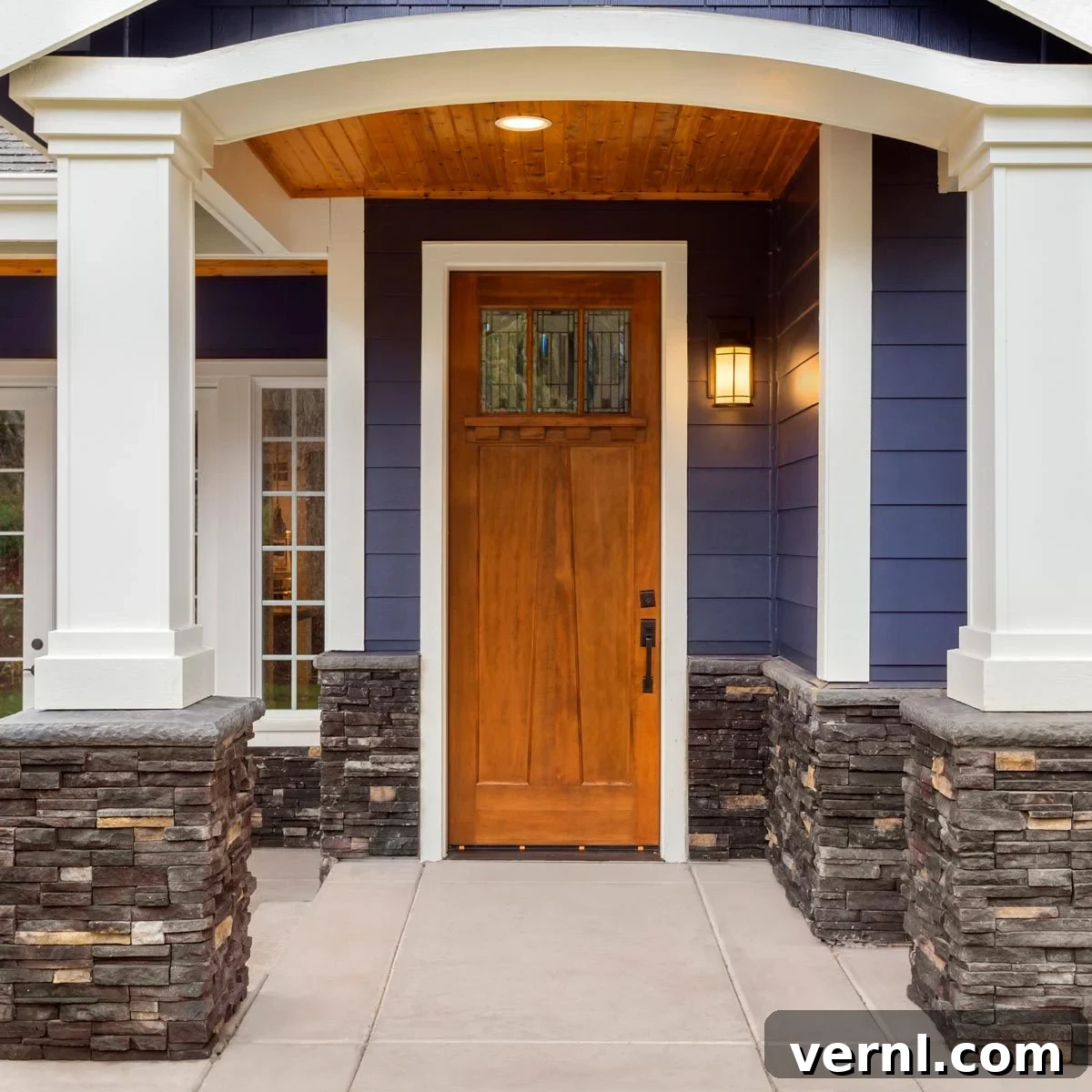
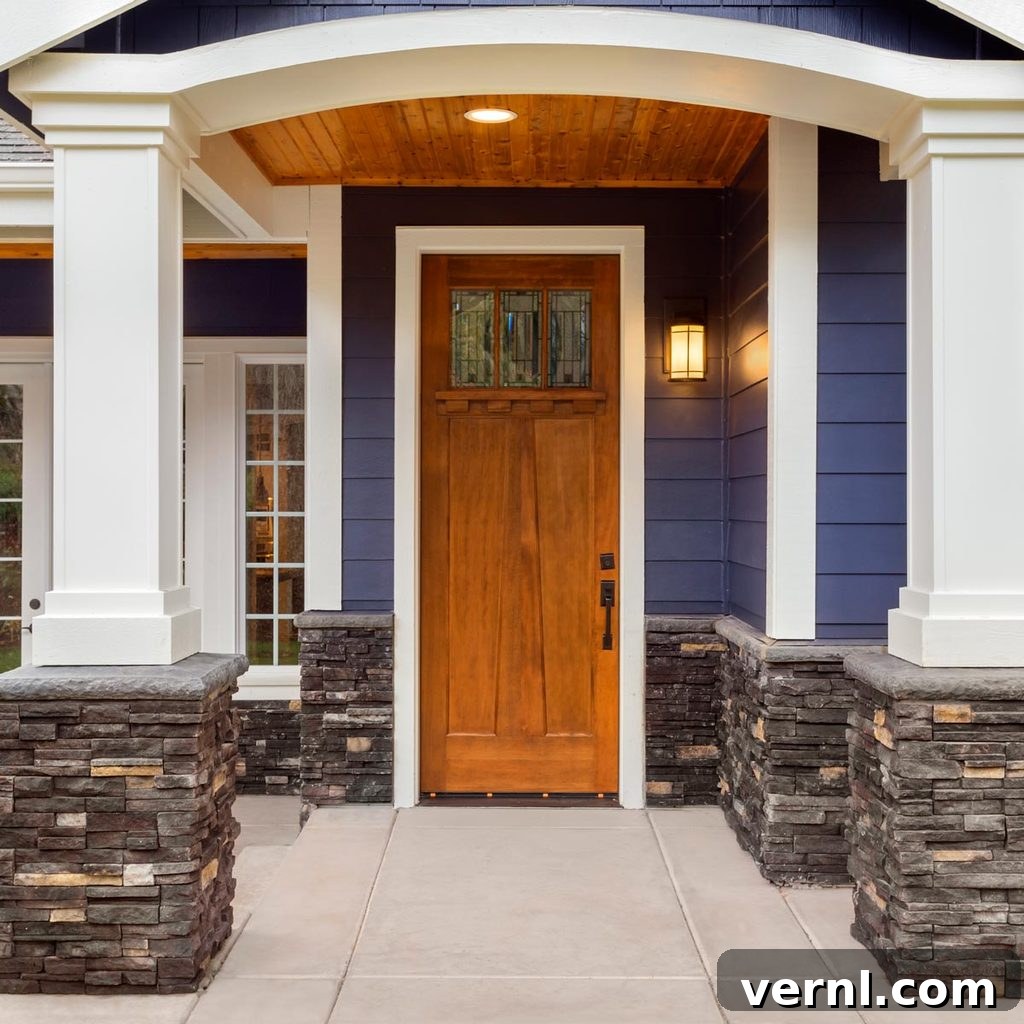
The Timeless Appeal of Wooden Front Doors: A Comprehensive Guide
The moment has arrived. You’re ready to bid farewell to that uninspiring, perhaps even dilapidated, front door that has long been an eyesore. Your home deserves a grand entrance, a statement piece that not only welcomes guests but also significantly elevates your home’s curb appeal and overall aesthetic. If you’re like many homeowners, you’re naturally drawn to the unparalleled warmth, classic beauty, and enduring charm that only wood can offer – from its rich visual textures to the solid, satisfying sound it makes when closed.
Indeed, a wooden front door isn’t just a design choice; it’s a strategic investment in your home’s character and value. A Consumer Reports study rigorously compared various entry door materials, including steel and fiberglass, and identified wooden doors as a solid contender, especially praised for their exceptional resistance to wear. Unlike doors that might dent easily, wood offers a unique advantage: minor scratches and imperfections can often be repaired, refinished, and restored, maintaining its pristine appearance for decades, provided it receives appropriate care and maintenance.
Choosing a new front door is a significant decision, impacting everything from your home’s security and energy efficiency to its aesthetic appeal and resale value. This comprehensive guide is designed to empower you with all the essential information needed to determine if a wooden front door perfectly aligns with your home’s architectural style, your personal lifestyle, and your budget considerations. We’ll delve into the various types of wood, explore maintenance needs, discuss energy efficiency, and clarify cost expectations, ensuring you make an informed choice that you’ll cherish for years to come.
Ready for some inspiration? Explore these 10 Modern Front Doors We Are Loving Right Now to kickstart your design journey!
Understanding the Wood: What Types Are Used for Front Doors?
The beauty and durability of a wooden front door largely depend on the type of wood used in its construction. Generally, wooden front doors fall into two main categories: solid wood and engineered wood, each offering distinct advantages and characteristics.
Solid Wood Doors: Natural Strength and Beauty
When a door is labeled “solid,” it signifies that it is crafted entirely from a single species of wood, offering unparalleled natural beauty and a substantial feel. Popular choices for solid wooden front doors include:
- Oak: Renowned for its strength, durability, and prominent grain pattern, oak is a classic choice that offers excellent resistance to impacts and wear. Its open grain takes stains beautifully, highlighting its natural character.
- Mahogany: A premium hardwood, mahogany is prized for its rich, reddish-brown hues, fine grain, and exceptional resistance to rot and insect damage. It offers a luxurious look and is often chosen for its stability and stately appearance.
- Maple: Known for its fine, even grain and light color, maple provides a clean, contemporary look. It’s a very hard wood, offering good durability, and can be stained to mimic darker woods or left light for a minimalist aesthetic.
- Knotty Alder: This wood provides a rustic, old-world charm, characterized by its distinctive knots and natural imperfections. It’s softer than oak or mahogany but takes stains exceptionally well, creating a warm, inviting appearance.
- Douglas Fir: A more economical option, Douglas Fir offers a beautiful straight grain and a reddish-brown color. While softer than some hardwoods, it’s a popular choice for craftsman and traditional styles, offering good stability and workability.
Solid wood doors exude a sense of authenticity and can be refinished multiple times throughout their lifespan, making them a long-term investment. However, as a natural material, solid wood can be more susceptible to expansion and contraction due to changes in temperature and humidity, which can sometimes lead to warping over extended periods if not properly maintained.
Engineered Wood Doors: Stability Through Innovation
Many manufacturers also produce “engineered” wood doors, which are a testament to modern woodworking techniques. These doors are constructed by pressing and gluing together multiple layers of wood, often in alternating grain directions, to form a highly stable core material. This cross-grain construction significantly reduces the wood’s natural tendency to warp, swell, or shrink in response to environmental fluctuations. A high-quality wood veneer, typically made from the same attractive species used for solid doors (oak, mahogany, cherry, etc.), is then applied to the surface, giving the door the authentic look and feel of solid wood. Engineered doors are generally considered more stable and resistant to warping than their solid counterparts, often offering a more consistent performance in diverse climates. They can also be a more environmentally friendly option, as they often utilize smaller, faster-growing timber resources and can incorporate recycled wood products in their core.
Beyond the structural considerations, the aesthetic details of your door can significantly impact your home’s façade. Discover inspiring concepts with these 15 Front Door Décor Ideas You Can DIY.
Are Wooden Front Doors Energy Efficient?
When considering energy efficiency, it’s true that wooden front doors, particularly older or poorly installed ones, may not inherently offer the same insulation values as some modern steel or fiberglass doors which often feature injected foam cores. However, this doesn’t mean a wooden front door cannot be energy efficient. With proper attention to detail during installation and ongoing maintenance, a wooden door can perform admirably in terms of thermal performance.
Maximizing Energy Efficiency for Wood Doors:
- Precision Installation: The most crucial factor for any door’s energy efficiency is its installation. A poorly installed door, regardless of material, will leak air. Professional installation ensures the door frame is plumb and square, creating a tight seal.
- Thorough Caulking: Gaps between the door frame and the rough opening of your wall are major culprits for air infiltration. Applying high-quality exterior-grade caulk around the entire perimeter of the door frame, both inside and out, creates an airtight barrier that prevents drafts and heat transfer.
- Effective Weatherstripping: This is vital for sealing the gaps between the door slab and the frame when the door is closed. Various types of weatherstripping exist, including compression gaskets, foam strips, and V-strip seals. Properly installed weatherstripping prevents air from leaking around the edges of the door. It needs to be regularly inspected and replaced if it becomes cracked, brittle, or worn. DIY kits make it easy to install weatherstripping, empowering homeowners to enhance their door’s efficiency.
- Adding a Storm Door: For an extra layer of insulation and protection, consider installing an attractive storm door that complements the style of your main wooden entry door. A storm door creates an insulating air pocket between itself and the main door, significantly reducing heat loss in winter and heat gain in summer. Modern storm doors come in various designs, from full-view glass to those with interchangeable screens, allowing you to maintain airflow in warmer months while adding an aesthetic enhancement.
By implementing these strategies, you can substantially boost the energy efficiency of your wooden front door, contributing to a more comfortable indoor environment and potentially lowering your heating and cooling costs. The natural insulating properties of wood, combined with these measures, create a robust barrier against the elements.
Do Wooden Front Doors Require Special Maintenance?
Yes, wooden front doors do require a commitment to regular maintenance, but this investment of time and effort is what preserves their natural beauty and extends their lifespan for decades. Unlike steel or fiberglass doors which are largely maintenance-free once installed, wood is a natural material that needs protection from the elements to prevent degradation.
Key Maintenance Tasks for Wooden Doors:
- Painting or Varnishing: The most critical maintenance task is to apply and regularly renew a protective finish – either paint or varnish. This finish acts as a shield against moisture, UV radiation from the sun, and temperature fluctuations.
- Painted Doors: Paint provides a durable, opaque layer of protection and allows for endless color customization. High-quality exterior-grade paint should be used.
- Varnished/Stained Doors: Varnish or stain allows the natural grain and beauty of the wood to show through, often enhancing its color. These finishes typically contain UV inhibitors to prevent sun damage.
- Re-application Frequency: The frequency with which you need to re-apply the finish largely depends on your door’s exposure to the elements.
- Sun Exposure: Doors that receive direct, prolonged sunlight will need more frequent attention, as UV rays break down finishes over time, leading to fading and peeling.
- Rain and Moisture: Doors exposed directly to rain and humidity are susceptible to moisture absorption, which can lead to swelling, cracking, and rot if the finish is compromised.
- Sheltered Doors: A door protected by a porch, overhang, or storm door will naturally require less frequent maintenance, potentially every 5-7 years. An exposed door might need re-finishing every 2-3 years.
- Climate Considerations: If you reside in an extremely dry climate, wood can lose moisture and crack. In contrast, extremely humid climates can cause wood to swell and warp. While proper finishing helps mitigate these issues, homeowners in such extreme conditions might consider a steel or fiberglass door if they prefer minimal maintenance, as these materials are less reactive to environmental extremes.
- Cleaning and Inspection: Beyond re-finishing, regular cleaning with mild soap and water can remove dirt and grime. Periodically inspect your door for any signs of cracking, peeling, or water damage, addressing small issues promptly before they escalate.
With a little care and commitment, your wooden front door will remain a stunning focal point of your home for many years. To ensure a professional-looking finish, learn how to paint your front door like a pro!
Are Wooden Front Doors Secure?
A common misconception is that wooden front doors are inherently less secure than their steel or fiberglass counterparts. This is not accurate. When properly constructed, installed, and outfitted, a wooden front door is considered to be just as secure as other types of doors. The inherent density and structural integrity of quality hardwoods provide a formidable barrier against forced entry.
Enhancing Wooden Door Security:
- Solid Core Construction: A solid wooden door, or a high-quality engineered wood door with a dense core, offers significant resistance to physical impacts and attempts to kick in the door.
- The Importance of the Deadbolt: The true secret to a truly secure door, regardless of its material, lies in the quality and installation of its locking mechanisms. A robust deadbolt lock is paramount.
- Heavy-Duty Deadbolts: Opt for a Grade 1 or Grade 2 deadbolt. These locks feature a bolt that extends at least one inch into the door frame.
- Reinforced Strike Plates: The deadbolt is only as strong as its strike plate and the door frame itself. Ensure the strike plate is made of heavy-gauge metal and secured with long screws (at least 3 inches) that penetrate deep into the structural framing behind the door jamb, not just into the jamb itself. This prevents the door from being easily forced open around the latch.
- Proper Installation: A deadbolt must be installed correctly, with precise alignment and drilling, to function at its maximum security potential.
- Smart Locks: For added convenience and security, consider integrating smart lock technology that allows for remote access control, monitoring, and keyless entry.
- Strong Hinges: Ensure hinges are heavy-duty and secured with long screws into the door frame. For outswing doors, consider hinges with non-removable pins or security studs to prevent the door from being lifted off its hinges.
- Solid Frame: A strong door is only as good as its frame. Ensure the door frame itself is solid, securely anchored to the wall studs, and free from rot or damage.
By combining the natural strength of wood with high-quality hardware and professional installation, your wooden front door will provide excellent security and peace of mind. To learn more about fortifying your entryway, read our guide on how to install a deadbolt for maximum security.
Do Wooden Front Doors Work With All House Styles?
Absolutely! One of the most compelling advantages of choosing a wooden front door is its unparalleled versatility. Unlike some materials that might be pigeonholed into specific architectural periods, wood’s inherent adaptability allows it to complement virtually every house style, from the historical elegance of a Victorian to the clean lines of a contemporary abode. This flexibility stems from the vast array of wood species available, the myriad of finishes, and the endless design possibilities, including the incorporation of glass.
Wood Doors Across Architectural Styles:
- Craftsman: Wooden doors are a cornerstone of Craftsman architecture. Often featuring multiple panels, dentil shelves, and rich, earthy stains that highlight the wood grain (like oak or fir), they perfectly embody the style’s emphasis on natural materials and handcrafted quality.
- Traditional and Colonial: Classic panel designs, often painted in muted or bold colors, seamlessly fit traditional and colonial homes. Mahagony or oak with a deep stain can also add a touch of timeless sophistication.
- Modern and Contemporary: For modern homes, wooden doors offer warmth and organic texture that can soften industrial elements. Sleek, flush designs, often made from exotic woods like teak or wenge, or simply stained maple, can create a minimalist yet striking entrance. Large glass inserts, frosted or clear, are frequently incorporated to maximize natural light and maintain a clean aesthetic.
- Farmhouse and Rustic: Knotty alder or distressed oak doors, perhaps with a custom finish or oversized hardware, perfectly capture the charm of farmhouse and rustic designs. These doors often feature X-bracing or vertical planks, evoking a sense of heritage and warmth.
- Victorian and Mediterranean: Elaborate carvings, arch-top designs, and decorative glass panels (stained or leaded) in rich woods like mahogany or dark-stained oak can beautifully enhance the intricate details of Victorian or Mediterranean-inspired homes.
The ability to choose from a variety of wood species, coupled with the option to stain it to showcase its natural beauty or paint it to match or contrast your home’s exterior, makes wood incredibly adaptable. Furthermore, adding glass – whether clear for maximum light, frosted for privacy, or decorative for artistic flair – allows for further customization to achieve the perfect look for your home. This inherent customizability makes wooden doors a preferred choice for homeowners who value both beauty and design flexibility.
To find the perfect door that seamlessly matches your home’s unique character, explore our guide on 15 Stunning Front Doors to Match Your House Style.
How Much Do Wooden Front Doors Cost?
The cost of a wooden front door can vary significantly, reflecting the wide range of options in terms of wood species, construction, design complexity, and installation. While wooden doors often represent a higher upfront investment compared to basic steel or fiberglass options, their durability, repairability, and aesthetic appeal can offer excellent long-term value.
Factors Influencing the Cost of Wooden Front Doors:
- Wood Species: The type of wood chosen is a primary cost driver. Common woods like pine or Douglas fir tend to be more affordable, while premium hardwoods such as mahogany, cherry, or exotic woods can significantly increase the price due to their rarity, unique grain patterns, and inherent properties like resistance to rot or insects.
- Construction Type:
- Engineered Wood Doors: These are generally more budget-friendly, with simple engineered wood doors starting around $200 to $500. They offer stability and the look of real wood through veneers, making them a cost-effective option.
- Solid Wood Doors: Solid wood doors typically start from $500 and can easily reach several thousand dollars. The cost depends heavily on the wood species, thickness, and level of craftsmanship. Solid hardwood doors are a premium product reflecting their natural material and durability.
- Design Complexity and Customization:
- Panels and Carvings: Doors with intricate paneling, custom carvings, or unique architectural details will naturally be more expensive than flush or simple panel designs.
- Size and Shape: Standard-sized rectangular doors are the most economical. Custom sizes, extra-wide doors, arch-top designs, or double-entry door systems will incur additional costs.
- Glass Inserts: Adding glass to your door can increase its cost. The price varies based on the type of glass (clear, frosted, beveled, stained, leaded), the size of the inserts, and the complexity of the design. Decorative or impact-resistant glass options are typically more expensive.
- Prehung vs. Slab Doors:
- Slab Door: This is just the door itself, without a frame or hinges. It’s generally less expensive to purchase but requires more skill and time to install into an existing frame, making it suitable mainly for replacements where the old frame is in excellent condition.
- Prehung Door: A prehung door comes pre-mounted in its own frame, complete with hinges and often a pre-drilled bore for the doorknob and deadbolt. While the unit itself costs more, it significantly simplifies and speeds up installation, reducing labor costs if you hire a professional, or making it a more manageable DIY project.
- Finishing: Factory-finished doors, which come pre-stained or pre-painted, will cost more than unfinished doors. However, this saves you the time and expense of doing the finishing work yourself, and factory finishes often offer superior durability.
- Installation Costs: Professional installation typically adds several hundred dollars to the overall cost, but it ensures proper fitting, sealing, and functionality, which are crucial for security and energy efficiency. While DIY installation can save money, it requires specific tools and expertise.
Considering all these factors, the cost of a wooden front door can range from a few hundred dollars for a basic engineered slab to several thousand for a custom-made, solid hardwood, prehung unit with decorative glass. While the initial investment might be higher, the timeless aesthetic, durability, and potential for increased home value make a wooden front door a worthwhile investment for many homeowners.
Ready to make the leap and install your new entryway? Here’s a practical guide on how to install a prehung wooden front door!