
Sponsored by Fujitsu
Unlock Modern Comfort in Your Historic Home: The Ultimate HVAC Upgrade Guide
There’s an undeniable charm and character that emanates from older homes. They stand as testaments to timeless craftsmanship, often boasting features that are rare in today’s new constructions – think solid wood doors, intricate custom trim, and beautifully finished plaster walls and ceilings. These elements contribute to an aesthetic and an ambiance that simply cannot be replicated. However, this classic elegance often comes with a significant drawback: a lack of modern, energy-efficient heating and cooling systems. If your home predates the 1970s, you’re likely grappling with an outdated HVAC setup that not only compromises your comfort but also significantly inflates your utility bills. In fact, homes 50 years or older frequently incur energy costs that are at least 25 percent higher than those of a comparably sized new build. That’s a substantial amount of money literally going out the window each year.
The problem extends far beyond inefficient hot water boilers, though these are certainly culprits. Many older homes rely on traditional, single-room cooling solutions like window or in-wall AC units. While they offer a temporary reprieve from the heat, these units are notorious for their inefficiency. They consume excessive amounts of energy, leading to higher operating costs, and they deliver inconsistent cooling. You’ll often find chilly spots right next to the unit and uncomfortable warm pockets on the opposite side of the room, failing to provide truly comfortable, uniform cooling. Beyond their poor performance, these conventional units are also incredibly noisy. The constant cycling of the compressor can be disruptive, making them particularly bothersome for light sleepers or those seeking a peaceful home environment. In essence, your home’s current heating and cooling systems are likely wasting precious energy and denying you the consistent comfort and tranquility you deserve. It’s not just an upgrade; it’s an investment in your home’s future and your quality of life. The time for an HVAC transformation is now, and understanding your options is the first step.
Retrofit Solutions: Forced-Air vs. Ductless Mini-Split Systems
For decades, homeowners of historic properties faced limited options when it came to modernizing their heating and cooling. Twenty years ago, the primary recommendation from HVAC contractors for retrofitting an older home typically involved the installation of a ducted forced-air system. While some contractors still offer this approach, it’s crucial to understand the extensive scope and inherent challenges it presents. Retrofitting a traditional forced-air system into an existing structure is a monumental undertaking. It demands the installation of new supply and return ductwork, a process that inevitably requires creating large, invasive openings in your walls and ceilings. Alternatively, installers might route these new ducts through existing closets, which, while less visually disruptive, results in the loss of valuable storage space. Regardless of the chosen path, this type of installation necessitates significant patching, painting, and often, extensive cosmetic repairs once the work is completed, adding considerable time, cost, and disruption to your life.
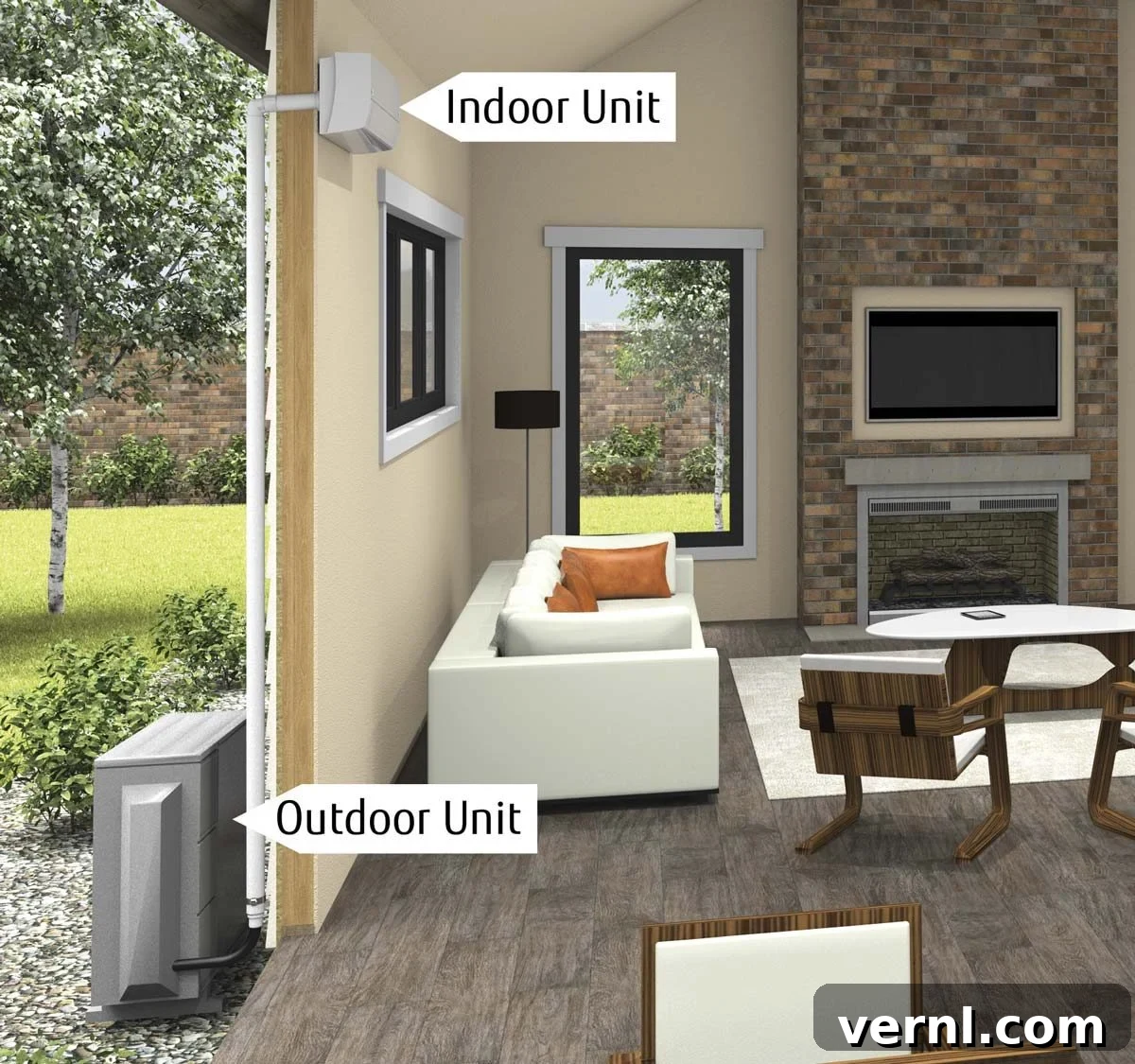
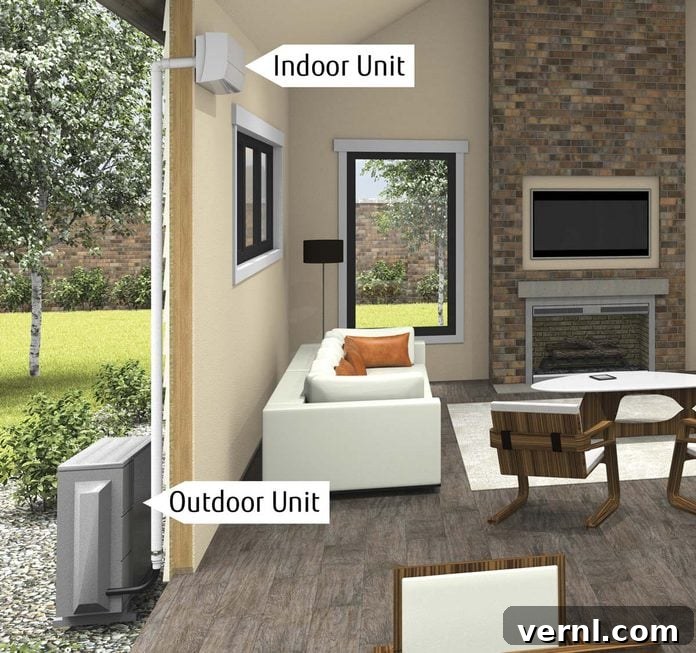
Fortunately, advancements in HVAC technology have introduced a far more elegant and less invasive solution: ductless mini-split systems. These innovative heating and cooling solutions are specifically designed to be incredibly easy to install, making them an ideal choice for older homes where preserving architectural integrity is paramount. With a ductless system, the need for extensive ductwork is completely eliminated. This means contractors won’t have to demolish walls, cut large holes in your ceilings, or commandeer your precious closet space. The installation process is remarkably streamlined: a main condensing unit is placed discreetly outside your home, and only small, typically 2-inch to 3-inch, holes are drilled through an exterior wall to accommodate the refrigerant lines. If these lines need to run along the side of your house, a protective cover, carefully matched to your home’s exterior color, can be installed to maintain aesthetic appeal. One of the most significant advantages of many ductless systems is their scalability and flexibility; a single outdoor condensing unit can efficiently power and control up to eight individual indoor units, each serving a distinct zone within your home.
Superior Energy Efficiency: The Core Advantage of Ductless Mini-Splits
When evaluating HVAC options, energy efficiency is often the most critical factor, and this is where ductless mini-split systems truly shine. Conventional ducted systems, no matter how meticulously designed, sealed, or insulated, are inherently susceptible to energy loss. This phenomenon, commonly referred to as “duct loss,” occurs in two primary ways: first, conditioned air (heated or cooled) flowing through the ducts transfers energy to the surrounding unconditioned air, effectively losing its desired temperature. Second, unconditioned air from the attic, crawlspace, or walls can infiltrate the ducts, contaminating the conditioned air and requiring the system to work harder. Studies have consistently shown that duct loss can account for a staggering 20 to 30 percent, and sometimes even more, of your total heating and cooling energy bill. This means a significant portion of the energy you pay for never actually reaches the living spaces you intend to condition.
Ductless mini-split systems completely bypass this pervasive problem. By eliminating the need for ductwork altogether, they deliver conditioned air directly to each individual zone, ensuring virtually no energy is lost in transit. This direct delivery mechanism provides an immediate and substantial energy-saving advantage over traditional ducted systems. Furthermore, modern ductless units often incorporate advanced inverter technology, which allows the compressor to vary its speed and output to precisely match the heating or cooling demand. Unlike older, single-stage systems that constantly cycle on and off at full power, inverter-driven mini-splits operate more continuously at lower, more efficient settings, consuming less energy and providing more consistent temperatures. This intelligent operation, combined with zoned control, makes ductless mini-splits a cornerstone of energy-efficient home climate management.
Choosing the Best Ductless Mini-Split System for Your Home
The market for ductless mini-split systems has expanded considerably, with several reputable companies offering both AC-only and combination heating and cooling solutions. However, when it comes to exceptional performance and industry-leading efficiency, the Energy Star certified mini-split systems from Fujitsu stand out. Fujitsu’s commitment to innovation and energy savings is evident in its product line, with many systems boasting efficiency ratings far exceeding government minimum standards. For instance, some Fujitsu ductless mini-split systems achieve an incredible 33 SEER (Seasonal Energy Efficiency Ratio) rating. To put this into perspective, this is among the highest SEER ratings available in the industry and represents an efficiency level 2.5 times greater than the common 13 SEER central air conditioning systems that contractors typically install. Such an exceptionally high efficiency directly translates into substantial savings on your monthly energy bills, year after year.
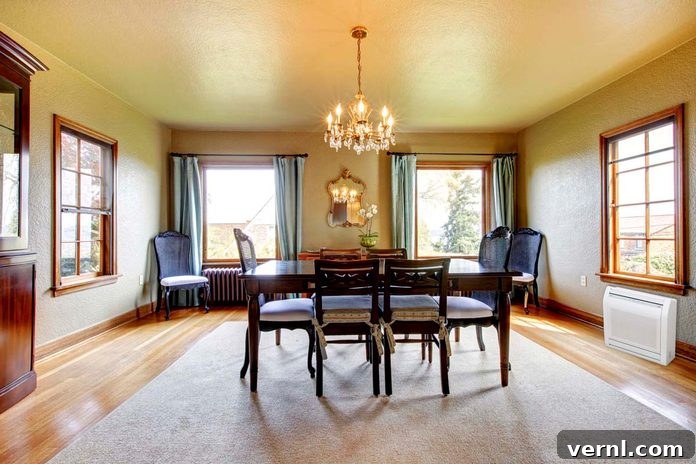
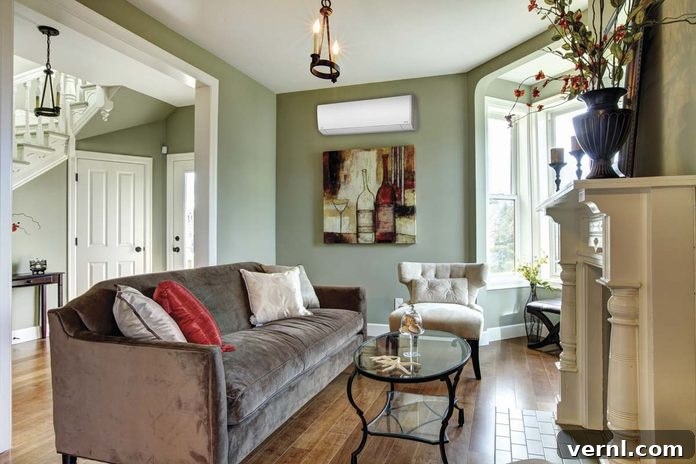
Beyond their impressive efficiency, Fujitsu ductless mini-split systems are engineered for unparalleled flexibility and personalized comfort. Their multi-zone capabilities allow you to configure a system that can run up to eight individually controlled zones from a single, quiet outdoor condensing unit. This means each room or area in your home can have its own dedicated indoor unit and thermostat, empowering you to heat or cool only the specific rooms you are using, rather than the entire house. This precise, on-demand conditioning eliminates wasted energy and maximizes your savings. Furthermore, Fujitsu offers a wide range of aesthetic options for their indoor units to seamlessly blend with your home’s interior design. You can choose between sleek wall-mounted units, discreet floor-standing models, or even innovative ceiling-cassette units that integrate beautifully into your space, ensuring your comfort solution enhances rather than detracts from your home’s charm.
Enhanced Comfort, Smart Home Integration, and Financial Incentives
The benefits of Fujitsu ductless mini-split systems extend far beyond just energy savings. They significantly enhance overall home comfort. By providing precise temperature control in each zone, these systems eliminate the common problem of hot and cold spots, ensuring every room maintains a consistent, comfortable temperature. Their advanced filtration systems also contribute to improved indoor air quality, reducing allergens and pollutants for a healthier living environment. Moreover, Fujitsu systems are renowned for their whisper-quiet operation. Unlike the disruptive noise of old window units, ductless mini-splits operate with minimal sound, allowing you to enjoy a peaceful and comfortable home without interruption.
In today’s connected world, smart home integration is a highly sought-after feature, and Fujitsu ductless mini-split systems are fully compatible. With the intuitive FGLair app, you gain complete control over your Fujitsu RLS3Y and RLS3YH series heating and cooling systems directly from your smartphone or tablet. This means you can adjust temperatures, switch modes, and even monitor energy usage from anywhere, at any time. Imagine arriving home to a perfectly pre-conditioned house, or adjusting the temperature for an empty room while you’re away – the convenience is unparalleled.
Beyond the immediate energy savings and enhanced comfort, investing in an energy-efficient Fujitsu ductless mini-split system can also offer attractive financial incentives. Many utility companies and local governments offer rebates, tax credits, or other incentive programs for homeowners who upgrade to high-efficiency HVAC solutions. The superior efficiency of most Fujitsu systems ensures they often qualify for these valuable rebates when they are available in your area, further reducing your initial investment and accelerating your return. These programs highlight the growing recognition of ductless mini-splits as a sustainable and economically sound choice for modernizing home climate control.
Make the Smart Choice: Contact a Fujitsu Contractor Today
Considering all these compelling advantages – from unparalleled energy efficiency and superior comfort to flexible zoning, quiet operation, and smart home compatibility – it’s clear that a Fujitsu ductless mini-split system represents an intelligent and forward-thinking investment for any homeowner, especially those with charming older properties. To truly understand how these advanced systems can be tailored to meet your specific needs and transform your living environment, the best first step is to consult with an authorized Fujitsu ductless mini-split contractor. They possess the expertise to conduct a comprehensive evaluation of your home’s unique heating and cooling requirements, recommend the ideal system configuration, and provide a professional installation that maximizes efficiency and comfort. Don’t let an outdated HVAC system diminish the beauty and potential of your historic home any longer. Take control of your comfort and energy costs. To find a qualified Fujitsu contractor near you and begin your journey towards modern, efficient, and comfortable living, simply visit contractors.fujitsugeneral.com.
– Rick Muscoplat, Contributing Editor