
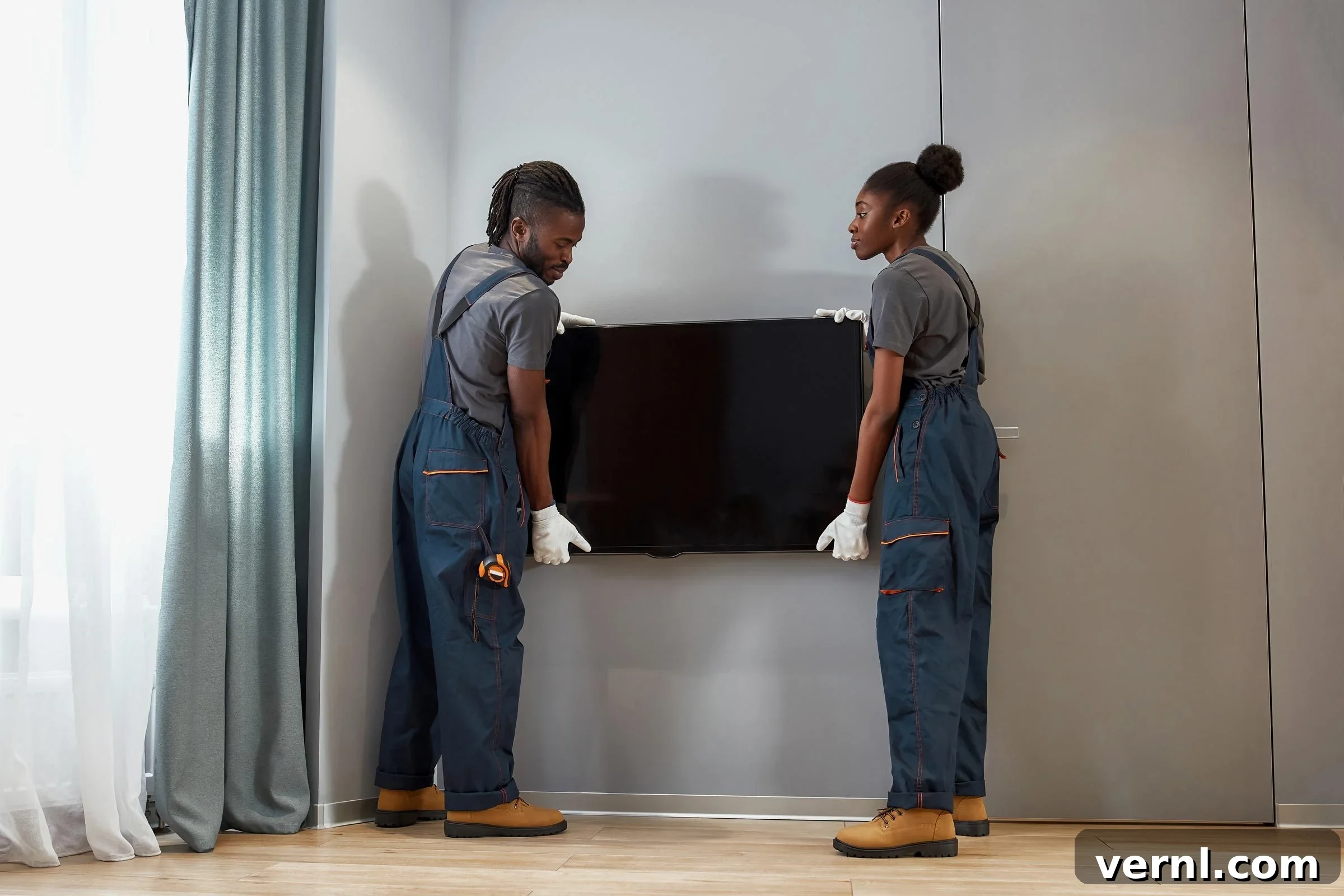
Optimal TV Height: A Comprehensive Guide for Comfort, Aesthetics, and Safety
Determining the ideal height to mount your television is a crucial decision that significantly impacts your viewing experience. It’s a topic frequently debated whenever a TV is to be mounted, and for very good reasons. A stunning, high-resolution picture can be completely undermined if poor sightlines, uncomfortable viewing angles, or persistent neck pain ruin the enjoyment. This guide delves into the science, ergonomics, and practical considerations to help you find the perfect mounting height for your home.
The issue of discomfort stemming from prolonged television viewing is not new. The term “television neck” dates back as far as 1952, when an article in the Journal of the American Medical Association described individuals who, while watching TV programs, maintained strained postures of the head and neck, often for extended periods. This early recognition highlights a long-standing challenge in home entertainment ergonomics.
This problem intensified with the advent of wall-mounted flat-screen televisions. Older, bulkier cathode ray tube (CRT) models necessitated sturdy TV stands to support their considerable weight, which naturally kept them closer to an ergonomic viewing angle. However, the sleek, lightweight design of flat-screen TVs, often compared to a mirror or a piece of art, led many homeowners to install them higher on walls, frequently above fireplaces, treating them as a natural focal point in the room.
While mantel-mounted TVs can indeed look aesthetically pleasing, viewers often find themselves outside the ideal distance and viewing angle. This common scenario frequently results in discomfort, such as sore necks and shoulders, and a picture that doesn’t appear as vibrant or clear as it should. The visual quality of your expensive display is intrinsically linked to how comfortably you can view it, making proper mounting height paramount.
Understanding Ergonomics and Viewing Comfort
To truly appreciate the importance of TV mounting height, it’s essential to understand the basic principles of ergonomics, particularly concerning neck and eye comfort. The human body is designed to maintain a neutral spine posture, and prolonged deviation from this posture can lead to strain and pain.
The Science Behind “Television Neck”
When you watch a television mounted too high, you are forced to crane your neck upwards, extending your cervical spine. Holding this position for an extended period puts undue stress on the neck muscles, ligaments, and spinal discs. This can lead to muscle stiffness, headaches, and chronic neck pain – precisely what “television neck” describes. Additionally, looking upward can cause eye strain as your eyes must constantly adjust to the higher angle, sometimes leading to dryness or fatigue. The ideal viewing experience allows your eyes to naturally scan the screen without significant vertical movement, and your neck to remain in a relaxed, neutral position.
Experts generally agree that the most comfortable viewing angle for your neck is when your eyes are level with the center, or slightly above the bottom third, of the screen. This allows for a slight downward gaze, which is more natural and less strenuous for both your neck and your eyes.
Optimal Viewing Distance and Screen Size
The perfect TV height is also heavily influenced by your viewing distance and the size of your screen. A larger television viewed from a closer distance will require a different mounting height than a smaller TV viewed from further away. Industry recommendations often suggest a viewing distance of approximately 1.5 to 2.5 times the diagonal screen size for 4K Ultra HD televisions to appreciate the resolution fully. For instance, a 65-inch 4K TV might be optimally viewed from 8 to 13 feet away.
When you sit closer to a large screen, the vertical field of vision increases. If the TV is mounted too high, the top of the screen will appear excessively high, necessitating greater head and eye movement, exacerbating neck strain. Conversely, if you are farther away, a slightly higher mount may be more tolerable as the upward angle becomes less acute. These interconnected factors must be considered to achieve true viewing comfort and prevent strain.
The Golden Rule: Eye-Level While Seated
The most widely accepted and ergonomically sound rule of thumb for TV height is to position the television so its center aligns with your eye level when you are comfortably seated in your primary viewing position, or perhaps an inch or two below it. This principle holds true across various screen sizes, seating arrangements, and individual viewer heights, as it prioritizes the natural posture of the human body.
Practical Measurement Steps
To accurately determine this optimal height, follow these simple, practical steps:
- Choose Your Primary Viewing Spot: Sit on the couch, armchair, or any seating where you typically watch television. Ensure you are in your most relaxed and common viewing posture.
- Look Straight Ahead: Without craning your neck up or down, look directly forward, as if you were already watching the screen.
- Mark Your Eye Line: Have a helper use a measuring tape or a laser level to measure the distance from the floor to your eye level. If you’re alone, you can use a piece of painter’s tape on the wall to mark your eye line and then measure from the floor to the tape.
- Calculate TV Center: This measurement from the floor to your eye line represents the approximate ideal height for the center of your television. You might slightly adjust it an inch or two lower to allow for a natural, relaxed downward gaze.
It is crucial to perform this measurement from the exact seating position you will use, as variations in couch height, cushion firmness, or individual posture can subtly alter your eye line. This methodical approach ensures the TV is placed for maximum comfort for the primary viewer.
Accounting for Different Seating and Viewers
For families with viewers of varying ages and heights, or those using furniture of different sizes, finding a single “perfect” balance might require some experimentation. In such cases, a common compromise is to prioritize the comfort of the most frequent viewer or to aim for the lowest eye-line in the room to minimize strain for children or shorter adults. If watching primarily from a recliner, where your head is tilted back, a slightly higher mounting might be appropriate. Similarly, in home gyms or dedicated workout spaces, where viewing might occur from a treadmill or stationary bike, a considerably higher mounting height may be necessary and justified due to the elevated eye level during exercise.
Beyond the Basics: Factors Influencing Your Decision
While the eye-level rule is an excellent starting point, several other factors can and should influence your final decision. Online calculators can offer a deeper dive by incorporating screen size and seating distance, but they often can’t account for the unique nuances of your specific living space and viewing habits. Here are a few additional considerations:
The Role of TV Screen Size
The physical dimensions of your television screen play a significant role. A 75-inch TV, for example, has a much greater vertical height than a 40-inch TV. If the absolute center of a very large TV is at eye level, the top edge of the screen will extend considerably higher, potentially causing the top portion to be out of a comfortable viewing cone. For larger screens, some experts suggest aiming for the lower-middle third of the screen to be at eye level, or ensure that your eye level is no higher than 25% to 30% of the way up from the bottom edge of the TV. This ensures that the primary viewing area remains within your comfortable line of sight without excessive head movement.
Viewing Distance Considerations
As discussed, the distance between your TV and your seating directly impacts how high you can comfortably mount the screen. When you are positioned farther away, the viewing angle becomes less acute, allowing for a slightly higher mount without inducing immediate neck strain. Conversely, if you sit very close to your TV, precision in mounting height becomes even more critical. A good rule of thumb is that for every foot you move closer to the screen, a difference of a few inches in vertical placement becomes more noticeable for your neck and eyes. Always consider the primary viewing distance when finalizing your height decision.
Room Layout and Furniture
The existing layout of your room and the type of furniture you have can also dictate mounting height. For instance, if you have a very high-backed sofa, your eye level might naturally be higher than with a low-slung modern couch. In a bedroom, where viewing is often done from a reclined position in bed, the TV will likely need to be mounted higher than in a living room. Consider how often you use different pieces of furniture for viewing and factor that into your compromise. Open-plan living spaces might demand a more universally acceptable height, while dedicated media rooms allow for more tailored precision.
Safety First: Protecting Your Family and Investment
Beyond comfort and aesthetics, safety must always be a paramount consideration when mounting a television. The risks associated with improperly secured TVs, especially in homes with children or pets, are serious and potentially life-threatening.
Child and Pet Safety
If you have inquisitive children or playful pets that might pull, push, or crawl around the television, there’s a real and significant risk of the TV falling, causing severe injury to them or damage to the television itself. According to government safety reports, hundreds of children are injured annually by falling televisions and furniture. To mitigate this danger, consider mounting the TV higher, beyond the reach of curious little hands or paws. This choice, while potentially compromising on the ideal ergonomic viewing angle, prioritizes the well-being of your loved ones. Always use appropriate, heavy-duty wall mounts securely fastened into wall studs, and ensure all cables are neatly managed and out of reach.
While barriers can offer some protection, even the most robust physical obstacles might only temporarily deter a truly determined toddler or cat. A more effective and flexible solution could be an adjustable-height wall mount that allows you to easily raise the TV out of harm’s way when not in use, and then lower it to an ergonomic viewing height when you want to watch. Regardless of the aesthetic look you prefer, if the choice ever comes down to safety versus the “proper” ergonomic mounting height, always opt for safety.
Structural Integrity of Walls
Proper installation is integral to safety. Ensure that your wall can support the weight of the TV and its mount. Always locate wall studs and use appropriate mounting hardware. If mounting onto drywall without studs, use heavy-duty toggle anchors or specialized drywall mounts designed for televisions. Never compromise on the quality of your mount or the security of its installation. A professional installer can ensure your TV is mounted safely and securely, giving you peace of mind.
Aesthetics and Integration: Making Your TV Part of the Room
For many, the visual impact of a wall-mounted television within the room’s decor is just as important as viewing comfort. While a TV at precisely couch-height might be ergonomically ideal, it might not always align with your desired aesthetic. However, there are numerous ways to integrate your TV seamlessly into the room while still prioritizing comfort.
The Fireplace Dilemma Revisited
Mounting a TV above a fireplace mantel is incredibly popular, as it often aligns with the room’s natural focal point. While visually appealing, this placement frequently leads to excessive neck strain due to the elevated position. Furthermore, the heat generated by a working fireplace can potentially damage the sensitive electronics of a TV over time. If a fireplace mount is your absolute preference, consider an adjustable-height wall mount. These innovative mounts allow you to raise the TV out of the way when not in use, protecting it from heat and making it a decorative element, then lower it to a comfortable viewing height when you’re ready to watch. Planning for cable management to conceal wires effectively is also vital for a clean, integrated look.
Decorating Around Your Wall-Mounted TV
A wall-mounted TV doesn’t have to be a stark black rectangle dominating your wall. Thoughtful design can help it blend in. Consider placing decorative items, shelving, or artwork on both sides of the TV to create balance and break up expanses of empty wall. A narrow console table or a low media cabinet positioned directly beneath the TV can also provide visual grounding, storage for components, and a surface for decor. Creating a gallery wall around the TV, or even recessing the TV into the wall, can transform it from a mere appliance into an intentional design feature.
The Enduring Charm of TV Stands and Media Consoles
There’s no rigid rule that mandates a TV must be wall-mounted. A classic TV stand or media cabinet offers several distinct advantages. They naturally position the television at an ergonomically appropriate height for most seated viewers. Furthermore, they provide invaluable storage space for media players, game consoles, soundbars, remote controls, and other accessories, helping to keep your living space tidy and organized. A well-chosen media console can be a stylish piece of furniture in its own right, enhancing the room’s aesthetic while providing functional benefits that wall-mounting often cannot.
Making an Informed Decision: Your Personal Preference
Ultimately, it is crucial to remember that this is your TV in your home. The “right” way to hang it is the way that works best for you and your family. Your personal preferences, lifestyle, and the unique characteristics of your living space should guide your final choice. If you rarely watch television and genuinely love the aesthetic of an over-the-mantel wall mount, then, by all means, pursue that option!
Balancing Competing Priorities
The key is to make an informed decision, considering all the factors and recommendations discussed. Weigh the importance of ergonomic comfort against aesthetic appeal, safety requirements, and the functional demands of your room. Perhaps you can mock up different heights using cardboard or tape on the wall to visualize the impact before committing to drilling holes. This allows you to experience how the height feels from your seating position and assess its visual integration into the room.
The Importance of Future-Proofing
Consider future changes. Will you eventually replace your sofa with a taller one? Might your viewing habits change? Investing in a versatile mount, such as a full-motion or adjustable-height model, can offer greater flexibility down the line. While static mounts are often more affordable, the long-term benefits of adjustability in terms of comfort and adaptability can outweigh the initial cost.
Final Considerations Before You Mount
Before you commit to drilling, a few final checks can ensure a successful and satisfying installation:
Cable Management
Hidden wires are essential for both aesthetics and safety. Plan how you will route and conceal all power and HDMI cables. This might involve using in-wall cable management kits, surface-mounted cable raceways, or simply drilling discreet holes behind the TV to run cables into a nearby media console. A clean setup enhances the visual appeal and prevents tripping hazards.
Glare and Lighting
Consider the natural and artificial light sources in your room. A TV mounted too high or at an incorrect angle can be prone to glare from windows or overhead lights, significantly diminishing picture quality. Test different angles and heights, if possible, to minimize reflections. Anti-glare screens or strategically placed curtains/blinds can also help.
Professional Installation
If you’re dealing with a very large or heavy television, have an unconventional wall type, or simply lack confidence in your DIY skills, hiring a professional installer is always a wise investment. They have the tools, expertise, and experience to ensure your TV is mounted securely, at the correct height, and with all cables neatly managed, providing peace of mind and protecting your investment.