Maximize Your Solar Investment: A Comprehensive Guide to Solar Panel Cleaning and Maintenance
Embracing solar energy is a significant step towards sustainability and energy independence. My personal journey into the world of off-grid living on California’s Central Coast began with a mix of excitement and challenge. Our property boasted a large, steep, south-facing hillside – an ideal location for solar panels, promising abundant sunshine. However, this blessing came with a hidden caveat: the existing system, inherited from previous owners, was drastically undersized and poorly maintained.
Initially, five modest 200-watt panels struggled to keep 16 enormous lead-acid batteries charged. This inadequate setup meant an external inverter frequently drew power, causing a noisy 10-kilowatt (kW) diesel generator to cycle on with alarming regularity. This frequent reliance on the generator defeated part of the purpose of our off-grid aspirations and highlighted a critical flaw in our energy strategy. After a few years of occupancy, we noticed the generator’s operation steadily increasing, prompting a deep dive into the system’s performance. The culprit, as I soon discovered, was surprisingly simple yet profoundly impactful: we weren’t cleaning the solar panels.
The Central Coast climate, with its minimal rainfall from April to November, allowed dust, pollen, and grime to accumulate relentlessly on the panels. This insidious layer of dirt acted as a barrier, significantly reducing their efficiency. Even the sporadic rain we received during the wetter months often failed to truly clean the panels, instead sometimes leaving behind a muddy residue that further compounded the problem. This firsthand experience underscored the profound importance of routine solar panel maintenance – not just for our convenience, but for the very viability of our off-grid lifestyle and the return on our renewable energy investment.
As we embark on a comprehensive upgrade of our solar system, we’ve prioritized making cleaning a consistent monthly task. We’re fortunate in that our panels are situated at ground level, offering easy and safe access for cleaning. This convenience, however, isn’t shared by all solar owners. Many systems are installed on rooftops, presenting a potentially more dangerous job. Steep roof pitches demand extreme caution, often requiring specialized gear like non-slip, rubber-soled shoes and a safety harness to prevent falls. Furthermore, working from a ladder introduces its own set of hazards, from stability issues to reaching awkward angles safely.
For those with roof-mounted panels who are uncomfortable or unequipped to safely climb, professional cleaning and inspection services are highly recommended. Solar maintenance professionals operate in most communities, offering not just cleaning but also crucial safety and expertise. A typical cleaning service might cost around $10 to $15 per panel, while an annual inspection – checking for critical issues like cracked glass, frayed wires, or loose connections – usually runs about $150. Investing in professional care can prevent costly repairs down the line, ensure your system operates at peak performance, and, most importantly, mitigate personal safety risks.
Why Regular Solar Panel Cleaning is Essential for Maximum Efficiency
The performance of your solar panels is directly linked to their cleanliness. While solar panels are incredibly robust and designed to withstand various weather conditions, they are not self-cleaning. Over time, dust, pollen, bird droppings, leaves, and other airborne particulates accumulate on their surface. This pervasive layer of grime acts like a shade, blocking precious sunlight from reaching the photovoltaic cells. Research indicates that dirty solar panels can lose anywhere from 10% to 25% of their energy production capacity, and in some extreme cases (e.g., heavy bird droppings or industrial soot), this reduction can be even more significant. This quantifiable reduction in efficiency translates directly to higher electricity bills for grid-tied homes or, for off-grid systems, increased reliance on backup power sources like generators, diminishing the very benefits solar power aims to provide.
Beyond immediate efficiency losses, consistent cleaning contributes significantly to the longevity of your solar investment. Accumulations of hard water stains or corrosive bird droppings can, over extended periods, cause micro-abrasions or chemical damage to the panel’s delicate glass surface, potentially reducing its operational lifespan and efficiency over time. By ensuring your panels are regularly cleaned, you’re not just maximizing daily energy output; you’re protecting your long-term return on investment, minimizing wear and tear, and contributing more effectively to a cleaner, more sustainable energy future. Neglecting this simple task can lead to underperformance, frustration, and ultimately, a less impactful environmental footprint.
How Often Do Solar Panels Need to Be Cleaned?
Solar energy experts generally advise cleaning your solar panels every six months to a year, but this frequency can vary significantly based on your local environment and specific conditions. In regions that experience abundant rainfall, panel efficiency might not suffer as quickly, potentially allowing for slightly longer intervals between manual cleanings. However, it’s crucial not to wait too long, as rainwater itself contains impurities and minerals that can leave behind a stubborn film or hard water spots on the glass surface once it evaporates, creating new obstructions. For those in snowy climates, snow accumulation must be removed promptly to restore energy production, as panels cannot generate power when completely covered. Ignoring snow can lead to extended periods of zero output during winter months.
Panel placement is another critical factor influencing cleaning frequency. Panels situated downwind of pollen-producing trees, agricultural fields, busy roads, or industrial areas will naturally accumulate more debris and thus require more frequent cleaning than those located in cleaner, upwind positions. Proactive inspection is key: it’s a smart practice to visually inspect your panels every week or two from the ground. If you notice a noticeable accumulation of dust, leaves, bird droppings, or other debris that appears to be obstructing the surface, it’s likely time for a cleaning. A quick visual check can prevent significant efficiency losses before they become too pronounced, ensuring your system is always performing near its peak.
When Is the Best Time to Clean Solar Panels?
Timing is crucial when it comes to solar panel cleaning, primarily for safety and to prevent damage to the panels themselves. Cloudy days are ideal for cleaning because solar panels can become extremely hot when exposed to full sun. Dousing hot glass with cold water can create a thermal shock, potentially causing the glass to crack, warp, or even shatter. If you live in an area with extended periods of sunny weather, such as California, it’s best to clean your panels in the early morning or late evening when they have had time to cool down and are no longer generating peak power. This not only protects the panels but also makes the cleaning process safer and more comfortable for you.
Seasonally, the optimal cleaning schedule also depends on your local climate and specific environmental challenges. In regions prone to heavy snowfall, a thorough cleaning in early spring is essential to remove any accumulated debris, dirt, and salt residue deposited with the snow and ice during winter. This prepares the panels for maximum output during the spring and summer months. Similarly, a mid-to-late fall cleaning is highly beneficial for clearing away contaminants that have circulated in the air throughout the summer, such as pollen, dust, and agricultural byproducts, ensuring winter efficiency. Additionally, smoke and haze from wildfires can leave heavy, oily deposits that dramatically reduce panel efficiency. These residues should be cleaned as soon as conditions are safe and the air quality improves after such events, as they can be particularly difficult to remove if left to bake on.
How To Clean Solar Panels: A Step-by-Step Guide
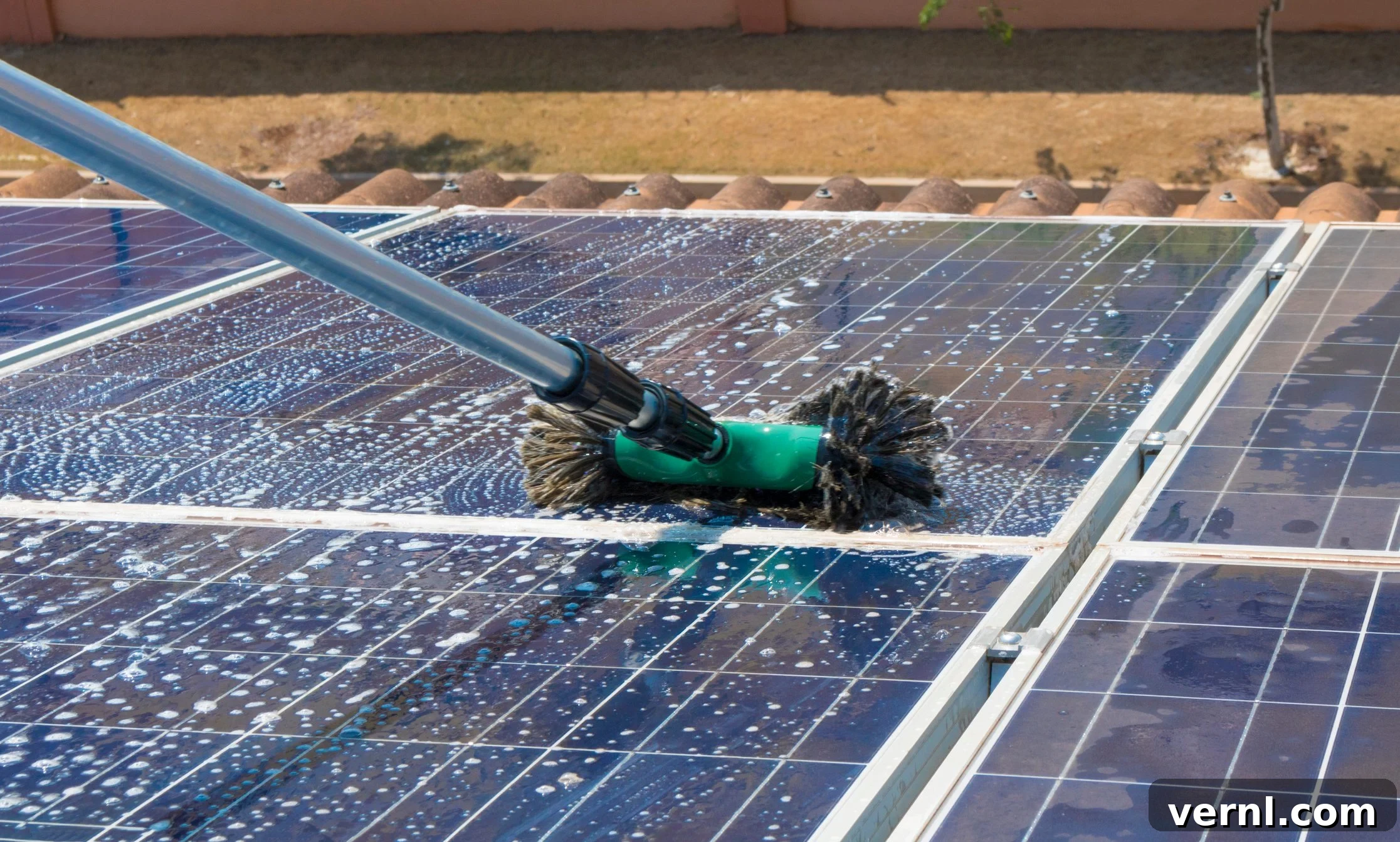
Before you begin cleaning your solar panels, prioritize safety above all else. Whether you’re working on a roof or from a ladder, thoroughly assess the safest approach for your specific setup. For roof-mounted panels, determine if it’s safer to physically climb onto the roof (ensuring proper fall protection, such as a harness and anchor points) or to work comfortably and securely from a sturdy extension ladder placed on firm, level ground. In either scenario, a brush with a long, telescoping pole will be an indispensable tool. Reaching the middle of a single panel, let alone an entire array of side-by-side panels, is practically impossible with just your arm. A telescoping pole brush allows for efficient and thorough cleaning from a safer distance. For an even more effective and efficient clean, consider investing in a water-fed brush that has an attached squeegee; while a slightly larger initial investment, it significantly streamlines the cleaning process and reduces streaking, offering a professional-grade finish.
Essential Tools and Materials for Effective Solar Panel Cleaning
- Garden hose: An expandable, lightweight hose is ideal for easy maneuverability and less hassle, especially when moving around the property or working from a ladder.
- Pole soft-bristle brush: Essential for gentle yet effective scrubbing without scratching the delicate glass surface of the panels. Ensure bristles are non-abrasive.
- Specialized glass cleaner or hard water stain remover: Specifically formulated for solar panels or tough mineral deposits. Avoid household detergents.
- Garden sprayer: For even, controlled application of cleaning solutions, ensuring economical use and effective coverage.
- Window squeegee: A professional-grade squeegee with an extension pole for achieving a perfectly streak-free, spotless finish.
- Safety gear: Always wear non-slip, rubber-soled shoes. For roof work, a safety harness, a sturdy, properly secured ladder, and potentially safety glasses are indispensable.
Step 1: Pre-Rinse and Initial Debris Removal
- Begin by thoroughly wetting the entire surface of your solar panels with clear water from your garden hose. This initial spray helps to loosen accumulated dust, dry dirt, and larger debris like leaves or pollen. An expandable hose is particularly advantageous here due to its lightweight nature and ease of carrying, especially if you’re navigating around a property or up a ladder.
- Once thoroughly wet, use your soft-bristle pole brush to gently brush away any remaining loose debris. Pay meticulous attention to the edges of each panel, particularly the bottom frame, where dirt, grime, and standing water tend to accumulate and harden into stubborn lines.
- If you’re utilizing a water-fed brush system, activate the water flow and systematically brush the panels, allowing the continuous spray to wash away loosened dirt as you work. This method combines the rinse and initial scrub efficiently.
Step 2: Apply Specialized Cleaning Solution
- Prepare your cleaning solution by pouring concentrated solar panel glass cleaner into a garden sprayer and adding water according to the product’s instructions. Ensure proper dilution for optimal effectiveness and to avoid any residue. Spray the solution evenly over the entire surface of each panel, ensuring good coverage.
- If you observe whitish, chalky deposits or stubborn mineral scales on the glass – often a sign of calcium or other mineral buildup from rain or sprinkler systems – substitute the standard glass cleaner with a dedicated hard water stain remover. These mineral deposits are typically impervious to regular glass cleaner and require specialized formulations for effective, safe removal.
- Pro Tip: Crucially, avoid using any kind of common household soap or detergent, including dish soap. Soaps can leave a thin, sticky film on the panel surface that attracts more dirt, dries unevenly, and partially blocks sunlight, thereby counteracting your cleaning efforts and potentially attracting more grime in the future. Stick to specialized solar panel cleaners or plain water.
Step 3: Thorough Scrubbing for Deep Clean
- Allow the applied cleaner to dwell on the panels for a few minutes. This allows the solution to penetrate and break down stubborn dirt, grime, organic matter like bird droppings, and environmental pollutants. Following this dwell time, use your pole brush or water-fed brush to scrub the panels again with firm but gentle pressure. At this stage, do not use additional water if you’re using a manual brush, as the cleaner needs to work concentrated on the surface.
- For particularly stubborn spots, embedded grime, or tenacious hard water stains, you may need to apply more cleaning solution and scrub repeatedly with focused attention. Persistence and gentle, consistent pressure are key to fully dislodging tough grime without damaging the panel surface.
Step 4: Comprehensive Rinse with Clean Water
- After scrubbing, thoroughly rinse the panels with clean, fresh water from your garden hose. The objective is to completely flush away all traces of the glass cleaner or stain remover, along with all the dislodged dirt and contaminants. Ensure no suds, streaks, or residue remain on the glass, as any lingering solution can attract dirt or impede light transmission.
- If you are using a water-fed brush, turn on the water flow to a steady stream and continue brushing while the clean water sprays. This combination effectively cleans and rinses simultaneously, ensuring that all loosened debris and cleaning agents are efficiently washed away, leaving a clean surface.
Step 5: Squeegee for a Streak-Free Finish (Optional but Recommended)
- For the best possible, streak-free results, use a professional window squeegee with an appropriate extension pole to dry the panels. Work systematically in a horizontal or vertical direction, starting from the top edge of the panel and making smooth, overlapping passes downwards, similar to how you would clean a large window or windshield. After each pass, ensure you wipe the squeegee blade clean to avoid reapplying dirt or leaving streaks.
- While this step is optional, particularly if you don’t possess a squeegee with an adequate extension pole or if ground-level access is difficult, it is highly recommended. Skipping the squeegee will still leave your panels clean, but some minor water spots or streaks may remain after drying, which can marginally impact efficiency and aesthetic appeal.
Beyond Cleaning: Comprehensive Solar Panel Maintenance
While cleaning is paramount for maintaining optimal output, holistic solar panel maintenance extends beyond simply washing the glass. Regularly inspecting your entire system can identify potential issues before they escalate into costly problems or significant performance dips. Perform visual checks for any signs of physical damage, such as cracks in the glass, bent frames, or loose mounting hardware, which could compromise the panel’s integrity. Pay close attention to the wiring beneath and around the panels; look for frayed wires, disconnected cables, or any signs of rodent or pest damage that could lead to electrical faults.
Furthermore, check for animal nests or significant debris accumulation under or around the panels, as these can impede crucial airflow and lead to panel overheating, which directly reduces efficiency and can shorten lifespan. Monitor your inverter, often located near your main electrical panel or directly integrated with the panels. Listen for unusual noises and regularly check any display screens for error codes or warning indicators. Many modern solar systems come with sophisticated monitoring apps or online dashboards that allow you to track real-time energy production. Familiarize yourself with these powerful tools to quickly identify any unexpected drops in performance that might indicate a problem beyond just dirty panels, such as a faulty cell or shading issue. Consistent monitoring, combined with regular cleaning and detailed visual inspections, ensures your solar power system remains a reliable, efficient, and long-lasting source of renewable energy for decades to come, maximizing its environmental benefits and your financial savings.
Conclusion: Investing in Clean Energy, One Panel at a Time
The journey to energy independence and sustainable living with solar power is incredibly rewarding, but it demands diligent care and attention. My firsthand experience with an underperforming system on California’s Central Coast powerfully illustrated that even the most ideally situated solar setup can falter and disappoint without consistent maintenance. Regular solar panel cleaning isn’t just a tedious chore; it’s a vital, non-negotiable component of maximizing your system’s efficiency, extending its operational lifespan, and ensuring a robust return on your significant investment in clean energy. By keeping your panels spotless, you ensure they can capture every ray of sunlight, translating directly into more power generation and greater savings.
Whether you opt for a hands-on DIY approach, prioritizing safety and utilizing the proper tools and techniques, or choose to enlist the expertise of professional solar cleaning services, making panel hygiene a regular part of your solar regimen is essential for peak performance. By understanding the optimal frequency, timing, and step-by-step methods for cleaning, along with embracing broader system inspections, you empower your solar panels to consistently deliver clean, reliable, and abundant renewable energy. Embrace this essential aspect of solar ownership, and you’ll not only reap the full financial and environmental benefits but also contribute meaningfully to a truly sustainable and self-sufficient energy future.