
A beautifully maintained and properly fertilized lawn significantly boosts your home’s curb appeal, reflecting a homeowner’s dedication to their property. If you’re wondering how to transform your lawn from sparse and struggling to a dense, golf-course-quality green, the answer lies in a combination of careful soil management, appropriate fertilization, and consistent, tender care. However, one of the most critical, yet often overlooked, aspects of achieving an enviable lawn is mastering the art of cutting your grass to its ideal length. This guide will walk you through everything you need to know about perfecting your lawn’s cutting height, ensuring its health, vitality, and stunning appearance throughout the seasons.
What Is the Best Height for Cutting Grass?
Every variety of grass possesses an optimal cutting height, a crucial factor often misunderstood by homeowners. A common misconception is that grass should be mowed as short as possible to prevent it from growing too tall. In reality, cutting grass too short strips the blades of their vital food source, hindering growth and weakening the plant. Taller grass blades, on the other hand, perform several essential functions: they allow the plant to photosynthesize more effectively, fostering stronger root development, and they provide natural shade to the soil. This shading action is incredibly beneficial, as it significantly slows weed growth by blocking sunlight from reaching weed seeds and reduces water loss from the soil through evaporation. This means less watering for you and a healthier environment for your grass to thrive.
While the exact ideal length of your lawn can be influenced by your local climate and specific grass type, most lawn care experts widely recommend maintaining your grass between 2 ½ inches and 3 inches long for cool-season grasses during the active growing season. For warm-season grasses, the range can vary, sometimes even lower for specific types, which we’ll discuss shortly. It’s also important to maintain a consistent length, even for the very last cut of the season, to prepare the lawn adequately for dormancy.
A fundamental principle in lawn care is the “one-third rule.” This rule states that you should never remove more than one-third of the grass blade’s total length in a single mowing session. For instance, if your grass is 4.5 inches tall, the highest you should cut it back is to 3 inches. Adhering to this rule minimizes stress on the grass plant, preventing shock and encouraging healthy, robust growth rather than forcing the plant to divert energy into recovery.
Does the Type of Grass Impact Cutting Height?
Absolutely, the type of grass growing in your lawn is a primary determinant of its optimal cutting height. While many common grass types typically fall within the 2-3 inch range for mowing, there are notable exceptions that thrive at different lengths. Understanding your specific grass variety is key to providing it with the best care.
Cool-Season Grasses
Cool-season grasses, such as Kentucky Bluegrass, Fescue (tall and fine), and Perennial Ryegrass, are prevalent in northern climates. These grasses flourish in temperatures between 60 and 75 degrees Fahrenheit. For most cool-season varieties, a cutting height of 2.5 to 3.5 inches is generally recommended. This length allows for deep root growth, enhanced drought tolerance, and better weed suppression, creating a resilient and lush turf. During periods of stress, such as hot summer spells, it’s often beneficial to slightly increase the mowing height to provide extra insulation and moisture retention for the roots.
Warm-Season Grasses
Warm-season grasses, including Bermuda grass, Zoysia grass, St. Augustine grass, and Centipede grass, are dominant in southern regions, thriving in warmer temperatures, typically between 80 and 95 degrees Fahrenheit. These grasses have different growth habits and often prefer a shorter cut.
- Bermuda Grass: Known for its fine texture and dense growth, Bermuda grass generally performs best when cut between 1 and 2 inches. Some varieties, especially those in golf course settings, can be mowed even shorter. Its vigorous growth means it can tolerate frequent, shorter cuts.
- Zoysia Grass: Similar to Bermuda grass in its love for warmth, Zoysia grass also prefers a shorter cut, typically between 1 and 2 inches. Its dense, slow-growing nature makes it highly tolerant to foot traffic but also requires consistent, precise mowing to maintain its beautiful carpet-like appearance.
- St. Augustine Grass: This broad-bladed, coarse-textured grass is popular in very warm climates. It generally requires a slightly higher cut than Bermuda or Zoysia, usually between 2 and 4 inches, to maintain its health and density.
- Centipede Grass: Often called the “lazy man’s grass” due to its low maintenance requirements, Centipede grass thrives at a height of 1.5 to 2.5 inches. It’s known for its light green color and requires less fertilizer than other warm-season grasses.
These warm-season types often require a little extra care due to their delicate nature when mowed too short or incorrectly, but when properly managed, they can produce exceptionally beautiful and resilient lawns.
How Do You Measure the Height of Grass?
Accurately measuring your lawn mower’s cutting height is crucial for consistent lawn health. You can easily do this by placing your mower on a flat, level surface, such as a driveway or walkway. Use a tape measure to determine the distance from the ground to the bottom edge of the mower blade. While the wheels themselves might have height settings, it’s the blade height that truly matters. Take measurements from multiple points if possible to ensure the deck is level.
It is equally important to know when to adjust and sharpen your lawn mower blades. Dull blades tear the grass rather than cleanly cutting it, leaving jagged edges that can turn brown, making the lawn vulnerable to diseases and pests. Sharpened blades ensure a clean cut, which promotes faster healing for the grass and a healthier, more vibrant lawn appearance. Check your blades regularly and sharpen them after every 10-12 hours of mowing, or at least once per season, depending on your lawn’s size and condition.
How Do You Change Height on a Mower?
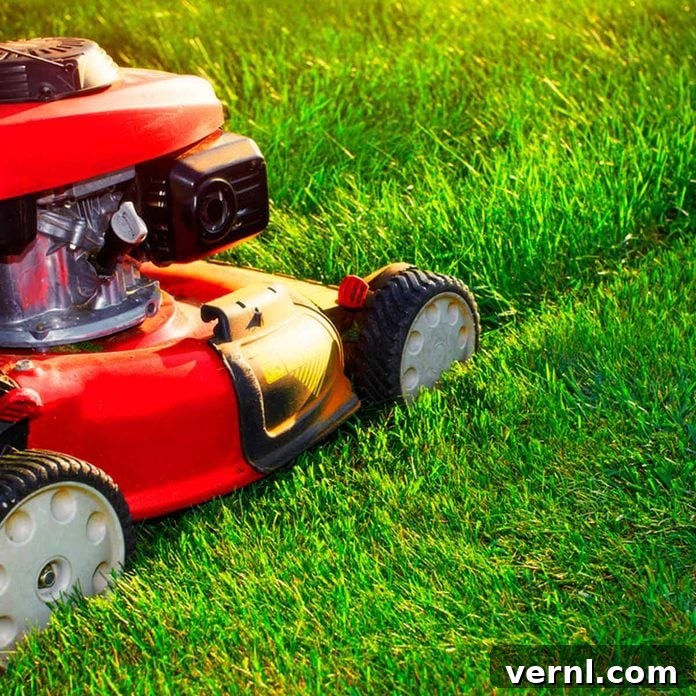
The method for changing your mower’s cutting height depends largely on the type and model of your equipment. Always consult your owner’s manual for specific instructions tailored to your particular lawn mower. This will provide the most accurate guidance and prevent any accidental damage to the machine or yourself.
Generally, lawn mowers have a few common adjustment mechanisms:
- Single-Lever Adjustment: Many modern push mowers, especially compact or walk-behind models, feature a single lever that adjusts all four wheels simultaneously. This lever is typically located at the back or side of the mower deck, making height changes quick and convenient. You simply pull the lever outward and move it to the desired notch or setting.
- Individual Wheel Levers: Most mainstream lawn mowers, including many walk-behind and some riding mowers, control cut heights by lowering or raising each wheel independently. A lever or spring-loaded pin is located next to each wheel, allowing you to reposition the wheel into different height settings on the axle. It is absolutely crucial to ensure that each wheel is set to the exact same height to guarantee an even cut across your entire lawn. An uneven deck can lead to “scalping” in certain areas and an inconsistent, patchy appearance.
- Deck Adjustments (Riding Mowers): On many riding lawn mowers and zero-turn mowers, the cutting height is adjusted via a lever or knob that raises and lowers the entire mower deck, rather than individual wheels. These systems often have a more precise range of settings, allowing for fine-tuning of the cutting height.
Always make height adjustments on a flat, stable surface with the engine off and the spark plug wire disconnected for safety. Wear gloves to protect your hands.
What Happens if You Cut Grass Too Short?
Cutting grass too short, often referred to as “scalping,” is one of the most detrimental practices for your lawn’s health and appearance. The consequences extend far beyond just an aesthetic flaw and can lead to a cascade of problems:
- Weed Invasion: Taller grass shades the soil, naturally suppressing weed seed germination. When grass is cut too short, more sunlight penetrates to the soil surface, providing ideal conditions for weed seeds to sprout and flourish. This means you’ll spend more time and effort fighting off unwanted weeds.
- Increased Drought Stress: Shorter grass blades mean less surface area for photosynthesis, which is how the plant produces energy. It also means less shade for the soil. Without adequate shade, the soil dries out much faster, requiring more frequent watering. This puts the grass under immense drought stress, leading to brown, dead patches and a weakened root system.
- Weakened Root Development: The length of the grass blade is directly correlated to the depth and strength of its root system. Shorter grass blades signal the plant to develop shallower, weaker roots, as it lacks the energy reserves to support a deep root structure. Shallow roots make the lawn less resilient to drought, heat, and disease.
- Increased Susceptibility to Pests and Diseases: A stressed, weakened lawn is an open invitation for pests and fungal diseases. When grass is scalped, it expends all its energy trying to recover, leaving it vulnerable to various pathogens and insect infestations that can quickly decimate large sections of your lawn.
- Unsightly Appearance: Beyond the health implications, cutting too short results in a patchy, uneven, and often brown lawn. The exposed soil can make your yard look neglected, drastically reducing its visual appeal and the curb appeal of your home.
- Damage to the Mower: Repeatedly mowing too short, especially on uneven terrain, can also cause damage to your lawn mower. The blades can hit exposed soil, rocks, or tree roots, leading to dulling, bending, or even breaking of blades, and potential damage to the mower’s engine or deck.
Maintaining the right cutting height is not just about aesthetics; it’s about fostering a healthy, resilient ecosystem in your garden. It promotes strong root development, natural weed control, and better drought resistance, contributing to a vibrant, green lawn that requires less intervention.
Mowing Height for Each Season
Adjusting your mower’s height according to the season is a well-kept secret to cultivating a consistently lush and green lawn. The needs of your grass change with weather patterns and temperatures, and your mowing strategy should adapt accordingly.
- Spring: As your lawn emerges from dormancy in spring, it’s typically a period of vigorous growth. For most cool-season grasses, maintain a cutting height of around 2.5 to 3 inches. This encourages tillering (new shoot growth) and helps to thicken the turf, creating a dense lawn that naturally outcompetes weeds. For warm-season grasses, you might start with a slightly lower cut to remove any winter damage and encourage new spring growth, gradually raising it as temperatures climb.
- Summer: During the hot, often dry summer months, it’s crucial to raise your mowing height. For cool-season grasses, increase the length to 3 to 3.5 inches, or even slightly higher if conditions are particularly stressful (e.g., extreme heat or drought). Taller grass provides vital shade to the soil, significantly reducing moisture evaporation and keeping the root zone cooler. This helps the grass tolerate heat stress better and conserves water. For warm-season grasses, continue with their recommended height, but be mindful of their specific drought tolerance.
- Fall: As temperatures begin to cool in the fall, grass experiences a renewed burst of growth. Gradually reduce your mowing height back to the spring recommendation (2.5 to 3 inches for cool-season grasses). This allows sunlight to reach the crown of the grass, promoting robust growth and helping it store energy for winter. Continue mowing as long as the grass is actively growing. For warm-season grasses, maintain regular mowing until growth slows.
- Late Fall/Winter Preparation (Last Cut): For your final cut of the season, typically just before your grass enters dormancy, it’s advisable to lower the height slightly, but not excessively. Aim for around 2 inches for most cool-season grasses. This shorter (but not scalped) length helps to minimize the risk of fungal diseases like snow mold, which can thrive under longer, matted grass during winter. It also prevents the grass from matting down under snow and ice. For warm-season grasses, the last cut should typically be at their normal recommended height before they go dormant.
Remember, these are general guidelines. Always observe your lawn’s specific response and adjust as needed, considering your local climate and grass type.
When Should You Stop Cutting Grass Seasonally?
There is no universal date or fixed rule for when you should stop mowing your lawn for the year. This decision is highly dependent on a variety of factors, including your geographic location, local climate, specific grass type, and prevailing weather conditions during the colder months. How long your grass will continue to grow will vary significantly across different regions.
In most temperate climates, grass will continue to grow as long as soil temperatures remain above approximately 40-50 degrees Fahrenheit. This means that while some areas might stop mowing in late October, others might continue well into November or even early December. The key indicator is the grass itself: as long as your grass is actively growing and reaching a height that warrants a cut (i.e., exceeding the one-third rule threshold if left untouched), you should continue to mow it. Don’t stop just because the calendar says it’s “fall.”
The goal of the final few cuts of the season is to prepare your lawn for dormancy, which helps it withstand the winter stresses and emerge healthier in the spring. Alongside continuing to mow as long as necessary, remember to apply a good quality winterizing fertilizer in late fall. This provides essential nutrients that the grass can store in its roots, bolstering its resilience through the colder months. Adequate moisture, even in the fall, is also crucial, so continue watering if natural rainfall is insufficient. Pay attention to local forecasts and observe your grass; it will tell you when it’s truly ready for its winter break.
Common Mistakes to Avoid When Cutting Grass
While mowing might seem like a straightforward task, many homeowners inadvertently make common mistakes that can severely compromise the health and beauty of their lawn. Avoiding these pitfalls is crucial for maintaining a vibrant and resilient turf:
- Cutting the Grass Too Much or Scalping: As discussed, removing more than one-third of the grass blade in a single pass or cutting the grass excessively short puts immense stress on the plant. This weakens the grass, stunts root development, makes it susceptible to disease and pests, and encourages weed growth by exposing the soil to more sunlight.
- Mowing Grass with Dull Blades: Dull mower blades don’t cut; they tear and shred the grass blades. This leaves ragged, brown edges that are unsightly and create open wounds on the plant, making it highly vulnerable to diseases and insect infestations. Always ensure your blades are sharp for a clean, healthy cut.
- Mowing in the Same Pattern Every Time: Repeatedly mowing in the same direction or pattern compacts the soil and can create ruts, especially on softer ground. It also causes the grass blades to lean in one direction, leading to an uneven cut and wear. Vary your mowing pattern with each cut (e.g., vertical one week, horizontal the next, then diagonal) to encourage upright growth and prevent soil compaction.
- Cutting or Mowing Wet Grass: Mowing wet grass is detrimental for several reasons. Wet grass clumps together, clogging the mower deck and leading to uneven cuts and messy discharge. The wet blades are also more prone to tearing by dull blades, and the weight of the mower can compact wet soil, damaging the root system. Furthermore, mowing wet grass can spread fungal diseases more easily. Always wait until the grass is completely dry before mowing.
- Ignoring the One-Third Rule: This fundamental rule of lawn care is often overlooked. Never remove more than one-third of the grass blade’s total height in a single mowing session. If your grass is very tall, you might need to make multiple passes over several days, lowering the deck incrementally each time, to bring it back to the desired height without shocking the plant.
- Not Changing the Grass’ Height According to the Season: Failing to adjust your mowing height seasonally can put undue stress on your lawn. Mowing too short in summer can lead to dehydration and weed invasion, while mowing too long into late fall can encourage fungal diseases. Adapting your height to the season’s specific challenges is key to year-round lawn health.
FAQ
Is it better to mow grass when it’s wet or dry?
It is unequivocally better to mow grass when it is completely dry. Mowing wet grass comes with a host of disadvantages and potential hazards for both your lawn and your equipment. When grass is wet, the blades tend to stick together, making it impossible for your mower to deliver a clean, even cut. This often results in unsightly clumps of wet clippings that smother the grass beneath, leading to dead patches. Additionally, wet grass clogs the mower deck, reduces cutting efficiency, and can even damage your lawn mower’s components over time. Furthermore, mowing wet grass can compact the soil, making it less hospitable for root growth, and can facilitate the spread of fungal diseases. For the healthiest, most aesthetically pleasing lawn, always wait until the grass is thoroughly dry before commencing any mowing activity. Once mowed, you can then proceed to water the lawn if needed, ensuring the soil gets proper hydration without the complications of wet blades.
How often should I mow my lawn?
The frequency of mowing depends on several factors, including grass type, season, growth rate, and desired lawn appearance. Generally, during peak growing seasons (spring and early fall for cool-season grasses, summer for warm-season grasses), you might need to mow once or twice a week to adhere to the one-third rule. During slower growth periods, you might mow every two weeks or even less frequently. The key is to never remove more than one-third of the grass blade’s height at a time, so monitor your lawn’s growth and adjust your mowing schedule accordingly.
Sources
- Pennington: “Recommended Mowing Heights”
- Ohio State University Extension: “Lawn Mowing”
- Michigan State University: Lawn Mowing Turf.