
The Ultimate Guide to Car Window Tinting: Enhance Your Ride with Style and Protection
Car window tinting has evolved significantly since its early days, transforming from a simple aesthetic modification into a sophisticated enhancement that offers numerous practical benefits. From its nascent beginnings with the 1958 Chevrolet Impala, which featured some of the first factory-installed tinted windows, to 3M’s pioneering, albeit flawed, introduction of window film in 1966, the technology has come a long way. Early tints were notoriously inefficient, trapping heat, bubbling unattractively, and often fading to an unsightly purple hue.
The landscape of automotive window tinting dramatically improved with the introduction of second-generation films in the early 1990s. These advancements allowed films to absorb heat more effectively, reflect a greater percentage of harmful ultraviolet (UV) and infrared (IR) rays, and maintain their integrity for longer periods. Today’s modern window tinting technology represents the pinnacle of this evolution, offering remarkable performance that vastly surpasses its predecessors.
Contemporary car window tinting solutions can reduce interior heat by up to 60 percent, effectively block an astounding 99 percent of ultraviolet radiation (UV) rays, and filter out as much as 90 percent of the sun’s infrared radiation (IR). These capabilities are not just about comfort; they have significant health implications. The Skin Cancer Foundation, for instance, strongly recommends reducing exposure to UV rays as a crucial defense against UV radiation, which is a leading cause of various skin cancers. Investing in quality window tinting, therefore, becomes a smart decision for both personal comfort and long-term health.
What Is Car Window Tinting?
At its core, car window tinting is a process designed to darken vehicle glass. This darkening reduces the Visible Light Transference (VLT), which is simply the amount of visible light that is allowed to pass through the glass. VLT is precisely measured as a percentage, indicating how much visible light (VL) penetrates the window. Consequently, a higher VLT percentage signifies that more visible light is transmitted through the glass, making the window appear lighter, while a lower VLT percentage means less visible light passes through, resulting in a darker window. Beyond aesthetics, this manipulation of light transmission offers a range of functional benefits, from increased privacy to significant heat rejection, making it a popular choice for vehicle owners seeking both style and substance.
Exploring the Different Kinds of Car Window Tinting
When considering car window tinting, it’s essential to understand that there are two primary categories: factory window tinting and aftermarket window tinting. Each method achieves a darkened glass appearance but differs significantly in its manufacturing process, application, and inherent properties.
Factory Window Tinting
Factory window tinting, often referred to simply as tinted glass or privacy glass, is an integral part of the vehicle’s manufacturing process. Unlike films applied later, this type of tint is created by adding dyes and coloring pigments directly into the raw materials during the glass manufacturing stage. This process permanently alters the glass itself, ensuring a uniform and durable tint that is embedded within the material. The specific quantity and type of additives used dictate the final color of the glass and its Visible Light Transference (VLT) percentage. Typically, factory window tinting commonly has a VLT ranging from 74 to 85 percent, providing a subtle reduction in light and heat without being excessively dark.
Tinted glass has become a standard feature on virtually all new vehicles sold in the United States and many other parts of the world. Manufacturers have recognized that by reducing the ingress of UV and IR radiation, vehicles’ air conditioning systems can operate more efficiently. This leads to a cooler vehicle interior, which in turn means the AC system requires less energy to maintain a comfortable temperature, thus using less fuel. This benefit highlights the practical engineering considerations behind factory tinting, aiming for improved passenger comfort and enhanced fuel economy.
Aftermarket Window Tint
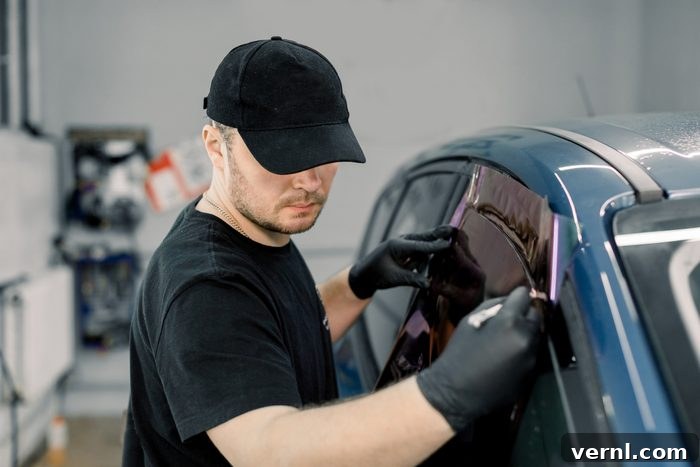
Aftermarket window tint, often simply called window tinting or window film, stands in contrast to factory tinting as it is a plastic film, typically made from high-quality polyester, applied to the inside surface of a vehicle’s windows after the car has been manufactured. Similar to factory tinting, the specific types and quantities of additives integrated into the film’s layers significantly influence the tint’s final color, its VLT, and its reflective or heat-absorbing properties. This versatility allows for a wide range of customization options that are not possible with factory-tinted glass.
Aftermarket window tint films can vary dramatically in their VLT, offering options from an extremely dark five percent (often referred to as “limo tint”), which allows virtually no light into the cabin and provides maximum privacy, to a nearly clear 90 percent VLT. This high-tech, virtually invisible nanotechnology tint, for example, can absorb more than 60 percent of total solar energy and reject over 90 percent of infrared heat without significantly altering the window’s appearance. This broad spectrum of VLTs and technological capabilities makes aftermarket tinting a highly adaptable solution for diverse needs and preferences.
Both factory and aftermarket window tinting methods ultimately contribute to reducing vehicle interior temperatures. This not only enhances passenger comfort but also plays a vital role in protecting interior surfaces, such as upholstery, dashboards, and trim, from the damaging effects of prolonged exposure to intense sunlight and harmful UV rays, helping to prevent fading, cracking, and premature wear.
Understanding the Different Types of Aftermarket Window Tints
The aftermarket window tinting market offers a diverse array of film types, each boasting unique features, characteristics, and properties designed to cater to specific needs and budgets. While their individual compositions vary, all quality window tints share fundamental attributes, including the ability to reduce or block sun glare. Structurally, most aftermarket window films are composed of at least three distinct layers, working in unison to provide their intended benefits:
- The Adhesive Layer: This is the crucial layer that binds the film securely to the interior surface of the window, ensuring a long-lasting and bubble-free application.
- The Tinting Layer(s): This central component is responsible for the film’s color, VLT, and its performance characteristics. Depending on the film type, additional sub-layers can incorporate various materials such as dyes, polymers, and specialized particles of carbon, ceramic, or metals.
- A Protective Top Coat: Positioned as the outermost layer, this durable coating is engineered to prevent chips, scratches, and abrasions, thereby extending the lifespan and maintaining the clarity of the window film.
The Most Common Types of Window Tint, From Least To Most Expensive
Choosing the right window tint involves balancing cost, performance, and aesthetic preferences. Here’s a breakdown of the most common types available, ranging from the most budget-friendly to the premium options:
- Dyed Window Tint
- Dyed window tint is the most basic and economical option, primarily chosen for its aesthetic appeal and enhanced privacy. Its construction involves a layer of dye absorbed into the film, which blocks light and creates a darker appearance. Although it offers the darkest visual effect among basic tints, its VLT does not typically impede a driver’s ability to see approaching cars or objects from the rear or sides of the vehicle, ensuring reasonable safety.
- Pros: It offers a non-reflective, matte-black finish, which many find visually appealing. It helps to reduce interior heat levels compared to untinted glass and generally does not interfere with vehicle electronics such as GPS, radio, or cellular signals. It’s also the most affordable option.
- Cons: The dye layers can degrade over time, leading to delamination (separation of layers) and a common issue of fading, often turning purple, especially with prolonged sun exposure. Improper installation can also lead to bubbling. Its heat rejection capabilities are modest compared to more advanced films.
- Metalized Window Tint
- Metalized window tint is constructed with multiple layers of film, making it noticeably thicker and more robust than dyed tints. These layers are embedded with microscopic metallic particles, which are highly effective at reflecting heat and UV radiation. This reflective property darkens the glass while actively bouncing solar energy away from the vehicle’s interior.
- Pros: Known for its exceptional durability and resistance to fading, metalized tint offers superior solar energy reflection, which significantly helps in keeping the car’s interior cooler. This enhanced heat rejection allows the air conditioner to operate more efficiently, potentially saving fuel. It also provides excellent UV blockout.
- Cons: The metallic particles give this tint a shiny, often reflective “mirror-like” appearance, which some may find less aesthetically pleasing. More significantly, these metal particles can interfere with various vehicle electronics, including cell phone signals, radio reception, GPS navigation systems, and even tire-pressure monitoring systems (TPMS) by blocking or scrambling their signals.
- Hybrid Window Tint
- Hybrid window tint represents a clever combination of the best characteristics found in both dyed and metalized window tints. It typically features multiple layers that include both dyes and a precise, thin layer of metallic particles. This sophisticated construction aims to harness the advantages of each material while mitigating their respective drawbacks.
- Pros: This type of tint excels at blocking both heat and harmful UV rays, offering a balanced performance. Crucially, the metallic content is optimized to avoid interference with electronic signals, making it a safer choice for tech-reliant drivers. It is also quite durable, resisting fading better than dyed films, and effectively reduces interior upholstery fading by blocking a broader spectrum of light.
- Cons: While offering a superior balance of features, hybrid window tint is generally more expensive than both purely dyed or metalized options, reflecting its more complex manufacturing process and enhanced performance.
- Carbon Window Tint
- Carbon window tint is engineered using hundreds of micro-layers of polymer infused with carbon particles. This advanced composition provides a distinctively deep, rich, matte-black finish that is highly sought after for its non-reflective, elegant look. The carbon particles are excellent absorbers of solar energy. This film is highly fade-resistant, ensuring its dark, uniform appearance is maintained over many years of sun exposure, and effectively reduces the harsh effects of both UV and IR radiation.
- Pros: It delivers a premium non-reflective, matte finish without the “mirror” effect of metalized tints. Carbon film does not affect electronic signals, making it ideal for modern vehicles. It offers increased privacy due to its deep dark shade and significantly helps decrease interior heat levels by absorbing a substantial amount of solar energy.
- Cons: Carbon window tint is a more technologically advanced film and consequently comes at a higher price point than dyed, metalized, or hybrid options.
- Ceramic Window Tint
- Ceramic window tint is widely regarded as the highest quality and most technologically advanced window tint available on the market today. It incorporates nonconductive and nonmetallic ceramic nanoparticles within its layers. These sophisticated ceramic particles possess unique properties that allow them to absorb and reflect sunlight remarkably efficiently, drastically reducing the total solar energy entering your car’s cabin without compromising visibility.
- Pros: Ceramic tint boasts exceptional heat rejection capabilities, absorbing up to twice as much heat as traditional dyed and even hybrid window tints. Being nonmetallic, it absolutely does not interfere with any electrical signals, ensuring perfect functionality for cell phones, GPS, radio, and keyless entry systems. It is virtually fade-resistant, offering long-lasting color stability. This tint also provides increased optical transparency, meaning drivers can see out clearly, even with a dark VLT, and significantly reduces interior upholstery fading. A notable safety benefit is its ability to make glass virtually shatter-proof by holding broken glass pieces together during an impact.
- Cons: Ceramic window tint is the most expensive option due to its advanced technology and superior performance. Additionally, while it offers incredible heat rejection and clarity, some ultra-high-performance ceramic tints, especially those with higher VLT, may not provide the same level of visual privacy as very dark dyed or carbon films, as their primary function is heat management rather than pure light blockage.
What Does It Cost to Have Vehicle Windows Tinted?
The cost of tinting your vehicle’s windows can vary widely, depending on several key factors. These include the make and model of your vehicle, the specific type of window film you choose, the number of windows you intend to tint, and crucially, whether you opt for a professional installation or decide to tackle it as a DIY project.
For professional installation, the pricing is influenced by labor costs and the complexity of the job. A basic professional installation of dyed window tint on a standard sedan, for example, typically costs around $200 to $300. However, vehicles like coupes or those with more deeply curved windows often require more specialized skills and time for proper application, which can increase the overall cost for the same type of window tint. High-performance films like carbon or ceramic tints will also naturally incur higher labor and material costs, potentially ranging from $400 to over $800 for a full vehicle, depending on the number of windows.
If you’re considering installing window tint yourself, you have a range of options that can significantly reduce the cost. Most types of window tint are readily available in pre-cut kits, which are custom-sized for specific vehicle makes and models. These kits typically cost between $60 to $350, depending on the film quality and the number of windows. Alternatively, you can purchase window tint in rolls, offering even greater cost savings for those confident in cutting and fitting the film themselves. For instance, a 100-foot-long by 24-inch-wide roll of 50 percent VLT film can often be purchased for less than $90, providing ample material for multiple vehicles or mistakes. However, attempting a DIY project requires not only patience and a steady hand but also a few inexpensive specialty tools, such as squeegees, a film cutting knife, and often a heat gun or hair dryer to properly shape the film to curved glass surfaces.
What To Consider When Choosing Window Tint Films
Selecting the ideal window tint for your vehicle involves more than just picking a shade. It requires careful consideration of your primary motivations, critical safety aspects, and, most importantly, adherence to your state’s specific laws and regulations regarding window tint percentages. An informed decision will ensure both satisfaction and legal compliance.
- Define Your Motivation: Before making a choice, clarify the main purpose of window tinting for you. Are you primarily seeking to block harmful UV rays and IR light to protect yourself and your car’s interior? Do you want to reduce sun glare for improved driving comfort? Or is your primary goal to enhance the aesthetic appeal of your ride and add an element of privacy? All these objectives can be achieved with various VLT percentages and film types. If making it difficult for people to peer inside your vehicle is a priority, then a film with a low VLT percentage is likely the right choice for you. However, balancing this with visibility is key.
- Prioritize Safety and Visibility: While darker tints offer maximum privacy and heat rejection, windows that are excessively dark can significantly impact your visibility, especially when driving at night or in adverse weather conditions. Reduced visibility can compromise safety, making it harder to spot pedestrians, other vehicles, or road hazards. The safety of you and your passengers should always be the paramount concern. It is crucial to test visibility from the inside out before committing to a very dark tint.
- Understand State Laws and Regulations: This is perhaps the most critical consideration. Window tinting laws vary dramatically from state to state, with different regulations governing the maximum VLT percentage allowed on front side windows, rear side windows, and the rear windshield. You must know the specific window tint percentage laws for your state to avoid fines and potential legal issues. Some states also grant exemptions for specific medical conditions that require protection from direct sunlight. If you believe you might qualify, check with your state’s Department of Motor Vehicles (DMV) to learn about the requirements and application process for a medical exemption.
- Account for Factory Tint: It’s important to remember that most vehicles come straight from the factory with a degree of tinted glass, particularly on rear windows and SUVs. This existing factory tint already has a specific VLT percentage. When considering adding aftermarket window tint, it’s vital to compensate for this factory VLT. The legal limit is usually for the combined VLT (factory tint + aftermarket film). If your factory glass is already at 75% VLT and your state’s legal limit is 35% VLT, you cannot add a 35% aftermarket film, as the combined effect would be much darker than legally allowed. A professional installer can help you calculate the precise film VLT needed to stay within your state’s legal limits.
The Final Word on Car Window Tinting
Car window tinting offers a compelling blend of aesthetic enhancement, improved comfort, and crucial protection against the sun’s harmful rays. However, navigating the choices and ensuring legal compliance are vital steps in achieving a satisfactory result. When you decide to move forward with tinting your vehicle, seeking out reliable vehicle window tint installers is highly recommended. Experienced professionals are well-versed in local regulations and will be able to advise you on whether your tint of choice exceeds your state’s window tinting laws. Always make it a point to ask about legal VLT limits before committing to an installation. For example, if your state permits a maximum of 25 percent VLT for front side windows, installing a 50 percent VLT film (meaning 50% of light passes through, making it lighter than 25% VLT) might seem compliant, but applying a film that results in a combined VLT of 25% or lower is what counts. Conversely, trying to install a 5% VLT film when only 25% is allowed will result in non-compliance. If caught with illegal tint, you will face a fine and be required to pay the additional cost of having the non-compliant tint professionally removed, effectively costing you double.
Furthermore, tinting the front windshield presents unique challenges and risks. Many reputable installers are reluctant to apply tint to the entire front windshield, primarily because it is exceedingly difficult to apply perfectly without flaws, and the potential for complications is high. The water and slip solution necessary for installing the film can easily drip on and under the dashboard, potentially causing severe and costly damage to sensitive electronic components and wiring. Most states also have very strict, if any, allowance for front windshield tinting, often only permitting a small strip at the very top of the windshield (AS-1 line). Prioritize safety and legal compliance, and always consult with a professional for guidance on what is permissible and practical for your specific vehicle and location.