
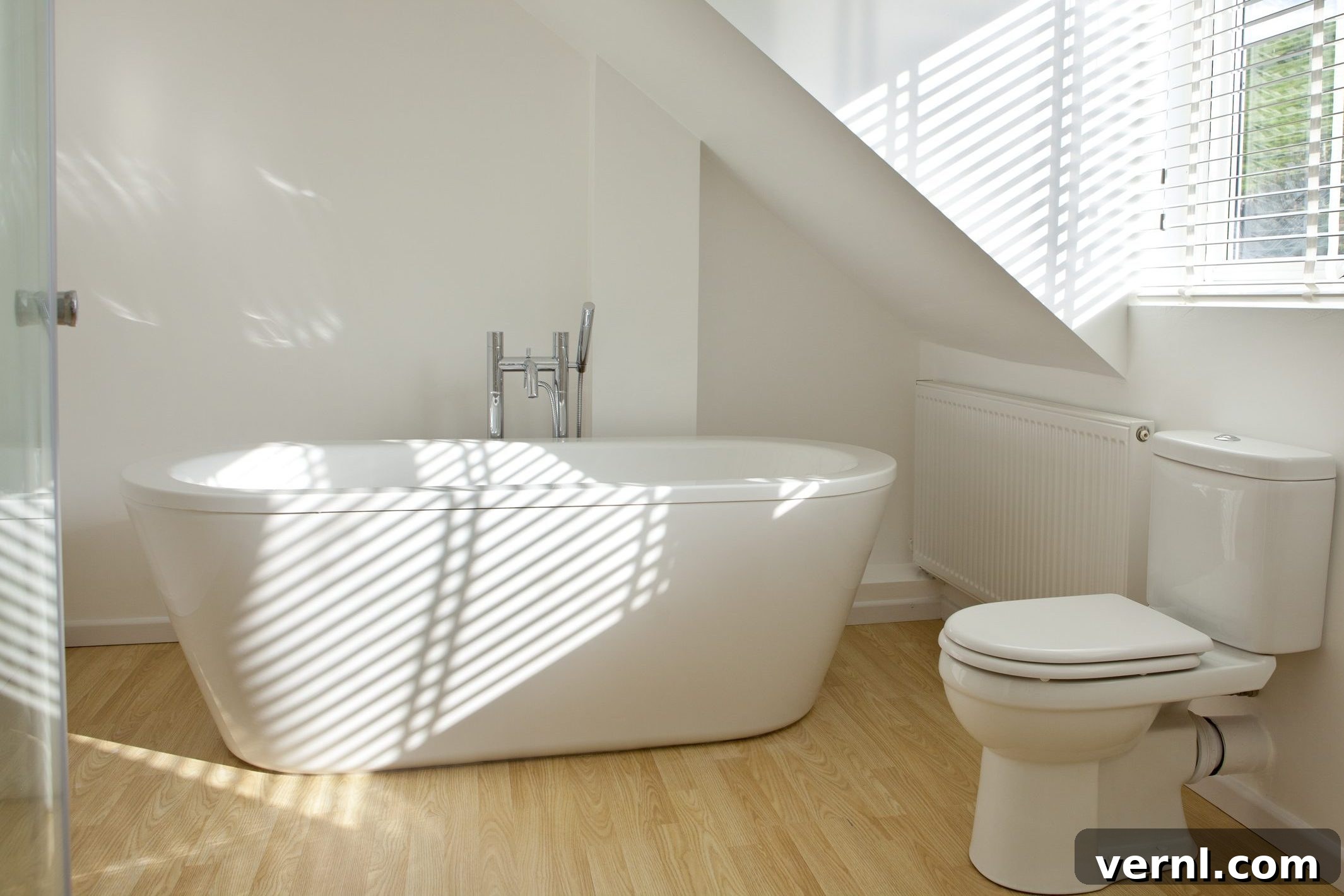
Freestanding bathtubs, in various forms, boast a rich history spanning thousands of years. Once the quintessential bathing fixture in any lavatory, exemplified by iconic clawfoot tubs, their popularity waned during the 20th century with the rise of integrated showers. However, these luxurious fixtures are now experiencing a remarkable resurgence, blending timeless elegance with modern functionality and unprecedented design choices. If you’re contemplating adding a freestanding tub to your home, here’s an in-depth guide to everything you need to know about these captivating bathroom centerpieces.
Understanding the Freestanding Bathtub
As its name suggests, a freestanding tub is a self-contained unit that stands independently, unattached to any walls. A defining characteristic is that all its sides are fully finished and aesthetically pleasing, a stark contrast to the more common alcove tub, which is typically finished on only one side for visible areas. This complete finish allows for incredible versatility in placement within your bathroom.
A freestanding tub can be positioned close to a wall, much like a traditional tub, or boldly placed in an open area of the bathroom, transforming it into a magnificent focal point. This strategic placement often capitalizes on desirable features, such as a scenic view from a window or the cozy ambiance of a fireplace. James Bruno, Chief Construction Officer at Curbio, a prominent home improvement company in Potomac, Maryland, emphasizes a crucial installation factor: “Location is dependent on access to plumbing.” He explains, “Usually the plumbing for a freestanding tub comes up through the floor.” This differs significantly from alcove tubs, where the plumbing connections typically emerge from the wall. Another key distinction of modern freestanding tubs, as Bruno points out, is their primary purpose: “They’re usually just for baths,” offering a dedicated space for relaxation rather than a dual bath/shower function.
Exploring the Diverse World of Freestanding Tubs
Today’s market offers an astonishing array of freestanding tub options, catering to virtually every taste and budget. From a wide selection of materials to an extensive range of shapes and integrated features, finding the perfect tub for your personal sanctuary has never been easier. Let’s delve into the exciting choices available.
Materials and Their Characteristics
- Fiberglass: Lightweight and affordable, fiberglass tubs are constructed by molding fiberglass sheets into the desired shape and coating them with gel resin. They are easy to install but can be less durable and prone to scratching or chipping over time.
- Acrylic: A popular choice, acrylic tubs are made from vacuum-formed acrylic sheets reinforced with fiberglass. They are lightweight, relatively inexpensive, and come in a vast array of shapes and colors. Acrylic retains heat well, is easy to clean, and resistant to chipping, making it a practical and versatile option.
- Cultured Marble: Crafted from crushed marble mixed with resin and pigments, cultured marble tubs offer a luxurious, seamless look. They are heavy, durable, and excellent at retaining heat. However, they can be more expensive and may require specific cleaning products to maintain their luster.
- Solid Surface Material: These tubs are made from a blend of acrylic polymers, natural minerals, and pigments, resulting in a non-porous, highly durable, and repairable surface. Solid surface tubs are known for their sleek, contemporary aesthetic and superior heat retention, though they typically come at a higher price point.
- Cast Iron: Revered for their classic beauty and exceptional durability, cast iron tubs are coated with an enamel finish. They are incredibly heavy but offer unparalleled heat retention, keeping bathwater warm for extended periods. Their substantial weight often necessitates floor reinforcement, but their longevity and timeless appeal make them a worthwhile investment.
- Copper: For a truly unique and luxurious statement, copper tubs stand out. They are excellent conductors of heat, quickly warming up and retaining temperature. Copper naturally possesses antimicrobial properties and develops a beautiful patina over time, adding character. These tubs are a significant investment and require specialized care.
- Stainless Steel: Offering a modern, industrial aesthetic, stainless steel tubs are lightweight, durable, and easy to clean. While not as common for residential use, they provide a distinct look and good heat retention.
- Cedar: A less common but incredibly distinctive choice, cedar tubs offer a rustic, spa-like experience. The natural wood has aromatic properties and retains heat well. These tubs require special installation and maintenance to prevent warping and ensure longevity.
Shapes and Features
- Single- or Double-Ended Tub: These designs refer to the sloped backrests for comfort. A single-ended tub features one sloped, rounded end for reclining, with the plumbing at the opposite end. A double-ended tub, on the other hand, has two sloped ends, making it comfortable for two bathers or for one person to face either direction, with the plumbing typically positioned in the middle.
- Slipper Tub: Named for its graceful shape, reminiscent of a high-heeled shoe, slipper tubs offer elegant ergonomics. A single slipper tub features one raised, sloped end, creating a comfortable, supportive backrest. A double slipper tub is raised at both ends, providing symmetrical comfort and a striking visual balance.
- Pedestal Tub: This style rests upon a distinct, often decorative, base or plinth that matches or complements the tub itself. The pedestal elevates the tub, adding a sense of grandeur and a finished look to the bathroom floor.
- Footed (Clawfoot) Tub: A classic and iconic design, footed tubs are supported by four decorative feet, with the traditional clawfoot being the most recognizable. These feet typically resemble an animal’s claw wrapped around a ball, imparting a timeless, vintage charm that remains highly sought after.
- Freestanding Corner Tub: Designed to fit neatly into a bathroom corner, these tubs are typically triangular with two straight sides. They offer a space-saving solution for smaller bathrooms while still providing the luxury and aesthetic appeal of a freestanding unit.
- Freestanding Tub with Shower: While “most bathrooms with freestanding tubs have a separate shower,” as James Bruno notes, it is possible to integrate a shower feature. This is typically achieved by installing a circular shower rod and curtains around the tub. This setup was common with clawfoot tubs before the widespread popularity of alcove showers.
- Freestanding Soaking Tub: Characterized by their exceptional depth, soaking tubs are designed for full-body immersion and ultimate relaxation. They can be round, oval, or rectangular and often feature comfortable sloped interiors. A Japanese soaking tub, for example, might have a smaller footprint but compensate with remarkable depth, often including an integrated seat, allowing water to reach shoulder level while sitting upright.
- Freestanding Jetted Tub: For an in-home hydrotherapy experience, jetted tubs incorporate powerful jets that release streams of air or water, providing a massaging effect. These tubs can offer therapeutic benefits, soothing muscles and promoting relaxation, turning your bathroom into a personal spa.
Freestanding Tub Dimensions and Sizing Considerations
While often perceived as larger, freestanding tubs come in a wide range of sizes, offering flexibility for various bathroom layouts. They are typically deeper than standard alcove tubs, providing a more immersive soaking experience, and can also be longer and wider to accommodate different preferences. However, selecting the right size is paramount. “But it’s really about matching the size of the tub with the size of your bathroom,” advises Bruno. It’s essential to ensure ample clearance around the tub for cleaning, maintenance, and comfortable access. While larger tubs can be appealing, a tub that overwhelms the space can make a bathroom feel cramped. Bruno also cautions, “Be careful that you don’t go too narrow in the width — 32 inches is usually good” as a minimum for comfortable use. Standard lengths typically range from 55 to 72 inches, with widths from 28 to 36 inches, and depths often exceeding 18 inches, providing a truly luxurious soak.
Key Considerations When Selecting Your Freestanding Tub
Once you’ve determined that your bathroom has the requisite space for a freestanding tub, the shopping process begins. To ensure you make an informed decision that meets both your aesthetic desires and practical needs, carefully consider the following factors:
- Cost: “This is key,” states Bruno. “There’s no use looking at a tub that’s over your budget.” Freestanding tubs vary significantly in price, influenced by material, brand, features (like jets), and design complexity. Factor in not just the tub’s purchase price but also potential installation costs, which can be higher due to specialized plumbing and floor requirements.
- Material: Beyond aesthetics, the material choice impacts durability, heat retention, weight, and maintenance. Acrylic is versatile and affordable, while cast iron offers timeless luxury and excellent heat retention but is very heavy. Solid surface materials provide a sleek, modern look and are easy to repair. Carefully weigh the pros and cons of each material against your priorities for maintenance, longevity, and appearance.
- Dimensions and Bathroom Layout: Let the overall size and layout of your bathroom guide your tub selection. Measure carefully, ensuring there’s adequate space around the tub for comfort, cleaning, and movement. Consider door clearances and the placement of other fixtures. A tub that fits proportionally within the room will enhance the entire bathroom’s design.
- Plumbing Location and Faucet Style: As freestanding tubs require floor-mounted plumbing, confirm your bathroom’s existing setup or plan for necessary plumbing modifications. This also dictates the style of faucet you’ll need – typically a freestanding, floor-mounted faucet, which can be a significant design element itself and contributes to the overall cost.
- Shape and Style: The tub’s shape and style should harmonize with your bathroom’s overall design aesthetic, whether it’s modern, traditional, minimalist, or rustic. A sleek oval tub might suit a contemporary space, while a clawfoot tub perfectly complements a vintage or farmhouse theme. Consider how the tub’s form will contribute to the visual flow and beauty of your bathroom.
- Weight and Floor Support: This is a critical safety consideration, particularly for heavier materials like cast iron or cultured marble. “And weight means when the tub is filled with water,” Bruno emphasizes, accounting for both the tub’s weight and the substantial weight of the water plus an occupant. Ensure your bathroom floor can adequately support this combined load. In older homes or with very heavy tubs, floor reinforcement may be necessary, adding to the installation complexity and cost.
- Heat Retention: Different materials retain heat more effectively than others. If long, hot soaks are a priority, materials like cast iron, solid surface, or even copper are excellent choices. Acrylic also offers good heat retention at a more accessible price point.
- Ease of Cleaning: While beautiful, freestanding tubs can sometimes be challenging to clean around, especially if placed close to a wall. Ensure there’s enough space to reach all sides. Non-porous materials like acrylic and solid surface are generally easier to maintain.
Weighing the Advantages and Disadvantages of Freestanding Tubs
Is a freestanding tub an automatic, worthwhile investment for your home? Not necessarily. Like any significant home upgrade, it comes with a unique set of advantages and disadvantages that warrant careful consideration.
Pros of a Freestanding Tub
- Enhanced Luxury and Aesthetic Appeal: A freestanding tub instantly elevates the visual appeal of a bathroom, serving as a sculptural statement piece. It exudes a sense of luxury, sophistication, and spa-like tranquility, significantly enhancing the overall ambiance and potentially increasing home value.
- Deep, Relaxing Soaking Experience: Designed primarily for bathing, freestanding tubs are typically deeper than standard alcove models. This allows for full-body immersion, providing a more comfortable and deeply relaxing soak, which can be incredibly therapeutic after a long day.
- Abundance of Style and Material Options: With a vast selection of materials (acrylic, cast iron, copper, solid surface) and styles (slipper, clawfoot, modern minimalist), homeowners have unparalleled freedom to customize their bathroom’s look and feel, ensuring the tub perfectly matches their personal taste.
- Jetted Tubs for an At-Home Spa Experience: Many freestanding models offer integrated jets, transforming a simple bath into a hydrotherapy session. These jetted tubs provide a soothing massage, relief for sore muscles, and a luxurious spa-like experience right in the comfort of your home.
Cons of a Freestanding Tub
- Higher Installation Costs: Freestanding tubs generally cost more to install compared to alcove tubs. This is due to the higher price of the tubs themselves, the need for specialized floor-mounted faucets, and potentially complex plumbing modifications. As Bruno illustrates, “In the D.C. area, a normal alcove tub including a new faucet costs between $1,300 and $1,900 to install, not including a new tile surround. A freestanding tub and a floor-mounted faucet can cost between $3,000 and $4,500.”
- Plumbing Relocation and Complexity: If you’re remodeling an existing bathroom that previously had an alcove tub, you’ll likely need to move the plumbing from the wall to the middle of the bathroom floor. This can be a labor-intensive and expensive process, requiring flooring to be opened up and new pipes to be run, potentially involving significant construction.
- Challenges with Cleaning and Maintenance: While visually appealing, the space behind and around a freestanding tub can be difficult to access and clean thoroughly, especially if it’s placed close to a wall. Splashing can also be more pronounced without integrated walls, requiring more frequent floor cleaning.
- Requires a Separate Shower (Typically): Unless you opt for the less common and often less aesthetically integrated shower curtain apparatus (common with older clawfoot tubs), you’ll almost certainly need a separate shower enclosure in your bathroom. This means a freestanding tub often requires more overall bathroom space for its placement and a dedicated shower.
- Difficulty Installing Grab Bars: For individuals with mobility issues, installing grab bars directly onto a freestanding tub is often impossible due to its design and material. This can create safety concerns for users who need assistance entering and exiting the tub, making it less accessible for some households.
- Lack of Integrated Storage: Unlike alcove tubs that often have ledges for toiletries or can be combined with shower niches, freestanding tubs offer no inherent storage solutions. You’ll need to consider separate bath caddies, shelves, or small tables to keep bathing essentials within reach.
Ultimately, the decision to incorporate a freestanding tub into your bathroom depends on your personal preferences, budget, and the practicalities of your space. By carefully weighing these factors, you can determine if this luxurious and stylish fixture is the perfect addition to your home.