
Choosing the Right Hammer Claws: Straight vs. Curved for Optimal Performance
In the vast world of construction and DIY, few tools are as iconic and essential as the hammer. While its primary function – driving nails – seems straightforward, the design nuances of a hammer, particularly its claw, play a critical role in its effectiveness and suitability for various tasks. Understanding the distinct advantages and disadvantages of straight and curved hammer claws is paramount for both seasoned professionals and enthusiastic hobbyists aiming to optimize their toolkit and project outcomes.
This comprehensive guide delves deep into the mechanics, applications, and specific considerations for each claw type, helping you make an informed decision that elevates your craftsmanship and efficiency on the job site or in your workshop.
The Fundamental Role of Hammer Claws
Before exploring the specific types, it’s worth appreciating the ingenuity behind the hammer claw. Designed primarily for extracting nails, the claw transforms simple leverage into a powerful mechanism. A well-designed claw can remove stubbornly embedded fasteners with relative ease, minimize damage to surrounding materials, and even assist in prying apart wood or other construction elements. However, not all claws are created equal, and their geometry dictates their optimal use.
Straight Claws: Power, Precision, and Prying Prowess
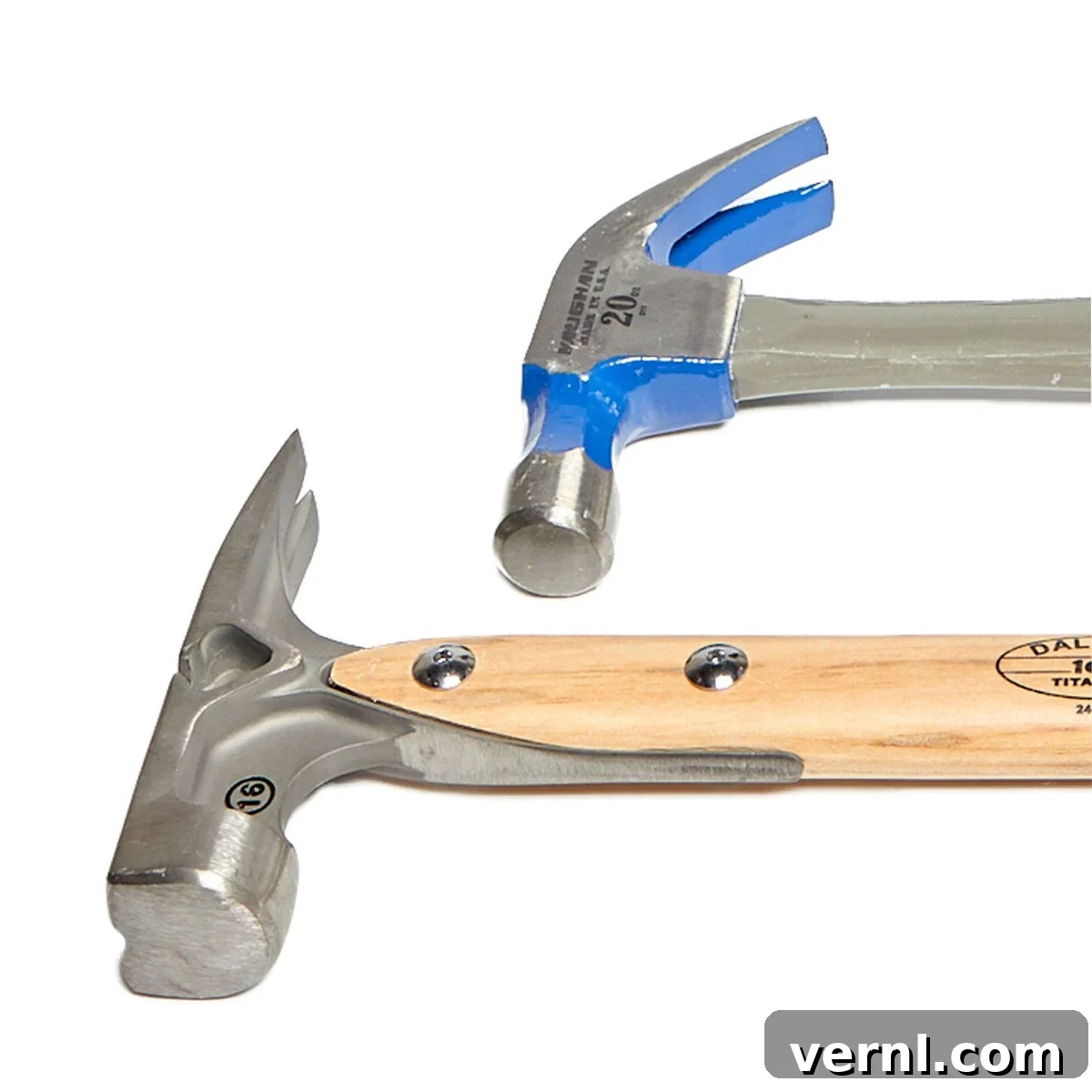
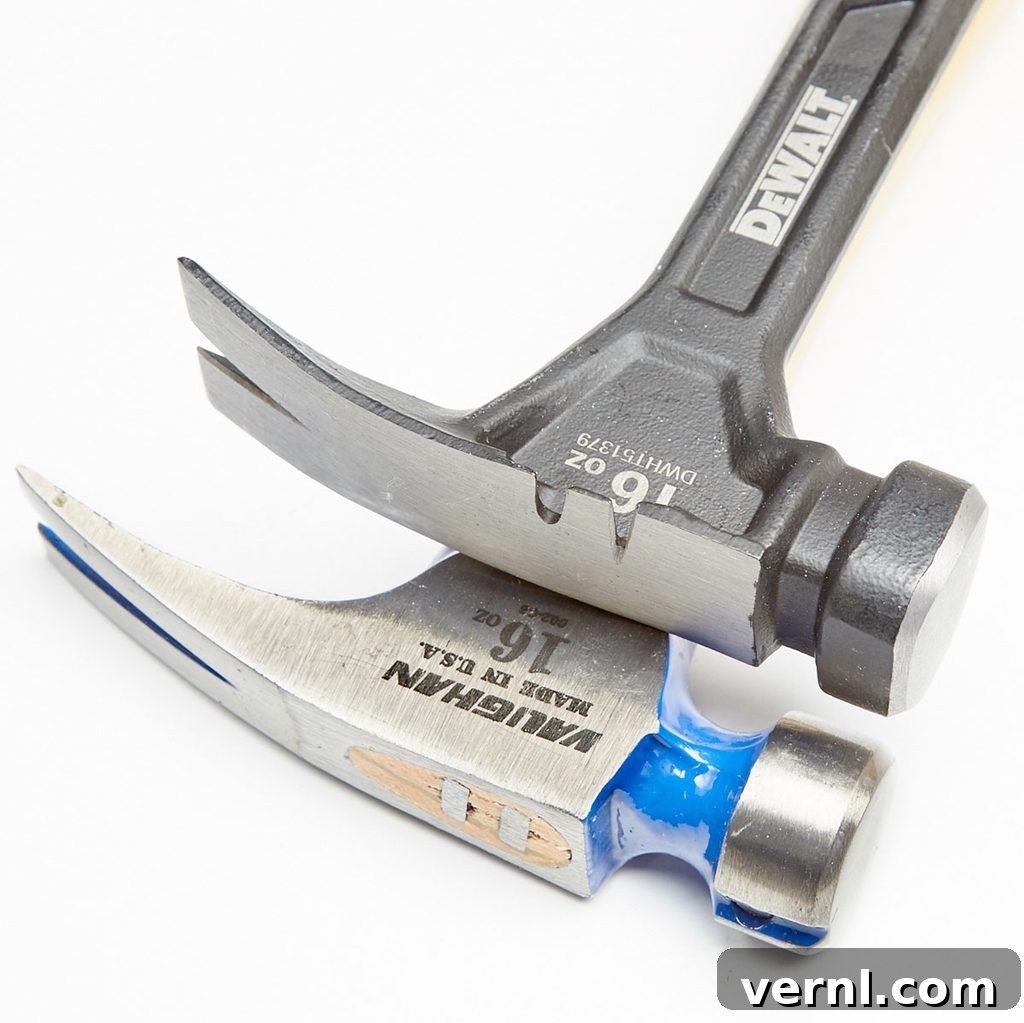
Often referred to as ‘rip claws’ or ‘framing claws,’ straight claws extend almost linearly from the hammer head. Their design prioritizes maximum leverage and robust prying capability, making them the preferred choice for heavy-duty construction and demolition tasks. The straight profile allows them to be driven deeper into wood or between materials, providing superior mechanical advantage for splitting, ripping, and prying.
Understanding Straight Claw Variations: Short vs. Long
Even within the category of straight claws, there are subtle yet significant differences. The length and thickness of the tines can greatly influence their performance:
- Long, Sharper Claws: These claws are typically thinner and come to a sharper point. Their keen edge allows them to pierce into wood effectively, making them excellent for tasks like grabbing hold of a stubborn piece of lumber or starting a pry. The increased length also provides slightly more reach for deeper embedded nails or wider prying gaps. However, their slender profile can be a drawback in extreme demolition scenarios. Under immense stress or when prying very dense materials, these thinner claws are more susceptible to bending or even breaking off, especially if they are made from lower-grade steel or not properly tempered. They demand a degree of finesse despite their robust appearance.
- Short, Rugged Claws: In contrast, shorter straight claws are generally thicker and more robust. While they might not pierce wood as effortlessly as their longer counterparts, their sheer bulk makes them incredibly durable. These are the workhorses for serious demolition and heavy prying. They are far less likely to bend or break when subjected to extreme force, making them ideal for pulling large, deeply set nails, ripping apart palettes, or deconstructing frameworks. Their compact nature also contributes to the overall balance and resilience of the hammer, often found on heavy framing hammers designed for relentless daily use.
Key Advantages of Straight Claw Hammers:
- Superior Leverage: The straighter angle provides unparalleled leverage for prying apart wood, pulling large nails, or even dismantling structures. This is particularly crucial in framing and demolition where significant force is often required.
- Demolition Efficiency: Ideal for breaking apart materials, splitting wood, and general demolition work. The robust nature of many straight claws can withstand considerable abuse.
- Versatile Prying: Beyond nail pulling, straight claws are excellent for prying up floorboards, removing trim, or separating joined lumber. They can often be wedged into tighter gaps thanks to their linear profile.
- Framing Favorite: The go-to choice for framers who need a hammer that can drive nails quickly and effectively, while also providing the prying power to adjust lumber or remove misdriven fasteners.
Potential Drawbacks of Straight Claw Hammers:
- Less Nail-Pulling Finesse: While powerful, the straight angle can sometimes make it harder to extract smaller, delicate nails without damaging the surrounding material, especially in finish carpentry. A spacer is often needed to get proper leverage on shorter nails.
- Risk of Snagging: The pronounced, linear projection of the claw can get hung up on obstacles, clothing, or scaffolding when working in confined spaces, potentially causing snags or even minor injuries.
- Weight and Balance: Straight claw hammers, especially framing hammers, tend to be heavier, which can lead to increased fatigue during prolonged use, though this weight aids in driving power.
Curved Claws: Finesse, Safety, and Everyday Utility
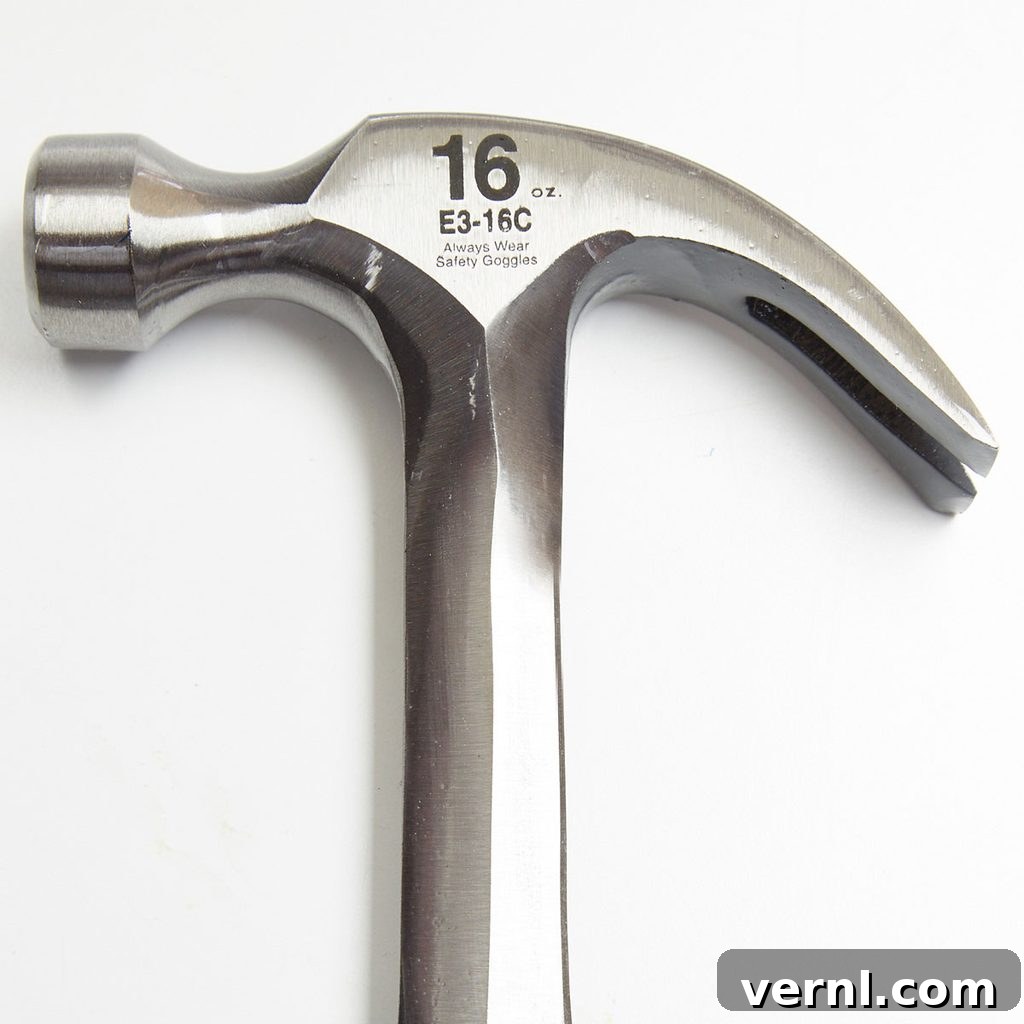
Curved claws, the more traditional and universally recognized hammer claw design, feature a distinct curve that arcs gracefully from the hammer head. This design is optimized for efficient and precise nail extraction, making them a staple in general carpentry, finish work, and household repairs.
Key Advantages of Curved Claw Hammers:
- Effortless Nail Extraction: The primary strength of a curved claw lies in its superior mechanical advantage for pulling nails. The arc allows for a smooth, rolling motion that lifts the nail straight up and out with minimal effort, often eliminating the need for a spacer block, even with shorter nails.
- Reduced Snagging Risk: The less pronounced projection of the curved claw means it’s far less likely to get caught on clothing, other tools, or surrounding structures when maneuvering in tight spaces, significantly enhancing safety and ease of movement. This is particularly valuable when working on ladders or in cramped corners.
- Gentler on Surfaces: The design distributes pressure more evenly around the nail head during extraction, reducing the likelihood of marring or damaging the surrounding wood surface. This is a crucial advantage for finish carpentry where aesthetics are paramount.
- Versatile for General Use: Curved claw hammers are excellent all-rounders, suitable for a wide array of tasks from hanging pictures and assembling furniture to light-duty framing and general repairs around the house. They are often lighter and more balanced for sustained, less impactful work.
Potential Drawbacks of Curved Claw Hammers:
- Limited Prying Power: While capable of some light prying, the curved design offers significantly less leverage than a straight claw. Attempting heavy prying with a curved claw can damage the hammer or be ineffective for stubborn materials.
- Less Effective for Demolition: Not designed for heavy demolition work. The curve can impede the ability to split wood or break apart materials as efficiently as a straight claw.
- May Require More Force for Stubborn Nails: For deeply embedded or extremely large nails, a curved claw might require more brute force, or a more precise technique, compared to the sheer leverage offered by a straight claw.
Straight vs. Curved: Making the Right Choice
The decision between a straight and curved claw hammer ultimately boils down to your primary needs and the type of work you most frequently undertake. Here’s a quick comparative overview to help solidify your understanding:
| Feature | Straight Claw Hammer | Curved Claw Hammer |
|---|---|---|
| Primary Use | Framing, Demolition, Heavy Prying, Ripping | Finish Carpentry, General Household Repairs, Nail Extraction |
| Leverage for Prying | Excellent (Maximized) | Good (Limited) |
| Nail Pulling Efficiency | Good for large/deep nails (often needs spacer for optimal leverage) | Excellent for most nails (smooth roll, less need for spacer) |
| Demolition Capability | Superior (Splitting, breaking) | Limited (Not designed for heavy demo) |
| Safety in Tight Spaces | Lower (Prone to snagging due to protrusion) | Higher (Less likely to snag) |
| Impact on Work Surface | Higher risk of marring during delicate extraction or prying | Lower risk of marring, gentler on finishes |
| Common Weight Range | Heavier (20-32 oz typically) | Lighter (16-24 oz typically) |
Choosing Your Hammer:
- For Professional Framers and Demolition Crews: A straight claw hammer is almost indispensable. Its power, leverage, and durability align perfectly with the demands of rough carpentry and deconstruction. Consider having both long and short straight claws for varied prying tasks.
- For Finish Carpenters and Cabinet Makers: A curved claw hammer is the clear winner. Its ability to extract nails cleanly and safely without damaging delicate surfaces is critical for high-quality finished work.
- For DIY Enthusiasts and Homeowners: If you’re buying your first hammer, a general-purpose curved claw hammer (typically 16-20 oz) is often the most versatile choice. It handles most common household tasks effectively. However, if you embark on larger renovation or construction projects, adding a straight claw hammer to your arsenal will be a wise investment.
- The “One Hammer” Dilemma: If you truly can only own one hammer, a mid-weight curved claw (e.g., 20 oz) offers the best compromise for general utility, albeit with limitations in heavy-duty prying.
Beyond the Claws: Other Hammer Considerations
While the claw type is a primary consideration, a hammer’s overall performance is also influenced by other factors that impact comfort, efficiency, and safety:
- Head Weight: Heavier heads (22-32 oz) deliver more force per strike, ideal for driving large nails quickly, which is common in framing. Lighter heads (16-20 oz) offer better control and reduce fatigue during prolonged finish work or light tasks.
- Handle Material: Handles can be made from traditional wood (offering good shock absorption and classic feel), durable fiberglass (excellent for vibration dampening and weather resistance), or solid steel (for maximum durability and transfer of power, often with a rubberized grip).
- Grip: A comfortable, anti-slip grip is crucial for control and safety, especially during prolonged use. Look for ergonomic designs that conform to your hand and reduce the risk of strain or accidental slips.
- Anti-Vibration Features: Some modern hammers incorporate advanced anti-vibration technology in their handles or head design to minimize shock transfer to the user’s arm. This significantly reduces fatigue and the risk of repetitive strain injuries, particularly important for professionals who use hammers extensively.
- Face Type: The striking face of the hammer can be either smooth or milled (also known as a waffle face). Smooth faces are essential for finish work to prevent marring or leaving impressions on wood. Milled faces, with their textured pattern, are designed for framing to prevent glancing blows and increase nail-driving efficiency, though they will leave marks on the wood surface.
Conclusion: The Right Tool for Every Task
The seemingly simple hammer reveals a surprising depth of design when you consider its claw. Whether you prioritize brute force and demolition capability or delicate nail extraction and precision, there’s a hammer claw specifically engineered for your needs. By understanding the distinct characteristics of straight and curved claws, along with their variations, you empower yourself to select the optimal tool for every task, enhancing both the quality of your work and your efficiency.
Investing in the right hammer isn’t just about owning a tool; it’s about investing in the success and safety of your projects. So, take a moment to assess your typical work, and choose the claw that truly fits your craft, ensuring your toolkit is as effective and versatile as possible.
For our complete guide to all things hammers, click here.
Disclosure: This post is brought to you by The Construction Pro Tips editors, who aim to highlight products and services you might find interesting. If you buy them, we get a small share of the revenue from the sale from our commerce partners. We frequently receive products free of charge from manufacturers to test. This does not drive our decision as to whether or not a product is featured or recommended. We welcome your feedback. Have something you think we should know about? Contact us.