
Purchasing a home can be one of life’s most significant investments, but it comes with its share of potential pitfalls. Among the most financially daunting and environmentally risky moves a home buyer can make is acquiring a property that harbors an underground oil tank (UOT). The implications of such a purchase extend far beyond mere inconvenience; they can lead to substantial financial burdens and long-term environmental liabilities. The complete decommissioning of an underground oil tank and the subsequent remediation efforts, especially if a leak is discovered or soil contamination is present, can skyrocket into the tens, or even hundreds, of thousands of dollars. We’re talking upwards of $100,000 or more if a tank ruptures and necessitates extensive cleanup, a cost that your standard homeowners insurance policy may explicitly exclude.
Fortunately, the prevalence of properties featuring underground oil tanks is steadily declining. Heightened awareness regarding environmental risks and the proactive efforts of homeowners to either remove or properly fill these tanks are contributing to this trend. However, should a property you’re considering still possess one of these antiquated heating relics, understanding its potential impact and the necessary precautions is paramount. This comprehensive guide will equip you with the knowledge needed to navigate the complexities associated with underground oil tanks, ensuring you make an informed decision and protect your investment.
Understanding the Risks and Realities of Underground Oil Tanks
About Underground Oil Tanks: A Historical Perspective and Modern Concerns
Before the widespread expansion of natural gas lines became a staple in residential areas, particularly from the 1930s through the 1980s, fuel oil served as the primary heating source for countless homes. Furnaces in these residences relied on a steady supply of fuel oil, which was typically stored in large tanks. Due to their considerable size, the desire to maintain aesthetically pleasing landscapes, and concerns over vandalism or theft of valuable fuel, these tanks were frequently buried beneath the ground. This practice, while convenient at the time, has created a legacy of environmental and financial hazards for future property owners, as noted by real estate attorney and investor Rajeh Saadeh.
The inherent design and age of these buried tanks render them vulnerable to degradation. Over time, a confluence of factors such as corrosive soil conditions, galvanic reactions, physical damage from ground shifts, or even manufacturing defects can compromise the structural integrity of the tank walls. Saadeh warns, “Over time, and due to a variety of factors like corrosion or damage, tanks can wear out to the point where the walls are compromised and permit oil therein to contaminate soil and groundwater.” This insidious leakage can lead to a cascade of negative environmental consequences, impacting not only the immediate property but also adjacent lands and local water sources, posing significant risks to the health and safety of both people and wildlife. Understanding the potential for soil contamination in your yard is crucial for any homeowner. The cost and complexity of rectifying such contamination can be astronomical, making early detection and proactive measures essential.
Detecting the Hidden Threat: How to Know if Your Home Has an Underground Oil Tank
Identifying the presence of an underground oil tank can be challenging, especially if it has been out of use for many years or improperly decommissioned. However, there are several key indicators and investigative methods that can reveal this hidden hazard.
Typically, if an underground oil tank exists, it will not be more than 10 to 15 feet from the home’s foundation, often near the basement or utility area where the furnace was originally located. The most overt signs are visible pipes protruding from the ground. As Saadeh explains, “Underground oil tanks have two pipes: a fill pipe that is used to fill the tank with oil, and a vent pipe.” The fill pipe is usually larger in diameter and has a cap, while the vent pipe is smaller and allows air to escape as the tank is filled, preventing pressure buildup.
However, the absence of these visible pipes does not automatically confirm the absence of a tank. In many instances, especially when a heating system has been converted to natural gas, the fill and vent pipes may have been cut below ground level or removed entirely, leaving the tank abandoned in place. This scenario, known as “abandonment in place” or “inactive tank,” is particularly problematic because the tank still poses a risk of leakage without any visible indication. In such cases, Saadeh strongly recommends conducting a specialized test known as a tank sweep. “A tank removal company performs the test by running a metal detector with ground penetrating radar, which identifies the presence of an oil tank,” he says. This sophisticated equipment can detect metallic objects and disturbances underground, providing a clear picture of what lies beneath. A professional tank sweep typically costs around $250 to $500, a small investment considering the potential costs of an undetected leaking tank. It’s important to stress that a recreational metal detector is inadequate for this task; only hire experienced professionals with the correct equipment and expertise.
Another common indicator of a potential underground oil tank involves the basement. Look for capped-off copper pipes that once would have delivered fuel oil to the furnace. If these pipes run outside the home and disappear underground, and are clearly not part of the plumbing pipes or other utilities, they could be a strong clue pointing to a buried tank. Additionally, consulting historical property records, old building permits, or even speaking with long-term neighbors can sometimes reveal crucial information about the property’s past heating systems.
Do I Need to Have the Oil Tank Removed? A Comprehensive Look at the Implications
The decision of whether to remove an underground oil tank, especially if it’s no longer in use, is multifaceted and subject to varying regulations and significant considerations. While some states have stringent laws mandating the removal of inactive tanks regardless of leakage, others offer more lenient guidelines, or even none at all. However, regardless of local regulations, most environmental and real estate experts strongly advise removal for several compelling reasons:
- Persistent Risk of Leakage and Contamination: Any property utilizing oil-fueled heat carries a baseline risk of a ruptured tank. However, underground oil tanks are inherently more susceptible to catastrophic failure and subsequent massive contamination compared to modern above-ground storage tanks. Deborah Goldberg, an insurance expert with Expert Insurance Reviews, emphasizes this danger: “Leaks can contaminate the soil around your house and even your drinking water.” This contamination can spread through the soil via capillary action and into groundwater tables, affecting not only your property but also neighboring lands and communal water sources. Remediation for such incidents often involves extensive soil excavation, specialized treatment, and ongoing monitoring, with costs easily exceeding $100,000, particularly if groundwater is impacted.
- Significant Resale Hardships and Reduced Property Value: The presence of an underground oil tank, even if seemingly inactive and structurally sound, can be a major deterrent for potential buyers. Many Realtors proactively advise clients to remove underground oil tanks before listing their property. The vast majority of modern buyers are unwilling to assume the financial and environmental liability associated with an old UOT. Furthermore, even if a buyer is amenable, securing financing can become a significant hurdle. Many banks and mortgage lenders will not offer mortgages for properties with an underground oil tank, viewing it as an unacceptable risk to their collateral. This can severely limit the pool of potential buyers and force sellers to accept lower offers or remove the tank anyway. Obtaining a “no further action” letter from environmental agencies after proper removal and testing is often crucial for a smooth sale.
- Inadequate Homeowners Insurance Coverage and Potential Personal Liability: Goldberg points out a critical flaw: homeowners insurance policies rarely cover the substantial costs associated with a leaking underground oil tank. Many standard policies contain explicit “pollution exclusion” clauses, effectively absolving the insurer of responsibility for cleanup and remediation expenses. Some policies may even have specific disclaimers concerning underground oil tanks. If you opt to retain an underground oil tank, it is imperative to investigate separate tank insurance policies. These specialized policies are designed to provide coverage in the event of a leak, but they come with their own premiums, deductibles, and limitations. More importantly, without proper insurance, the property owner could be held personally liable for environmental damage, which can lead to staggering legal fees and cleanup costs.
- Profound Environmental Damage and Public Health Risks: The environmental ramifications of a leaking underground oil tank extend far beyond the property line. A slow, undetected leak can spread from the immediate soil into adjacent ground water systems, eventually reaching surface water bodies like streams, rivers, and lakes. This widespread contamination impacts not just your home, but also surrounding properties, local ecosystems, and even public water supplies. Ground water contaminated with fuel oil may become unusable for irrigation, potentially harming nearby agricultural operations. A leak that reaches surface water can devastate aquatic wildlife, compromise recreational areas, and pose significant public health risks, necessitating costly and complex regional cleanup efforts for which the property owner may ultimately be held responsible.
The Oil Tank Removal Process: What to Expect and Why Professional Expertise is Key
The process of removing an underground oil tank is a complex operation that demands adherence to specific safety protocols, environmental regulations, and local ordinances. State and municipal laws regarding oil tank removal vary considerably. For instance, Michigan mandates that all underground oil tanks be properly closed and removed within one year of their last use. Similarly, New York is a strong proponent of underground tank removal, emphasizing proactive measures to protect groundwater.
Due to the inherent dangers and regulatory intricacies, oil tank removal should always be performed by a professional, licensed, and insured tank removal service. These specialized companies employ trained technicians who possess the necessary knowledge, experience, and specialized equipment to safely handle hazardous materials and excavation. Furthermore, removing an underground oil tank almost invariably requires obtaining special permits from local authorities, which a reputable professional service will manage.
The removal process typically unfolds in several critical stages:
- Pre-Removal Assessment and Permitting: Before any excavation begins, the contractor will conduct a thorough site assessment, locate underground utilities (e.g., gas, water, sewer, electrical lines) to prevent accidental damage, and obtain all necessary permits from local fire departments, environmental agencies, and building departments. This ensures compliance with all safety and environmental regulations.
- Emptying and Cleaning the Tank: The first physical step is to completely empty the tank of any remaining fuel oil. This residual oil, along with any sludge that has accumulated over the years, is considered hazardous waste and must be professionally pumped out and transported to an approved facility for proper disposal. Once empty, the tank is thoroughly cleaned and purged of flammable vapors using inert gases (like nitrogen or carbon dioxide) to prevent explosions during excavation.
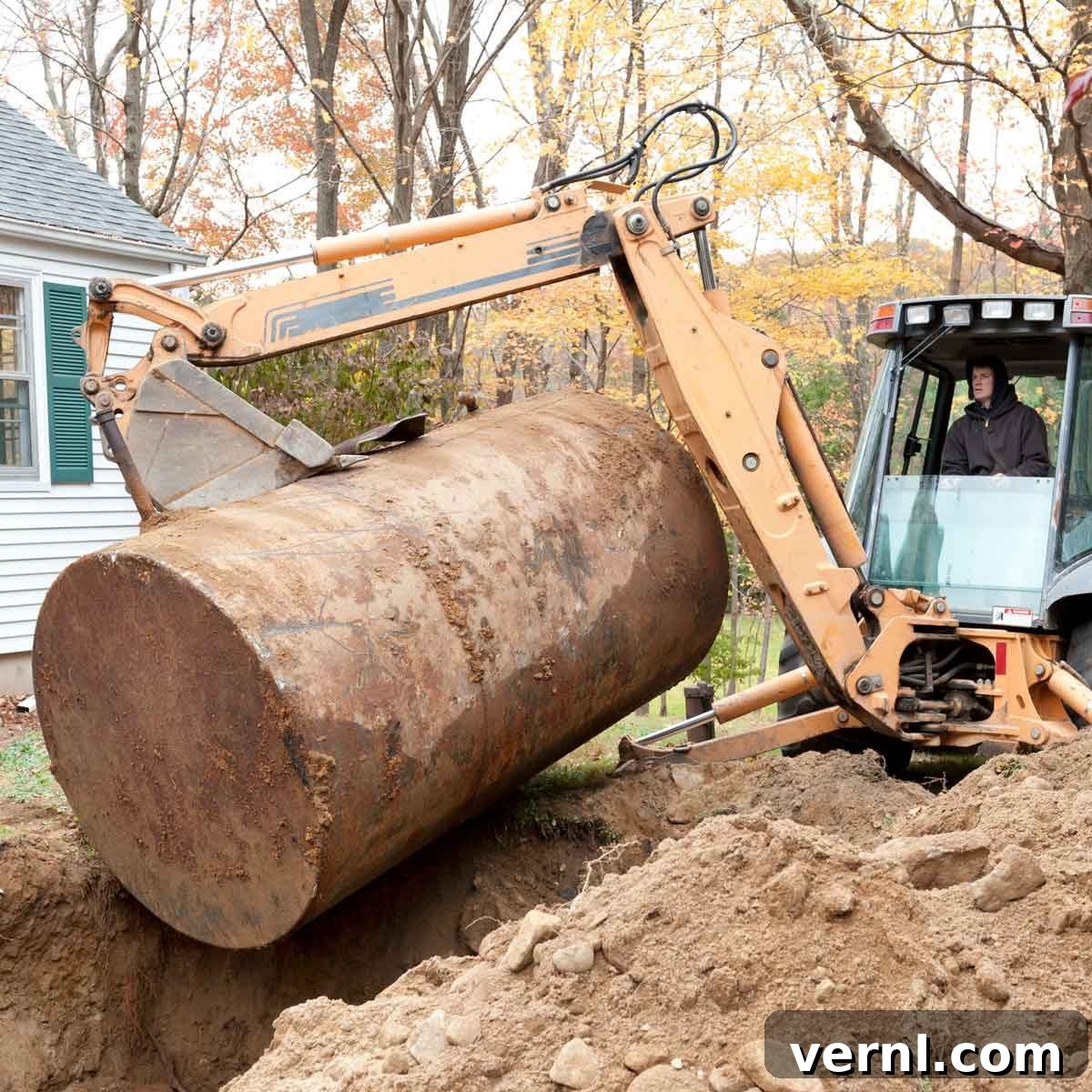
- Excavation and Tank Removal: With the tank safely inerted, the surrounding soil is carefully excavated using heavy machinery. Once fully exposed, the tank is visually inspected for any obvious signs of corrosion, holes, or leaks. It is then carefully lifted from the ground and loaded onto a specialized trailer for transport off the property.
- Soil Sampling and Testing: This is perhaps the most critical stage. After the tank is removed, environmental soil samples are taken from the bottom and sides of the excavation pit. These samples are sent to an accredited laboratory for analysis to determine if any fuel oil contamination is present. If the tests come back clean, a “no further action” letter or a similar closure report can be obtained from the relevant environmental agency, certifying the site is free of contamination.
- Backfilling and Disposal: If no contamination is found, the excavation pit is backfilled with clean soil. The removed tank is then transported to an approved facility where it is properly disposed of, often through recycling or repurposing, adhering to strict environmental guidelines. If contamination is detected, the remediation process will commence, involving the excavation and removal of contaminated soil, and potentially groundwater treatment, which significantly increases the project’s scope and cost.
The cost of oil tank removal is highly variable, depending on numerous factors such as the tank’s size, its location on the property (e.g., ease of access for excavation equipment), the type of soil, and crucially, whether any contamination is discovered. While a straightforward removal without leaks typically ranges from $1,000 to $5,000, if soil or groundwater remediation is required, these costs can easily escalate into the tens of thousands, or even hundreds of thousands of dollars, underscoring the importance of thorough pre-purchase due diligence. Protecting your home and the environment begins with understanding and addressing the hidden threat of an underground oil tank.