
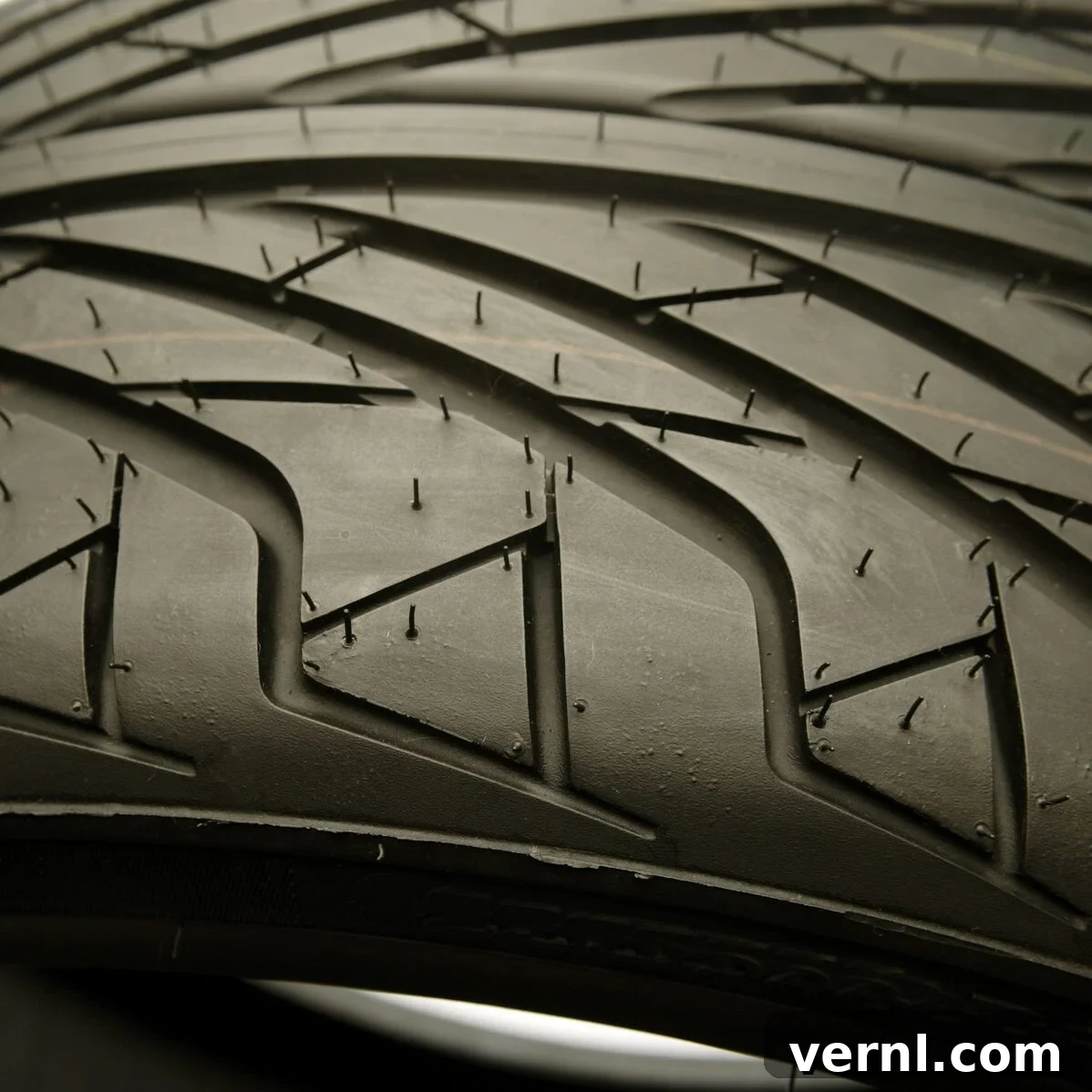
Decoding Tire Hairs: What Those Little Rubber Strands Tell You About Your Tires
The journey of car ownership, much like life itself, is often marked by predictable milestones – from joyous first drives to the inevitable need for maintenance and, eventually, replacement parts. One such common yet often perplexing occurrence is the moment you realize your trusty vehicle needs a new set of tires. Whether you’re browsing a dealership lot or simply inspecting your current set, you might notice peculiar little rubber hairs protruding from the tire surface. These tiny strands, seemingly insignificant, hold fascinating clues about a tire’s history and manufacturing process. I recently experienced this firsthand when my reliable Subaru required a new engine, prompting a search for a new-to-me vehicle. Strolling through rows of pristine cars, I couldn’t help but admire the flawless paint and impeccably clean windows. The tires on these new vehicles were a sight to behold – gleaming jet-black, each adorned with numerous delicate hairs extending from both the treads and sidewalls, an unmistakable hallmark of brand-new rubber. Ultimately, I chose a used car whose tires displayed hairs only on the sidewalls, indicating they weren’t new but had been carefully reconditioned. This observation immediately sparked a question: what exactly are these rubber hairs, and why are they so prevalent on new tires?
In this comprehensive guide, we’ll delve into the intriguing world of tire hairs, also known as vent spews. We’ll explore their origins in the intricate manufacturing process, discuss their significance as indicators of tire age and condition, and provide essential insights into tire care and maintenance. By understanding these subtle features, you’ll be better equipped to make informed decisions about your tires, ensuring both their longevity and your safety on the road.
Understanding Tire Hairs: The Science Behind Vent Spews
While some might colloquially refer to these delicate rubber strands as “whiskers” or “nubs,” the tire industry employs more precise and descriptive terminology. You might hear them called “sprue nubs,” “gate marks,” or “nippers.” However, the most accurate and widely recognized term is “vent spews.” This name provides a direct insight into their formation, revealing them not as a decorative feature but as a necessary byproduct of tire production.
The creation of a modern tire is a sophisticated engineering marvel, involving a precise blend of rubber compounds, synthetic fibers, and steel belts, all meticulously assembled and molded under extreme heat and pressure. The crucial step where vent spews come into play is during the vulcanization process, where the tire’s components are fused together in a massive, specialized mold. For the molten rubber to flawlessly fill every intricate cavity of this mold and form the tire’s distinct tread pattern and sidewall details, all air trapped within the mold must be expelled. If air pockets were to remain, they would lead to imperfections, weak spots, and an uneven, misshapen tire – significantly compromising its performance and safety.
To prevent this, tire molds are engineered with thousands of tiny, strategically placed vent holes, often no wider than a needle. As the heated, semi-liquid rubber compound is injected into the mold and subjected to immense pressure, it expands to fill every available space. This pressure also forces a small amount of the rubber to “spew” or extrude through these tiny vent holes, effectively pushing out any trapped air. Once the rubber cools and hardens, these extruded bits remain attached, forming the characteristic thin, hair-like projections we see on new tires. These vent spews are tangible evidence that the tire underwent a successful molding process, free from air bubbles and ensuring structural integrity.
The Universal Presence of Vent Spews on New Tires
A common question among consumers is whether all new tires exhibit these rubber hairs. The answer is unequivocally yes. Given that vent spews are an integral and unavoidable part of the modern tire manufacturing process, virtually every brand-new tire you encounter will have them. Their presence is a tell-tale sign that the tire has recently emerged from the factory and has not yet seen significant road use.
While vent spews are universal on new tires, their appearance can vary. The number of hairs, their thickness, and their exact configuration are influenced by several factors, including the tire’s design, the specific rubber compound used, the type of mold, and the manufacturing precision of different tire brands. Some tires might feature very fine, numerous hairs, while others might have fewer but slightly thicker spews. These variations are purely aesthetic and do not impact the tire’s quality, performance, or safety. What remains consistent is their presence, serving as a reliable visual cue of a tire’s fresh-from-the-factory status.
To Remove or Not to Remove: Addressing Tire Hairs
Upon noticing these peculiar rubber hairs, many car owners instinctively wonder if they should be removed. The simple answer is: you can, but there’s absolutely no functional necessity to do so. Vent spews are purely cosmetic and have no bearing on a tire’s performance, handling characteristics, or safety. They are designed to wear off naturally as the tire is driven, making removal an optional aesthetic choice rather than a critical maintenance task.
If you’re a meticulous car enthusiast who values a pristine vehicle appearance, or if you simply find the hairs visually bothersome, you can certainly remove them. The safest and most recommended method is to gently pull them off with your fingers. They are usually quite pliable and detach easily without damaging the tire’s surface. Alternatively, some people might consider using a sharp object, such as a utility knife or scissors, to snip them off. However, extreme caution should be exercised if opting for this method. Poking or cutting too deeply into the tire’s rubber could potentially compromise its integrity or leave unsightly marks. Therefore, manual removal with your fingers remains the preferred and safest approach.
The Lifespan of Tire Hairs: What Their Disappearance Means
The duration for which tire hairs remain visible offers interesting insights into a tire’s operational history. Their longevity varies significantly depending on their location on the tire:
Hairs on the Tire Treads: A Quick Indicator of Newness
Vent spews located on the tire’s treads – the part that makes direct contact with the road – are the most ephemeral. These hairs will wear off relatively quickly, typically after only about 100 miles of driving. This rapid disappearance makes them an excellent and reliable indicator that a tire is truly brand-new and has seen minimal, if any, road use. If you’re purchasing tires and notice hairs predominantly on the sidewalls but not on the treads, it suggests the tires have been driven, even if for a short period, or have undergone some form of reconditioning.
Hairs on the Tire Sidewall: Enduring Evidence
In contrast, vent spews on the tire’s sidewall – the vertical portion that faces outwards and does not typically touch the road – can persist for a considerably longer period. Since this part of the tire is not subjected to constant friction and abrasion from the road surface, these hairs are far more durable. However, their longevity is not absolute and can be influenced by various driving conditions and environmental factors. For instance, frequent driving in harsh wintry conditions involving snow, ice, or road salt, or navigating unpaved dirt roads, can accelerate their wear due to increased abrasion. Even under such challenging circumstances, it’s not uncommon for sidewall hairs to remain visible for thousands of miles, potentially lasting 10,000 to 20,000 miles or even more. Their gradual disappearance over time is a subtle indicator of a tire that has accumulated significant mileage.
Beyond the Hairs: Comprehensive Tire Condition Assessment
While the presence or absence of tire hairs can offer initial clues about a tire’s history, it’s crucial to understand that their wear is not the primary determinant of a tire’s overall health or its need for replacement. The wearing off of hairs from the treads simply signifies that the tire is no longer in its “brand-new, zero-mileage” state. When sidewall hairs eventually disappear, it indicates that the tire has experienced a considerable amount of service. However, neither scenario alone dictates immediate replacement.
A comprehensive tire inspection involves looking for more critical and reliable indicators of wear and damage that directly impact safety and performance. Regularly inspecting your tires is paramount for safe driving and extending their lifespan. Here are the key factors to monitor:
- Visible Cracks in the Sidewall: Any cracks, large or small, are a serious warning sign. They indicate that the rubber is deteriorating, potentially compromising the tire’s structural integrity and increasing the risk of a blowout.
- Exposed Steel Bands or Cords: If you can see the internal steel belts or fabric cords through the rubber, the tire is severely worn and poses an immediate danger. This requires urgent replacement.
- Shallow Treads: Adequate tread depth is essential for grip, especially in wet conditions. Worn treads reduce traction and increase stopping distances. You can easily check tread depth using a simple method, like the penny test as a gauge. Insert a penny into a tread groove with Lincoln’s head upside down and facing you. If you can see all of Lincoln’s head, your treads are too shallow, and it’s time for new tires. Many modern tires also feature built-in tread wear indicators – small rubber bars flush with the tread surface when it’s time for replacement.
- Unevenly Worn Treads: If parts of the tread are significantly more worn than others, it can indicate problems with tire pressure, wheel alignment, or suspension issues. Uneven wear not only shortens tire life but also affects handling and stability. Regular tire rotations can help promote even wear.
- Bulges or Blisters: Any outward bulges on the sidewall or tread indicate internal damage to the tire’s structure, often caused by impact. These are extremely dangerous and necessitate immediate tire replacement.
- Vibrations and Noises: Persistent vibrations while driving, especially at certain speeds, or unusual noises coming from the tires, can signal balance issues, alignment problems, or internal tire damage.
- Tire Age: Even if a tire looks good, rubber deteriorates over time. Most manufacturers recommend replacing tires after 6-10 years, regardless of mileage, as the rubber compounds can become brittle.
FAQ: Common Questions About Tire Appearance and Maintenance
How do dealers make used tires look new or “reconditioned”?
When purchasing a used vehicle, it’s common for dealers to present it in the best possible condition, and that often includes making the tires look pristine. This practice, referred to as reconditioning, primarily focuses on aesthetics rather than structural repair or alteration. Dealers typically employ specific cleaning and dressing products to achieve that showroom shine.
One critical aspect of this process is avoiding harmful chemicals. As motorsport enthusiast and tire expert Danny Stanford-Ravet explains, “I’d recommend against using disinfectants on tires outside specialized contexts.” He elaborates, “If you’re simply doing a generic car clean, you’re better off using good old soap and water or commercial tire cleaning products.” He acknowledges that there are exceptions: “That said, there are circumstances where disinfectants are used for good reason! For example, in safari-style zoo parks, disinfectant puddles are used to help prevent the spread of diseases between different areas.” This highlights that for general tire cleaning and aesthetic enhancement, harsh chemicals are unnecessary and potentially damaging.
Instead, dealerships and professional detailers often rely on specialized tire dressings. When I inquired with David Rivera, a service agent at the Subaru dealership, about their secret to perfectly presented tires, he simply stated, “We just use Tire Bright.” Products like “Tire Bright” are typically silicone-based or water-based dressings that clean the rubber, restore its deep black color, and provide a glossy or satin finish. These products create a protective layer that repels dirt and enhances the tire’s visual appeal, giving it a ‘like-new’ look without altering its fundamental structure or safety characteristics. It’s important to differentiate this cosmetic reconditioning from retreading, which involves applying new tread to a worn tire casing, a practice primarily for commercial vehicles and not typically for passenger cars.
Can I use household cleaners on my tires?
While some mild household soaps can be used with plenty of water, it’s generally best to stick to products specifically designed for tires. Many household cleaners can contain harsh chemicals, solvents, or petroleum distillates that can dry out the rubber, causing it to crack or prematurely age. Always opt for pH-neutral car wash soap or dedicated tire cleaners for the safest and most effective results.
Do tire hairs affect tire balance?
No, tire hairs are extremely lightweight and small. They have absolutely no impact on the tire’s balance. Any perceived imbalance would be due to other factors, such as improper wheel balancing, uneven wear, or structural damage to the tire or wheel itself.
What are the benefits of proper tire maintenance beyond appearance?
Beyond looking good, proper tire maintenance significantly contributes to safety, performance, and economy. Well-maintained tires ensure optimal grip and handling, reduce stopping distances, improve fuel efficiency, and extend the lifespan of your tires, saving you money in the long run. Regular checks for pressure, alignment, and wear can prevent dangerous situations and costly repairs.
How often should I check my tire pressure?
It’s recommended to check your tire pressure at least once a month and before long trips. Proper tire pressure is crucial for safety, fuel efficiency, and even tread wear. You’ll find the recommended pressure for your vehicle on a sticker typically located on the driver’s side door jamb, in your owner’s manual, or sometimes on the glove compartment door.
About the Experts
- Danny Stanford-Ravet is a distinguished specialist in tire engineering and the founder of Racing Owl Motorsport, a UK-based firm dedicated to high-performance automotive solutions. His expertise provides invaluable insights into tire technology and maintenance practices.
- David Rivera serves as a knowledgeable service representative at Santa Cruz Subaru in Santa Cruz, CA. With extensive experience in vehicle service, David offers practical perspectives on daily automotive care and dealership practices.