
Reduce… reuse… recycle. This timeless mantra has resonated with us for decades, gaining significant traction in the 1970s as global conservation efforts began to flourish. Over the years, these three fundamental Rs have evolved into a collective call to action, urging us to minimize waste and mitigate the profound impact of mass consumerism on our planet’s delicate ecosystems. While the intricate system of recycling continues to be an imperfect yet evolving endeavor, it undeniably represents a noble campaign. At its very least, it has successfully cultivated a broader public awareness regarding the urgent need to reduce waste in our daily lives and adopt more sustainable practices.
However, despite this heightened awareness, the specific guidelines governing what can and cannot be recycled often remain shrouded in confusion. A common question frequently arises: “Am I even allowed to recycle this particular item?” Some materials, such as Styrofoam or bubble wrap, are unequivocally unsuitable for your residential recycling bin. Yet, other items present a more ambiguous challenge, leaving conscientious individuals scratching their heads.
Among the items that frequently spark bewilderment for potential recyclers, the classic takeaway pizza box stands out. Is its corrugated cardboard packaging a perfect candidate for the recycling stream, or do lingering traces of grease and melted cheese automatically disqualify it? This enduring question has led to countless debates and misunderstandings. In an effort to provide much-needed clarity and empower consumers to recycle more effectively, let’s thoroughly investigate the recyclability of pizza boxes and understand the nuances involved.
Can You Recycle Pizza Boxes? Unraveling the Grease and Cheese Mystery
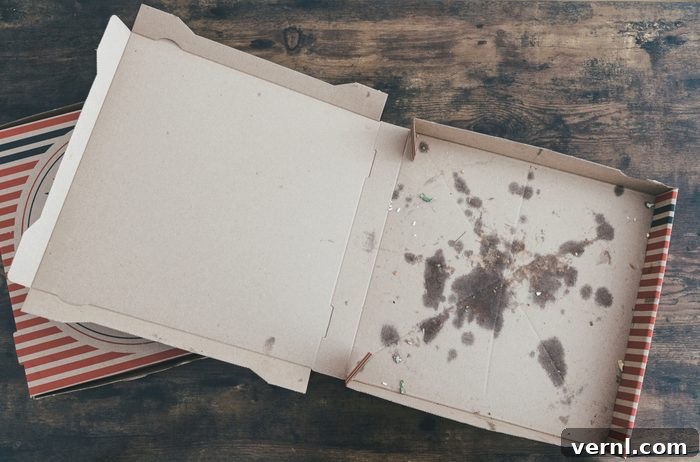
The ultimate answer to whether you can recycle a pizza box often boils down to a single, critical factor: the extent of its cleanliness. Most pizza boxes are meticulously crafted from corrugated cardboard, a material that, in its pristine state, is exceptionally recyclable and can be efficiently transformed into a diverse array of new paper products. If your pizza box is predominantly clean, free from significant food debris, and contains only minimal grease stains, you can confidently place it into your designated recycling bin. This is the ideal scenario for successful cardboard recycling.
Historically, the conventional wisdom dictated that any item containing food waste was unsuitable for recycling. A grease-soaked pizza box, therefore, seemed like a quintessential example of an item destined for the landfill. The logic behind this was sound: food contaminants, especially oils and grease, can compromise the integrity of paper fibers during the pulping process, making it difficult or impossible to produce high-quality recycled paper. These contaminants can also lead to mold growth and pest issues at recycling facilities, increasing processing costs and reducing the overall efficiency of the recycling stream.
However, the landscape of recycling is continually evolving, driven by technological advancements and a deeper understanding of material science. Fortunately for the eco-conscious pizza consumer, the American Forest & Paper Association (AFPA), a leading authority in the paper industry, provided crucial clarification on this very issue back in 2023. Their updated guidance offered a welcome change, affirming that cardboard pizza boxes can indeed be recycled, even if they bear some minor food remnants.
“Grease and cheese in an amount typically found on pizza boxes are not an issue for the recycling process,” stated the AFPA, alleviating widespread confusion. “Simply remove leftover pizza and place the box in the recycling bin.” This statement reflects an important shift, acknowledging that modern recycling technologies are more robust and can effectively process cardboard with light contamination. The key distinction here lies between minor residue and substantial food waste.
While the AFPA’s statement provides a robust national guideline, it is always prudent to consult your local recycling rules and regulations. Recycling infrastructure and processing capabilities can vary significantly from one municipality to another. Some highly specialized facilities might have advanced systems that can handle more contamination, while others might adhere to stricter guidelines. Nevertheless, you can generally rest assured that a light film of grease or a few specks of cheese will not prevent your pizza box from being recycled and reborn, perhaps as a new cereal box, a tissue box, or another valuable paper product. This small but significant clarification empowers millions of individuals to divert a common household item from landfills.
Understanding Why Minor Contamination is Now Acceptable
The shift in guidance regarding pizza box recycling isn’t just a random decision; it’s a testament to improvements within the recycling industry. Modern recycling mills utilize advanced pulping processes that are more efficient at separating paper fibers from minor contaminants like grease and cheese. The intense heat and chemical treatments involved in breaking down cardboard can often neutralize or remove these small amounts of food residue without compromising the quality of the recycled pulp. This technological progress means that small, typical pizza stains are no longer the systemic threat they once were perceived to be.
Furthermore, the focus has shifted towards the overall volume and type of contamination. While a significant amount of uneaten pizza, crusts, or large globs of cheese can still pose a problem by increasing moisture content, attracting pests, and requiring extra sorting efforts, the minimal grease and melted cheese that naturally adheres to the cardboard is now considered manageable within many processing systems. This pragmatic approach acknowledges the reality of consumer behavior and aims to maximize the recovery of valuable materials rather than discarding them due to minor imperfections.
Best Practices for Recycling Your Pizza Box
To ensure your pizza box has the best chance of being recycled and contributes positively to the circular economy, follow these simple yet effective steps:
- Remove Large Food Scraps: Before placing the box in the recycling bin, scrape off any significant pieces of leftover pizza, crusts, or large clumps of cheese. These are still considered food waste and should be disposed of in your compost bin (if applicable) or general waste.
- Assess the Contamination: Examine the box. If only certain parts (like the lid) are relatively clean, you might consider tearing off the heavily soiled bottom or side panels and discarding them, recycling only the cleaner sections. This maximizes the recoverable material.
- Flatten the Box: Always flatten your pizza box before placing it in the recycling bin. This saves valuable space in your bin and in the collection trucks, making the recycling process more efficient.
- Check for Liners or Inserts: Some pizza boxes may come with wax paper or plastic liners. These are typically not recyclable and should be removed and thrown in the trash before recycling the cardboard box itself.
- When in Doubt, Check Local Guidelines: As emphasized, while national guidelines are helpful, local rules are paramount. Many municipalities have dedicated websites or recycling guides that explicitly state their policies on pizza boxes. A quick search for “[Your City/County] recycling pizza boxes” can provide definitive answers.
The Broader Impact of Proper Recycling: Beyond the Pizza Box
The saga of the pizza box serves as a microcosm for the larger challenges and triumphs of modern recycling. Understanding and correctly applying recycling rules for even a single item like a pizza box contributes significantly to a more efficient and effective waste management system. But why is this so critical?
- Resource Conservation: Recycling cardboard saves trees. For every ton of recycled paper, approximately 17 trees are spared. It also reduces the need for virgin materials, conserving natural resources like water and energy used in manufacturing new products.
- Reduced Landfill Waste: Every item recycled is an item diverted from overflowing landfills. Landfills contribute to greenhouse gas emissions and can leach harmful chemicals into the environment. Minimizing waste is essential for environmental health.
- Energy Savings: Producing goods from recycled materials often requires significantly less energy than producing them from raw materials. For instance, making paper from recycled pulp consumes about 60-70% less energy than making it from virgin timber.
- Economic Benefits: The recycling industry creates jobs, from collection and sorting to processing and manufacturing. It stimulates local economies and fosters innovation in sustainable technologies.
- Reduced Pollution: Recycling helps reduce air and water pollution associated with manufacturing from raw materials. It lessens the impact of industrial processes on ecosystems and human health.
The Pitfalls of “Wishcycling”
While the intent behind recycling is always positive, a common problem known as “wishcycling” can inadvertently hinder the process. Wishcycling occurs when individuals place items in the recycling bin that they *hope* are recyclable, even if they aren’t sure. This well-intentioned but misguided practice can lead to significant problems:
- Contamination: Non-recyclable items contaminate batches of otherwise good recyclables, making them harder or impossible to process. This can lead to entire loads being sent to landfills.
- Increased Costs: Recycling facilities have to spend more time, energy, and resources sorting out contaminants, increasing operational costs.
- Damage to Machinery: Certain non-recyclables, like plastic bags or hoses, can get tangled in sorting machinery, causing breakdowns and costly repairs.
The updated guidance on pizza boxes helps reduce wishcycling by providing clear rules, ensuring that genuinely recyclable items are processed correctly, and minimizing the adverse effects of uncertainty.
Staying Informed: Your Role in a Sustainable Future
The journey towards a truly sustainable future relies on collective action and informed decisions. The evolving guidelines for items like pizza boxes highlight the dynamic nature of waste management and the importance of staying updated. As consumers, our responsibility extends beyond merely putting items in a bin; it involves understanding the nuances and contributing to an effective system.
By making conscious efforts to learn and follow local recycling protocols, we empower the recycling infrastructure to function optimally. Every correctly recycled item, be it a clean pizza box, a plastic bottle, or an aluminum can, contributes to reducing our ecological footprint, conserving precious resources, and fostering a healthier planet for generations to come. The path to sustainability is paved with small, informed actions taken by many.
Source:
- American Forest & Paper Association, “Let’s Set the Record Straight: Pizza Boxes Are Recyclable?” 2023