
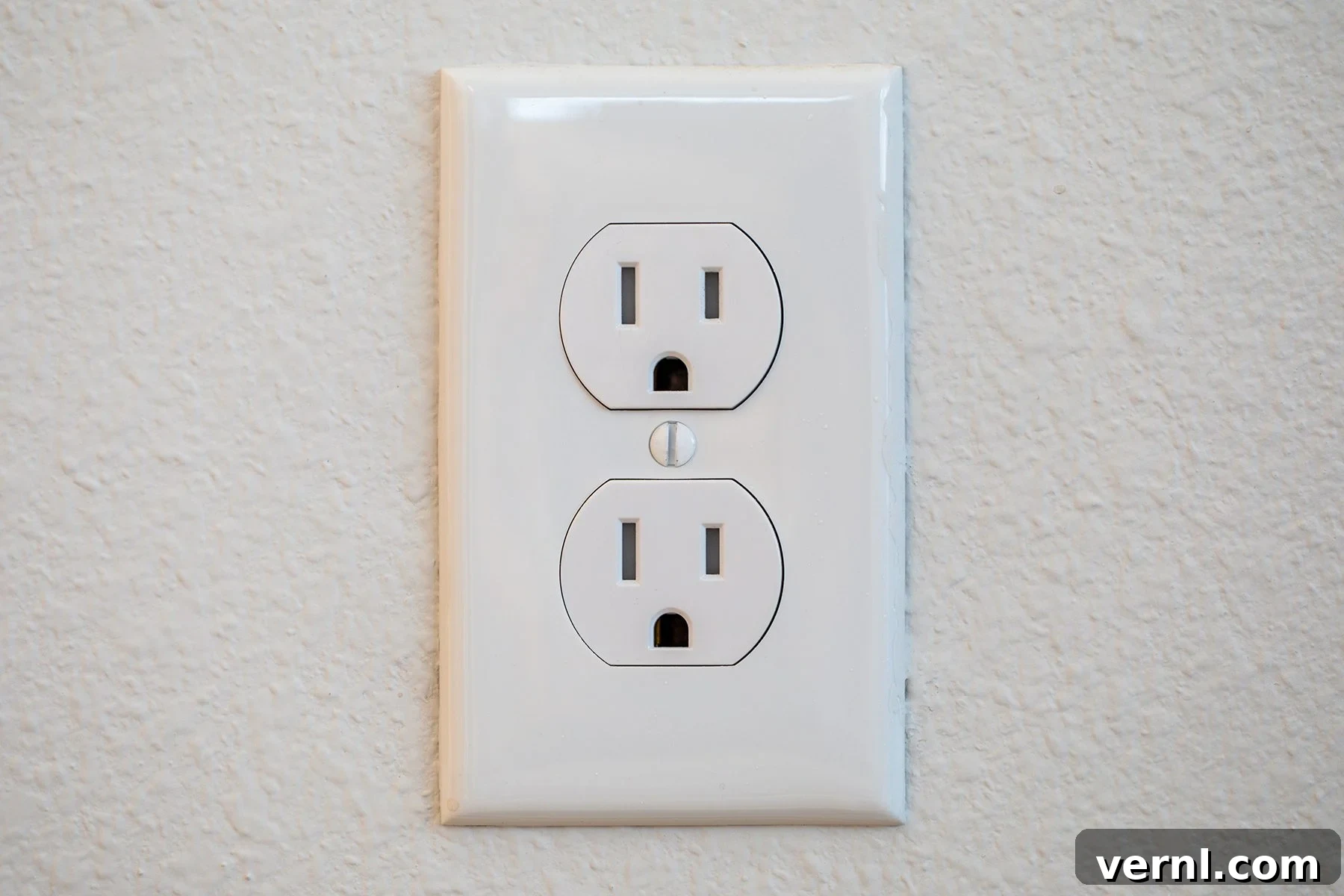
When you plug something into an electrical outlet at home, you inherently expect it to provide power. It’s a fundamental convenience of modern living. However, if an outlet suddenly goes dead, your first thought is probably to check and reset the circuit breaker. This is often the simplest solution, and for good reason: circuit breakers are designed to trip and cut power when they detect a problem. But what if you go to your electrical panel, and all the breakers appear to be in the “on” position? What then? This scenario can be confusing and frustrating, but before you pick up the phone to call a professional electrician, there are several straightforward troubleshooting steps you can take. You might just diagnose and fix the issue yourself, saving both time and money. Understanding the basics of how your home’s electrical system works, and knowing what to look for, can empower you to tackle common electrical hiccups with confidence, always prioritizing safety.
Understanding Why Circuit Breakers Trip: A Foundation for Troubleshooting
To effectively troubleshoot an outlet that has no power when its breaker hasn’t tripped, it’s helpful to first understand why circuit breakers typically trip in the first place. Circuit breakers are essential safety devices designed to protect your home’s electrical system, appliances, and inhabitants from potentially dangerous overcurrent situations. They primarily trip for three critical reasons: short circuits, overloads, and ground faults. Each of these conditions indicates a problem that, if left unaddressed, could lead to serious consequences such as electrical fires, equipment damage, or even electrocution.
- Short Circuits: A short circuit occurs when an electrical current deviates from its intended path and takes a “shortcut” back to the electrical panel, bypassing the load it’s meant to power. This usually happens when a hot (live) wire accidentally comes into direct contact with a neutral wire or another hot wire, often due to degraded or worn insulation, accidental damage (like a nail piercing a wall), or loose wire terminations within an outlet or fixture. When a short circuit happens, the electrical resistance in the circuit drops dramatically, causing an immediate and extremely high surge of current. Circuit breakers are designed to detect this rapid increase in current and instantaneously trip, opening the circuit to prevent overheating, sparks, potential fires, and damage to connected equipment or the circuit wiring itself. It’s a rapid-response safety mechanism against a sudden and severe electrical fault.
- Overloads: An overload happens when too much electrical current is drawn through a circuit, exceeding its designated amperage capacity. Each circuit in your home is rated for a maximum amount of current it can safely carry, typically 15 amps or 20 amps. If you plug in too many high-power devices or appliances onto a single circuit, the combined current draw can surpass this limit. For instance, imagine a 15-amp circuit serving your bedroom, powering lamps, a television, a gaming console, and perhaps charging a laptop. If, during a cold winter day, you plug in a space heater, which alone can consume upwards of 12.5 amps, the total demand on that circuit will likely exceed its 15-amp capacity. This sustained excessive current causes the wires within the walls to heat up. To prevent the wires from overheating, melting their insulation, and potentially causing a fire, the circuit breaker for that circuit will trip, interrupting the power supply. Overloads are often a sign of insufficient planning for electrical usage or simply too many devices on an older, less robust circuit.
- Ground Faults: Ground faults are a specific and particularly dangerous type of short circuit. They occur when a hot (live) wire makes unintended contact with a grounded part of the electrical system or an appliance, such as the metal housing of a toaster, a lamp, or even wet ground. Like other short circuits, ground faults generate very high currents and pose a severe risk of electric shock, as the current can travel through a person who comes into contact with the energized part. Because they can energize objects or surfaces that a person might touch, leading to electrocution, ground fault circuit interrupters (GFCIs) are specifically designed to detect even minor imbalances in current flow (indicating current escaping to ground) and de-energize the circuit almost instantly. While standard circuit breakers also protect against severe ground faults, GFCIs offer a far more sensitive and rapid response crucial for personal safety in areas where water might be present, like bathrooms, kitchens, and outdoor spaces.
Why Your Circuit Breaker Didn’t Trip (And Your Outlet Is Still Dead)
It’s natural to assume a tripped breaker is always the culprit when an outlet goes dead. However, when you check your electrical panel and find all breakers seemingly in their “on” position, the situation can feel more complex. Rest assured, there are several common, and often simple, reasons why you might have a non-working outlet even without a visible breaker trip. These scenarios often involve specific types of safety devices or wiring configurations that operate independently of your main breaker panel, or simply a lack of electrical connection without a fault current.
The “Hidden” or Upstream GFCI Receptacle
One of the most frequent culprits for a seemingly dead outlet with an untripped breaker is a tripped Ground Fault Circuit Interrupter (GFCI) receptacle located elsewhere on the same circuit. GFCIs are specialized outlets or circuit breakers designed to provide enhanced protection against ground faults, especially in areas prone to moisture. You can identify a GFCI receptacle by its distinctive square face and two small buttons, usually labeled “Test” and “Reset.”
A common misconception is that a GFCI only protects the specific outlet it’s installed in. However, one GFCI outlet can be wired to protect several downstream outlets on the same circuit. This means that if the GFCI in your garage trips, it could cut power to an outdoor outlet, or even a bathroom outlet upstairs, without a single breaker in your main panel moving. A friend once experienced this exact frustration: her bathroom outlet stopped working, but the breaker was fine. Knowing the National Electrical Code (NEC) mandates ground fault protection in bathrooms, I suspected a GFCI. She insisted there wasn’t one in *her* bathroom. We eventually found it in *another* bathroom, upstairs! One click of the reset button, and power was restored. These “hidden” GFCIs are often found in garages, basements, laundry rooms, or even in less-used bathrooms that share a circuit with other water-prone areas.
The Half-Hot Outlet: When a Switch Controls Your Power
Most standard wall outlets in your home are “duplex” receptacles, meaning they have two individual sockets for plugging in devices. While sold and installed as a single unit, it’s possible for these two receptacles to be wired independently. A common configuration, often seen in living rooms or bedrooms, is a “half-hot” outlet. In this setup, one of the two sockets always has continuous power, while the other only becomes energized when controlled by a wall switch.
This design is particularly handy for controlling a lamp with a wall switch rather than having to walk across the room to turn the lamp on or off directly. If you’ve always lived in your home and installed the lamp yourself, you probably know which outlets are controlled by a switch. However, if you’ve recently moved into a new place, rearranged a room, or simply removed a floor lamp that used to be plugged into that specific socket, you might mistakenly assume the entire outlet is dead when only the switched half is currently de-energized. It’s an easily overlooked detail that can cause unnecessary head-scratching.
Loose or Faulty Wiring: A Silent Disconnection
Circuit breakers are designed to trip when there’s an excessive current flow, which typically happens during a short circuit or an overload. However, a loss of power can also occur due to a loose or faulty connection *without* creating a high current fault that would trip a breaker. Imagine an electrical conductor coming loose from its terminal screw inside an outlet box or junction box, but not touching anything else. In this scenario, the circuit is simply “open” – the current can’t complete its path to the load – resulting in no power. But because no dangerous current surge or ground fault has occurred, the circuit breaker remains un-tripped.
This type of issue can stem from various factors, including improper installation (such as “back-stabbed” wires that are simply pushed into a hole on the back of the device, which are notorious for coming loose over time), vibrations, or even old, corroded wiring. While this doesn’t immediately pose a fire risk in the same way a short circuit does, it still results in a dead outlet and requires careful investigation. Addressing loose wiring involves opening the electrical box, which always necessitates extreme caution and proper safety measures.
How To Systematically Troubleshoot a Non-Working Outlet
When faced with a dead outlet but an untripped breaker, a systematic approach to troubleshooting can often lead you to a simple solution. However, it’s crucial to remember that working with electricity carries inherent risks. If at any point you feel uncomfortable, unsure, or out of your depth, do not hesitate to call a qualified electrician. Your safety is paramount. Always ensure you understand the steps and have the right tools before you begin.
1. Re-Check the Circuit Breaker (Thoroughly!)
Yes, you’ve probably already glanced at your electrical panel. But it’s worth a closer, more deliberate look. Sometimes, a tripped breaker doesn’t overtly present itself as “off.” Its handle might simply be in a middle position, slightly off-center, or not fully aligned with the other “on” breakers. This can be particularly subtle on older panels or with certain breaker types. Furthermore, electrical panels are notoriously poorly labeled, or not labeled at all. Don’t assume the label (if there is one) is accurate.
* Visual Inspection: Carefully examine every single breaker handle in your panel. Look for any that are not fully aligned with the “on” position (usually pushed all the way to one side, often right). A tripped breaker will typically have its handle in the middle or slightly to the “off” side.
* Cycling the Breaker: If you suspect a breaker is tripped, or even if you’re just unsure, firmly push its handle all the way to the “off” position first, then firmly push it all the way back to the “on” position. This ensures the breaker mechanism fully resets.
* Identifying the Correct Breaker: If your panel isn’t labeled, you might need to engage in a bit of detective work. With the power off to the outlet you’re testing, go to your panel and systematically cycle individual breakers off and then on, checking the dead outlet each time with a lamp or voltage tester. If multiple outlets are dead, identify all affected ones, then test each breaker until you find the one that controls them. If a breaker immediately trips again after you reset it, do not attempt to reset it repeatedly. This indicates a persistent and serious fault (like a short circuit or severe overload) that requires professional investigation.
2. Hunt Down That Elusive GFCI
If your non-working receptacle is located in a bathroom, kitchen, garage, basement, laundry room, or outside, a tripped GFCI is a very strong suspect—even before you delve into the main breaker box. The NEC requires GFCI protection in these and many other areas where water or moisture could be present, significantly increasing the risk of ground faults.
* Systematic Search: Start by looking for GFCI receptacles in the immediate vicinity of the dead outlet. Then, expand your search. Check other bathrooms, garages (including the ceiling or walls), basements, laundry rooms, and any outdoor outlets. Remember, a single GFCI can protect multiple downstream outlets.
* Unconventional Locations: Be prepared for GFCIs in less obvious places. They can be behind appliances (like the refrigerator in a garage), inside cabinets, or even in an adjacent room that shares the same circuit. Property owners or previous electricians might have installed them in convenient, or sometimes inconvenient, locations.
* Resetting a GFCI: If you find a GFCI, check if its “Reset” button is popped out. Firmly press the “Reset” button. You should hear a faint click. Then, re-test your dead outlet. If the GFCI immediately trips again after resetting, it means there’s a persistent ground fault somewhere on that circuit, and you should call an electrician. Do not repeatedly reset a GFCI that won’t hold.
3. Test for a “Half-Hot” Outlet with a Wall Switch
If the dead outlet is located in a living room, bedroom, or den, particularly near an entrance or a prominent wall, consider the possibility of a “half-hot” configuration.
* The Lamp Test: Plug a working lamp into both sockets of the duplex receptacle in question. If the lamp lights up in one socket but not the other, you’ve likely identified a half-hot outlet. Leave the lamp plugged into the dead socket.
* Flipping Switches: Now, systematically flip every wall switch in the room, and even switches in adjacent rooms, one by one. Many homes have three-way switches or dimmer switches that could be connected to these outlets. If the lamp suddenly illuminates when you flip a particular switch, you’ve found your culprit!
* Visual Clues: Sometimes, electricians who install switched receptacles put them in “upside down,” meaning with the grounding slot on top instead of the bottom. While not a code violation, this orientation is sometimes used as a visual cue to indicate a switched receptacle. It’s not a definitive sign, but it can be another clue.
4. Carefully Check the Wiring Connections (Advanced DIY / When to Call a Pro)
If none of the above steps restore power, the issue might be a loose or faulty wiring connection within the outlet box itself or an upstream junction box. **This step requires extreme caution and should only be attempted if you are comfortable and knowledgeable about electrical safety. If you have any doubt, call a professional.**
* Absolute Safety First: Before opening any electrical box, locate the specific circuit breaker controlling the dead outlet and turn it completely OFF. For maximum safety, especially if you’re unsure which breaker controls the outlet, it’s best to turn off the main breaker to your entire home. Always verify the power is off using a non-contact voltage tester, multimeter, or a dedicated receptacle tester by checking for voltage at the dead outlet.
* Tools Needed: You’ll need a screwdriver (flathead and/or Phillips), a non-contact voltage tester, and potentially a multimeter.
* Open the Outlet Box: Carefully unscrew the cover plate of the non-working outlet. Then, gently remove the screws holding the receptacle to the electrical box and pull the outlet device partially out of the wall.
* Inspect Connections: Examine the wiring connected to the outlet. Look for:
* “Back-stabbed” wires: These are wires simply pushed into small holes on the back of the outlet device. They are infamous for coming loose over time, leading to intermittent or complete power loss. If you see these, it’s a prime suspect.
* Loose terminal screws: Check if any wires connected to the side screws are loose or appear to have pulled out.
* Damaged wires: Look for any signs of charred, burned, discolored, frayed, or broken insulation around the wires or terminals.
* Corrosion: Greenish or whitish buildup on wires or terminals can indicate corrosion, which impedes electrical flow.
* Splices: If there are wire nuts or crimps connecting wires within the box, gently check their security.
* Re-terminate Wires (If Safe to Do So): If you find a loose back-stabbed wire, remove it. For a more secure connection, strip about 3/4 inch of insulation from the wire, then create a hook at the end. Wrap the wire clockwise around the appropriate terminal screw (brass for hot, silver for neutral, green for ground) and tighten the screw firmly until the wire is snug and secure. Repeat for any other loose connections. If the wires are damaged, do not attempt to reconnect them; this requires professional repair.
* Check Downstream Outlets: If multiple outlets are affected, the problem might be in the *first* dead outlet on the circuit, as power typically “daisy-chains” from one outlet to the next. You may need to inspect all affected outlets on the circuit.
* Close Up and Re-test: Once you’ve inspected and secured all connections (and are certain everything is properly wired and safe), carefully push the outlet back into the box, screw it in place, and reattach the cover plate. Then, restore power at the breaker panel and re-test the outlet with your voltage tester or a simple lamp.
When It’s Time to Call a Professional Electrician
While these troubleshooting steps can resolve many common outlet issues, there are definite instances where it’s best to defer to a licensed professional. Your safety and the integrity of your home’s electrical system are always the top priority.
You should immediately contact an electrician if:
- You’ve exhausted all the above troubleshooting steps, and the outlet still has no power.
- You discover any signs of serious electrical issues, such as burning smells, smoke, charring, melted insulation, or flickering lights that coincide with the dead outlet.
- A circuit breaker or GFCI continually trips immediately after being reset, indicating a persistent and potentially dangerous fault.
- You feel uncomfortable or unsure at any point during the troubleshooting process, especially when it involves opening electrical boxes or manipulating wiring.
- You encounter old, brittle, or unknown wiring configurations that you don’t understand.
- The problem affects multiple circuits or large sections of your home’s power.
A professional electrician has the expertise, specialized tools, and knowledge of electrical codes to safely diagnose and repair complex electrical problems, ensuring your home’s electrical system is both functional and safe. Don’t take unnecessary risks with electricity.
In conclusion, a dead outlet with an untripped breaker can be perplexing, but by systematically checking for hidden GFCIs, half-hot configurations, and loose wiring, you can often identify and resolve the problem yourself. Remember to always prioritize safety by turning off power at the source and using appropriate testing tools. Empowering yourself with this knowledge not only saves money but also gives you a deeper understanding of your home’s essential systems.