
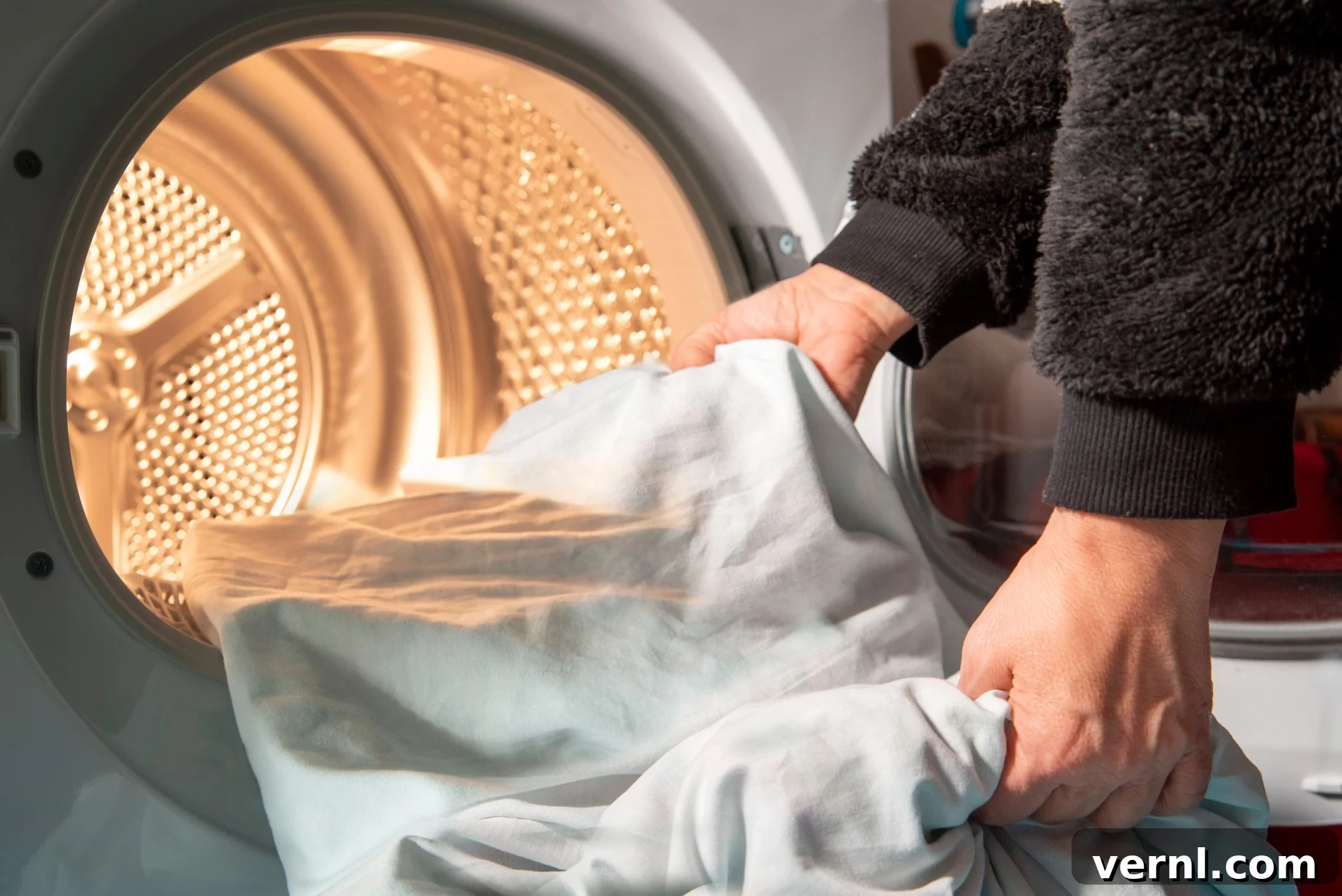
Permanent Press: A Comprehensive Guide to This Laundry Cycle
Understanding and utilizing the Permanent Press cycle can significantly improve your laundry routine and extend the life of your clothes.
The Enduring Relevance of Permanent Press
Modern dryers are packed with innovative settings – steam refresh, downloadable cycles, and more. Amidst these advancements, the Permanent Press cycle, a long-standing feature, often gets overlooked. Despite its slightly dated name, this cycle remains relevant. Permanent press textiles are still incredibly popular due to their ease of care and neat appearance. But what exactly does this cycle do?
To unravel the mysteries of Permanent Press, we spoke with Haven Polich, Product Manager at Asko, a premium brand of kitchen and laundry appliances. Here’s what she shared.
Meet the Expert: Haven Polich
- Haven Polich is a Product Manager specializing in kitchen and laundry appliances at Asko.
Decoding Permanent Press: What Does It Really Mean?
The term “Permanent Press” alludes to the concept of ironing or “pressing” your clothes. According to Polich, “The cycle was originally created for permanently pressed clothes, which are chemically treated to resist wrinkles.”
Natural fibers like cotton are prone to wrinkling. Before the advent of permanent press finishes and synthetic fabrics in the mid-20th century, constant ironing was a necessary chore. This was labor-intensive.
Scientists discovered that adding chemicals, such as formaldehyde and its derivatives, to cotton made it more resistant to wrinkles. This reduced the need for frequent ironing, offering a convenient solution. As permanent press finishes gained popularity in the 1950s, Polich notes, “It became common for washing machines to include a special cycle specifically designed for these fabrics.”
The Formaldehyde Factor: Addressing Concerns
A legitimate concern arises: Are we still wearing clothing treated with formaldehyde, a chemical often associated with embalming? The answer is unfortunately, yes.
Modern permanent press (also known as “durable press”) clothing typically employs a safer formaldehyde derivative called dimethylol dihydroxyethyleneurea. This derivative significantly reduces the release of formaldehyde onto your skin or into the air.
However, formaldehyde is still utilized in the processing of many everyday textile garments, including jeans, underwear, and even baby clothes. Studies indicate that even “eco-friendly” clothing can contain this chemical. However, washing clothes before initial use typically lowers formaldehyde levels to within legal limits.
It’s important to be aware that formaldehyde can still trigger dermatitis in sensitive individuals. Furthermore, manufacturers are generally not obligated to disclose the specific finishing processes used on their products.
Understanding the Permanent Press Cycle in Your Washing Machine
According to Polich, the Permanent Press cycle in a washing machine involves gentler spinning and shorter wash times. “The Permanent Press cycle is slower, using gentler agitation than the normal cycle, and often lasts around 30 minutes,” she explains.
The process typically begins with a warm-water wash. The temperature then switches to cold for the rinse cycle. Polich states that the cold-water rinse helps release wrinkles.
While originally designed for “wash-and-wear” fabrics, this cycle is versatile and works well for a variety of materials. This includes synthetics, such as wrinkle-resistant polyester, cotton-poly blends, and even natural fibers like linen.
Unveiling the Permanent Press Cycle in Your Dryer
In dryers, “The Permanent Press cycle typically uses less heat than a regular cycle,” Polich says. This lower heat setting is gentler on clothes, reducing the likelihood of wrinkles. Permanent Press cycles are also shorter than standard cycles.
For optimal wrinkle control, Polich recommends utilizing the lowest heat setting for the shortest duration. This cycle is also beneficial for preventing fading, making it suitable for clothes that wrinkle or shrink easily, as well as those with bright colors.
To achieve the best results, always remove your clothes promptly after the cycle finishes to prevent wrinkles from setting in.
Does “Permanent Press” Still Exist on Modern Machines?
The terminology used on laundry machines is evolving. Many contemporary washers and dryers are moving away from the “Permanent Press” label. This is a result of evolving lifestyles. Many people today wear less formal clothing. Ironing is becoming less common.
As a result, Polich notes that manufacturers have adopted alternative terms. Look for settings like “casual,” “easy care,” or any variation of the word “wrinkle,” such as Asko’s Steam Wrinkle Care feature.
Modern machines frequently incorporate advanced settings tailored to specific laundry needs. These cycles are often named intuitively. Therefore, Polich advises users to take advantage of these advanced options.
However, before selecting a cycle, it’s crucial to check your clothing labels. These labels provide essential guidance, helping you choose the right cycle, regardless of its name. Following these instructions will also help your clothes last longer.
Key Takeaways for Effective Laundry Care
- Understand the Cycle: Familiarize yourself with how the Permanent Press cycle works in both your washer and dryer.
- Material Matters: Know which fabrics benefit most from this cycle (synthetics, blends, wrinkle-prone natural fibers).
- Heat Control: Use lower heat settings in the dryer to minimize wrinkles and prevent fading.
- Timing is Everything: Remove clothes promptly from the dryer to avoid wrinkles setting in.
- Read the Label: Always check clothing labels for care instructions and choose the appropriate cycle.