
Timing Belt Replacement: A Comprehensive Guide for Vehicle Owners
Timing belts are crucial components in your car’s engine, responsible for the precise synchronization of the engine’s internal workings. While the timing belt itself is relatively inexpensive, its failure can lead to significant and costly engine damage. This guide provides essential information on timing belts, their importance, signs of wear, replacement intervals, and associated costs. Keeping your timing belt in good condition is vital for the longevity and performance of your vehicle.
Engines are designed in two main configurations: interference and non-interference. Understanding the type of engine your vehicle has is critical regarding timing belt failure consequences. In an interference engine, the valves and pistons occupy the same space at different points in the engine cycle. A broken timing belt in this type of engine will likely result in the pistons colliding with the valves, causing severe damage. In a non-interference engine, the valves and pistons have sufficient clearance, so a timing belt failure may leave you stranded but won’t cause immediate internal engine damage.
Timing belts are considered a regular maintenance item and should be inspected and replaced at the manufacturer’s recommended intervals. Ignoring this critical maintenance can lead to unexpected breakdowns and expensive repairs.
What Exactly is a Timing Belt?
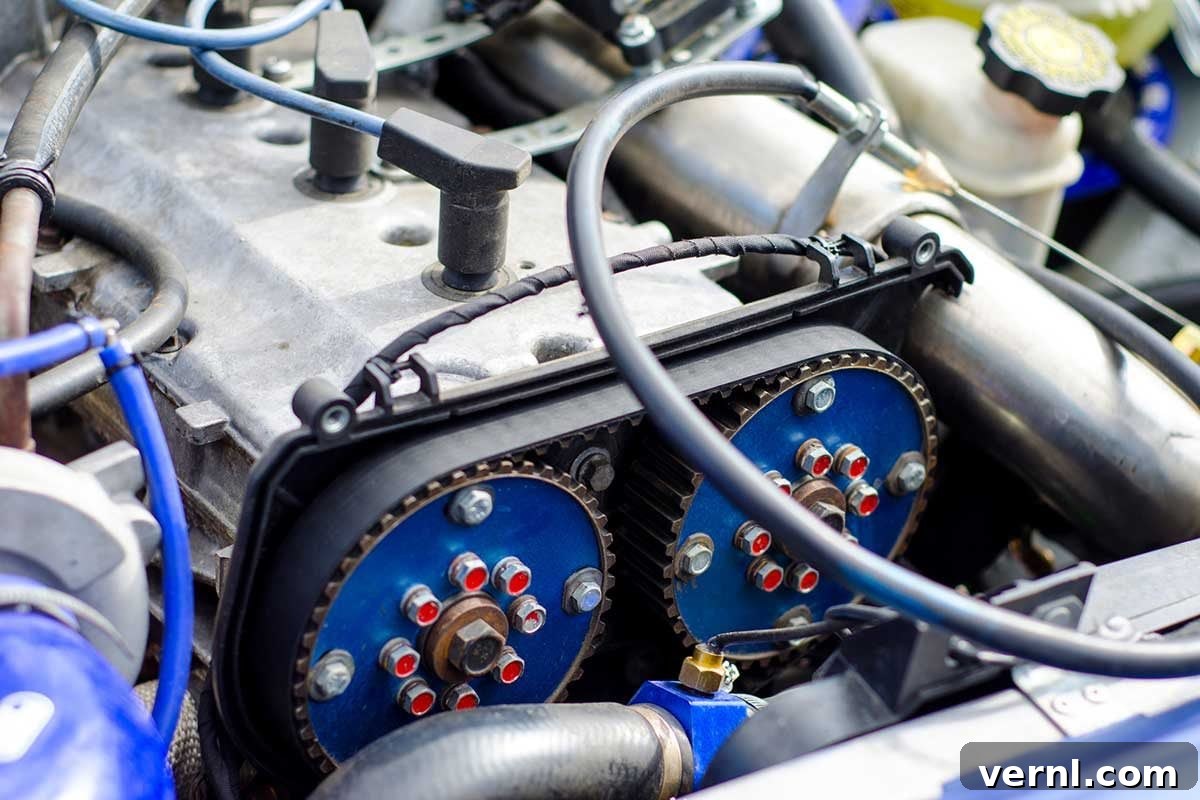
A timing belt is a toothed belt, similar in function to a drive belt, but with a critical difference: its teeth. These teeth ensure precise synchronization between the camshaft and crankshaft. In many engines, timing belts have replaced metal timing chains. The camshaft and crankshaft must work in perfect harmony, a process called valve timing, during the four-stroke combustion cycle: intake, compression, power, and exhaust.
Timing belts are usually made from rubber or neoprene, reinforced with strong fibers or steel. They are designed to withstand the stresses of engine operation while producing less noise than metal timing chains. While durable, they are not designed to last forever, and regular inspection and timely replacement are essential.
How to Identify a Timing Belt That Needs Replacement
Regular inspection of your timing belt is crucial for preventing unexpected failures. While visual inspection may not always be possible without removing components, there are several signs to look out for that indicate the need for replacement.
Consult a repair manual to determine the accessibility of the timing belt cover. Some covers are easy to remove, while others require extensive disassembly. If accessing the belt is complex, it’s best to have a professional inspect it.
Visual Inspection: If you can access the belt, look for these signs of wear:
- Tension: The belt should be taut, with a slight deflection (around 1/4 to 1/2 inch) when pressed with your thumb along its longest run between gears.
- Surface Condition: The belt should be smooth and flat, without rounded edges, glossiness, or shine.
- Cracks and Damage: Check for missing chunks, large cracks, peeling, and fraying. Small surface cracks are acceptable, but spider cracking indicates significant wear.
- Contamination: Inspect for any signs of oil or coolant leaks, as contamination can damage the belt’s material.
Replace the timing belt immediately if you observe any missing teeth or evidence of contamination from oil or coolant leaks.
How Often Should a Timing Belt Be Replaced?
The recommended replacement interval for a timing belt varies based on the vehicle manufacturer and model. Always refer to your owner’s manual for the specific recommendations for your car. Some manufacturers suggest replacement every 30,000 miles, while others recommend up to 120,000 miles.
Several factors can influence the lifespan of your timing belt and should be considered when determining replacement timing:
- Engine Performance Issues: A poorly running engine can put extra stress on the timing belt, shortening its life.
- Misfires: Engine misfires from issues like faulty spark plugs or coil packs can also place additional strain on the belt.
- Unusual Noises: Clicking, squealing, or rattling noises from the front of the engine can indicate timing belt problems. Missing teeth can cause clicking, while tensioner or pulley issues may cause squealing sounds.
- Driving Conditions: Frequent stop-and-go driving, aggressive acceleration, and extreme temperatures can accelerate belt wear.
- Used Car Purchases: If you purchase a used car and the seller cannot provide proof of a recent timing belt replacement, it’s advisable to have it inspected and potentially replaced, especially if the mileage is over 50,000 miles.
It’s important to prevent driving a car with a worn timing belt. A failing timing belt can cause catastrophic damage, resulting in thousands of dollars in repairs. If you suspect your timing belt has issues, get it inspected by a qualified mechanic.
What Does It Cost to Replace a Timing Belt?
Timing belt replacement is best left to professionals. The process can be complicated, especially for engines with multiple camshafts or many accessories. Special tools are often required to ensure proper installation and timing gear indexing.
DIY Replacement: If you are an experienced mechanic and decide to replace the timing belt yourself, keep the following in mind:
- Repair Manual: Consult a detailed repair manual before starting and keep it handy throughout the process.
- Tools: Ensure you have all the necessary tools, including specialty tools needed to adjust belt tension correctly.
- Time: Set aside a full day to complete the job.
- Additional Components: Plan to replace other components at the same time, such as drive belts, the water pump, and the motor oil and filter.
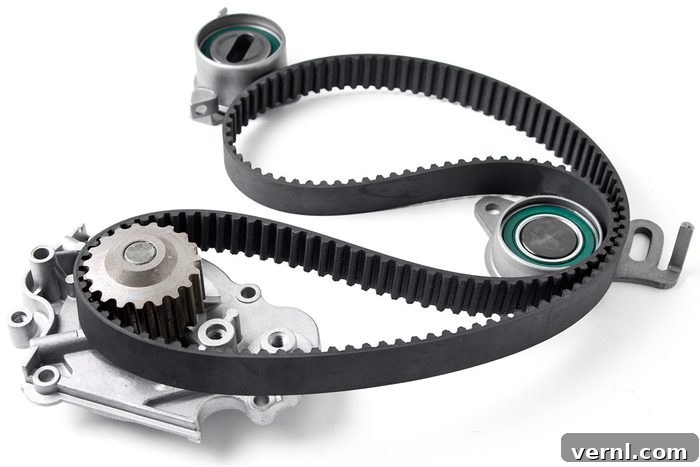
- Timing Belt Kits: Consider purchasing a timing belt kit, which typically includes the timing belt, tensioner, idler pulleys, water pump, gaskets, O-rings, seals, and other hardware.
Cost of Parts: Timing belt kits can range from $100 to $500, depending on the vehicle’s make and model.
Professional Replacement: The cost of professional timing belt replacement varies based on the engine type, the vehicle’s make, model, and year. Costs can range from $350 to $1,500.