
Garage Door Springs: A Comprehensive Guide to Maintenance and Replacement
Garage doors are essential components of our homes, providing secure access and protecting our vehicles. While often taken for granted, these systems are subject to wear and tear. One of the most common issues homeowners face is the malfunctioning of their garage door springs. Understanding these springs and how to care for them is crucial for ensuring the smooth and safe operation of your garage door.
What Are Garage Door Springs?
Garage door springs are the unsung heroes of your garage door system. These critical components are designed to counterbalance the heavy weight of the door, allowing it to open and close with ease. Without functioning springs, the electric opener would struggle to lift the door, rendering it virtually unusable. They store the energy required to lift the door and slowly release it, controlling the door’s movement.
Types of Garage Door Springs
There are two main types of garage door springs commonly used in residential applications:
Extension Springs
Extension springs are typically found running parallel to the door tracks on either side of the garage door. They function by stretching and contracting as the door moves. As the door closes, the springs extend, storing energy. When the door opens, the springs contract, releasing the stored energy and assisting in the lifting process.
Torsion Springs
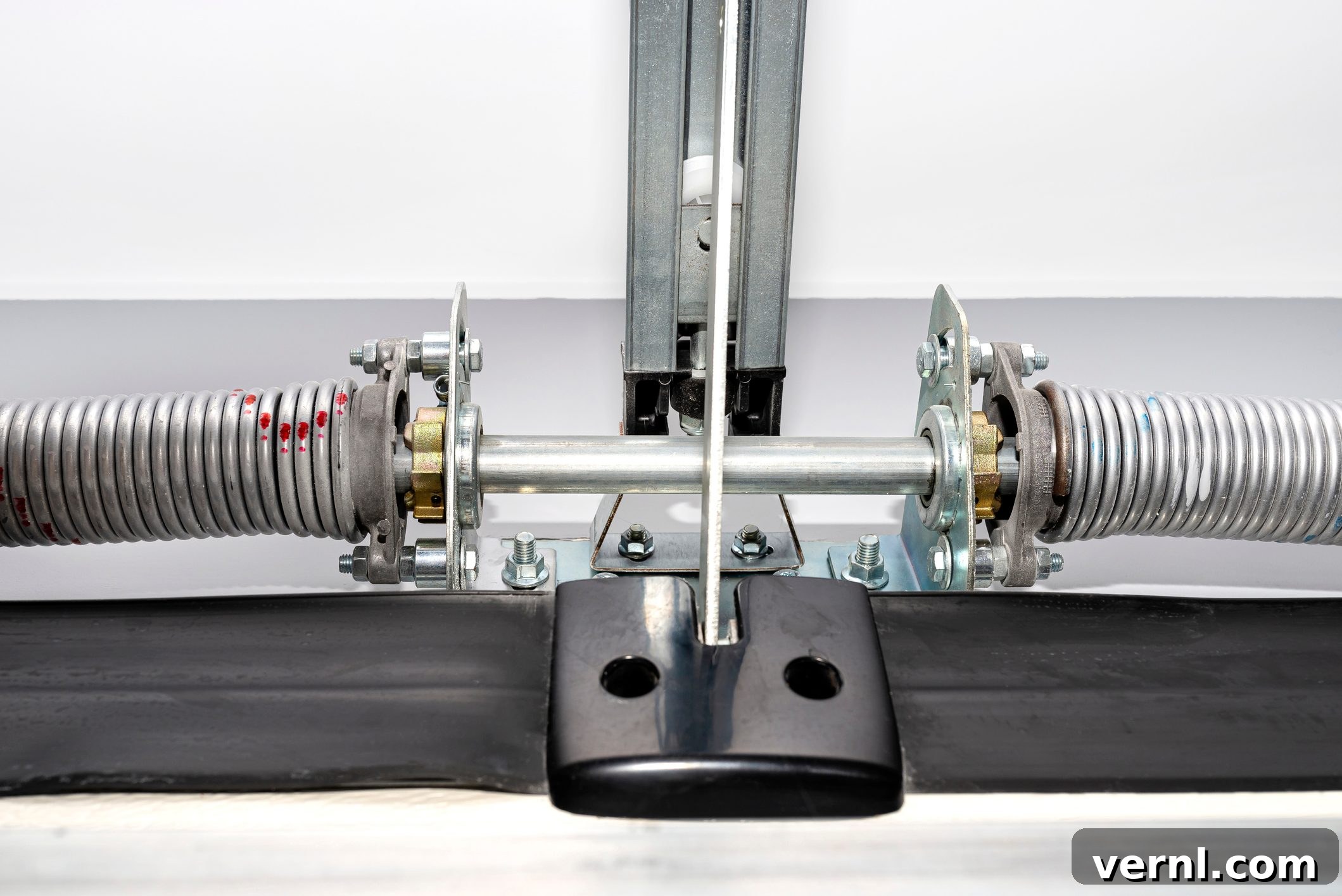
Torsion springs are positioned above the door’s opening, mounted on a shaft. They operate by twisting and coiling when force is applied, either manually or by the garage door opener motor. These springs provide a powerful counterbalance, making it easier to lift and lower the heavy garage door. Torsion springs are often favored for their durability and balance.
Signs Your Garage Door Springs Need Replacement
It’s essential to recognize the warning signs that indicate your garage door springs require attention. Ignoring these signs can lead to more significant problems and potential safety hazards. Watch out for these common issues:
- The door is not hanging straight. This can be an indication that one of the springs is broken or weakened, causing an imbalance.
- The motor operates, but the door remains stuck. This suggests that the springs aren’t providing the necessary counterbalance to lift the door.
- The door descends faster than usual. This is often a sign of failing springs that are unable to control the door’s descent properly.
- The door won’t remain open on its own. If the door slowly closes after being opened, the springs are likely not holding the door’s weight correctly.
- Visible gaps or breaks in the springs. This is a clear indication that the springs are damaged and need to be replaced.
- Excessive noise when operating the door. Unusual sounds, such as grinding or squeaking, can signal problems with the springs or related components.
- Loose or broken cables. Cables are connected to the springs and help to lift and lower the door safely. Damage to these cables can affect the spring’s function.
- Rust on the springs. Rust can weaken the metal and compromise the spring’s structural integrity.
Can You Repair Garage Door Springs?
Garage door springs operate under high tension, making them dangerous to handle without proper training and equipment. While some minor issues may be addressed, it is usually best to replace damaged springs rather than attempting repairs. Attempting to repair them yourself can be very dangerous.
When one spring fails, it is often recommended to replace both springs simultaneously. This practice helps ensure the garage door remains balanced and operates correctly. Garage door springs have a limited lifespan and typically last between 10,000 to 20,000 cycles. Replacing both at the same time prevents the other from failing shortly after the first and maintains balance.
Due to the inherent risks associated with garage door spring replacement, it’s generally advisable to entrust this task to experienced professionals.
According to Jon Russell, director of systems at Precision Garage Door Service, “Most types of minor damage to garage door springs can be repaired. However, if one or more of your springs have extensive damage, it will need to be replaced.”
“Homeowners can lubricate the door’s moving parts with either a spray lubricant or a spray grease product. We do not recommend WD-40 or silicone spray, though. However, if the counterbalance springs need to be adjusted, you should contact a professional company due to the risk of injury.”
Garage Door Spring Replacement Cost
The cost of replacing garage door springs can vary depending on several factors. It’s essential to understand these factors to anticipate the potential expenses involved. Several variables influence the final cost:
- Number of Doors Requiring Service: The more doors that need spring replacement, the higher the overall cost.
- Garage Size: Larger garages might have heavier doors requiring more robust springs, potentially increasing the price.
- Type of Spring: Torsion springs often cost more than extension springs due to their construction and installation complexity.
- Geographic Location: Labor rates and material costs can vary based on your location.
Generally, replacing springs for a single garage door can cost between $150 and $350, including materials and labor. However, if multiple doors require attention or if additional complications arise, costs could escalate to $500 or more.
New Garage Door Spring Maintenance
Proper maintenance is key to extending the life of your garage door springs and ensuring their reliable performance. Regular maintenance can prevent issues and reduce the need for premature replacements. Implementing a few simple steps can help you maximize the lifespan of your garage door springs:
- Regular Lubrication: Lubricate the springs and other moving parts of your garage door regularly, particularly in areas with high humidity or moisture. This helps prevent rust and ensures smooth operation.
- Professional Inspections: Schedule periodic inspections and tune-ups by a qualified professional. They can identify potential problems early on and provide necessary adjustments.
- Address Issues Promptly: If you notice any signs of wear, unusual noises, or potential breakage, address them immediately. Delaying repairs can lead to more significant and costly problems, and also create a dangerous situation.
Video Example – Garage Door Spring Maintenance