
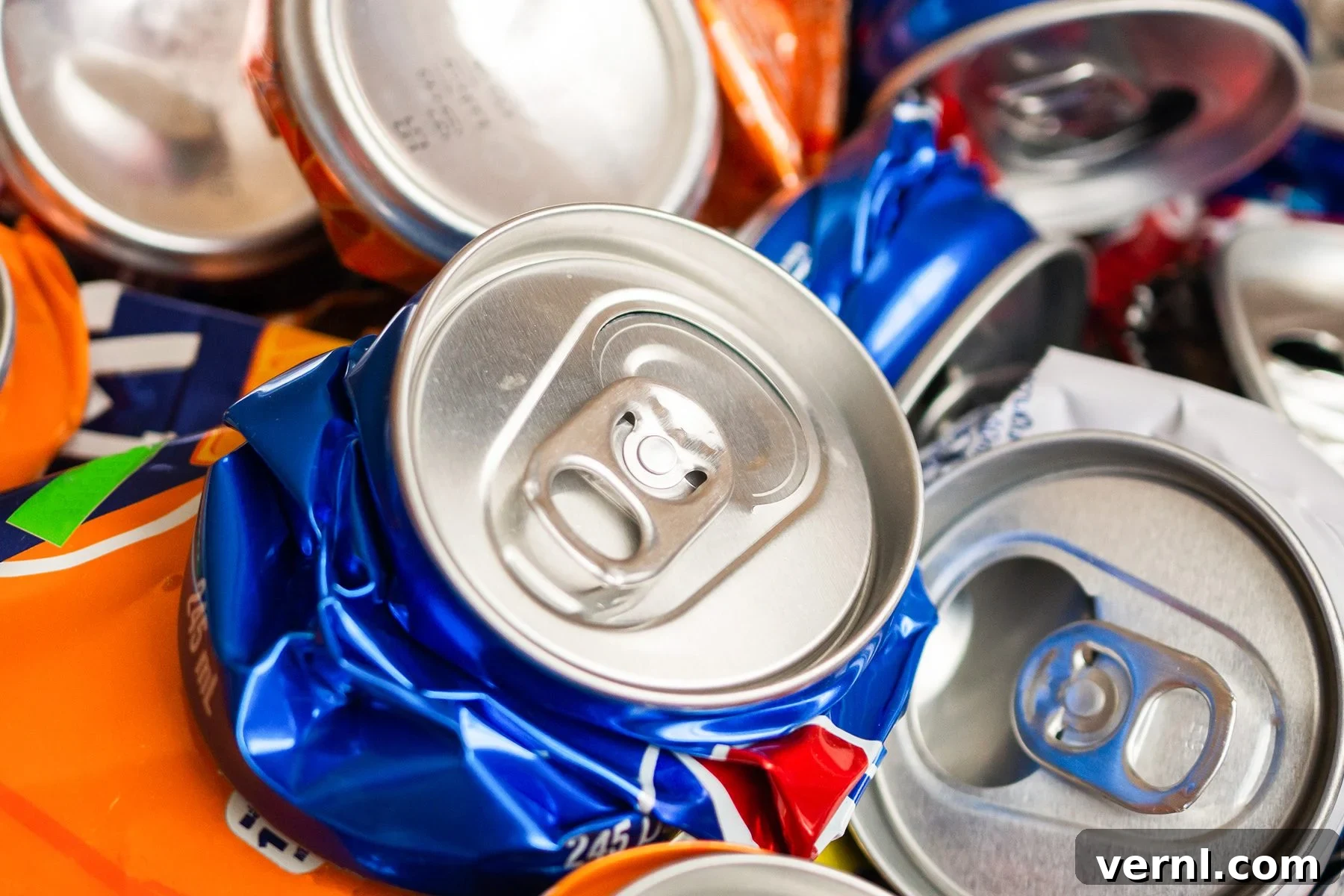
Recycling aluminum cans is a remarkably effective and straightforward way to contribute to environmental sustainability, reduce waste, and conserve vital natural resources. Aluminum is unique in its ability to be recycled endlessly without losing quality, making it a cornerstone of a circular economy. However, the seemingly simple act of preparing your aluminum cans for recycling can be more nuanced than you might think. Specifically, whether or not to crush your cans before placing them in the recycling bin is a common dilemma that can significantly influence their journey through the recycling stream. While crushing might appear to be a sensible approach for maximizing space, it can, in certain crucial scenarios, inadvertently hinder the very process it aims to support. Understanding these intricacies is key to becoming a more effective and informed recycler, ensuring your efforts truly make a difference.
Why Do People Crush Aluminum Cans? Exploring the Motivations Behind Compaction
The practice of crushing aluminum cans is widespread, driven by several compelling and often practical motivations. For many individuals and households, the primary incentive is the desire to save space. An uncrushed aluminum can, with its cylindrical form, occupies a considerable volume. By flattening or compacting cans, they take up significantly less room in recycling bins, bags, or other containers. This space-saving strategy is particularly appealing to those living in smaller homes or apartments, or for families that generate a large volume of recyclables, as it allows them to fit more materials into their designated recycling receptacle before it needs to be emptied or collected. This perceived efficiency can make waste management feel more organized and less cumbersome.
Beyond household storage, crushing cans can also streamline the transportation process. For individuals who routinely collect and bring their recyclables to a local drop-off center, a grocery store with a redemption machine, or a community recycling point, compact cans are far easier to manage. They are less bulky, more stable when packed together, and less prone to spilling or rolling around during transit. This reduces the number of trips required and simplifies the physical act of handling a large volume of empties. Furthermore, some individuals might crush cans out of habit, a sense of satisfaction, or a mistaken belief that it always aids the recycling process. While these practical benefits are undeniable and understandable, it’s crucial to recognize that crushing cans isn’t universally the optimal choice for every recycling system.
Should You Crush Aluminum Cans Before Recycling? Decoding the Recycling Rules
The question of whether to crush aluminum cans before recycling is not a simple yes or no; rather, the answer is highly dependent on the specific type of recycling system in place in your local community. Different facilities employ varied technologies and sorting methods, and what works well in one system might create significant complications in another. Understanding these distinctions is fundamental to ensuring your recycled cans successfully complete their journey back into new products.
The Challenges in Single-Stream Recycling Systems
For communities utilizing a single-stream recycling system, where all recyclable materials—such as paper, plastic, glass, and metal—are collected together in one bin, crushing aluminum cans is generally strongly discouraged. These modern recycling facilities, often referred to as Material Recovery Facilities (MRFs), rely on a sophisticated array of automated machinery to separate mixed recyclables efficiently. This equipment includes optical sorters, magnetic separators, eddy current separators, and vibrating screens, all designed to identify and categorize materials based on their distinct shapes, sizes, weights, and magnetic properties.
Crushed aluminum cans can pose a significant challenge to these advanced sorting mechanisms. When a can is flattened, its original three-dimensional shape is distorted, making it difficult for optical scanners to correctly identify it as an aluminum can. Instead, a severely crushed can might be misread as a piece of flat paper or cardboard, or even as a different type of metal. Furthermore, while eddy current separators are highly effective at distinguishing and separating non-ferrous metals like aluminum, a crushed can presents a smaller, less uniform surface area, which can reduce the efficiency of the electromagnetic field’s ability to “kick” it off the conveyor belt into the correct stream. These misidentifications can lead to crushed cans being improperly sorted and diverted into the wrong material bales, contaminating other valuable recyclables, or, more unfortunately, being mistaken for non-recyclable waste and sent directly to a landfill. This ultimately undermines the environmental purpose of recycling and increases the operational costs for the facility.
Another issue with crushed cans in single-stream systems relates to their size and weight relative to other materials. Smaller, flatter items can sometimes fall through screens designed to separate larger pieces of paper and cardboard, ending up in streams designated for glass or other fine materials, where they act as contaminants. The integrity of the original can shape is surprisingly important for the automated systems to perform their job accurately and prevent cross-contamination, ensuring that high-quality, pure material streams are generated for reprocessing.
When Crushing Might Be Acceptable: Source-Separated and Manual Systems
Conversely, the rules surrounding crushing might differ significantly if you participate in a source-separated or multi-stream recycling program, or if your local facility primarily relies on manual sorting. In these systems, where aluminum cans are collected separately from other recyclables, or where human sorters play a more prominent role, the issues encountered by automated single-stream MRFs are often less relevant. Some facilities that deal exclusively with metals, or those with manual sorting lines, may accept crushed cans without issue, as the material is either processed differently or sorted by hand, bypassing the complications of automated single-stream identification. In fact, for certain programs, especially those that bale aluminum for shipping, a denser, compacted can might even be preferred as it optimizes storage and transportation space for the recycling facility itself. However, it is always paramount to verify the specific guidelines with your local recycling program or waste management provider, as general assumptions can lead to incorrect recycling practices.
Can I Redeem My Deposit If My Aluminum Can Is Crushed? Navigating Deposit Return Systems
Many regions and states in various countries operate a container deposit system, often referred to as “bottle bills,” where consumers pay a small deposit on beverage containers at the point of purchase, which can then be redeemed for a refund upon returning the empty container. These programs are highly effective at encouraging recycling and reducing litter, but they often come with specific requirements regarding the condition of the returned containers.
A crucial requirement in most deposit redemption systems is that the aluminum cans must remain intact and uncrushed for accurate and efficient processing. The majority of these programs utilize automated reverse vending machines (RVMs) or similar technologies to process returns. These machines are engineered to identify eligible containers by scanning their universal product code (UPC) barcode, recognizing their specific shape and size, and sometimes even weighing them to confirm the material type and verify the container’s integrity. A crushed can presents several insurmountable challenges to these automated systems. The barcode may be wrinkled, torn, or obscured, rendering it unscannable. More critically, the machine’s internal mechanisms, designed to accept and process containers of a specific shape and dimension, will often reject a severely crushed or distorted can because it does not fit properly or cannot be recognized by its optical sensors. This means that despite being made of recyclable aluminum, a crushed can will likely not qualify for a deposit refund.
While some smaller, independent deposit centers or redemption points might offer manual counting for crushed cans, this is generally less common, particularly for large volumes. Manual processing is significantly slower, more labor-intensive, and less cost-effective for the center, and it may not always be a guaranteed service. To avoid disappointment and ensure you can successfully redeem your deposits, the best and most reliable practice is to always leave your aluminum cans intact and uncrushed when participating in a deposit return program. This small effort ensures a smooth process for both you and the recycling center, maximizing the value of your recycling efforts.
Maximizing Your Impact: Best Practices for Aluminum Can Recycling
Beyond the “to crush or not to crush” debate, there are several other best practices that can significantly enhance the effectiveness of your aluminum can recycling efforts, ensuring they are truly sustainable and beneficial.
Rinsing Cans for Purity
One of the most important steps is to lightly rinse your aluminum cans to remove any residual food or beverage contents. While a perfectly clean can isn’t always necessary, removing sticky or sugary residues prevents the attraction of pests (like ants and rodents) at collection points and processing facilities. It also minimizes potential contamination of other recyclable materials, such as paper and cardboard, which can be ruined by sugary liquids or food particles. A quick rinse with water is usually sufficient and helps maintain the purity of the aluminum stream, which is crucial for high-quality recycling.
Understanding Labels and Lids
For aluminum cans, the labels (which are often paper or plastic sleeves) typically do not need to be removed before recycling. During the high-temperature melting process at the recycling facility, these labels will burn off harmlessly. However, any plastic lids or caps should generally be removed before recycling the can. These are often made of a different type of plastic that may not be recyclable with the aluminum or in your local program. Check your local guidelines for specifics on plastic lids – some programs might accept them separately if they are larger than a certain size, while others prefer them to be discarded with regular waste.
Proper Storage and Collection
Store your aluminum cans in a clean, dry area to prevent mold growth and maintain hygiene. If your local program accepts cans loose, avoid bagging them, as plastic bags can often tangle sorting machinery at MRFs and are themselves considered “tanglers” or contaminants in many single-stream systems. If your program requires bags, ensure they are the specified type (e.g., clear bags for visual inspection).
Educate Yourself and Others
The landscape of recycling is constantly evolving and can vary significantly from one municipality to another. The most effective way to be a responsible recycler is to stay informed about your local program’s specific rules and guidelines. Visit your city or county’s waste management website, download their recycling app, or contact them directly with any questions. Spreading this accurate information to family, friends, and neighbors can multiply your positive impact and help your community achieve higher recycling rates and greater environmental benefits.
The Lifecycle of an Aluminum Can: From Bin to New Product
When aluminum cans are properly collected and sorted, they embark on an incredibly efficient journey back to becoming new products. After collection, cans are typically transported to an MRF (or a dedicated aluminum processing plant if source-separated). Here, they are baled into large, dense blocks, making transportation to a recycling plant more efficient. At the recycling plant, these bales are shredded into small pieces, which are then thoroughly cleaned to remove any remaining impurities like labels, lacquer, or food residue. These cleaned aluminum fragments are then fed into a massive furnace, where they are melted down at extremely high temperatures. The molten aluminum is cast into large ingots or slabs, which are then rolled out into thin sheets. These sheets are finally used by manufacturers to produce brand-new aluminum cans, ready to be filled and sold again, completing the circular economy loop.
This process is remarkably energy-efficient, requiring up to 95% less energy to produce new cans from recycled aluminum compared to manufacturing them from virgin raw materials (bauxite ore). This significant energy saving translates directly into a substantial reduction in greenhouse gas emissions and a decreased reliance on mining, which has considerable environmental impacts. Aluminum’s infinite recyclability means that a can you recycle today could be back on a store shelf as a new can in as little as 60 days, demonstrating a truly sustainable closed-loop system.
Conclusion: The Power of Informed Recycling for a Sustainable Future
Recycling aluminum cans is undeniably a powerful act of environmental stewardship. Each can saved from a landfill contributes to substantial energy savings, reduces pollution, and conserves natural resources. However, the effectiveness of this simple act hinges on informed participation. The question of whether to crush aluminum cans before recycling is a prime example of how local infrastructure and specific recycling processes dictate the best approach. While crushing might seem intuitively beneficial for space-saving, it can unfortunately disrupt the sophisticated automated sorting systems prevalent in many single-stream facilities, potentially leading to valuable aluminum being misdirected or discarded.
Conversely, in source-separated systems or manual collection schemes, crushing might be acceptable or even preferred. Similarly, deposit redemption programs often strictly require cans to remain intact for automated processing. The overarching takeaway is clear: there is no universal “one-size-fits-all” answer. To ensure your recycling efforts are as impactful as possible, it is essential to consult your local municipal recycling guidelines, contact your waste management provider, or check the requirements of your nearest deposit return center. By understanding and adhering to these specific rules, you empower the recycling process, ensuring that every aluminum can you collect makes its way back into the cycle, contributing meaningfully to a healthier planet and a more sustainable future. Your small actions, guided by correct information, collectively create a monumental difference.