
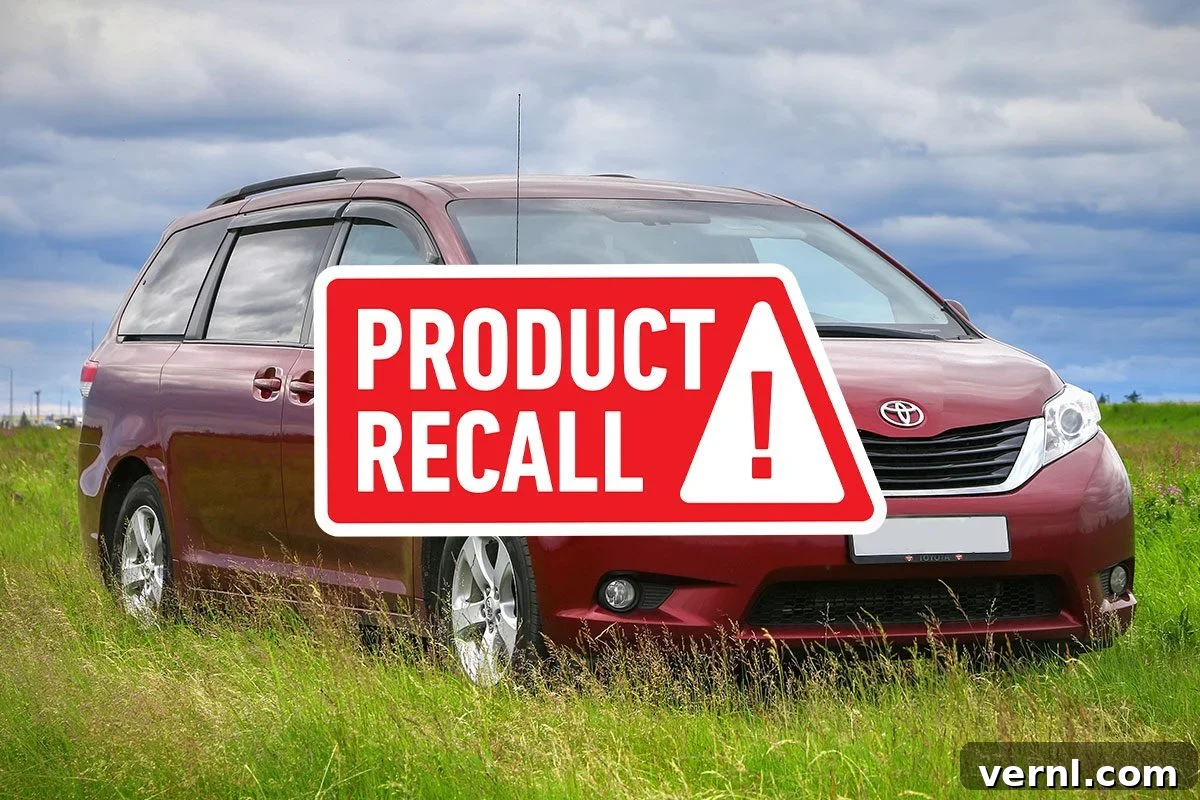
The National Highway Traffic Safety Administration (NHTSA) announced on October 7th that a significant number of Toyota vehicles are subject to a critical recall. This announcement affects nearly 55,000 units, primarily due to a manufacturing defect involving faulty seat rails. For owners whose vehicles fall under this recall, understanding the implications and taking immediate steps is paramount to safeguarding themselves and their passengers until the necessary repairs can be completed. This comprehensive guide will delve into the specifics of this recall, offering clarity on why it’s happening, which vehicles are affected, the recommended safety precautions, and how Toyota plans to resolve the issue, all while emphasizing the overarching importance of vehicle safety and proactive owner response.
Why Is There a Toyota Recall? Unpacking the Seat Rail Safety Concern
The core reason behind this recent Toyota recall, as detailed in the NHTSA brief, stems from a fundamental safety issue with the vehicle’s seating system. More precisely, the agency has identified that “the second-row seat rails may be welded improperly.” This defect, while seemingly confined to a single component, has profound implications for occupant safety, particularly during a vehicular accident. Seat rails are not merely structural elements that allow for seat adjustment; they are critical anchors designed to secure the seat firmly to the vehicle’s chassis. Their primary function is to withstand the immense forces exerted during a collision, preventing the seat from detaching or shifting, thereby maintaining the integrity of the occupant restraint system.
The NHTSA’s warning against these faulty components is stark and unequivocal: “improperly welded seat rails can prevent the seat from adequately restraining an occupant during a crash, increasing the risk of injury.” In a crash scenario, a seat with compromised weld points on its rails could fail to remain fixed, leading to the occupant being improperly positioned or even ejected from their seat. Such an event would severely diminish the effectiveness of the seatbelt, which relies on a stable seat foundation to correctly tension and hold the occupant. Without a properly functioning restraint system, the risk of severe injuries, including head trauma, spinal damage, and internal injuries, escalates dramatically. This incident serves as a crucial reminder of why rigorous quality control and adherence to safety standards are non-negotiable in automotive manufacturing, and why regulatory bodies like the NHTSA play a vital role in protecting public safety.
Identifying Affected Vehicles: Which Toyota Models Have Faulty Seat Rails?
This particular safety recall targets a specific and popular model within Toyota’s lineup. According to the detailed NHTSA brief, the recall impacts nearly 55,000 units of the 2025 Toyota Sienna Hybrid. Owners of this particular model year should be especially vigilant and proactive in determining if their vehicle is part of this safety campaign. Toyota has outlined a clear communication strategy to ensure all affected owners are informed.
The initial round of owner letters is scheduled to be dispatched in late November 2025. These letters will serve as a primary notification, alerting owners to the recall and its general nature. Following this, once the definitive remedy for the faulty seat rails has been fully developed and made available across dealerships, a second, more detailed round of letters is planned for early December 2025. This subsequent communication will provide comprehensive instructions on how to proceed, including information on scheduling repairs and what to expect during the service appointment. It is therefore crucial for all 2025 Toyota Sienna Hybrid owners to monitor their mailboxes closely during these specified periods and to promptly review any official correspondence received from Toyota or the NHTSA.
Beyond waiting for formal letters, proactive owners can immediately determine their vehicle’s recall status using readily available online tools. Both Toyota’s official website and the NHTSA’s dedicated recall portal offer a VIN (Vehicle Identification Number) lookup service. By simply entering the 17-character VIN of your Sienna Hybrid, you can instantly check for any open recalls specific to your vehicle. This method provides the quickest confirmation and allows owners to take immediate precautions, even before receiving a physical letter. Given the critical nature of the seat rail defect, early verification is strongly recommended to ensure the safety of all occupants.
Immediate Safety Measures: Protecting Passengers Until Repairs Are Made
For owners whose 2025 Toyota Sienna Hybrid is identified as having the faulty second-row seat rails, immediate safety measures are critically important until the repair work can be performed. The most urgent and significant recommendation is to refrain from driving with back-seat passengers whenever possible. This counsel is not to be taken lightly; it is a direct response to the heightened risk of injury posed by the compromised seat rails during even minor incidents.
The risks associated with improperly welded seat rails extend beyond severe, high-speed collisions. Even a sudden, forceful stop, a minor rear-end collision, or a moderate impact from the side could potentially cause a defective seat rail to fail. If this occurs, the second-row seat could shift, collapse, or detach, rendering the seatbelt ineffective and drastically increasing the likelihood of injury to the occupant. Such scenarios can lead to passengers being thrown against interior surfaces, sustaining serious head, neck, or torso injuries. Relying on sheer “luck” to keep loved ones safe when a known defect exists is an unacceptable gamble. Owners should consider temporary alternatives for passenger transport, such as carpooling or using another vehicle, to avoid placing anyone in the compromised second-row seats. Furthermore, the knowledge of a significant safety hazard can create considerable anxiety for the driver, potentially impacting their focus and increasing the overall risk on the road. Prioritizing the temporary restriction of second-row passenger use is a responsible and essential step towards ensuring the safety of everyone in the vehicle.
The Resolution: How Toyota Will Fix the Recalled Vehicles
Toyota is committed to addressing this safety concern with efficiency and without any financial burden on the affected owners. The NHTSA brief explicitly states that “dealers will replace the second-row seat rails, free of charge.” This crucial detail assures owners that all costs associated with parts, labor, and any necessary diagnostics for this specific recall will be covered entirely by Toyota. The manufacturer’s extensive network of authorized dealerships across the nation is being mobilized and prepared to handle the volume of repairs related to this safety campaign.
The repair process involves the complete replacement of the potentially defective second-row seat rails. While the precise time required for this service can vary depending on the individual dealership’s scheduling and workload, owners should generally anticipate that the repair might take a few hours. It is highly advisable to contact your preferred Toyota dealership promptly once you have received your official recall notification or confirmed your vehicle’s involvement via the VIN lookup tool. Scheduling your appointment as soon as possible will help ensure that your vehicle is serviced in a timely manner, thereby minimizing the duration during which you must adhere to the immediate safety precautions. Addressing the issue of unsecured seats is not just a matter of compliance; it is fundamental to restoring the safety and peace of mind for both your passengers and yourself as a driver. Prompt action will allow you to quickly return to enjoying the full utility of your 2025 Toyota Sienna Hybrid with complete confidence in its safety systems.
Understanding Vehicle Recalls: A Broader Perspective on Automotive Safety and Regulation
Vehicle recalls, while sometimes causing inconvenience, are an indispensable part of the automotive industry’s dedication to safety and consumer protection. A recall is initiated when either a vehicle manufacturer or a regulatory body, such as the NHTSA, determines that a specific vehicle model or one of its components presents an unreasonable risk to safety or fails to comply with established safety standards. These issues can arise from various factors, including design flaws, errors in the manufacturing process, or defects that become apparent after vehicles have been sold and are in active use, often triggered by consumer complaints, field reports, or internal testing procedures.
The National Highway Traffic Safety Administration (NHTSA) plays a pivotal and often unseen role in maintaining automotive safety across the United States. Its core mission revolves around saving lives, preventing injuries, and reducing the incidence of vehicle-related crashes through various means, including setting and enforcing safety standards, investigating potential defects, and overseeing recall campaigns. From a consumer perspective, receiving a recall notice should not be viewed as an indicator of a brand’s overall poor quality. Instead, it signifies that the manufacturer is proactively taking responsibility and addressing an identified safety concern, frequently under the direct guidance and scrutiny of regulatory bodies. This system underscores the critical importance of a robust framework designed to protect drivers and passengers from latent hazards. Ignoring or delaying action on a recall notice is not merely neglecting maintenance; it is a shared responsibility between the manufacturer and the vehicle owner to ensure the safety of every individual on the road. This current recall involving the 2025 Toyota Sienna Hybrid’s second-row seat rails is a prime illustration of this vital safety ecosystem effectively identifying and mitigating potential risks.
Connecting with Toyota Customer Service and NHTSA for Recall Information
For any additional questions, specific concerns about your vehicle, or to facilitate the scheduling of your recall service, it is crucial to reach out to the appropriate channels. Toyota provides a dedicated customer service line specifically equipped to assist owners with all recall-related inquiries. You can contact Toyota’s customer service directly by calling 1-800-331-4331. To ensure the most efficient and accurate assistance, it is highly recommended to have your Vehicle Identification Number (VIN) readily available when you call. Furthermore, clearly state that your inquiry pertains to the second-row seat rail recall for the 2025 Sienna Hybrid. For even faster service and to help the representative quickly locate the specific information, you should also provide the relevant recall numbers: 25TB12 and 25TA12.
In parallel, the National Highway Traffic Safety Administration (NHTSA) serves as an authoritative and independent source for all recall information. The specific NHTSA recall number for this particular issue is 25V668000. Their official website, nhtsa.gov, is an invaluable resource where you can perform a VIN lookup to confirm your vehicle’s recall status, gain a deeper understanding of the recall’s scope, and stay updated on the latest developments in vehicle safety. Always prioritize cross-referencing information from these official sources to ensure accuracy and to obtain the most current guidance regarding your vehicle’s safety and repair timeline. Timely and clear communication with both Toyota and the NHTSA will contribute significantly to a smoother and quicker resolution of this important safety recall, ensuring your complete confidence in your vehicle’s safety.
Beyond the Recall: The Enduring Importance of Comprehensive Vehicle Maintenance and Safety Checks
While the immediate focus of this article is the urgent recall concerning the 2025 Toyota Sienna Hybrid’s second-row seat rails, this event also serves as a potent reminder of the broader, ongoing importance of comprehensive vehicle maintenance and regular safety checks. Every component in a vehicle, from the most visible safety features to the smallest internal parts, plays a role in its overall operational safety and reliability. Adhering to manufacturer-recommended service schedules and performing routine inspections are fundamental practices for ensuring that all systems – including critical safety mechanisms like seatbelts, airbags, and seating structures – remain in optimal working condition.
This includes periodically checking the functionality of seatbelt latches, inspecting the integrity of seat adjustments, and being attentive to any unusual noises, movements, or malfunctions within the vehicle’s interior. For current owners, staying informed about recall notices and promptly addressing them is a key responsibility. For prospective buyers considering a used 2025 Sienna Hybrid in the future, it is absolutely essential to verify that this recall, along with any other outstanding safety campaigns, has been properly and officially remedied by a certified Toyota dealership. A meticulously maintained vehicle not only offers superior performance and longevity but, more importantly, significantly enhances the safety and security of all its occupants, greatly reducing the risk of injury in unforeseen circumstances. This recall vividly underscores that vehicle safety is a continuous commitment, demanding vigilance, proactive measures, and collaborative efforts from both automotive manufacturers and conscientious vehicle owners.
Conclusion: Prioritizing Safety and Timely Action for Toyota Sienna Hybrid Owners
The recall affecting nearly 55,000 2025 Toyota Sienna Hybrid vehicles due to improperly welded second-row seat rails is a serious safety matter that necessitates immediate and attentive action from all owners of the affected models. The inherent risk of inadequate occupant restraint during a crash presents a significant and unacceptable potential for injury, making the recommended safety precautions and prompt repair absolutely essential. In response to this critical finding, Toyota, in close collaboration and under the oversight of the NHTSA, is taking decisive steps to mitigate this issue by offering free replacement of the faulty second-row seat rails at all authorized dealerships.
Owners are strongly urged to verify their vehicle’s specific recall status using their VIN, to respond promptly and diligently to all official recall notifications received from Toyota, and most crucially, to restrict the use of the second-row seats for passengers until the necessary repair has been fully completed. Your proactive and responsible engagement in this recall process extends far beyond mere compliance; it is a fundamental commitment to prioritizing the safety, well-being, and peace of mind of every individual who travels in your vehicle. By acting swiftly, diligently, and responsibly, affected Toyota Sienna Hybrid owners can ensure their vehicle is promptly restored to the highest standards of safety and reliability that they and Toyota rightly expect, making every journey secure.