Explore custom-made door and drawer options from The Home Depot, designed to meet your specific needs and budget. Learn more.
Window Replacement: Cost, Factors, and Saving Tips
Window replacement is a significant home improvement project. Beyond enhancing aesthetics, it offers substantial benefits like improved energy efficiency and increased home value. This comprehensive guide explores the key aspects of window replacement, including costs, factors to consider, and ways to save money.
One of the primary motivations for window replacement is to boost energy efficiency. Modern windows utilize double- or triple-pane glass and thermally insulated frames. These features were not available in older homes, when energy costs were generally lower.
Because of the energy-saving benefits, replacing windows can increase home value. Homelight estimates an 81 percent return on investment. With energy prices expected to remain high, upgrading your windows can save you money over time.
The cost of new windows can vary considerably. Generally, you can expect to pay between $600 and $800 per window. This cost depends on several factors, including the cost of labor. Labor costs can range from $400 to $500 per window, according to Wayne Owczarzak, owner of Mr. Handyman, a Neighborly company.
While some homeowners may consider DIY window installation, experts like Owczarzak advise against it for most cases. The difficulty of the project depends greatly on the window type and placement.
On average, replacing 10 double-hung windows in a typical 2,500-square-foot home costs about $7,500. High-end wooden windows will cost more. Fortunately, there are ways to reduce your window replacement expenses.
Factors Influencing Window Replacement Costs
Unlike a new construction, window replacements often fit within the existing window frame. These are known as “pocket windows.” Several factors impact the overall cost of a window replacement project:
- Window Frame Material: Common materials include vinyl, fiberglass, and wood. Less common options are composites and metal (primarily aluminum). The material affects both cost and performance.
- Window Type: Different window types have varying price points and installation complexities.
- Window Opening Size: Larger windows inherently cost more than smaller ones.
- Condition of the Window Opening: Any rot or deterioration in the existing window frame will increase labor costs.
- Window Placement: Windows in upper stories might require extra skill and equipment, thus increasing the price.
- Age of the Home: Older homes sometimes have non-standard window openings that demand custom-made replacements.
- Type of Glass: While double-pane glass is standard in modern windows, triple-pane glass offers increased insulation. Other options include tempered or laminated (safety) glass, as well as UV-resistant coatings.
Replacement Costs by Window Type and Frame Material
You can estimate window replacement costs by considering the frame material and the window type. Here’s a breakdown of average costs:
Frame Material
- Aluminum: Aluminum frames are generally the most affordable but do not provide good insulation. They are often used for utility or commercial purposes. They can be an option for budget-conscious homeowners. Cost per window unit: $100 to $400.
- Vinyl: Vinyl is the next least expensive option after aluminum. A standard double-hung window made of vinyl ranges from $200 to $500.
- Wood: Wood remains a popular, traditional choice. A double-hung wood window costs between $300 and $600.
- Fiberglass: Fiberglass can be molded to resemble wood while offering excellent durability and energy efficiency. Expect to pay between $800 and $2,000 for a double-hung window.
Window Type
- Single-hung: Common in older homes, single-hung windows have a lower sash that slides up and down and a fixed upper sash. Replacement costs range from $100 to $400.
- Double-hung: These windows feature two sliding sashes that tilt inward for easy cleaning. Costs range from $300 to $600.
- Casement: The sash on a casement window pivots on a vertical axis, operated by a crank. Awning windows operate similarly but pivot from the top on a horizontal axis. Replacement costs: $300 to $600.
- Sliding: Sliding windows open and close along a horizontal track. Quality and cost can vary widely, with prices ranging from $200 to $2,000.
- Picture: These are fixed windows, and often come in non-standard sizes. Costs range from $300 to $800.
DIY vs. Professional Window Replacement
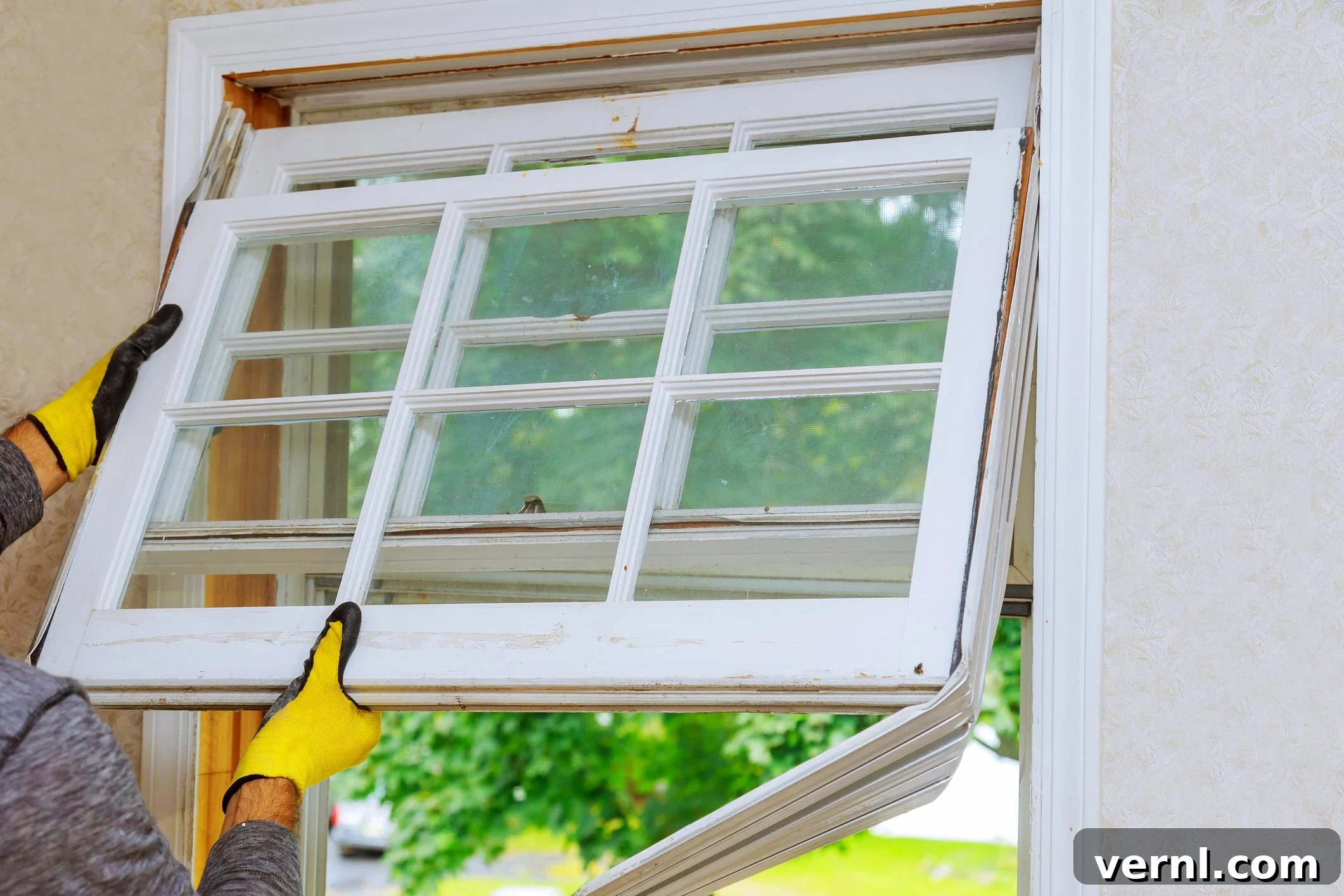
Window replacement isn’t always extremely complicated, and it frequently involves minimal exterior work. Often, you can remove old sashes from inside after removing the molding, insert pocket windows, and replace the molding.
A contractor typically takes two to four hours to install a replacement window. However, the project may take longer if you are a DIYer. Consider the following points before deciding to DIY:
- Contractors usually get discounts on replacement windows that are unavailable to homeowners.
- Contractors are better equipped to address unforeseen issues, such as windows that don’t fit perfectly or crumbling window frames. Owczarzak notes that efficiency won’t improve if air can enter between the window and frame. Resolving these concerns often requires professional expertise.
- Replacement windows can be heavy. You frequently need two people to lift and install one. If you drop the window during a DIY project, you are responsible for the replacement cost. However, the contractor is responsible if they drop the window during an installation.
- Poor installation practices, such as incorrect sealing or missing weatherproof frame linings, can reduce the window’s lifespan and negate insulation benefits. A contractor will provide a warranty against such defects. When you do the job yourself, you assume the liability.
- DIY installations may void the product warranty.
Additional Cost Considerations
The list of materials needed for even a basic window replacement is often longer than homeowners anticipate. It can include items like waterproofing tape, silicone caulk, and foam insulation.
In addition to the window itself, you’ll generally need to replace stops and parting strips that secure the window in place. Depending on the casing and windowsill condition, you might also consider replacing them.
Upgrading to a larger window means expanding the opening. This requires framing work and, subsequently, a complete interior and exterior trim makeover.
Tips for Saving Money on Window Replacement
Besides DIY installation, you can control window replacement costs in several ways:
- Install windows with simpler designs, such as solid panes instead of panes with grids.
- Stick to standard colors and sizes.
- Replace multiple windows simultaneously to take advantage of bulk discounts.
- Pay with cash or check, as credit card processing fees can increase the cost.
- Look for “seconds”. Builders often sell unused windows on sites like Craigslist.com or via Habitat for Humanity’s ReStore program.
- Choose Energy Star windows to potentially qualify for energy efficiency tax credits. While the federal Residential Energy Efficiency tax credit expired in 2021, some state and local governments may still offer incentives for energy-efficient windows.
Sponsored