
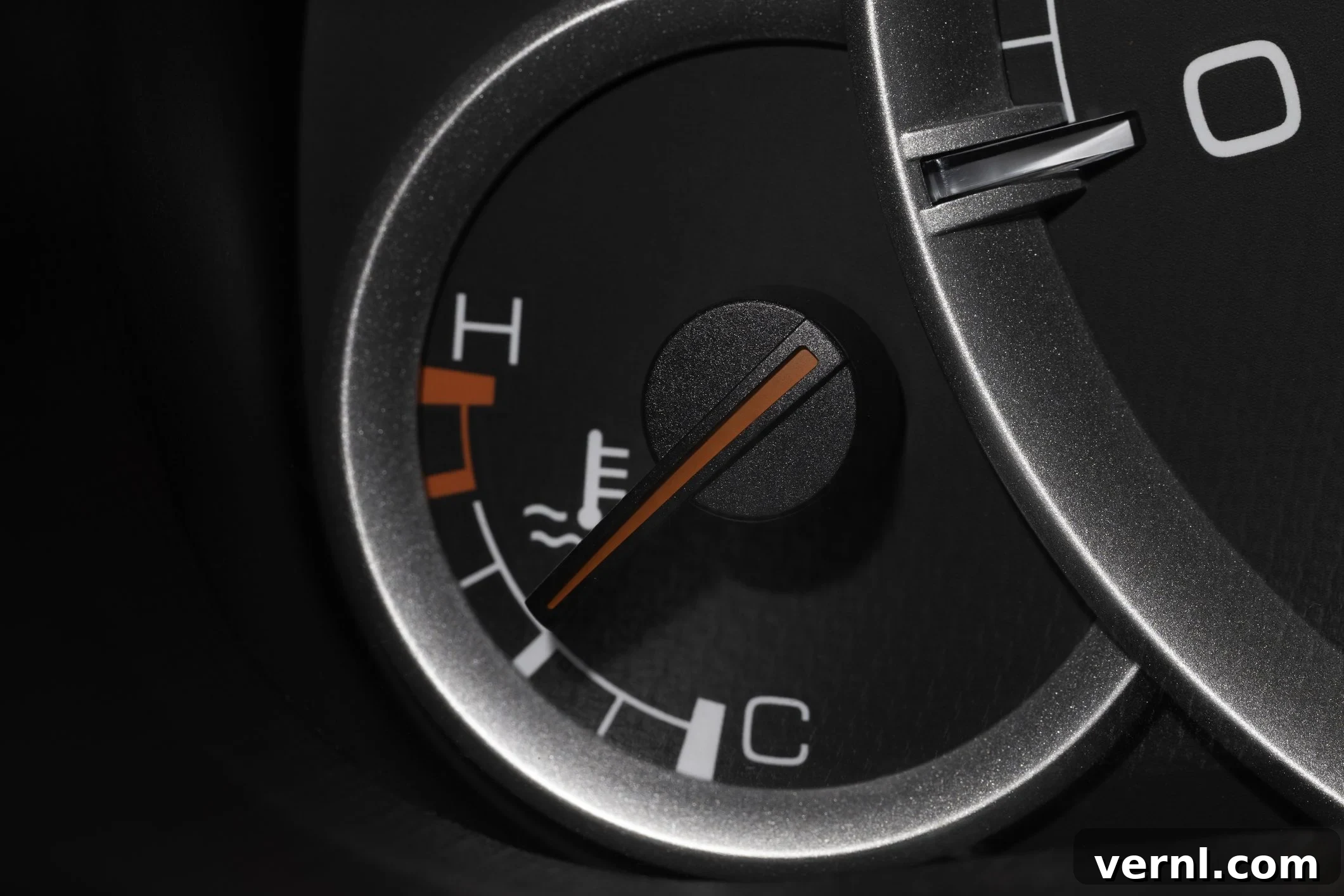
Coolant Temperature Sensor Replacement: Symptoms, Cost & DIY Guide
Is your car acting up? Overheating, smoking, or running rough can all be signs of a failing coolant temperature sensor. While it’s not always immediately obvious, a faulty sensor can lead to serious engine problems. This guide will walk you through everything you need to know about coolant temperature sensor replacement, from recognizing the symptoms to fixing the problem yourself.
What Does the Coolant Temperature Sensor Do?
The engine coolant temperature sensor (ECT) is a crucial component in your vehicle’s engine management system. Its primary job is to monitor the temperature of your engine’s coolant. This information is then relayed to the engine control module (ECM) or powertrain control module (PCM). The ECM/PCM uses this data to make important adjustments, including:
- Controlling the cooling fan operation
- Adjusting the air-to-fuel ratio for optimal performance
- Fine-tuning spark timing for efficient combustion
Essentially, the coolant temperature sensor helps your engine run efficiently and prevents overheating.
Where Is the Coolant Temperature Sensor Located?
The location of the coolant temperature sensor varies depending on your car’s make and model. However, you can typically find it in one of the following locations:
- Near the thermostat housing, often at the top of the engine near the intake manifold and cylinder heads.
- Integrated into the thermostat housing itself.
- Mounted on or very close to the water pump housing.
Consult your vehicle’s service manual for the exact location of the sensor in your specific car.
How to Tell If the Coolant Temperature Sensor Is Bad
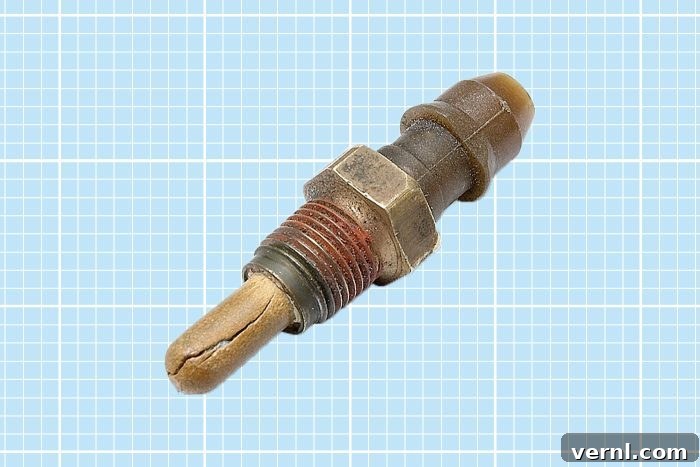
A failing coolant temperature sensor can manifest in several ways. Be on the lookout for these common symptoms:
- Engine Overheating: One of the most serious signs is your engine running too hot.
- Erratic Temperature Gauge Readings: The temperature gauge might fluctuate wildly or show inaccurate readings.
- Check Engine Light: An illuminated check engine light or other temperature-related warning light on the dashboard can indicate a problem.
- Cooling Fan Issues: The electric cooling fan may run constantly or not at all.
- Poor Fuel Efficiency: You might notice a decrease in your car’s fuel economy.
- Rough Engine Performance: The engine might run roughly, misfire, or stall.
If the sensor sends incorrect information to the ECM/PCM, the engine might receive too much fuel, especially when starting. This can lead to:
- Difficulty starting the engine (cranking excessively)
- A strong fuel smell
- Black smoke from the tailpipe
- Rough engine operation or shaking
To confirm the sensor is faulty, you can use a few methods:
- Voltmeter: Test the sensor’s electrical output.
- Scan Tool: Use a scan tool to read the coolant temperature signal and compare it to the actual engine temperature, often measured with an infrared thermometer.
How Much Does It Cost to Replace the Coolant Temperature Sensor?
The cost to replace a coolant temperature sensor varies depending on your vehicle and whether you choose to do the work yourself. Here’s a general breakdown:
- Sensor Cost: The sensor itself typically costs between $15 and $50.
- Labor Costs (if applicable): If you take your car to a mechanic, expect to pay for labor. This usually takes 1 to 2.5 hours, which can cost anywhere from $150 to $400.
- Coolant: You’ll likely need to replace some coolant, which typically costs around $15 per gallon.
How To Replace the Coolant Temperature Sensor Yourself
Replacing the coolant temperature sensor can be a manageable DIY project. Here’s a step-by-step guide:
- Safety First: Allow the engine to cool completely to avoid burns.
- Locate and Clean: Find the sensor and use compressed air to remove any debris around it. You may need to remove other parts for access.
- Drain Coolant: Drain some coolant from the radiator. If the coolant is relatively new, save it in a clean container for reuse.
- Disconnect and Remove: Carefully unplug the electrical connector from the sensor. Then, remove the old sensor using the appropriate tools (socket wrench, open-end wrench, etc.).
- Install the New Sensor: Apply a thin coat of RTV sealant to the threads of the new sensor (if it doesn’t come pre-coated) or install new O-rings. Tighten the sensor to the manufacturer’s recommended torque specifications.
- Reconnect: Reconnect the electrical connector. You can use a small amount of dielectric grease on the connector terminals to help prevent corrosion.
- Refill Coolant: Add coolant back to the system.
- Check for Leaks: Start the engine and check for any coolant leaks around the new sensor. Run the engine with the coolant cap off for a while to let out air pockets. Use the correct coolant for your car, mixed to the proper ratio.
While you’re at it, consider replacing the thermostat as well, as they often fail around the same time.
Common Mistakes With Coolant Temperature Sensor Replacement
Avoid these common pitfalls to ensure a successful replacement:
- Over-Torquing: Tightening the new sensor too much can damage the threads, the sensor itself, or the intake manifold.
- Cross-Threading: Be careful not to cross-thread the sensor, which can lead to coolant leaks.
- Forgetting Sealant: If the sensor requires sealant, be sure to apply it to the threads.
- Using the Wrong Sensor: Opt for an OEM (Original Equipment Manufacturer) part for the best reliability.
- Using the Wrong Coolant: Always use the correct type of coolant specified in your owner’s manual. Mixing different types of coolant can cause problems.
- Dissimilar Metals: Installing a brass sensor into an aluminum intake manifold can lead to corrosion.
FAQs
Is it okay to drive with a bad coolant temperature sensor?
It’s generally not recommended. A bad sensor can cause your engine to overheat, leading to serious damage. If you see a red warning light or your car is overheating, stop driving immediately. If the engine isn’t overheating, you might be able to drive for a day or two, but have the car checked as soon as possible. If the symptoms are less severe (hard starting, excessive fuel smell, rough running), the situation may not be as critical, but your car will likely use more fuel and could damage your catalytic converter over time.
Is it hard to replace the coolant temperature sensor?
The difficulty depends on your vehicle. If the sensor is easy to access, replacing it is usually a straightforward job for someone with basic mechanical skills and the right tools.
About the Experts
- Chris “Moose” Pyle: A master certified technician with over 20 years of experience in automotive repair.
- Duane “Doc” Watson: A technical trainer with over 45 years of experience in automotive repair.
- Paul Knoll: Automotive expert with a passion for cars and sharing his knowledge.